
Top 25 Canadian Cities for Solar Panels
July 17, 2025
Solar Panels Roof After 25 Years in Canada The Truth
July 31, 2025Last Updated on May 29, 2026 by Vitaliy
Updated May 29, 2026. If you’re thinking about installing solar panels in New Brunswick, the decision is no longer just “does my roof get enough sun?” The bigger question in 2026 is whether your savings estimate still works after rebate deadlines, the Canada Greener Homes Loan closure, and NB Power’s proposed net metering changes.
That matters because a system that looks good under today’s one-for-one credit rules can look much weaker if export credits are reduced or a new demand charge is approved. Before you sign a contract, you need the 2026 version of the math.
Key Takeaways
- Solar can still make sense in New Brunswick, especially for homes with high electricity use, good roof exposure, and a plan to use more of their solar power on site.
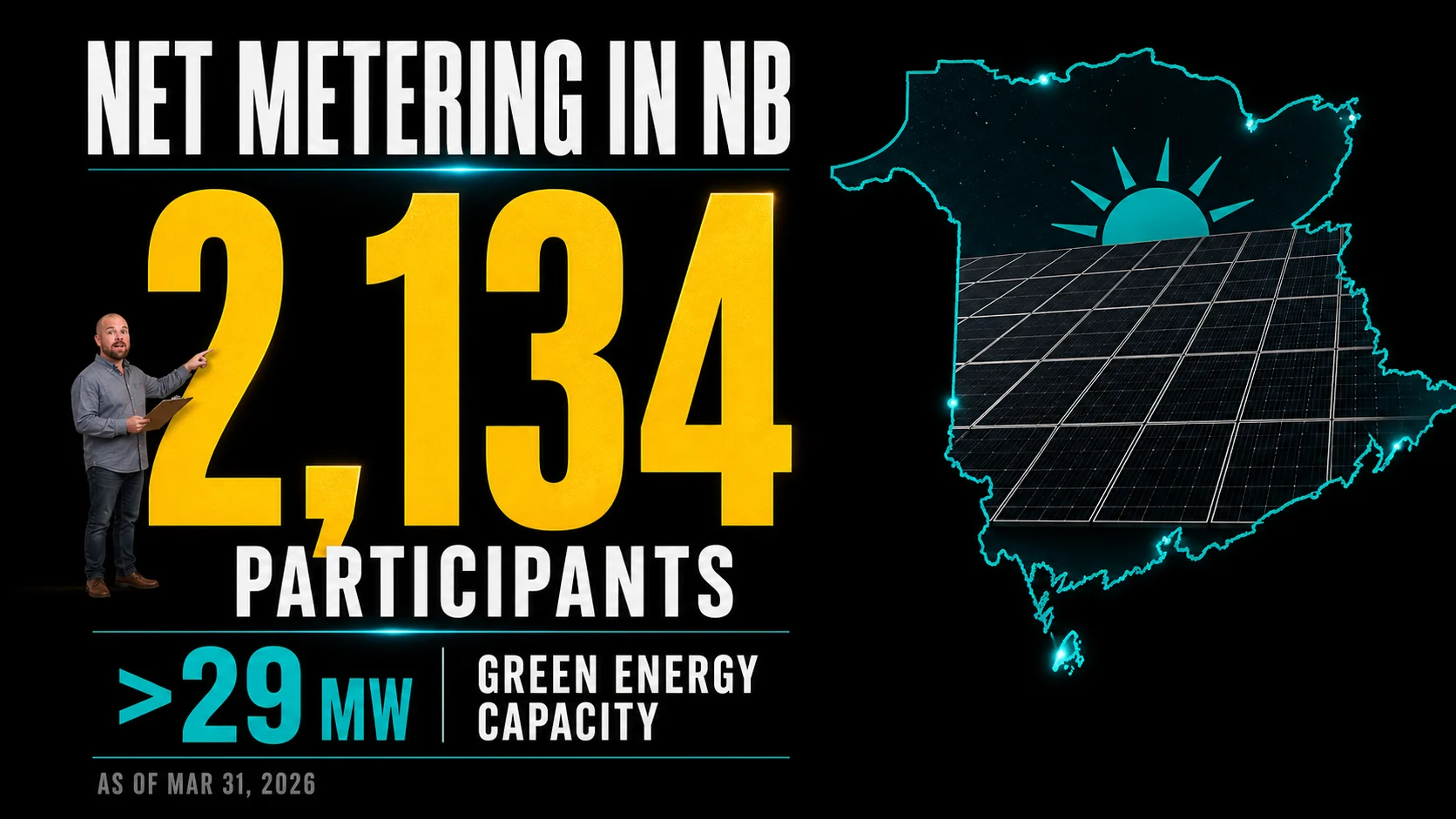
- NB Power currently lists 2,134 net metering participants and more than 29 MW of green energy capacity as of March 31, 2026. Source: NB Power net metering.
- NB Power’s residential electricity rate is 15.84 cents per kWh as of April 14, 2026, with a monthly service charge of $30.82 for urban customers and $33.82 for rural or seasonal customers, according to NB Power residential rates.
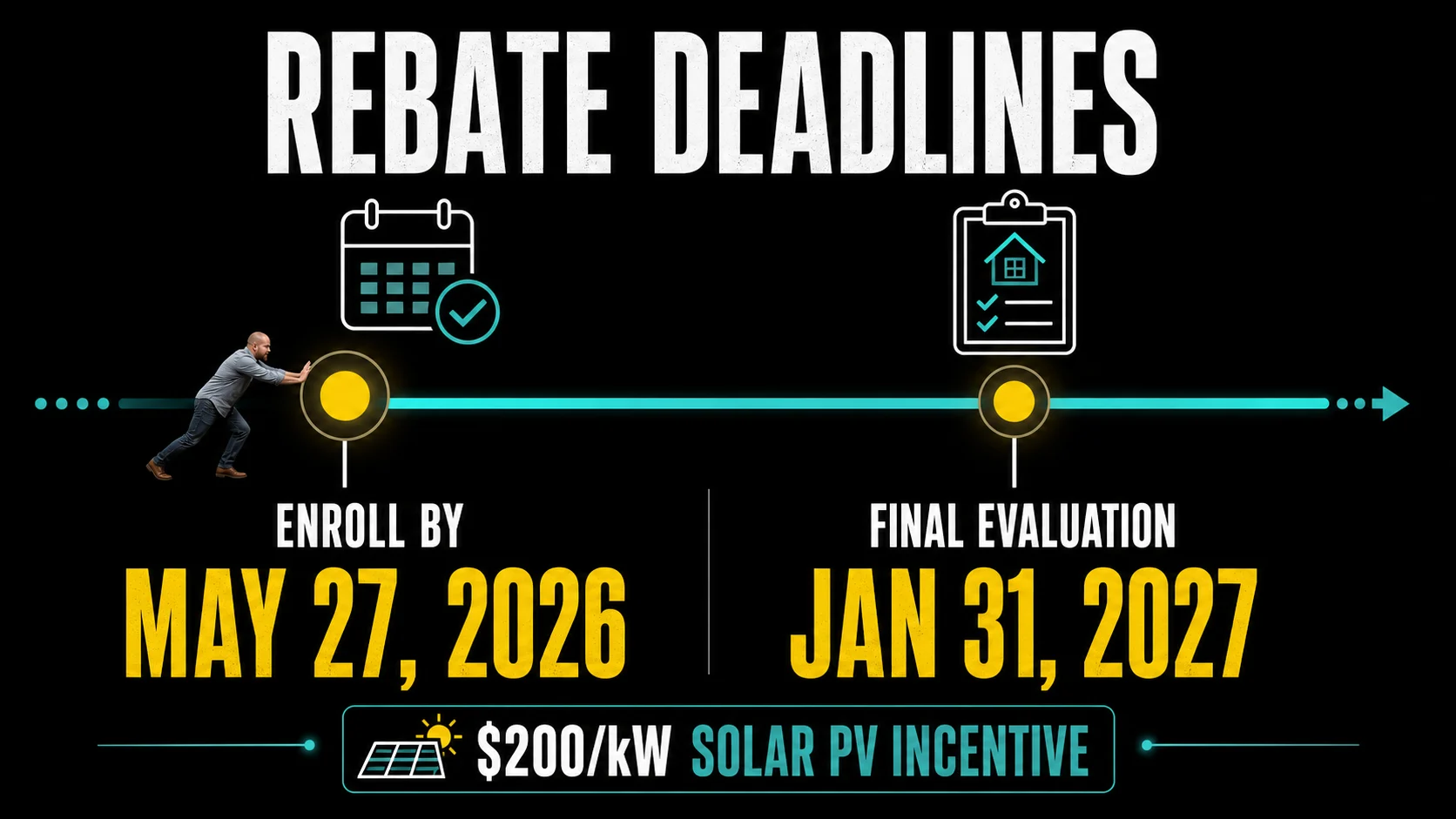
- New Brunswick’s solar PV rebate is now a deadline issue. SaveEnergyNB says solar incentives are only available to Total Home Energy Savings Program participants who enroll by May 27, 2026, with final work and the final Home Energy Evaluation completed by January 31, 2027. Source: SaveEnergyNB additional rebates.
- The Canada Greener Homes Loan is closed to new applicants. NRCan says October 1, 2025 was the last day to apply, and the loan portal says funding was fully committed as of March 31, 2026. Sources: NRCan Canada Greener Homes Loan and the Canada Greener Homes Loan portal.
- NB Power has filed a 2026 rate design application that includes net metering modernization. If approved, changes would begin gradually in 2027. Source: NB Power Rate Design.
May 2026 Update: NB Power’s Proposed Net Metering Changes
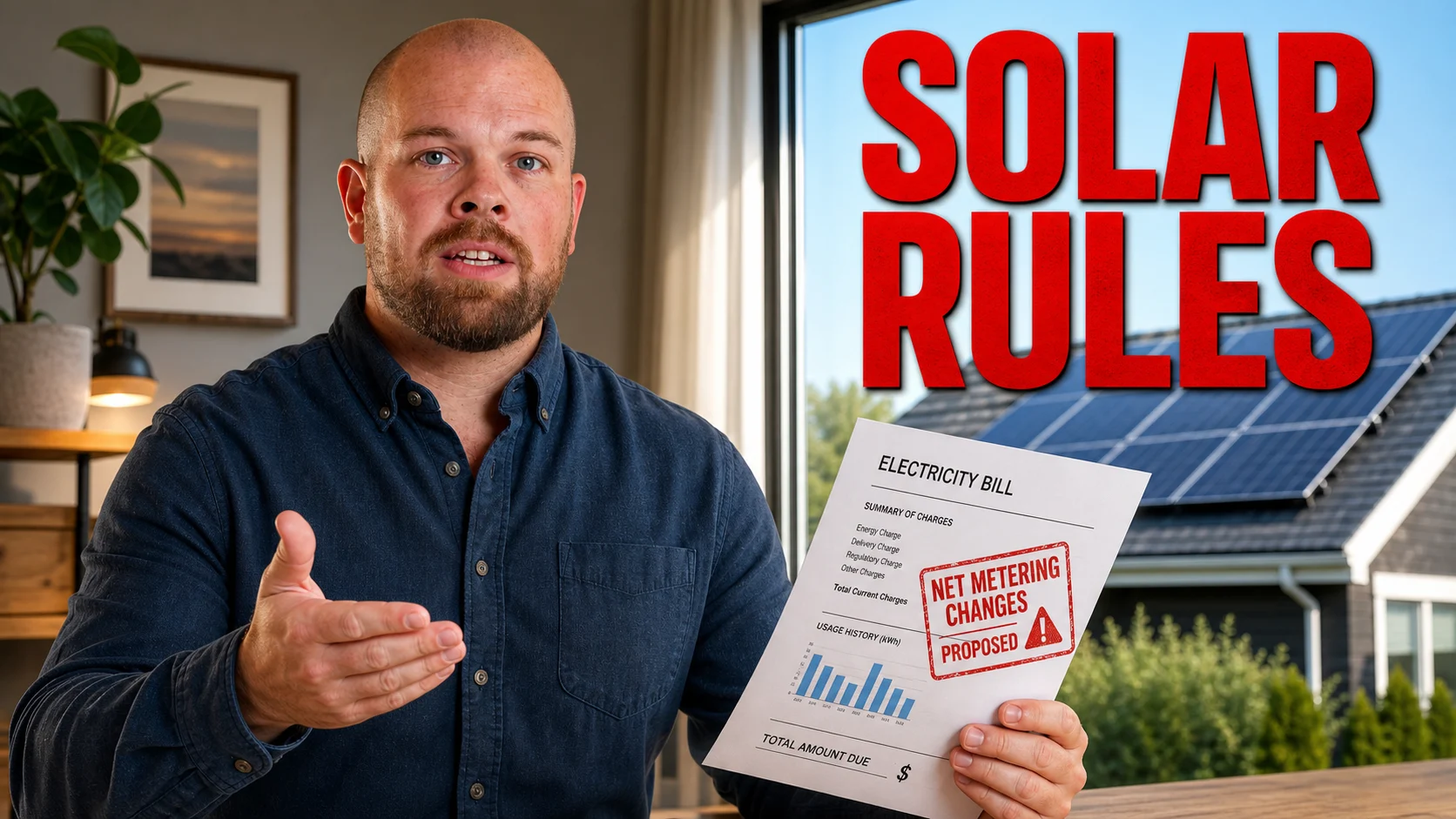
The biggest solar policy issue in New Brunswick right now is NB Power’s proposed change to how solar customers are billed.
Global News reported that NB Power says the current solar model is no longer sustainable as solar adoption grows in the province. NB Power’s own net metering page currently lists 2,134 net metering participants and more than 29 MW of green energy capacity as of March 31, 2026.
NB Power’s position is simple: customers with solar still use the grid, especially at night and during winter peaks, but their bills can be lower under the current credit system. The utility argues that this shifts some grid costs to customers who do not have solar.
Solar customers and installers see the risk differently. Their concern is that reducing export value and adding a demand charge could slow solar adoption, stretch payback periods, and make New Brunswick a much harder market for rooftop solar.
The proposal is not final. NB Power’s rate design page says the application was filed on April 30, 2026, and that approved changes would be introduced gradually over several years, beginning April 1, 2027. Homeowners should treat every estimate as conditional until the Energy and Utilities Board process is finished.
How Net Metering Works in New Brunswick Today
NB Power’s current net metering program lets you connect a solar PV system to the distribution grid. Your home uses solar power first. When your panels produce more than your home needs, the excess goes to the grid and earns energy credits. When your home needs more power than the panels are producing, you draw from NB Power.
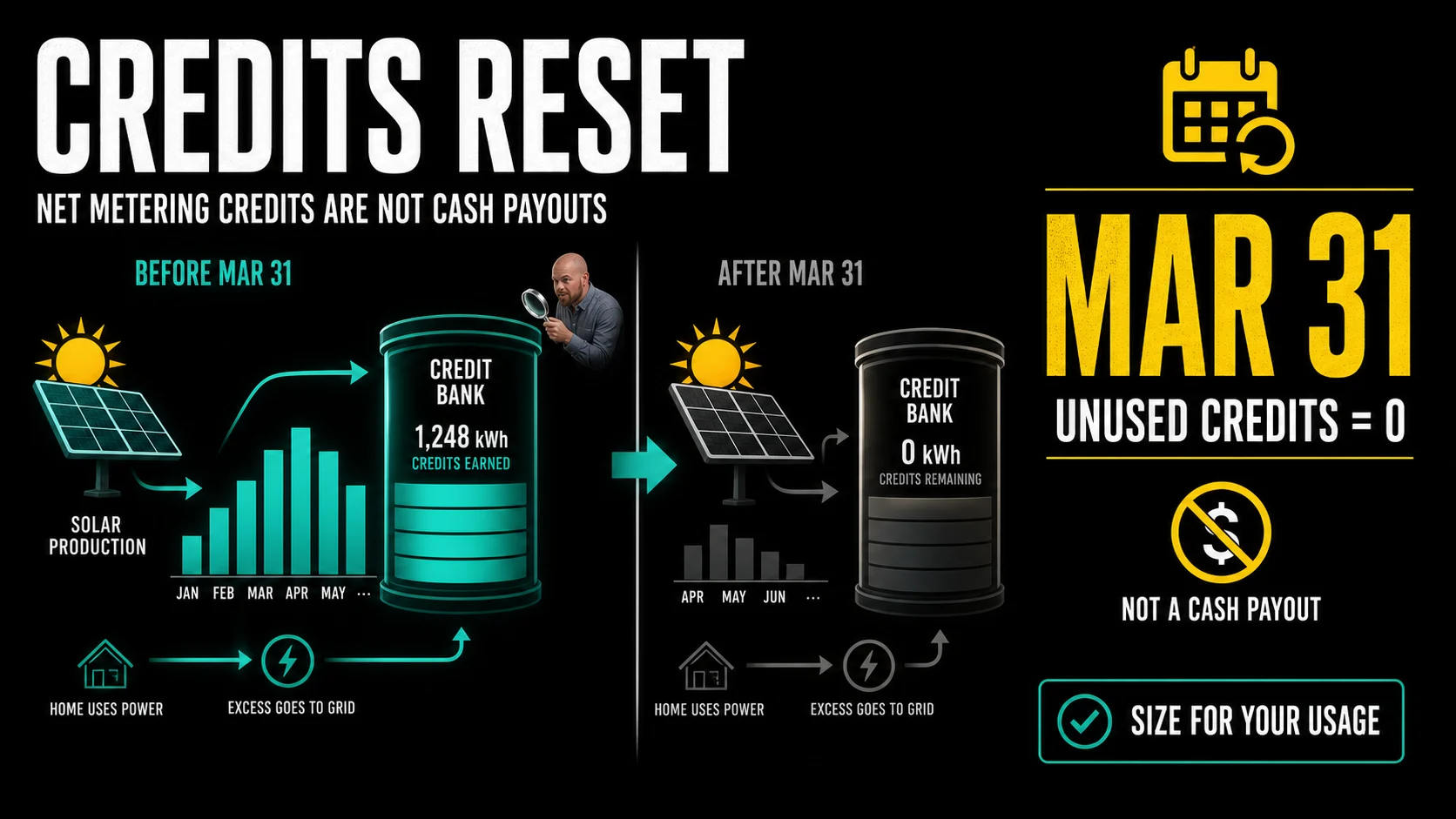
The current system is usually described as one-for-one crediting, but it is not a cash sale program. NB Power says unused credits are zeroed out every March 31, which is why system size matters. Source: NB Power net metering FAQs.
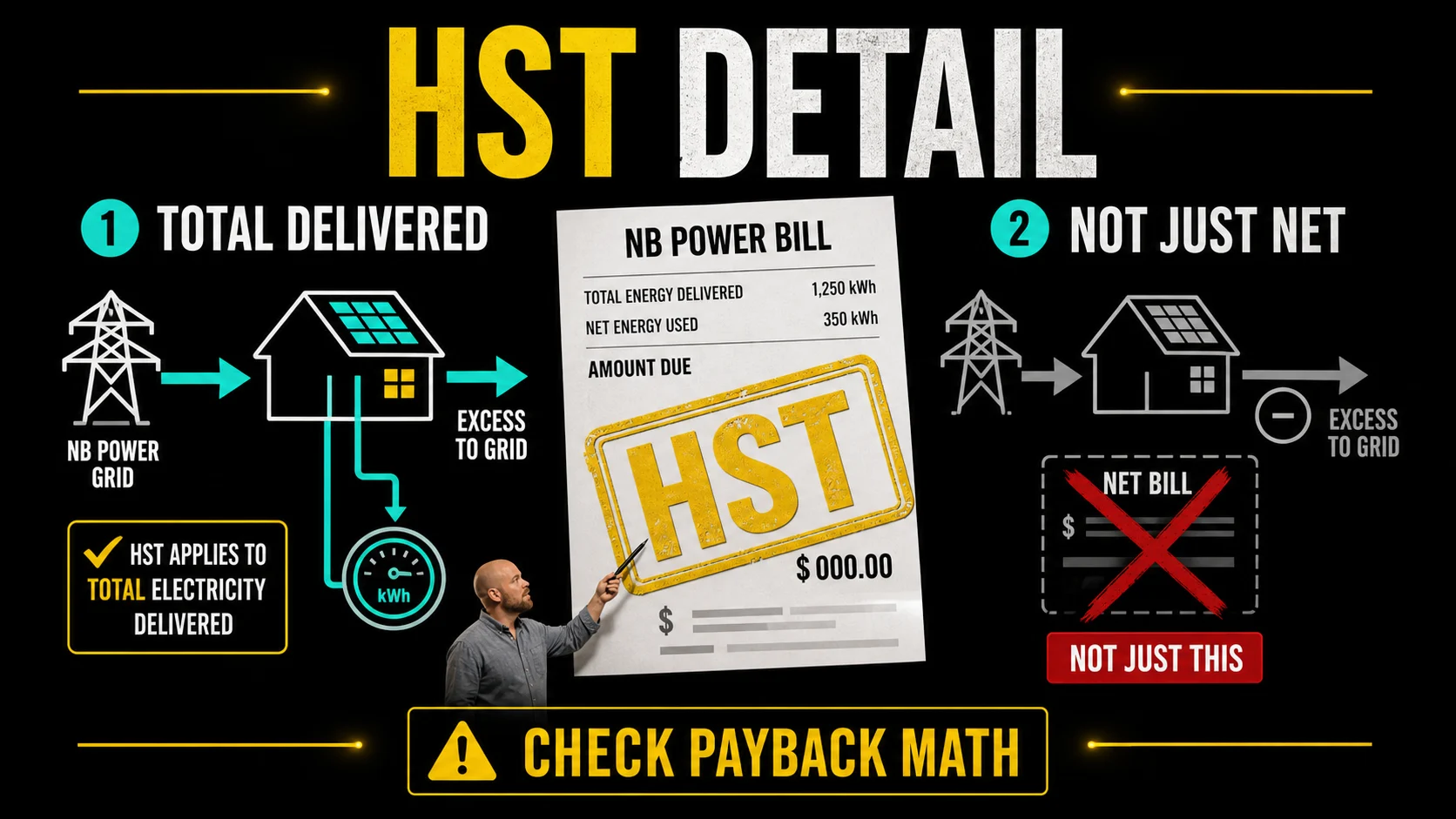
There is also an HST detail that can affect payback estimates. NB Power says HST is charged on the total electricity delivered, not just the net amount billed under net metering.
Tip for system sizing: Do not size a New Brunswick solar system just to cover the biggest roof area you have. Size it around your annual energy use, your winter consumption, your March 31 credit risk, and any proposed future billing rules.
What NB Power Is Proposing
NB Power’s official 2026 rate design application includes a proposal for net metering modernization. The formal notice says NB Power is asking for approval of a mandatory three-part rate structure for residential customers applying to the Net Metering Program on or after November 1, 2026, with final rates to be filed in the 2027/28 General Rate Application. Source: NB Power Rate Design Application Phase 2 notice.
| Issue | Current net metering | Proposed direction |
|---|---|---|
| Exported solar power | One-for-one kWh credits | Lower export value is being proposed |
| Surplus credits | Zeroed out March 31 | Grandfathered customers would keep current billing terms during the grandfathering period, if approved |
| Demand charge | Not part of normal residential solar billing today | Global News reported a proposed $13 per kW demand charge based on the customer’s highest burst of use between 7 a.m. and 10 p.m. |
| Timing | Current program still applies today | Proposed changes would begin in 2027 if approved |
| Grandfathering | Existing enrolled customers remain under current terms for now | NB Power says the proposed grandfathering period runs from April 1, 2027 to March 31, 2037 |
NB Media Co-op reported that the proposed export credit would shift away from full one-for-one retail treatment, with an avoided-cost style export value discussed at 6.77 cents per kWh while NB Power’s current residential rate is 15.84 cents per kWh. Source: NB Media Co-op coverage of proposed solar billing changes.
Use that as a warning sign, not a final tariff. The final approved rate design, if any, is what will matter.
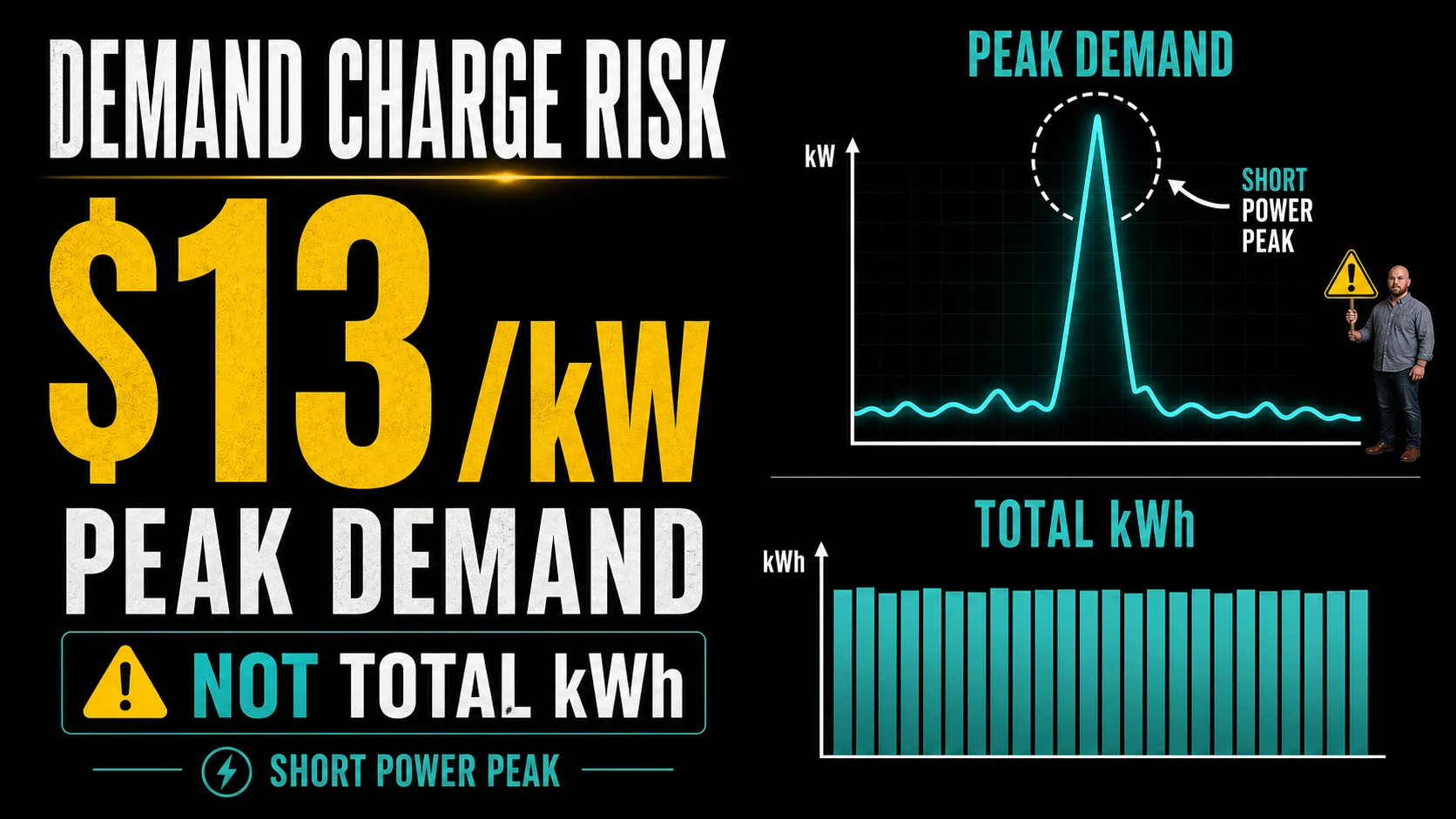
A demand charge is based on your highest short burst of power use, not your total monthly electricity use. That is why kW and kWh are not interchangeable in this discussion.
Are Solar Panels Still Worth It in New Brunswick?
Yes, solar panels can still be worth it in New Brunswick, but the best projects in 2026 are the ones designed with policy risk in mind.
Solar is strongest when your power bill is high, your roof has limited shading, your roof condition is good, and you can use a good share of the solar power during the day. Solar is riskier when the payback only works because of a rebate you no longer qualify for, or when the installer assumes every exported kWh will keep full retail value forever.
Homes with electric heat, EV charging, hot tubs, or other high-draw loads need extra care because demand charges, if approved, would make short power spikes more important.
If you want a quick first check, use the SolarEnergies.ca online solar calculator before collecting quotes. Then ask installers to show two payback scenarios: one under today’s net metering rules and one under a lower export-credit future.
New Brunswick Solar Incentives and Financing in 2026
This is the part of the guide that needed the biggest update.
SaveEnergyNB lists a Solar Photovoltaic incentive of $200 per kW under the Total Home Energy Savings Program, but the 2026 deadline is tight. Solar upgrades are only eligible for participants who enroll by May 27, 2026. All work must be complete and the final Home Energy Evaluation must be done on or before January 31, 2027. Source: SaveEnergyNB additional rebates.
If you are reading this after May 27, 2026 and you were not enrolled, do not assume the rebate is still available. Ask SaveEnergyNB directly and get the answer in writing before you include it in your payback calculation.
The old federal 0% loan was a major help for solar buyers because it could finance up to $40,000 over 10 years. That option is now closed to new applicants. NRCan says October 1, 2025 was the last day to apply, and the loan portal says funding was fully committed as of March 31, 2026. A project that worked with interest-free financing may not work the same way with regular consumer financing.
How Much Do Solar Panels Cost in New Brunswick in 2026?
NB Power currently says a typical 5 kW rooftop solar system costs about $17,000 before batteries or extras. Real quotes can still vary based on roof, electrical work, equipment, and labour. Source: NB Power net metering FAQs.
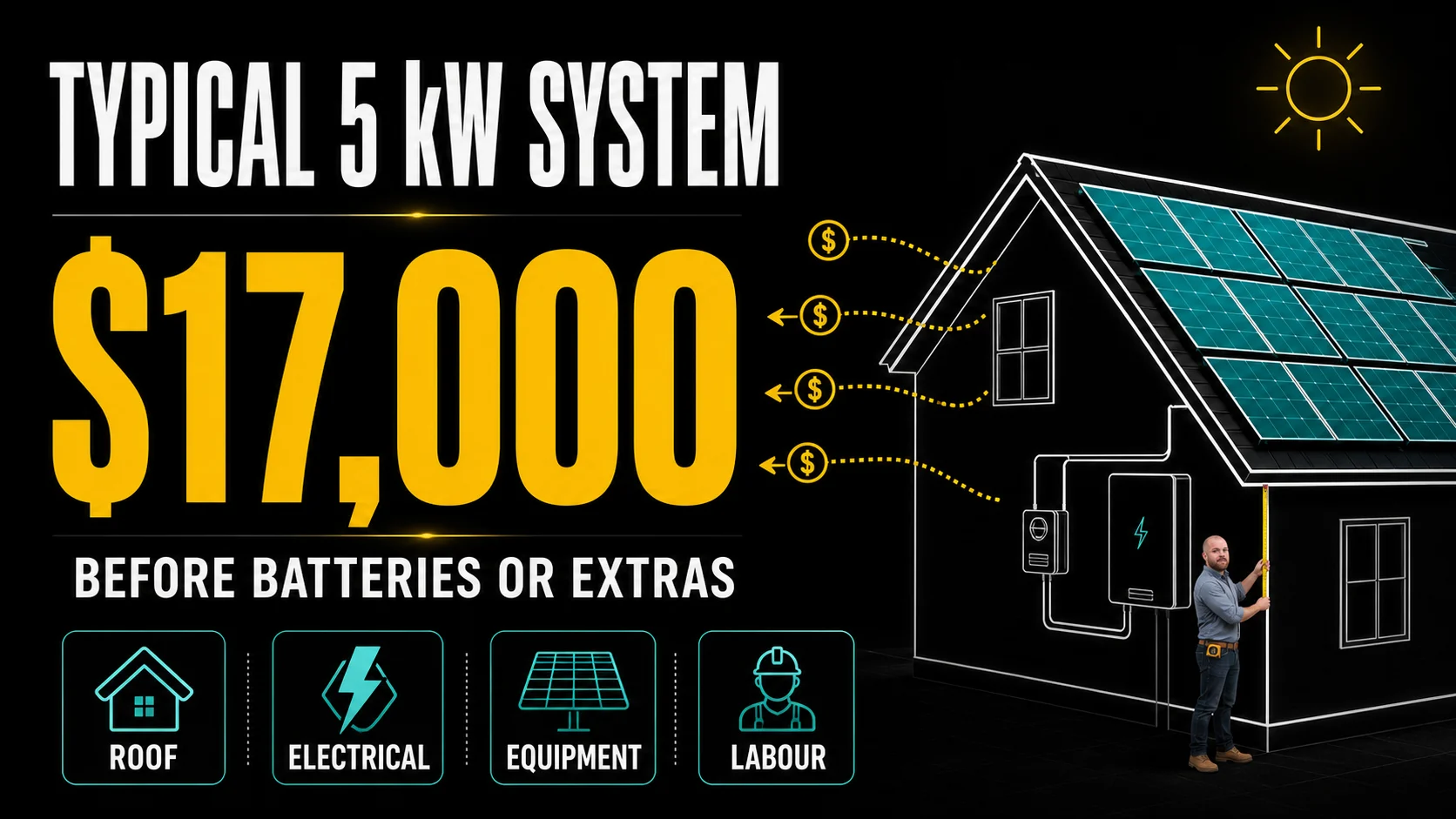
That $17,000 figure is a useful starting point, but it is not the average cost for every property. The cost of installing residential solar panels in New Brunswick depends on system size, roof layout, electrical work, equipment choice, labour, and whether battery backup is included. A simple roof with a clean electrical panel is a different solar project than a shaded roof that needs panel upgrades or extra wiring.
For New Brunswick homeowners, the better question is the total cost after confirmed incentives, financing option, net metering credits, HST treatment, and expected energy savings on the NB Power bill. A lower upfront cost is not always the better deal if the solar panel system is undersized, the production estimate is too optimistic, or the warranty is weaker.
What affects solar panel prices in New Brunswick?
| Cost factor | Why it matters |
|---|---|
| System size | A larger solar system costs more upfront, but it may offset more electricity if your energy usage supports it. |
| Cost per watt or per kW | This helps you compare solar panel prices between quotes instead of only looking at the headline total cost. |
| Roof and electrical work | Roof complexity, electrical upgrades, permitting, and labour can change the cost of solar installation quickly. |
| Net metering and electricity prices | Credits for excess energy, NB Power rates, and future billing rules affect payback period and long-term energy savings. |
| Solar contractor and equipment | Panel brand, inverter choice, workmanship warranty, and installer quality can change the long-term value of the system. |
Tip for comparing quotes: ask each solar contractor to show the cost per watt, estimated yearly kWh production, expected self-consumption, and the electricity prices used in the payback model. That makes it easier to compare a quote for solar panel installation without getting distracted by one low headline price.
For New Brunswick, payback depends on your installed cost after any confirmed rebate, annual electricity use, the value of power you avoid buying from NB Power, and the value of exported solar. That last number is the policy risk. Under today’s net metering, exported energy can offset later use as a kWh credit, subject to the March 31 reset. Under a future net billing model, exports may be worth less than electricity used directly in the home.
Tip for payback estimates: Ask every installer for a “self-consumption” number. If they cannot show how much solar your home is expected to use directly versus export, the savings estimate is incomplete.
Before choosing an installer, compare at least three detailed quotes. Look at system size, annual production, equipment, warranty, roof work, electrical upgrades, financing, and assumptions about NB Power’s net metering rules. SolarEnergies.ca can connect you with certified installers with 14,000+ installs across Canada, so you can compare real options instead of guessing.
Batteries and Load Management Matter More Now
Under traditional net metering, batteries were mostly about backup power. That may change if New Brunswick moves toward lower export credits or demand-based billing for solar customers.
A battery can store midday solar power and use it later in the evening. Smart load control can also reduce peak demand by preventing an EV charger, dryer, heat pump, and water heater from pulling hard at the same time.
This does not mean every New Brunswick solar quote should include a battery. Batteries add cost, and the payback needs to be checked carefully. But in 2026, battery storage and smart panels deserve a real conversation, especially for homes with electric heat, EV charging, frequent outages, or large evening loads.
Tip for electric heat homes: Ask the installer to model winter peak demand. A home that looks fine on annual kWh may still have high short-term demand, and that matters if demand charges become part of the approved solar rate design.
What I Would Do Before Signing a Solar Contract in NB
I would ask for three versions of the numbers: today’s rules, conservative future rules, and a battery or load-control option. If the project only works with today’s one-for-one credits and a rebate you may not qualify for, I would slow down. If it still looks reasonable with lower export value and realistic self-consumption, the project is much stronger.
FAQ
Are solar panels worth it in New Brunswick in 2026?
Solar panels can be worth it in New Brunswick in 2026, but the answer depends on your roof, electricity usage, confirmed incentives, financing, and how NB Power’s net metering changes are decided.
Homes with high electricity use and good sun exposure have the best chance of a strong return. Homes that export too much power or rely on old rebate assumptions need a more cautious review.
What is the solar panel grant in New Brunswick?
SaveEnergyNB lists a Solar Photovoltaic incentive of $200 per kW under the Total Home Energy Savings Program, but only for participants who enroll by May 27, 2026 and complete all work and the final Home Energy Evaluation by January 31, 2027. Check SaveEnergyNB’s current rebate page before assuming eligibility.
How does NB Power net metering work today?
Your solar system offsets your electricity use. Excess energy earns credits toward future use, but NB Power does not currently buy remaining surplus for cash. Any remaining credits are zeroed out on March 31 each year. NB Power also says HST applies to the total electricity delivered, not just the net amount billed.
What is NB Power proposing to change?
NB Power is proposing net metering modernization as part of its 2026 rate design application. Reported changes include lower export value and a proposed demand charge for solar customers. The application is before the Energy and Utilities Board, so homeowners should wait for final approved rules before treating any proposal as final.
What happens if I sell a home with solar in New Brunswick?
NB Power’s rate design FAQ says a home sale closes the customer account and terminates that customer’s net metering agreement. The new owner or account holder would not automatically keep the same grandfathered status under the proposed structure. This is a key point to confirm if you plan to sell before 2037.
What should I ask a solar installer in New Brunswick?
Ask about system size, annual production, expected self-consumption, March 31 credit loss, rebate eligibility, net metering approval timing, warranties, roof work, electrical upgrades, financing cost, and how their payback model handles NB Power’s proposed 2027 changes.