
Solar Panels Quebec Guide 2026: Cost, Hydro-Quebec Grant, Net Metering and Payback
August 6, 2025
Solar Panels Northwest Territories Guide 2025
August 6, 2025Last Updated on May 28, 2026 by Vitaliy
If you are looking at solar panels in Prince Edward Island in 2026, the first question is not “does solar work here?” It does. The real question is whether the current rebates, net metering rules, electricity rates, roof conditions, and financing options still make the numbers work for your home, farm, or business.
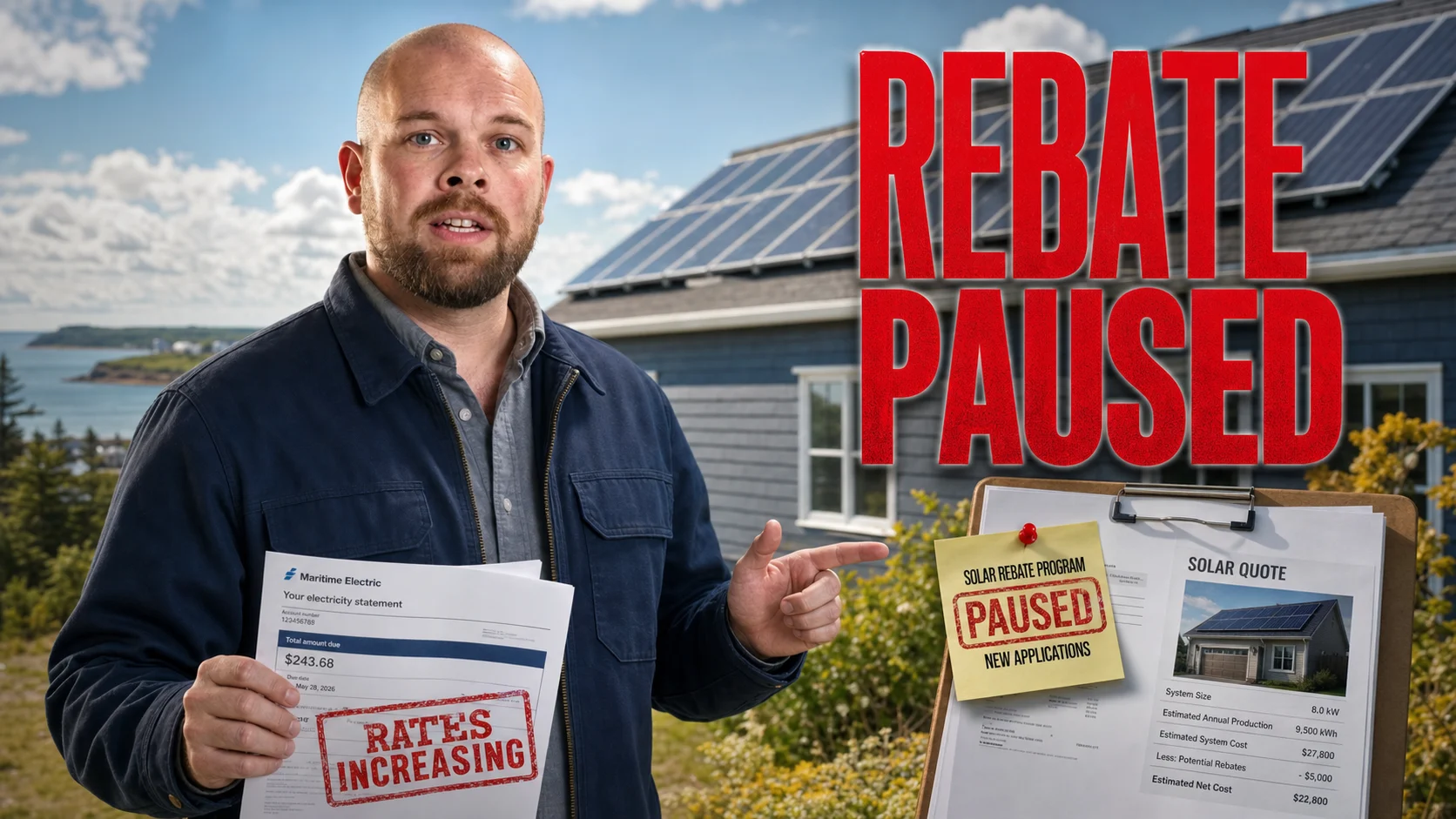
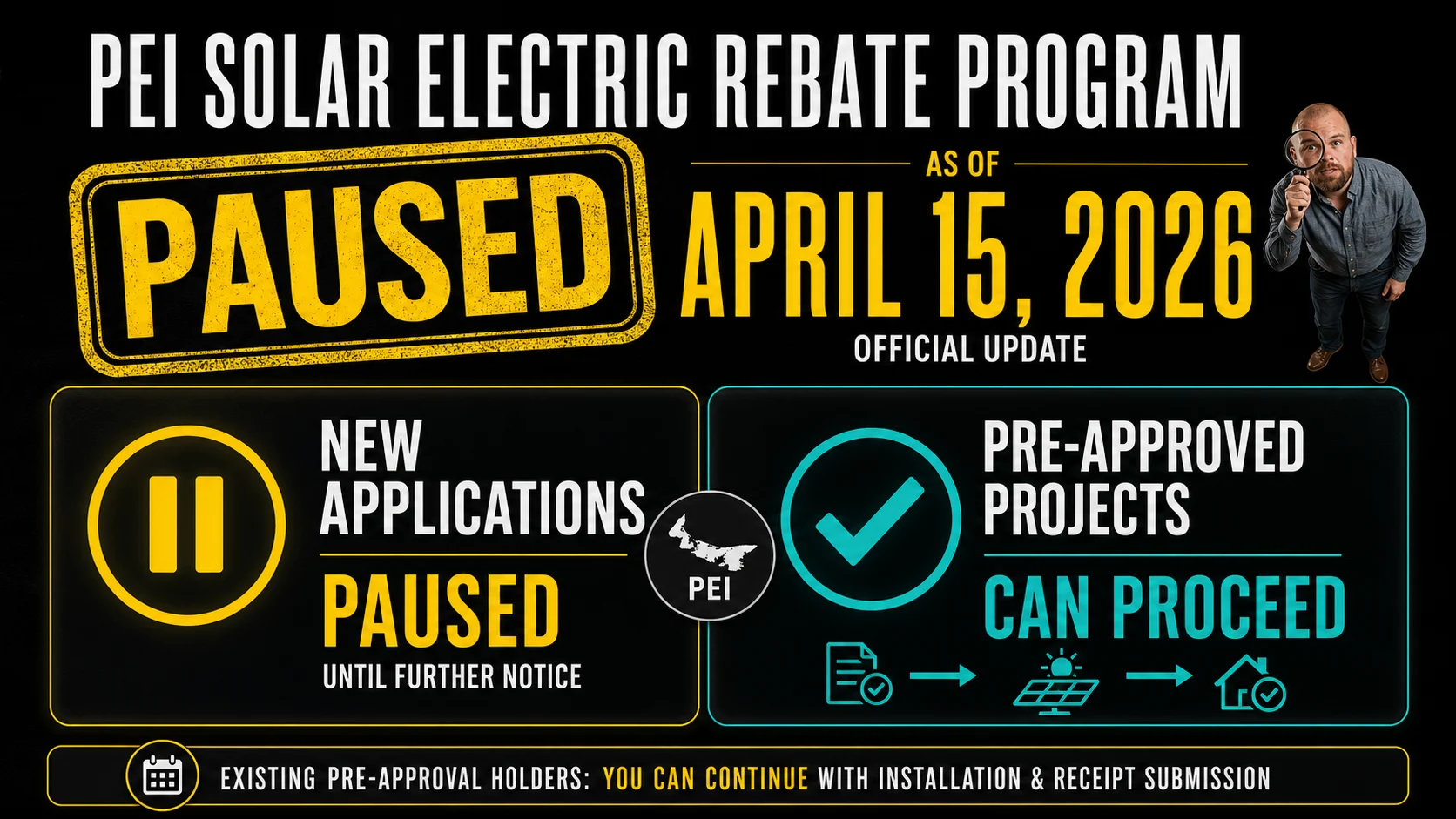
Here is the honest update: PEI still has a useful net metering framework, but the incentive stack is weaker than many older solar articles make it sound. As of May 28, 2026, PEI’s official Solar Electric Rebate Program page, published April 15, 2026, still says applications are paused while 2026-2027 funding and final program details are being finalized. Existing efficiencyPEI pre-approval holders can continue, but new readers should not assume they can apply today. Source: PEI Solar Electric Rebate Program.
That matters because a bad 2026 assumption can change your payback by thousands of dollars. If you price a system using an open rebate or a federal interest-free loan that is no longer open to new applicants, your quote comparison will be off from the start.
Key Takeaways
- PEI’s Solar Electric Rebate Program is paused for new applications as of the official April 15, 2026 update.
- Existing pre-approval holders can still proceed with installations and receipt submission.
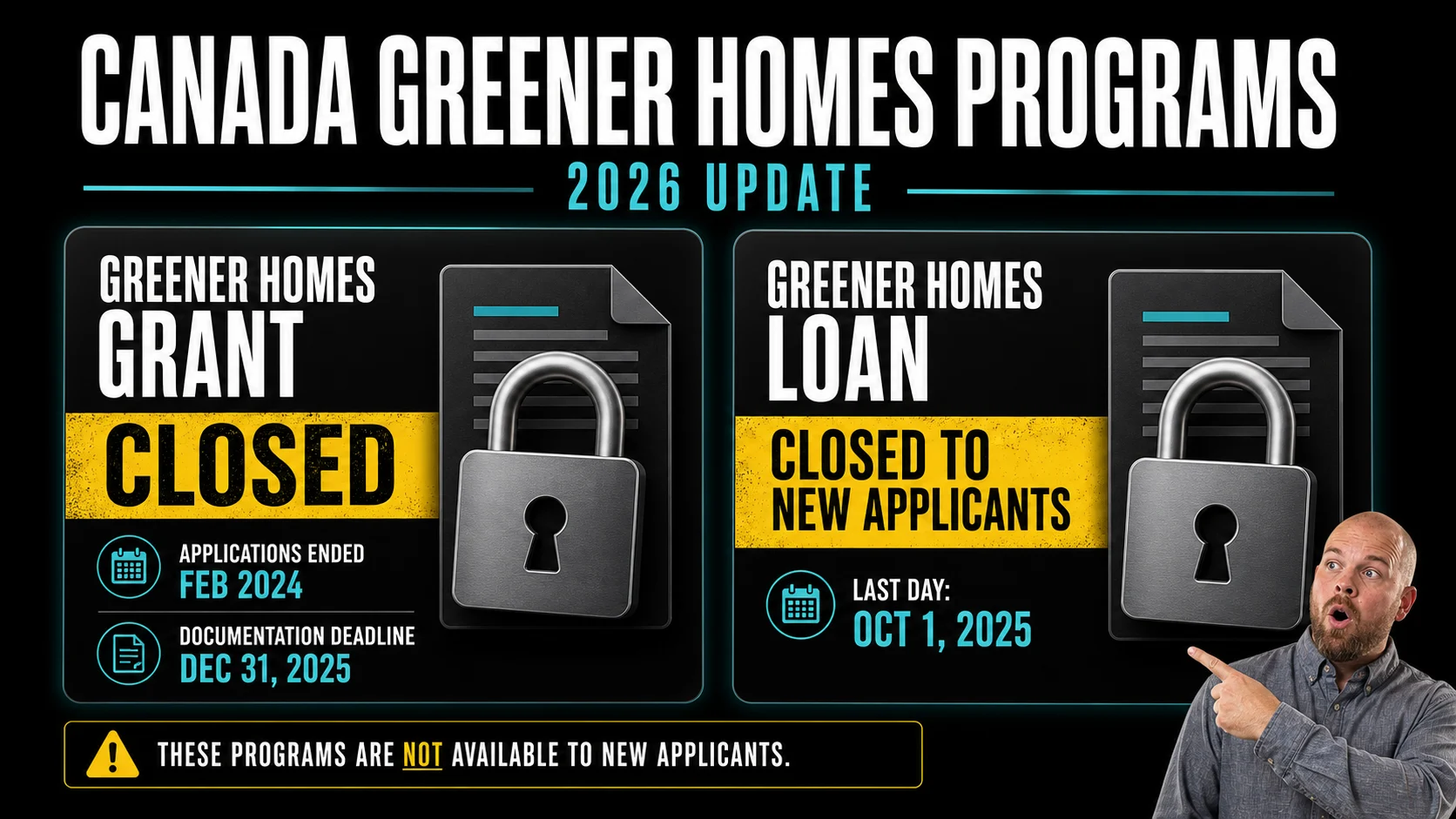
- The Canada Greener Homes Grant is closed, and the Canada Greener Homes Loan is closed to new applicants.
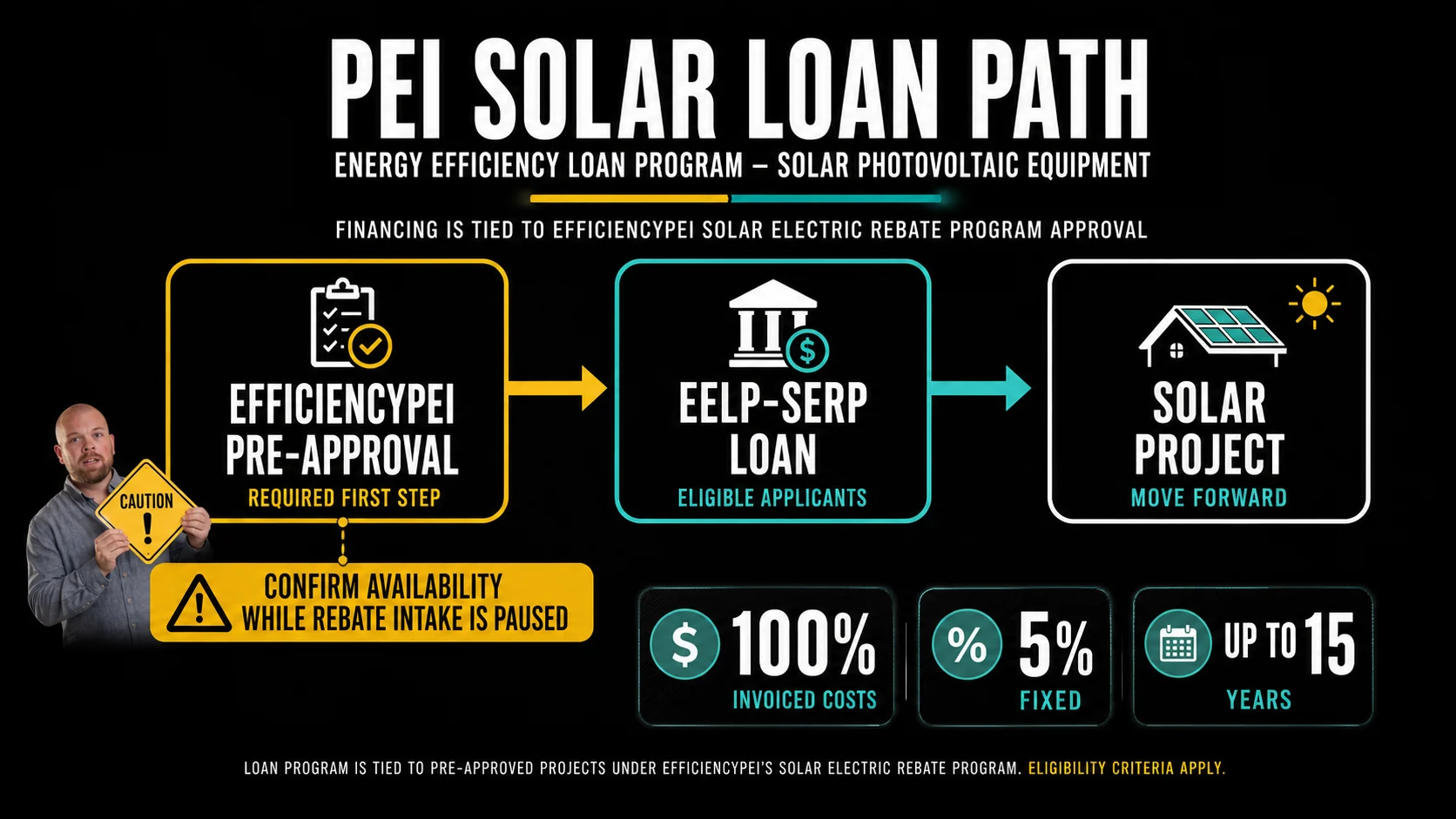
- PEI also lists an official solar loan program, but it is tied to efficiencyPEI Solar Electric Rebate Program approval, so availability needs to be confirmed while rebate intake is paused.
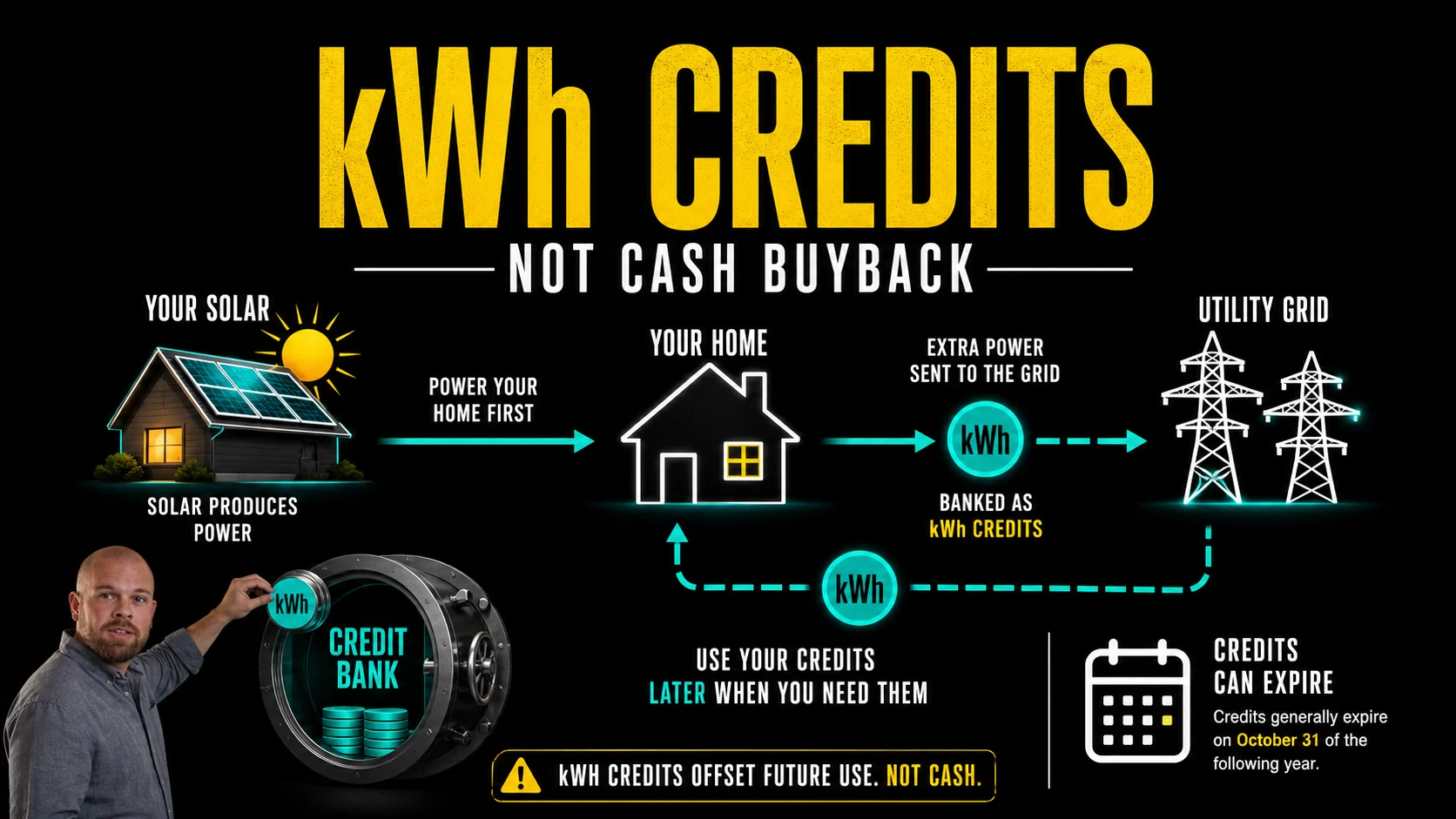
- PEI net metering uses kWh credits, not a typical cash feed-in tariff for households.
- Maritime Electric and Summerside customers still need utility approval, inspections, and code-compliant interconnection.
- Incorporated PEI businesses may have a stronger 2026 federal incentive path through the Clean Technology Investment Tax Credit.
- Before choosing an installer, compare system size, equipment, warranty, production estimate, financing terms, and the exact assumptions used in the payback.
If you want a quick first check before collecting quotes, use the SolarEnergies.ca solar panel calculator to estimate cost, production, and payback for your property.
What Changed for PEI Solar Panels in 2026?
The biggest change is program availability. The old 2025 story was: PEI rebate reduced, federal grant closed, federal loan still useful. The 2026 version is different.
PEI’s provincial solar rebate is still listed, but it is paused for new applications. The official page says 2026-2027 funding and final program details are still being finalized. It also says existing pre-approval letter holders can proceed with installations.
If you applied on or before September 5, 2025, PEI says you should wait until you receive a pre-approval letter from efficiencyPEI before beginning any solar installation. That detail matters because starting too early can put rebate eligibility at risk.
The posted rebate amounts still matter for anyone with pre-approval and for readers watching for the program to reopen:
| Applicant type | Official posted amount | Current 2026 status |
|---|---|---|
| Residential, applied before Jan. 8, 2025 | $1,000/kW DC, up to 40% of installed cost, max $10,000 | Only relevant for earlier/pre-approved applications |
| Residential, applied on or after Jan. 8, 2025 | $500/kW DC, up to 40% of installed cost, max $5,000 | Program paused for new applications |
| Businesses | $350/kW DC, up to 40% of installed cost, max $10,000 | Program paused for new applications |
| Farm buildings | $1,250/kW DC, up to 40% of installed cost, max $35,000 | Program paused for new applications |
Tip for homeowners: if a 2026 quote shows the PEI rebate as guaranteed, ask the installer to show the pre-approval path in writing. A quote can model a future reopened rebate scenario, but it should not treat paused funding as cash already approved.
Are Federal Solar Incentives Still Available in PEI?
For homeowners, the old federal Greener Homes stack should not be presented as an active 2026 option. Natural Resources Canada says the Canada Greener Homes Grant is closed. Applications were open from May 2021 to February 2024, and December 31, 2025 was the final documentation deadline for existing participants. Source: Canada Greener Homes Grant at a glance.
The Canada Greener Homes Loan is also closed to new applicants. NRCan says October 1, 2025 was the last day to apply. Approved borrowers may still have projects moving through the system, but that is not the same as an open 2026 financing option for a new PEI homeowner. Source: Canada Greener Homes Loan. For a broader national update, see our guide to the Canada Greener Homes Program in 2026.
Businesses have a different federal path. CRA’s Clean Technology Investment Tax Credit is a refundable tax credit for new clean technology property in Canada from March 28, 2023 to December 31, 2034. CRA lists equipment used to generate electricity from solar energy and fixed-location electrical energy storage as qualifying clean technology property. Be careful with eligibility: this is not a general homeowner credit. Source: CRA Clean Technology Investment Tax Credit.
Financing check
PEI also lists the Energy Efficiency Loan Program for Solar Photovoltaic Equipment, but it is tied to applicants approved under efficiencyPEI’s Solar Electric Rebate Program. Since the rebate intake is paused, homeowners, farms, and businesses should confirm whether EELP-SERP is available before treating it as part of their 2026 payment plan. The official Finance PEI page says eligible applicants can apply for financing for 100% of invoiced costs, including non-refundable HST, for Solar PV systems pre-approved by efficiencyPEI, with a fixed 5% annual interest rate and repayment up to 15 years. Source: Finance PEI Energy Efficiency Loan Program for Solar Photovoltaic Equipment.
How PEI Net Metering Works in 2026
PEI net metering is still one of the main reasons solar can make sense on the Island. It lets a small-capacity renewable energy generator send extra electricity to the utility and receive credits for later use.
The key detail: PEI credits are measured in kilowatt-hours, not as a normal cash buyback cheque. Under the Renewable Energy Act, if your system produces more electricity than you consume in a billing period, you receive a kWh credit equal to the difference. That credit can be applied against future consumption. Source: PEI Renewable Energy Act.
Credits do not last forever. The Act says unused kWh credits generally expire on October 31 of the following calendar year unless the net-metering agreement sets another compliant expiry date. This is why system size matters. Oversizing your solar system can create credits you may not fully use.
PEI law defines a small-capacity renewable energy generator as a system with nameplate capacity equal to or less than 100 kW, but the mandatory agreement clause uses “less than 100 kW.” For normal residential systems, this will not be an issue. For a farm or business near 100 kW, confirm the exact limit with the utility or province before signing a contract.
Tip for businesses and farms: ask your installer to model monthly production against your actual monthly usage, rather than annual usage alone. A system that looks perfect over a full year can still leave value on the table if credits expire before you use them.
How Much Do Solar Panels Cost in PEI in 2026?
Older versions of this article used a simple 8 kW example with a provincial rebate and the federal interest-free loan. For 2026, that example needs a reset.
For a quick planning number, many PEI homeowners should expect quote-by-quote pricing rather than one province-wide average cost. Roof layout, electrical upgrades, racking, installer, panel brand, inverter choice, and whether the project is in Charlottetown, Summerside, or a rural area can all move the final cost of installing solar panels.
The table below uses a simple $2.75 to $3.25 per watt DC planning range. It is not a guaranteed price. Use it to sanity-check the cost of solar before you compare installer quotes and then replace it with your actual solar installation quote.
| Solar system size | Gross cost at $2.75/W | Gross cost at $3.25/W | Conditional PEI home rebate if approved |
|---|---|---|---|
| 5 kW | $13,750 | $16,250 | Up to $2,500 |
| 8 kW | $22,000 | $26,000 | Up to $4,000 |
| 10 kW | $27,500 | $32,500 | Up to $5,000 max |
For a solar installation in Charlottetown, do not compare only the total number. Ask for the per-watt price, equipment list, solar production estimate, warranty, electrical upgrade allowance, financing options, and rebate assumptions. The average cost on paper is less useful than whether the quote matches your roof, energy usage, and electric bill.
A residential payback model should now show at least two scenarios:
| Scenario | What it assumes | Why it matters |
|---|---|---|
| Rebate-paused 2026 case | No new PEI rebate approval and no new Greener Homes Loan | Best fit for a homeowner starting today |
| Pre-approved or reopened-rebate case | PEI rebate applies because the customer already has pre-approval or the program reopens | Useful, but should be labelled as conditional |
The savings side still comes from avoiding retail electricity purchases through your own solar energy production and using net metering credits for later consumption. For any payback math, link directly to the exact tariff used. The IRAC-posted Maritime Electric tariff used for this review includes residential block rates, general service rates, and monthly service charges. Source: Maritime Electric rates filed with IRAC.
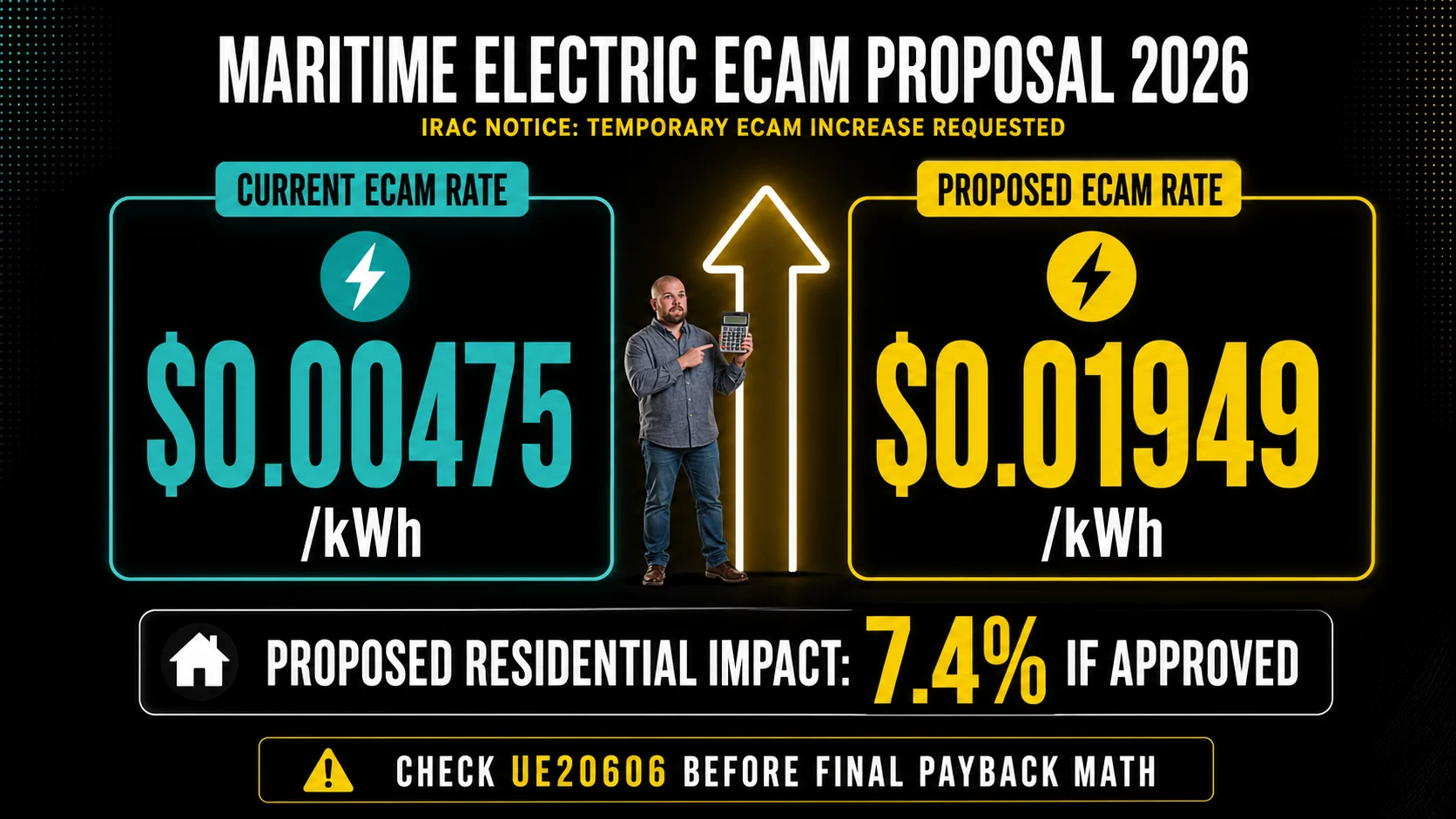
There is also a 2026 rate caveat. IRAC’s UE20606 notice says Maritime Electric requested a temporary ECAM increase from $0.00475/kWh to $0.01949/kWh for March 1, 2026 to February 28, 2027, with a proposed 7.4% residential bill impact if approved. At the time of review on May 28, 2026, the UE20606 docket should be checked before using final rate assumptions. Source: IRAC ECAM notice of application.
That means any “current payback” example should be dated and built from the customer’s bill. Roof angle, shade, panel count, system size, electrical upgrades, financing rate, and your actual kWh use can all move the payback.
If upfront cost is the sticking point, ask about available financing options. SolarEnergies.ca can connect you with certified installers who have completed 14,000+ installs across Canada, and depending on approval and program terms, available installer financing may include 0% financing with $0 down payment. Just do not confuse installer financing with the closed federal Greener Homes Loan.
Permits, Inspections, and Installer Requirements
PEI solar is not just panels on a roof. Solar projects can trigger building, development, electrical, and utility interconnection steps. Your exact permit path depends on location, municipality, roof or ground-mount design, and utility requirements.
PEI’s building and development page says that in almost all cases, both a Development Permit and a Building Permit are required before construction begins. Permit authority depends on the property location. Charlottetown, Stratford, and Summerside issue their own development and building permits. Other municipalities with official plans and land-use bylaws issue development permits, while the provincial Land Division handles building permits. Outside municipal jurisdictions, or in municipalities without those bylaws, the provincial Land Division handles both. Source: Building and Development in PEI.
Electrical work has its own path. PEI’s electrical permit page says permits must be submitted by a licensed electrical contractor. The same page says inspectors need at least 48 hours notice of a completed service, and once approved, the electrical contractor issues a Certificate of Compliance. Source: Apply for an Electrical Permit in PEI.
The net-metering regulations also require code-compliant equipment and a manual load-break disconnect that is lockable, accessible to the utility, and labelled for the net-metering system. Source: PEI Net-Metering System Regulations.
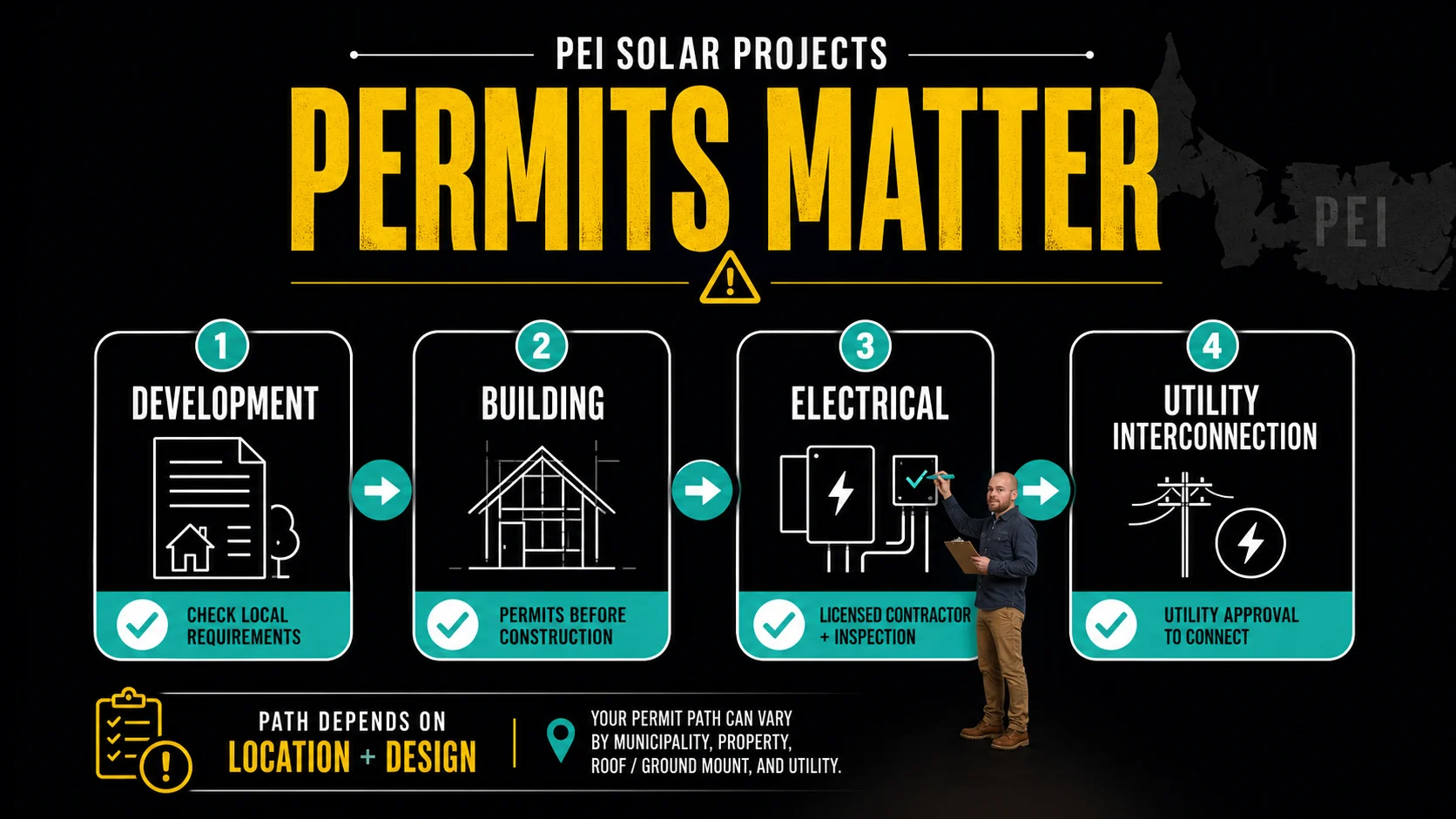
Tip for Charlottetown, Summerside, and rural PEI: ask each installer who handles which permit, what is included in the quote, and whether electrical upgrades are priced as fixed amounts or allowances.
How Much Solar Energy Is Already in PEI?
PEI is still heavily associated with wind, but solar is now visible in the official energy picture.
The province lists two major solar projects over 1 MW: Slemon Park Solar Farm at 10 MW and Summerside Sunbank at 21.6 MW. Together, that is 31.6 MW of listed utility-scale solar capacity. Source: Renewable Energy in Prince Edward Island.
That does not capture every rooftop system. PEI’s Renewable Energy Indicators page says the gauges do not include renewable energy created in net-metering agreements, and the province says there is over 45 MW of net-metered renewable energy. Source: PEI Renewable Energy Indicators.
So the cleaner statement is this: PEI has at least 31.6 MW of listed utility-scale solar, plus more than 45 MW of net-metered renewable energy that is not included in the province’s solar gauges.
Are Solar Panels Worth It in PEI in 2026?
For many PEI homes, farms, and businesses, solar can still be worth it in 2026. The case is just more specific now.
Solar looks strongest when you have high electricity use, a good roof or ground-mount site, limited shade, a long ownership horizon, and a quote that does not depend on a paused rebate. It looks weaker when your bill is small, your roof needs replacement, your service panel needs expensive upgrades, or the payback only works if a closed federal loan is treated as available.
My practical answer is yes, PEI solar is still worth investigating. I would not tell a homeowner to rush in because of a rebate that is not currently open. I would tell them to get a property-specific design, compare at least three quotes, and run the math with and without provincial incentive support.
Before choosing an installer, compare the equipment, warranty, production estimate, net-metering assumptions, financing terms, electrical work, permit handling, and final cash-flow model side by side. The cheapest quote is not always the best deal if it uses weak panels, thin warranties, or outdated incentive assumptions. Our guide on how to compare solar quotes in Canada can help you review the numbers without getting pulled in by the lowest headline price.
You can also use our national solar power incentives Canada guide to compare PEI against other provincial and federal programs.
FAQ
How much do solar panels cost in PEI?
As a planning range, a PEI solar panel system may land around $2.75 to $3.25 per watt before any conditional rebate, but your actual cost depends on system size, roof or ground-mount design, equipment, electrical work, and the installer quote. That puts a 5 kW system around $13,750 to $16,250, an 8 kW system around $22,000 to $26,000, and a 10 kW system around $27,500 to $32,500 before any eligible rebate or financing.
Because PEI’s Solar Electric Rebate Program is paused for new applications, the safest 2026 approach is to compare a no-rebate case against a conditional pre-approved or reopened-rebate case.
Is the PEI Solar Electric Rebate Program open in 2026?
No, not for new applications as of the official April 15, 2026 update reviewed on May 28, 2026. The province says 2026-2027 funding and final program details are still being finalized and applications continue to be paused. Existing efficiencyPEI pre-approval holders can proceed.
Can I still use the Canada Greener Homes Loan for solar panels in PEI?
No, not as a new applicant. NRCan says October 1, 2025 was the last day to apply for the Canada Greener Homes Loan. If you were already approved, your situation may be different, but new 2026 solar buyers should not build their financing plan around that loan.
Does PEI net metering pay me cash for extra solar power?
For typical residential and small commercial systems, PEI net metering is better described as kWh credit banking. When your system produces more than you use in a billing period, the excess becomes a kWh credit that can offset future consumption.
What size solar system can I install under PEI net metering?
PEI law defines a small-capacity renewable energy generator as 100 kW or less, but the section requiring a utility to enter into an agreement uses “less than 100 kW.” Most homes are far below that. If you are planning a farm, commercial, or large ground-mount system near 100 kW, confirm the exact treatment before final design.
Do I need permits for solar panels in PEI?
Yes. Solar projects can trigger building, development, electrical, and utility interconnection steps. Your exact permit path depends on location, municipality, roof or ground-mount design, and utility requirements. PEI confirms most construction projects require both building and development permits, while electrical permits must be handled by licensed electrical contractors.
Should I wait for the PEI rebate to reopen?
Maybe, but do not let the pause stop you from gathering real numbers. A good installer can model your project with no rebate, with a possible future rebate, and with any financing options you qualify for. That gives you a cleaner decision than waiting without knowing whether your roof, usage, and electrical panel are a good fit.
Can batteries or EV chargers be added to a PEI solar project?
Yes, but treat them as electrical-permit and code items, not casual add-ons. PEI’s current homeowner solar rebate page does not show a separate open battery or EV charger solar rebate. For businesses, CRA’s Clean Technology ITC may support fixed-location electrical energy storage if the claimant and property qualify.