Solar Panels in Alberta Cost Guide 2026: Prices, Rebates, Payback + Calculator
August 7, 2025
Solar Panels Manitoba Cost Guide 2026 + Calculator
August 8, 2025Last Updated on May 20, 2026 by Vitaliy
So, you’re thinking about solar panels in Saskatchewan. Good on you. It’s a big step, and you’ve probably got a ton of questions. Is it worth the money? What kind of help can you get? What is the catch? I’m here to walk you through it, friend to friend. This 2026 update keeps the focus where it should be: real installed costs, SaskPower net metering, current incentives, permits, winter performance, and the payback math that actually matters.
Key Takeaways
- Saskatchewan has strong solar potential, but the financial case depends on roof conditions, quote price, self-consumption, and SaskPower’s net metering rules.
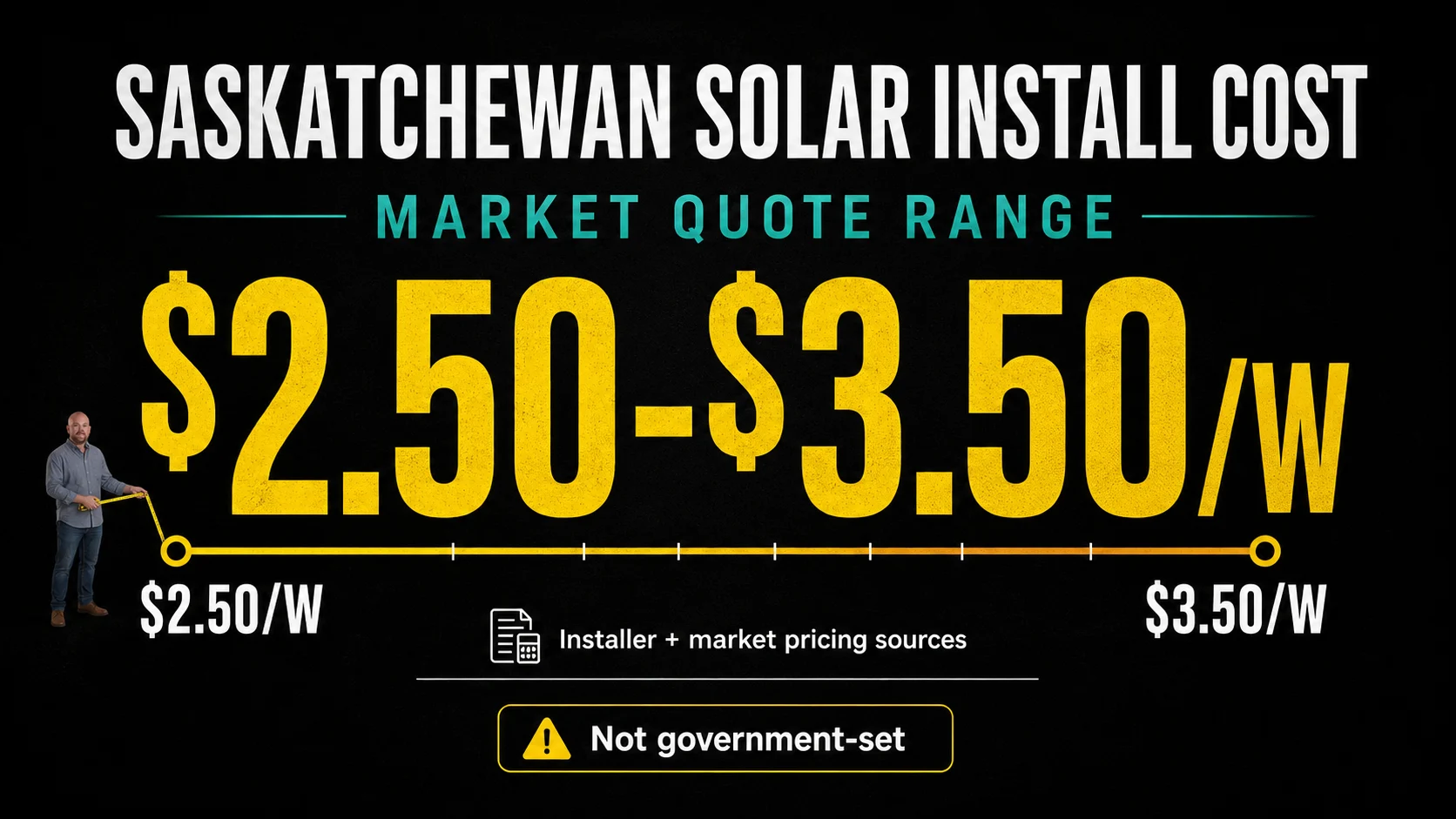
- Many residential systems are quoted around $2.50 to $3.50 per watt installed. That is a market quote range, not a government-set price.
- A 10 kW system often lands around $25,000 to $35,000 before tax effects, local programs, batteries, electrical upgrades, or unusual site work.
- SaskPower’s export credit is lower than the residential energy charge, so solar power used directly in the home is usually worth more than exported power.
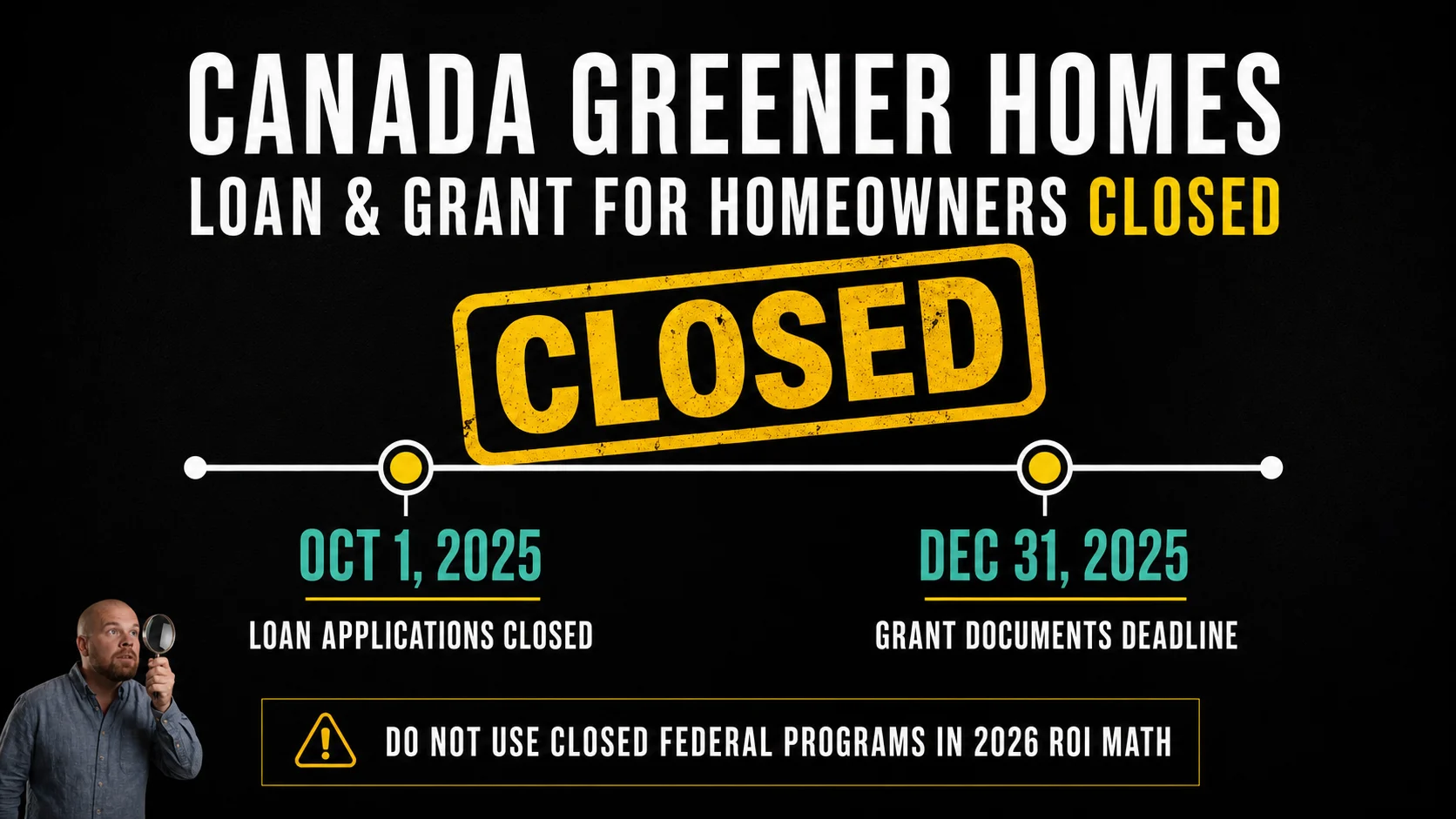
- The Canada Greener Homes Grant and Loan are closed to new homeowner applications, so do not use those programs in 2026 payback math unless you already have an approved file.
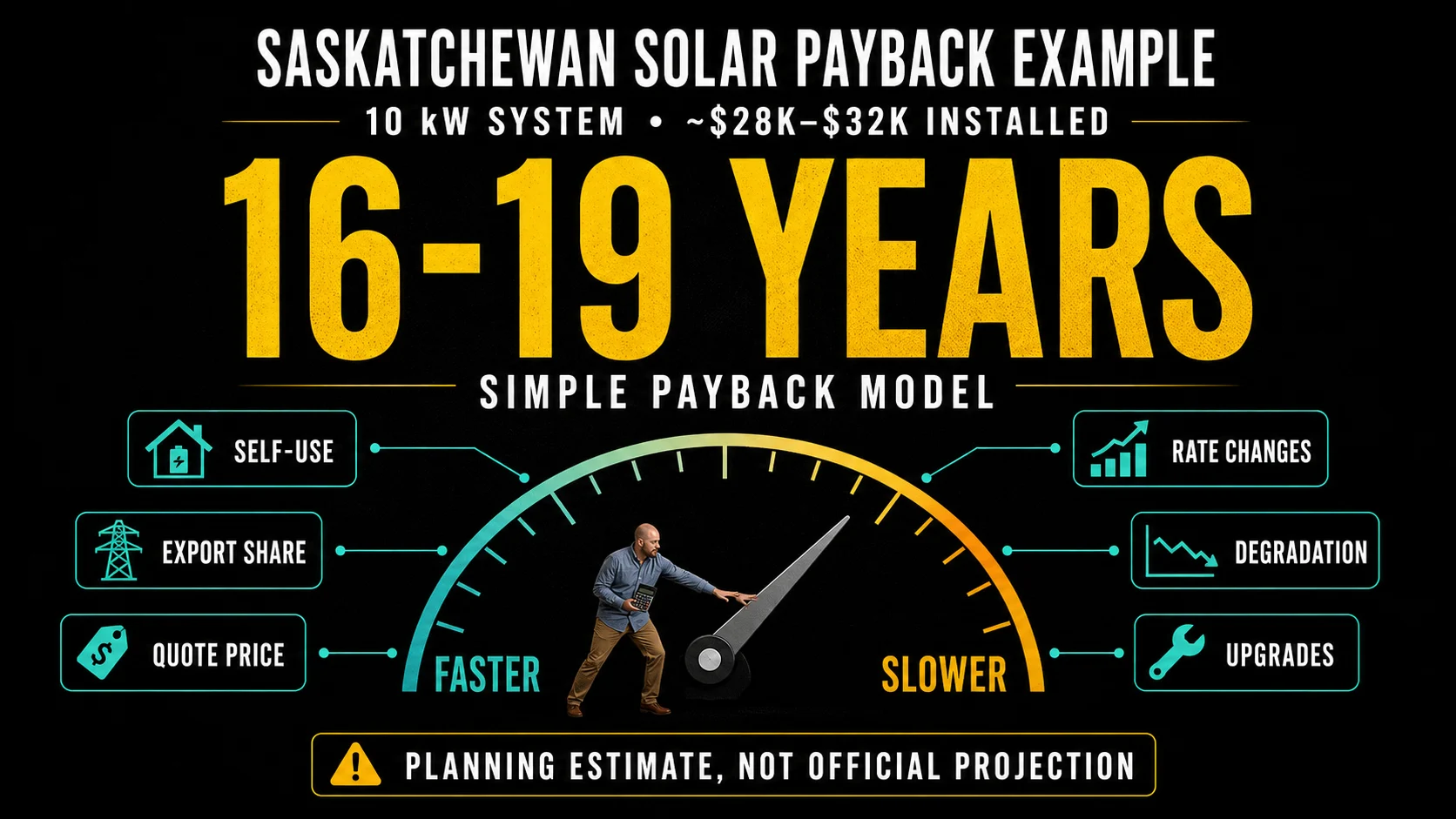
- A simple Saskatchewan payback example often lands around 16 to 19 years, but that is a planning estimate, not an official utility projection.
Why Consider Solar Panels in Saskatchewan?
Saskatchewan gets a fantastic amount of sun, some of the best in Canada. Cities like Regina and Saskatoon are strong solar locations, and Natural Resources Canada’s photovoltaic potential tools are a better source for production estimates than any single installer quote. Tapping into that sunshine means you can produce clean electricity right on your rooftop and reduce how much power you buy from the grid.
That said, Saskatchewan solar is not a simple “install panels and erase the bill” story. The province has good sunlight, but the financial return depends heavily on your installed price, roof design, self-consumption, export credits, and the monthly charges that stay on your bill.
How Does Solar Energy Benefit the Environment?
Let’s be direct: every kilowatt-hour your system produces at home is one less kilowatt-hour you need to buy from the grid. Saskatchewan still relies on fossil-fuel generation for a large share of its electricity, so rooftop solar can be a practical way to reduce your household emissions. It is not magic, but it is real: a well-designed system can quietly produce clean power for 25 years or more.
Overview of Solar Energy Adoption in Canada
Across Canada, solar is moving from niche to normal. Some provinces have richer rebates or higher power prices, which makes the math easier. Saskatchewan’s residential market is more mixed. The sunlight is strong, but the net metering credit is lower than the retail electricity charge, so homeowners need to size systems carefully and use as much of their own solar power as possible.
The Cost of Solar Panels in Saskatchewan
Alright, let’s talk money. This is usually the first question people ask, and for good reason. The upfront cost of a solar panel system is a significant investment.
What is the Average Cost of Solar Panels in 2026?
Based on current installer and market pricing sources, many Saskatchewan residential systems are quoted around $2.50 to $3.50 per watt installed. This is a market quote range, not a Saskatchewan government or federal government-set price.
That range puts a typical residential system in this ballpark before tax effects, local incentives, batteries, trenching, electrical upgrades, or unusual roof work:
| System Size | Estimated Installed Cost |
|---|---|
| 5 kW | $12,500 to $17,500 |
| 8 kW | $20,000 to $28,000 |
| 10 kW | $25,000 to $35,000 |
| 12 kW | $30,000 to $42,000 |
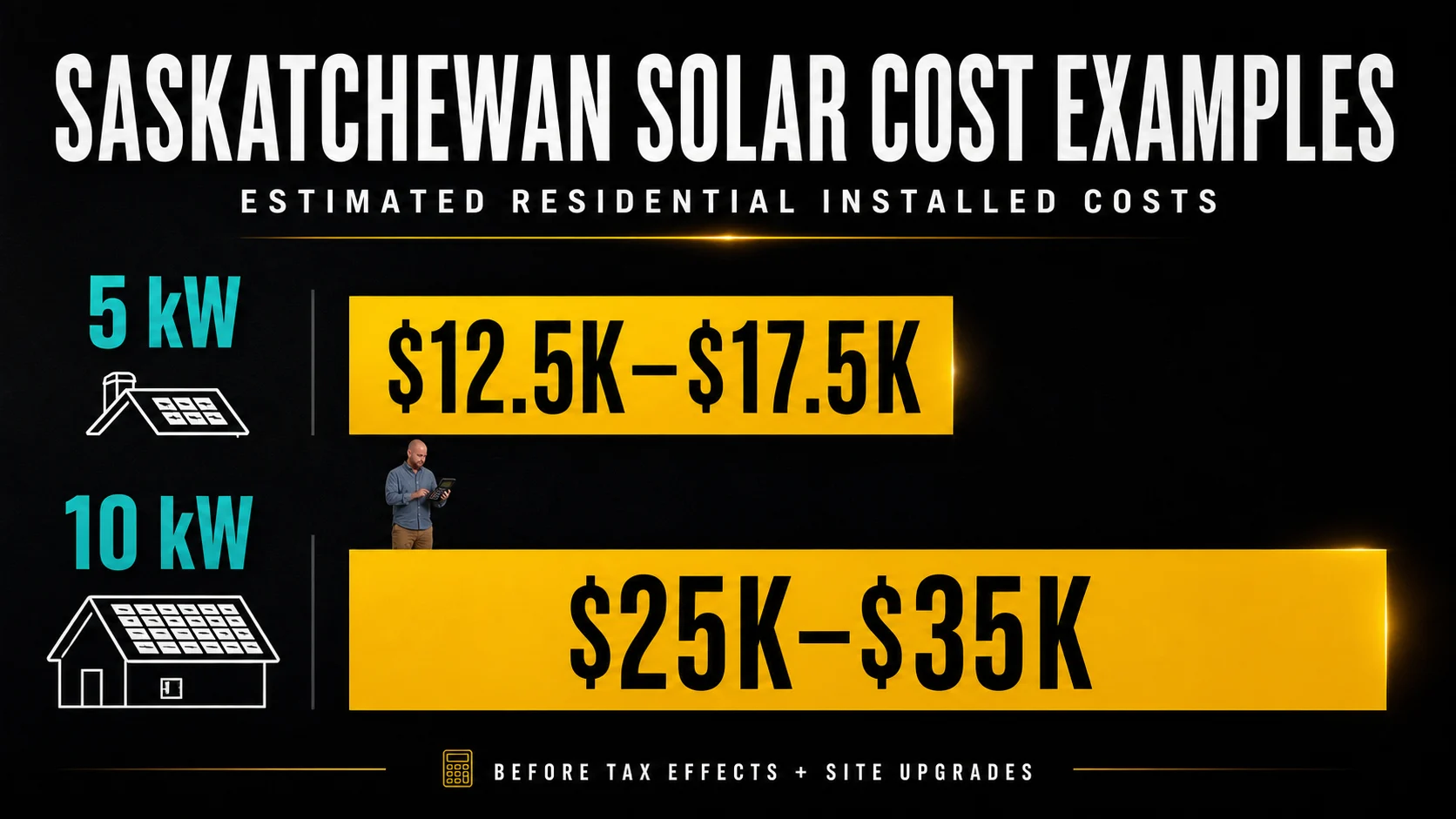
A 10 kW Saskatchewan system is often the size people use for back-of-the-napkin planning. For production, use NRCan’s photovoltaic potential map or a site-specific solar model before making final decisions. A good unshaded southern Saskatchewan roof can often land around the low-13,000 kWh/year range for a 10 kW system, but roof tilt, azimuth, snow, inverter losses, and shading can change the number.
How Do Costs Vary Across Saskatchewan?
The cost does not usually change dramatically between Regina, Saskatoon, Prince Albert, Moose Jaw, or smaller communities. The bigger swing is the house itself. A clean south-facing roof with easy electrical access is cheaper to work on than a steep, cut-up roof that needs structural work, a service upgrade, or long conduit runs.
What Factors Influence the Price of Solar Panels?
Several things determine the final price tag for your solar installation:
- System size: The more power you need, the more panels and inverter capacity you will install.
- Equipment quality: Higher-efficiency panels, premium inverters, monitoring, and stronger warranties usually cost more.
- Roof complexity: A simple roof is easier. A steep roof, multiple roof faces, shading, or aging shingles can add cost.
- Electrical work: Some homes need panel upgrades, trenching, disconnects, or utility-side changes before solar can be connected.
- Installer pricing: Different companies use different equipment, labour assumptions, and warranty structures. Get more than one quote.
Financial Incentives and Rebates
This is where the 2026 update matters. A lot of older solar articles still lean on federal programs that are no longer open to new applicants.
What Government Programs are Available?
The big federal update is this: the Canada Greener Homes Grant and Loan are closed to new homeowner applications. Do not use those closed federal programs in 2026 ROI math unless you already have an approved file and are confirming your own deadline.
Locally, Saskatoon homeowners should still check the City of Saskatoon’s Home Energy Loan Program. HELP can make eligible upgrades easier to finance, but interest rates, intake windows, and eligible measures can change, so treat the City page as the source before building your final budget.
Are There Any Tax Credits for Solar Installation?
Yes, but the number needs to be current. Saskatchewan’s Home Renovation Tax Credit allows eligible renovation expenses to be claimed at 10.5%. For 2025 and subsequent years, the province lists a maximum of $4,000 in eligible expenses per year, which means the maximum annual provincial tax reduction is $420. It is helpful, but it is not a major solar rebate.
Net Metering in Saskatchewan
Understanding net metering is crucial because it directly affects your savings.
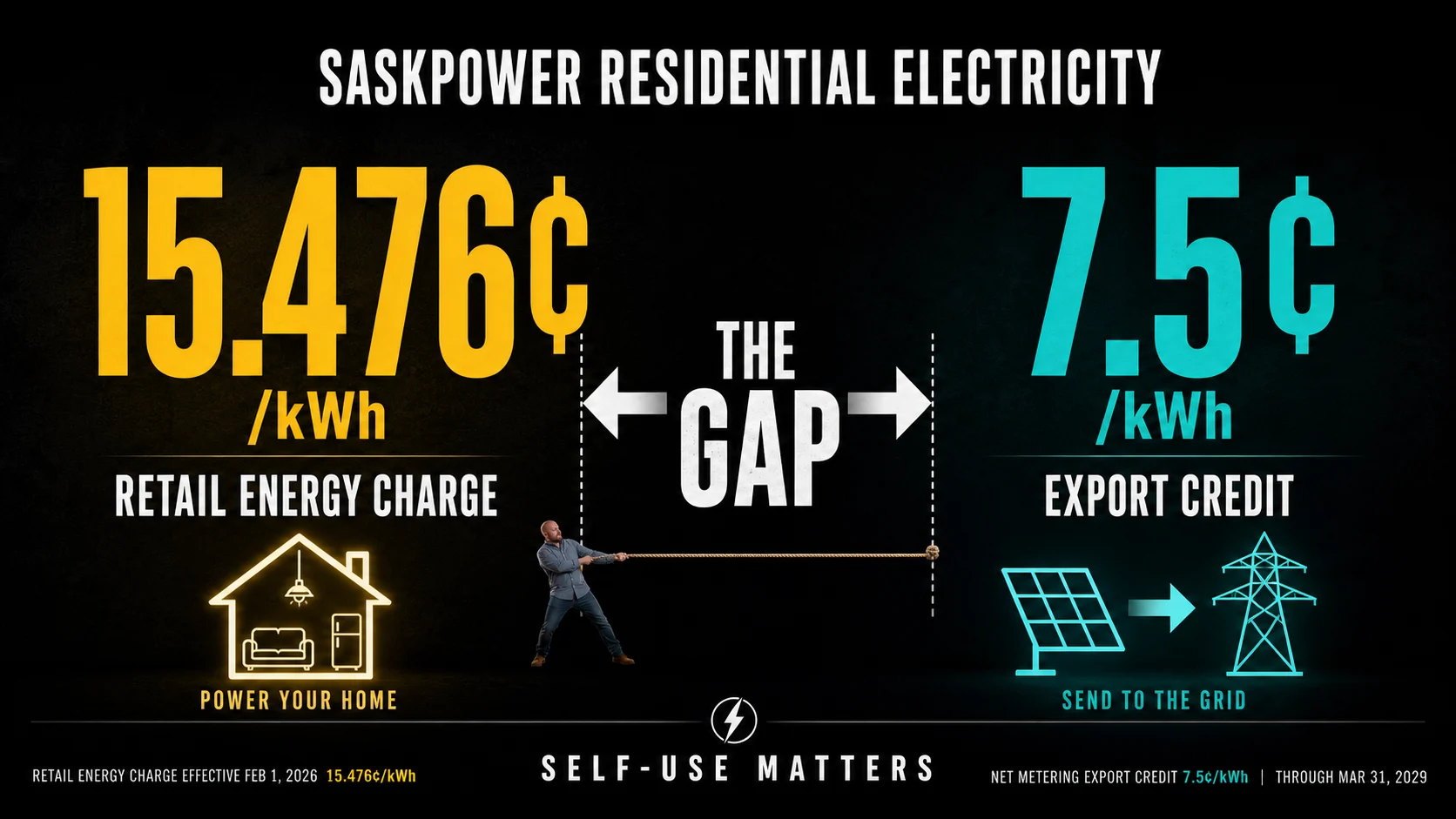
When your solar panels produce more electricity than you are using at that moment, the excess energy is sent back to the grid. SaskPower tracks this through a bi-directional meter. The important part is the rate difference: SaskPower’s residential energy charge is listed at 15.476 cents/kWh, while the net metering excess energy credit is 7.5 cents/kWh through March 31, 2029.
That gap is the single biggest challenge for the financial return of residential solar in Saskatchewan. Power you use directly in your home is worth more than power you export.
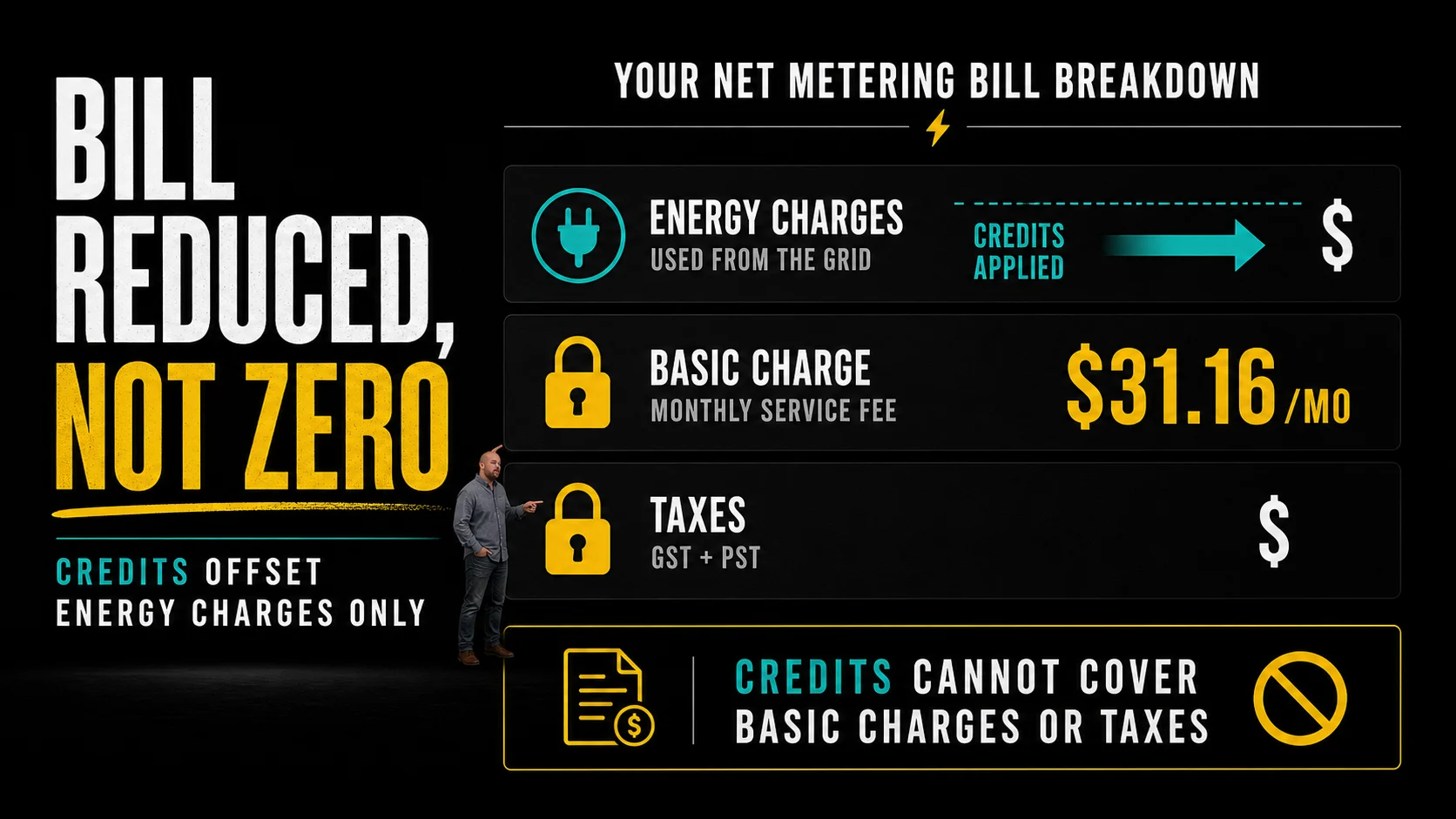
Also, net metering can reduce your bill, but it will not eliminate it. SaskPower credits cannot cover taxes or the basic monthly charge. That is why a solar proposal promising a $0 SaskPower bill should make you slow down and ask for the actual bill model.
How Can Homeowners Maximize Their Savings?
Because of the lower export credit, the best strategy is to use as much of your own solar power as possible.
- Shift your load: Run the dishwasher, dryer, EV charging, and other flexible loads during sunny hours when you can.
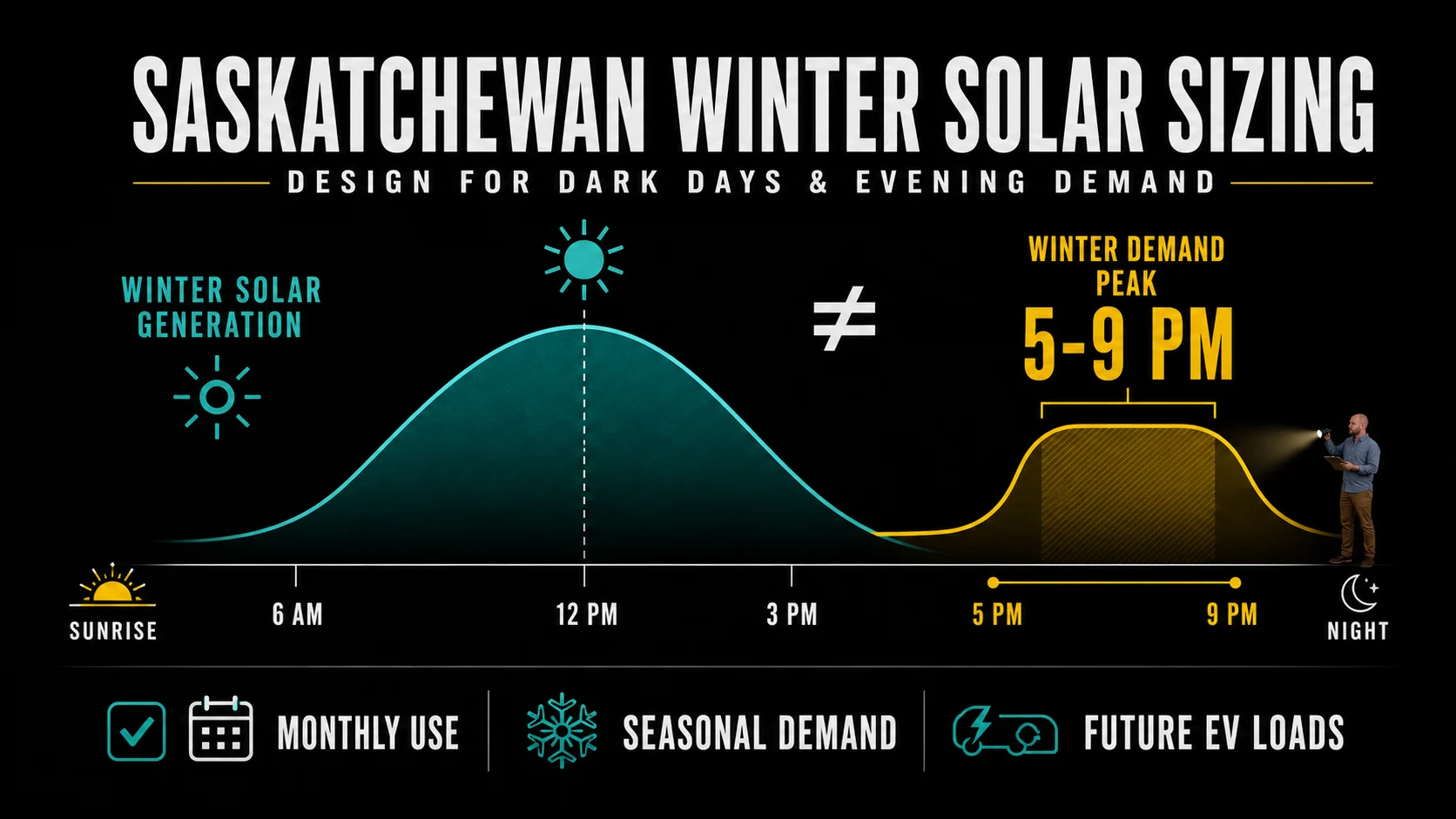
- Size for your real usage: SaskPower recommends tracking monthly power use and considering time of day, seasonal use, and future loads such as EVs before sizing a system.
- Consider batteries carefully: A battery can increase self-use and backup value, but it adds cost. If you are comparing batteries, this leasing versus buying solar panels guide can help you think through ownership and financing tradeoffs.
Installation Process and Considerations
Choosing the right people for the job is just as important as choosing the right equipment.
How to Choose a Reliable Solar Installer?
Do not just go with the cheapest quote. A solar installation is a 25-year investment.
- Check licensing and experience: Ask who designs the system, who pulls permits, and who is responsible if the utility asks for changes.
- Read reviews: Look for patterns in reviews, not just star ratings. Slow service after installation is a real issue with some contractors.
- Get multiple quotes: Get at least three quotes so you can compare equipment, production estimates, warranties, and assumptions.
- Ask about warranties: You should understand the panel warranty, inverter warranty, racking warranty, and workmanship warranty.
I remember helping a friend in Regina a couple of years back. He got a quote that was way cheaper than the others. It turned out the company was using low-quality panels with a weak warranty and was vague about permits. We dodged a bullet there. A good installer will walk you through everything and will not pressure you.
What to Expect During the Installation Process?
A typical residential solar installation takes only a few days on site, but the full process takes longer because design, approvals, utility paperwork, and inspections happen before and after the crew shows up.
- Site assessment and design: The installer confirms roof layout, shading, electrical capacity, and production assumptions.
- Permits and utility application: Your project may need municipal building permits, electrical permits, and a SaskPower or Saskatoon Light & Power interconnection review.
- Installation: The crew installs racking, panels, wiring, inverter equipment, labels, and disconnects.
- Inspection: Electrical work must meet code, and TSASK has specific solar installation requirements that installers should already understand.
- Commissioning: Once approvals are complete, the system is energized and monitoring is set up.
What Maintenance is Required for Solar Panels?
Solar panels are low-maintenance. They have no moving parts. In Saskatchewan, rain and snow often do most of the cleaning, though heavy snow cover can temporarily stop production. It is still worth checking monitoring, watching for unusual production drops, and having the system inspected if something looks off. This guide on what to do if your solar panels underperform is a useful next read.
Return on Investment for Solar Panels
This is the bottom line: when will your solar panel system pay for itself?
How Long Until You See a Return on Investment?
With current net metering rates and no major province-wide solar rebate, Saskatchewan payback is usually longer than in the best rebate provinces. For a 10 kW system, a simple planning example often lands around 16 to 19 years, depending on the installed price, annual production, self-consumption, export share, tax treatment, rate changes, degradation, and whether electrical upgrades are needed.
These are simple planning examples, not official utility projections. A business that uses more power during the day may see a better return than a home that exports most of its mid-day solar.
What is the Lifespan of a Solar Panel?
Your solar panels are usually warranted for 25 to 30 years. They degrade slowly over time, but a good system should still be producing useful power long after the simple payback period. Inverters may need replacement earlier than the panels, so include that in long-term planning.
How Can You Calculate Your Energy Savings?
Here is a simplified way to look at it:
- Find your annual kWh use from your SaskPower bills.
- Estimate annual production with NRCan’s PV potential map or a site-specific model.
- Estimate how much solar you will use directly in the home.
- Value direct solar use at the retail energy rate.
- Value exported solar at the net metering credit rate.
- Subtract costs that remain on the bill, including basic monthly charges and taxes.
Challenges and Considerations
It is not all sunshine and savings. There are some real challenges to going solar in Saskatchewan.
What are the Common Challenges with Solar Panels?
- The net metering rate: The export credit is lower than the retail rate, so self-use matters.
- Upfront cost: Even with financing, solar is still a large home investment.
- Winter timing: SaskPower notes that dark, snowy winters can affect solar generation, while winter demand often peaks between 5 p.m. and 9 p.m.
- Interconnection and upgrades: Some projects need added utility review or electrical upgrades before approval.
How Does Weather Affect Solar Panel Efficiency?
Solar panels work on light, not heat. Cool sunny weather can actually be good for panel efficiency. The real winter issue is shorter days, lower sun angles, snow cover, and the fact that household demand can peak after the sun is down. That does not make solar useless in winter; it just means sizing and bill modelling need to be honest. For more background, read this explanation of how solar panels work on cloudy days in Canada.
Are There any Zoning Laws or Restrictions?
Usually, residential rooftop solar is allowed, but you still need the proper permits and utility approval. Requirements can differ between Regina, Saskatoon, rural municipalities, and local utilities. If you live in a condo, heritage property, or community with design controls, check those rules before signing a contract.
Future of Solar Energy in Saskatchewan
So, what is next for solar in the province?
What are the Emerging Trends in Solar Technology?
The technology keeps improving. Higher-efficiency panels, better monitoring, stronger racking, and more battery options are becoming common. Bifacial panels can also make sense for some ground-mount systems where reflected light helps production.
How is the Market for Solar Panels Expected to Grow?
Saskatchewan’s residential solar market will likely keep moving, but not every year will feel like a boom. The best projects will be the ones designed around real household usage, fair quote pricing, and the current utility rules instead of outdated rebate assumptions.
What Role Will Solar Energy Play in Saskatchewan’s Energy Future?
Solar will be one piece of the puzzle. Large solar farms, commercial systems, and individual rooftop systems can all help Saskatchewan reduce emissions and add more local electricity generation. For homeowners, the best reason to go solar in 2026 is still practical: long-term energy control, cleaner power, and a system that fits the way your home actually uses electricity.
Conclusion
So, let’s bring it all together.
Is Investing in Solar Panels Worth It in 2026?
So, is solar worth it in Saskatchewan in 2026? Here is my honest take:
- It is a tough sell if… you want a quick financial win, your roof is shaded, your quote is high, or most of your solar will be exported at the lower credit rate.
- It is worth considering if… you have a strong roof, good sun, fair pricing, a long-term plan to stay in the home, and enough daytime usage to make self-consumption meaningful.
Best Case Scenario
The best-case scenario for going solar in Saskatchewan looks like this:
- You have a simple, unshaded roof with strong southern or southwest exposure.
- Your installed price is close to the lower end of the current market range.
- You can shift a meaningful amount of electricity use into daylight hours.
- You understand that net metering reduces the bill but does not erase every line on it.
- You plan to stay in the home long enough for the long-term savings to matter.
What Steps Can You Take to Get Started?
- Analyze your power bill: Look at annual kWh, monthly swings, and when you use the most power.
- Check your roof: Age, shading, direction, and available space matter.
- Confirm current programs: Check SaskPower, your municipality, and any local financing program before counting incentives.
- Get quotes: Contact at least three installers and compare assumptions, not just price.
- Ask for the bill model: Make sure direct use, exported power, basic charges, taxes, and winter production are all shown clearly.
Making the switch to solar is a big call, but it can still be a good long-term investment when the numbers are honest. I hope this guide cuts through the noise and gives you the clear information you need to make the right decision for your home.
-Vitaliy Lano, SolarEnergies.ca Canada goes Solar