Leasing vs Buying Solar panels In Canada Practical Guide
October 3, 2025
Churches Going Solar in BC, Canada: A Practical How-To Guide
October 10, 2025Last Updated on June 23, 2026 by Vitaliy
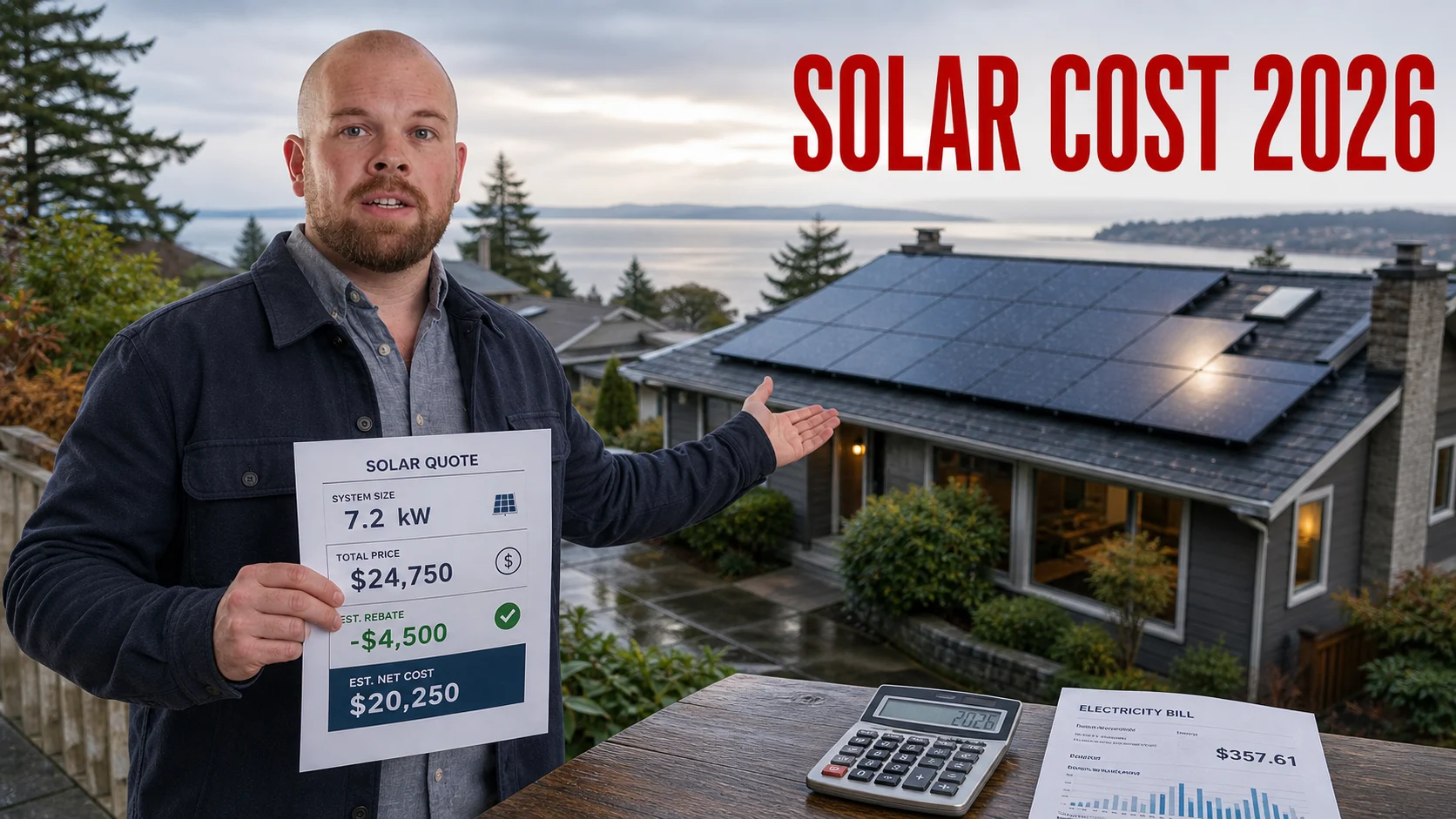
If you are trying to figure out solar panel cost in Victoria BC, start with the calculator below. Then use the guide under it to sanity-check the number before you talk to an installer.
That order matters.
A calculator gives you a fast first estimate. But your final solar quote depends on your roof, your BC Hydro usage, your electrical panel, the equipment you choose, the installer you hire, and whether your project qualifies for 2026 rebates.
In Victoria, the biggest mistake is not asking, "How cheap can I get solar?" It is asking the wrong version of that question. The better question is:
Can this system lower my lifetime electricity cost without creating a bad roof, financing, or rebate problem?
Key Takeaways
- Based on current installer-style planning ranges, many residential solar quotes in Victoria may land around $2.50 to $3.50 per watt before rebates, but final pricing depends on roof complexity, electrical work, equipment, and contractor pricing.
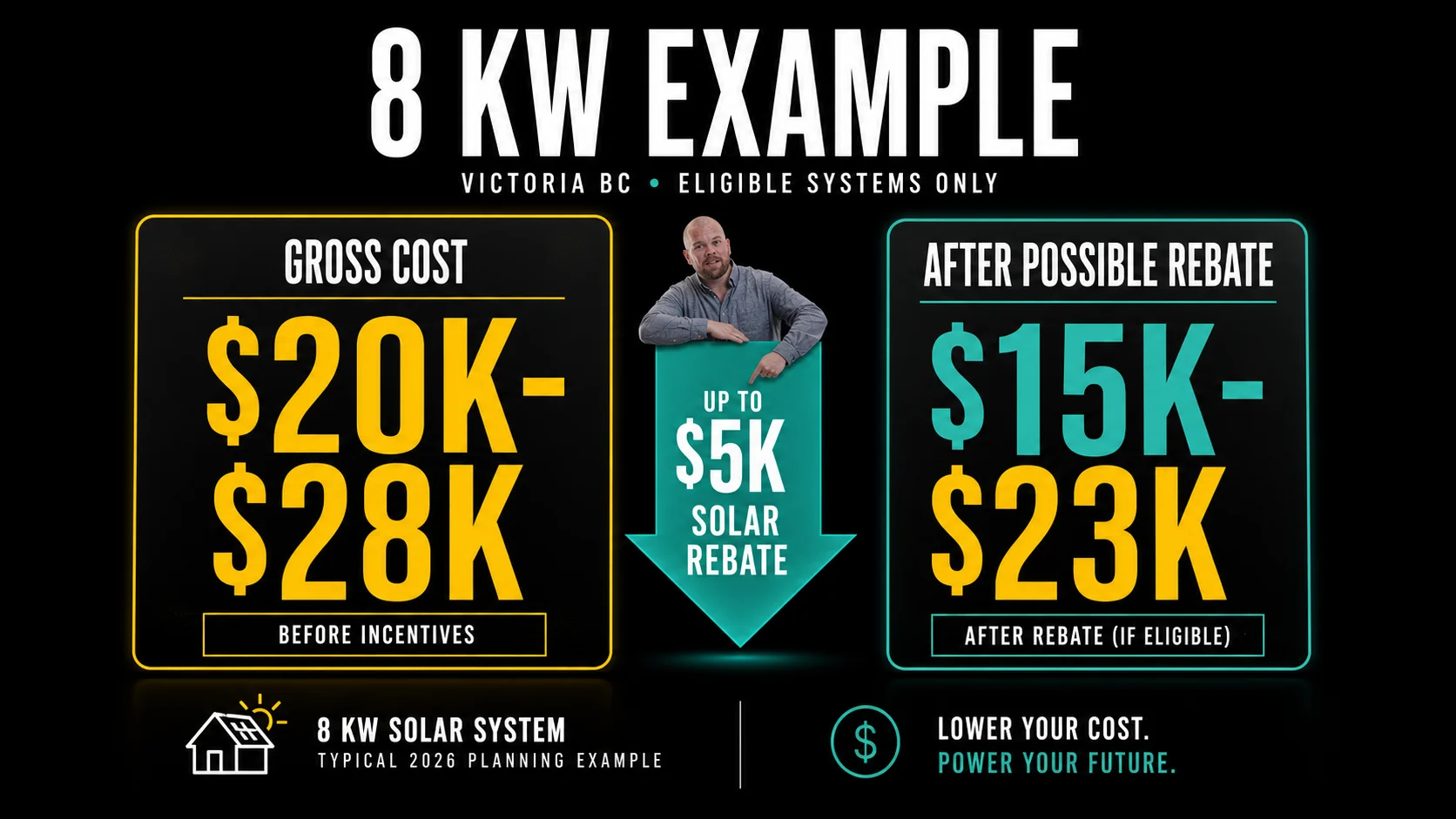
- An 8 kW system may fall around $20,000 to $28,000 before incentives in quote-planning examples. A simple roof can come in lower; a complex roof or electrical upgrade can push the project higher.
- BC Hydro still offers up to $5,000 for eligible grid-connected solar panels, but the system must meet BC Hydro requirements and, beginning June 1, 2026, must be installed by an HPCN member to qualify for rebates.
- Battery rebates changed in 2026. A battery paired with solar may only qualify for up to $1,500 unless it is enrolled in BC Hydro's Peak Saver program, where eligible systems may qualify for up to $5,000.
- The federal Greener Homes Grant and Greener Homes Loan are not available as new 2026 offers for a Victoria homeowner starting today.
- BC Hydro's self-generation rules change on July 1, 2026. Under the new rate, exported excess generation is purchased at $0.10/kWh, so system sizing and self-consumption matter more than ever.
The Real Cost of a Solar System in Victoria
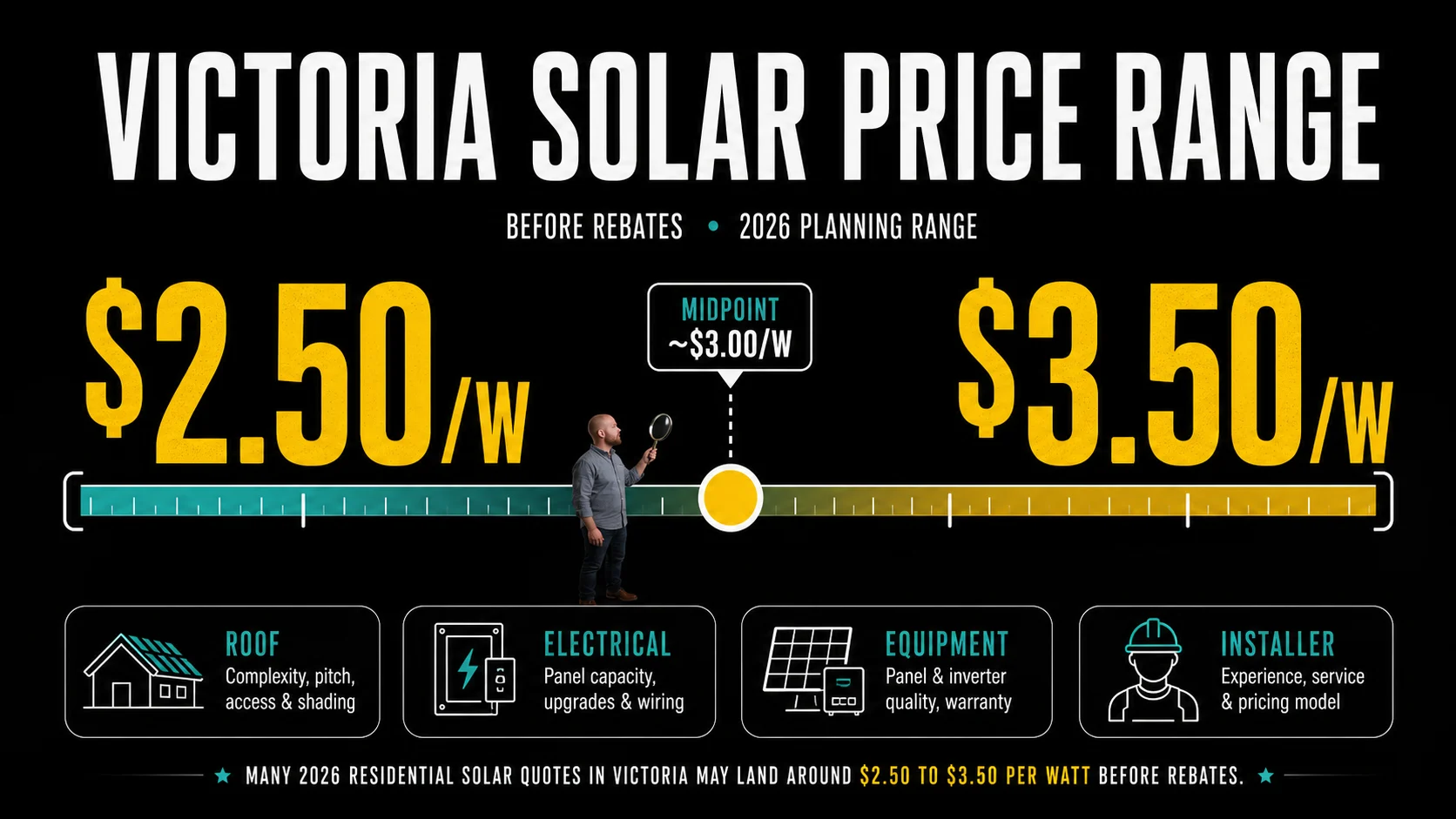
The price of a solar panel installation depends mainly on the size of the system, which is based on your home's electricity use. A small efficient home may only need 5 kW to 7 kW. A larger home with electric heat, a heat pump, an EV charger, or a hot tub may need 10 kW to 12 kW or more.
For most Victoria homeowners, a realistic quote-based 2026 planning range is:
| System Size | Best Fit | Estimated Gross Cost Before Rebates |
| 5 kW | Smaller home or low electricity use | $12,500 – $17,500 |
| 8 kW | Average family home | $20,000 – $28,000 |
| 10 kW | Larger home or higher BC Hydro usage | $25,000 – $35,000 |
| 12 kW | Large home, EV, heat pump, higher annual use | $30,000 – $42,000 |
These are planning numbers, not official government benchmarks or promises. Your quote can change fast if you need a main electrical panel upgrade, trenching, roof repairs, premium panels, microinverters, or battery backup.
If you want a fast first check, use the SolarEnergies.ca calculator above before you book quotes. It helps you see whether the project is even worth a serious conversation.
Where The Money Goes
Here is a simple cost breakdown for an 8 kW solar panel system in Victoria.
| System Component | Estimated Cost For 8 kW System |
| Solar panels | $5,000 – $7,000 |
| Inverter or microinverters | $2,000 – $3,500 |
| Racking and mounting | $2,000 – $3,000 |
| Labour and installation | $6,000 – $8,500 |
| Permits, design, electrical inspection, utility paperwork | $800 – $2,000 |
| Wiring, disconnects, monitoring, miscellaneous electrical work | $3,000 – $5,000 |
The panels are only one part of the cost. A clean, safe solar installation also needs proper roof attachments, electrical work, utility interconnection, monitoring, and paperwork. This is why a suspiciously cheap quote should make you pause.
BC Hydro Solar Rebates in Victoria in 2026
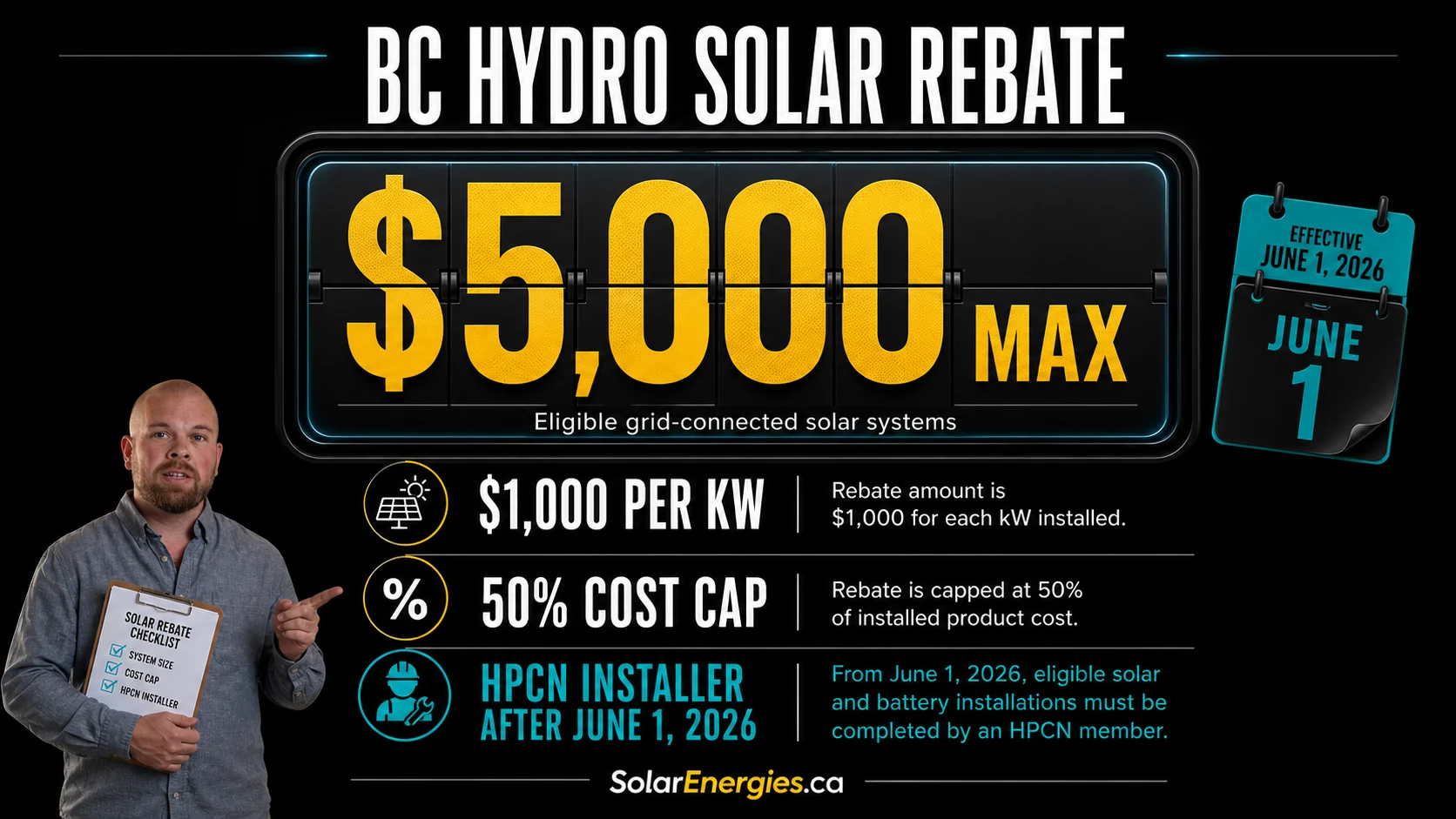
The main solar rebate for Victoria homeowners is BC Hydro's rebate for eligible grid-connected solar panels.
As of May 2026, BC Hydro lists the residential solar panel rebate as:
- $1,000 per kW of installed generator capacity
- Capped at 50% of total installed product cost
- Maximum solar rebate of $5,000
So if you install a 5 kW or larger eligible solar PV system, you may be able to qualify for the full $5,000 solar rebate. But do not buy equipment first and hope to claim the rebate later. BC Hydro requires the project to go through the correct approval process.
The New HPCN Rule
This is one of the biggest 2026 changes.
Beginning June 1, 2026, BC Hydro says solar and battery installations must be completed by a Home Performance Contractor Network (HPCN) member to be eligible for rebates.
That means your installer choice now affects more than workmanship. It can affect whether your rebate survives.
Tip for homeowners: Before you sign a contract, ask the installer directly:
- Are you an HPCN member for solar and battery rebate eligibility?
- Will you handle the BC Hydro self-generation application?
- Will you handle rebate pre-approval before equipment is purchased?
- Will the exact equipment in my quote qualify?
Get the answers in writing.
Battery Rebates Changed in 2026
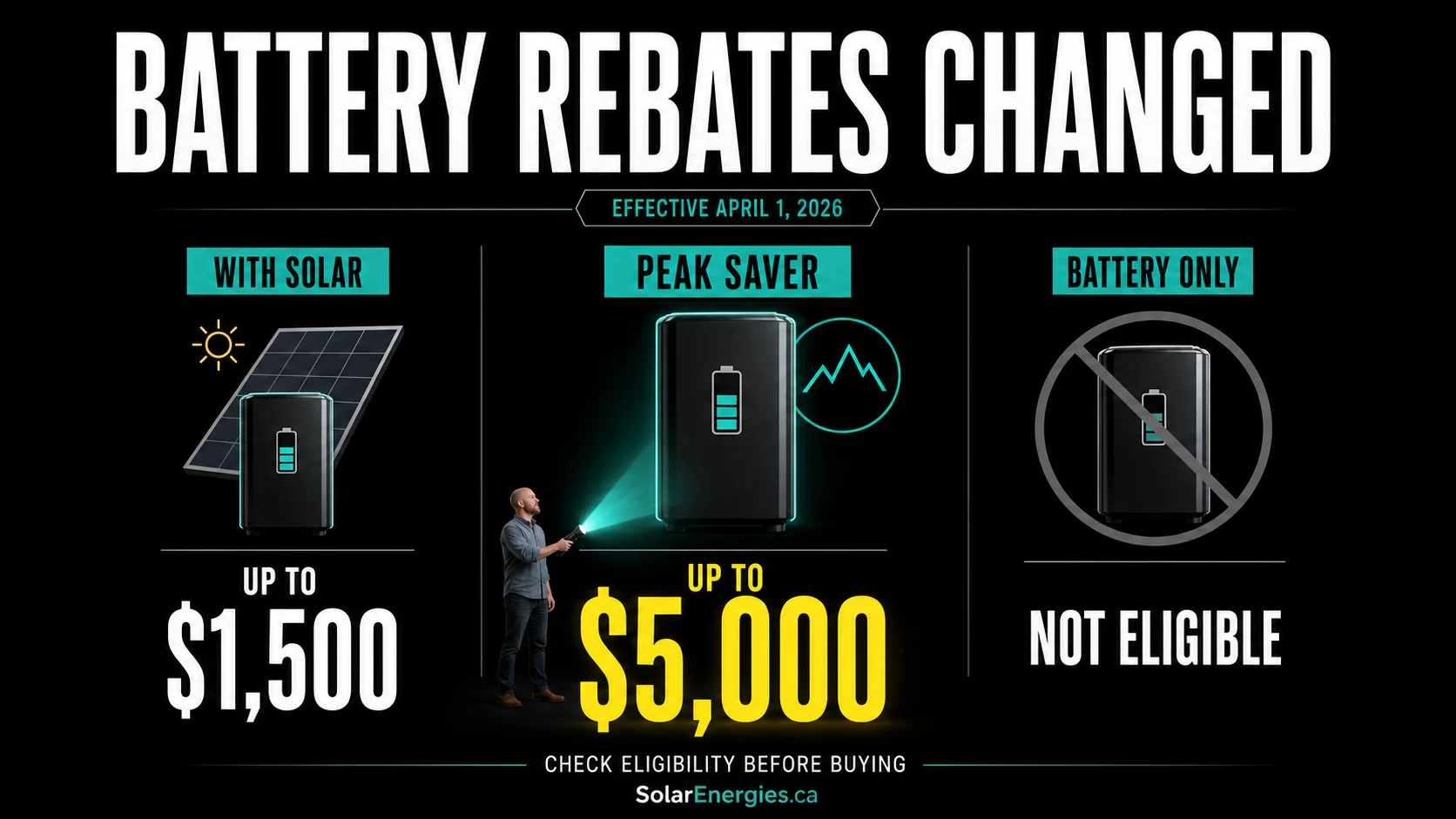
Older solar articles often say BC Hydro offers an extra $5,000 battery rebate. That used to be a simple way to explain it, but it is no longer precise enough.
BC Hydro changed battery rebate amounts effective April 1, 2026:
| Battery Setup | 2026 Rebate |
| Battery paired with solar | Up to $1,500 |
| Battery enrolled in Peak Saver, with or without solar | Up to $5,000 |
| Battery only, not enrolled in Peak Saver | Not eligible |
This matters because a battery can add a large cost to your project. In Victoria, a battery may make sense if backup power is important to you, especially during outages. But if you are buying only for payback, the numbers need to be checked carefully.
Solar panels lower your bill. Batteries mostly add backup power and control. They can improve self-consumption, but they are not automatically a better investment than a well-sized solar-only system.
BC Hydro Self-Generation: What Changed in 2026
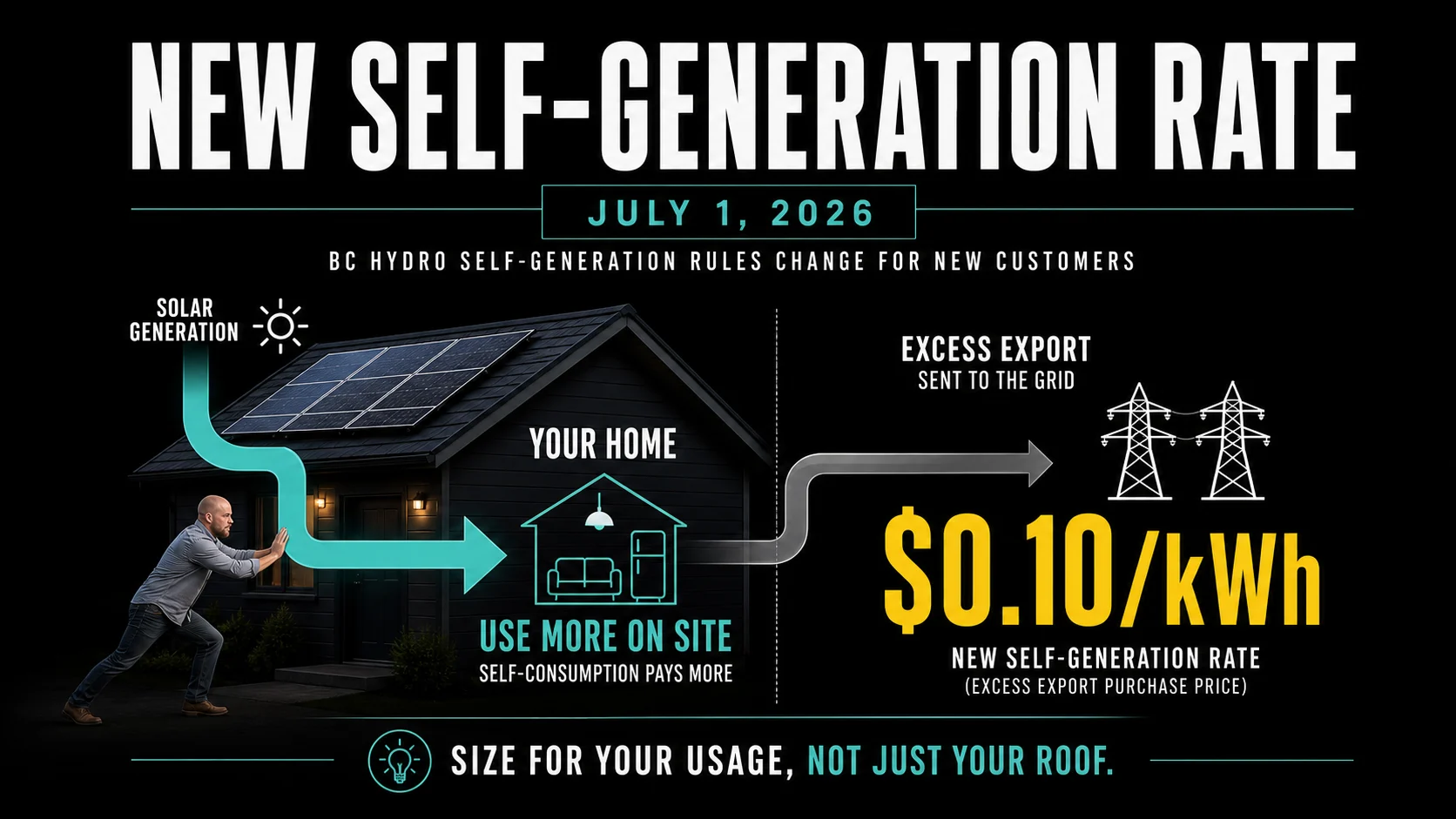
Under BC Hydro's old net metering structure, exported solar generation could be banked as kWh credits and used later to offset billed consumption.
That changes for new customers on July 1, 2026.
BC Hydro is closing the old net metering service rate, Rate Schedule 1289, to new customers and introducing the new self-generation service rate, Rate Schedule 2289. Under the new rate, BC Hydro purchases excess exported energy at $0.10/kWh, with compensation each billing cycle.
What does this mean in plain English?
It means you should not oversize your system just to export a lot of extra solar. The best design is usually the one that offsets your own annual use and improves self-consumption, especially if you have an EV, heat pump, daytime loads, or battery strategy.
Your BC Hydro rate choice also matters. Residential customers can choose between tiered and flat rates, and both can be combined with optional time-of-day pricing. That means solar payback should be checked against your actual rate plan, not a generic electricity price.
If you already have BC Hydro net metering, or if you accepted a solar rebate before the March 24, 2026 BCUC decision, the transition rules can be more complicated. BC Hydro has a solar rebate repayment process for some customers who want to stay on the old net metering rate for up to 10 years from their original start date.
For a new Victoria homeowner starting now, assume the 2026 self-generation rules matter.
Practical Examples of Solar Costs in Victoria
Here are three simple scenarios using 2026-style assumptions. These are not quotes. They are examples to help you compare the math.
1. Smaller Home
- Annual consumption: 7,000 kWh
- Recommended system size: about 6 kW to 7 kW
- Estimated gross cost: $17,000 – $24,500
- Possible BC Hydro solar rebate: up to $5,000
- Estimated net cost after solar rebate: $12,000 – $19,500
This can work well if your roof is simple and you plan to stay in the home long enough to benefit from the savings.
2. Average Family Home
- Annual consumption: 10,000 kWh
- Recommended system size: about 8 kW to 10 kW
- Estimated gross cost: $20,000 – $35,000
- Possible BC Hydro solar rebate: up to $5,000
- Estimated net cost after solar rebate: $15,000 – $30,000
This is the most common range I see homeowners asking about. The biggest variables are roof shape, shading, equipment choice, and whether the electrical panel needs work.
3. Larger Home With EV Or Heat Pump
- Annual consumption: 15,000 kWh
- Recommended system size: about 12 kW or larger
- Estimated gross cost: $30,000 – $42,000+
- Possible BC Hydro solar rebate: up to $5,000
- Estimated net cost after solar rebate: $25,000 – $37,000+
This is where solar can make a lot of sense, because higher electricity use gives the system more bill to offset. But the design has to be careful under the new self-generation rules. Bigger is not always better if you are exporting too much power at a lower rate.
Does Victoria Get Enough Sun for Solar?
Yes, Victoria can work for solar.
The old myth is that solar only works in hot, sunny places. That is not true. Solar panels produce electricity from light, not heat. Cool sunny days can be excellent for production because panels often perform better in cooler temperatures.
Victoria does have cloudy months, especially in winter. Production will be lower in November, December, and January. But long spring and summer days can still produce strong annual output, especially on a south-facing or good east/west roof.
What matters most is not the city's weather in general. It is your roof:
- Is it shaded by trees?
- Does it face south, east, or west?
- Is the roof old or moss-covered?
- Is there enough usable space?
- Can your electrical panel handle the system?
A good installer should model this with your real roof, your actual BC Hydro usage, and the permits your project needs. If they only give you a generic production number, ask for a better quote.
Victoria Roof Issues: Moss, Salt Air and Older Homes
Victoria has a few local details that matter for solar.
First, roof condition. If your shingles only have five to seven years left, deal with the roof before installing solar. Removing and reinstalling panels later can be expensive.
Second, moss. Victoria's damp climate can be rough on roofs. Moss does not mean you cannot install solar, but it does mean the roof should be assessed and cleaned properly before the racking goes on.
Third, salt air. If you are near the water in Victoria, Oak Bay, Esquimalt, Sidney, Saanich, or the Gulf Islands, ask about racking and hardware. You want corrosion-resistant mounting, properly sealed electrical components, and an installer who understands coastal conditions.
Fourth, older electrical panels. Some Victoria homes may need electrical upgrades before solar can be connected. That cost should be shown clearly in your quote, not buried in vague wording.
In Victoria, all PV solar installations require an electrical permit. A building permit may not be required for certain roof-mounted solar projects if the system meets the City's load, attachment, manufacturer-instruction, and height conditions. If the project falls outside those limits, a building permit is required.
Financing: Can You Still Get 0% Or $0 Down Solar?
The federal Greener Homes Loan is no longer something a new 2026 reader should count on. That means financing has shifted back to installer programs, HELOCs, credit unions, bank loans, and other private options.
Some available financing options may include 0% financing with $0 down, depending on approval and program terms. Just be careful with the wording.
Zero interest does not always mean the cheapest total price. Sometimes the finance cost is built into the contract price. Ask for two numbers:
- The cash price.
- The financed price, including all fees and the full repayment schedule.
Then compare the monthly payment against your expected bill savings. If the payment is lower than your savings and the total system price is fair, financing can make sense. If the quote is inflated to make the monthly payment look good, walk away.
How To Compare Solar Quotes in Victoria
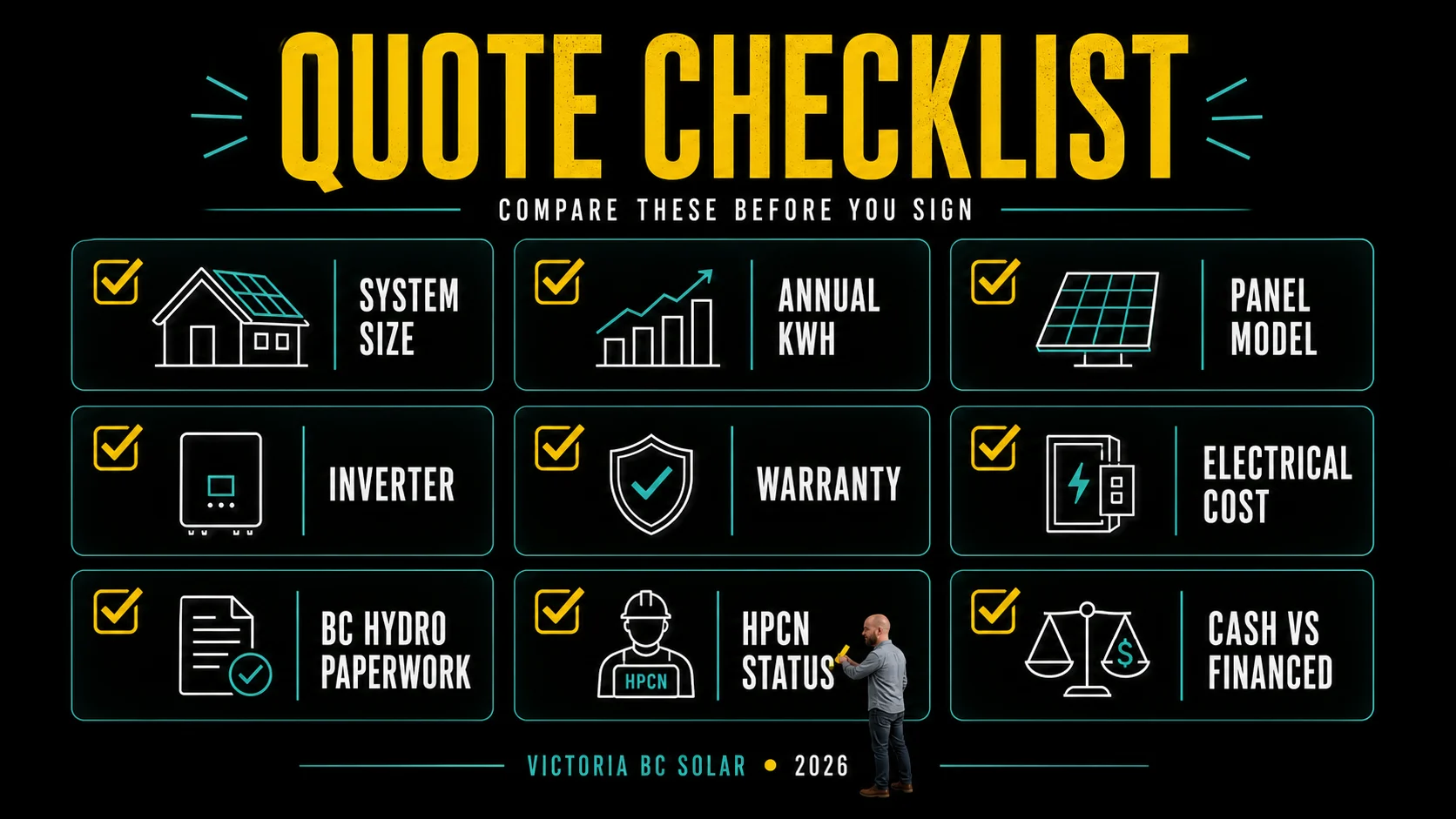
Before choosing an installer, compare at least three detailed quotes. Do not compare only the final price.
Compare:
- System size in kW
- Estimated annual production in kWh
- Solar panel brand and model
- Inverter or microinverter brand
- Workmanship warranty
- Roof attachment method
- Electrical upgrade cost
- BC Hydro self-generation paperwork
- BC Hydro rebate pre-approval
- HPCN status
- Cash price vs financed price
SolarEnergies.ca can connect you with certified installers who have completed 14,000+ installs across Canada, so you can compare real options instead of guessing.
Is Solar Worth It in Victoria in 2026?
For many Victoria homeowners, yes, solar can still make sense in 2026. But the math is more specific than it used to be.
Solar is strongest when:
- You use a lot of electricity.
- Your roof has good sun exposure.
- You plan to stay in the home for at least 10 years.
- Your roof is in good shape.
- You qualify for the BC Hydro rebate.
- Your installer sizes the system around your actual usage, not just your roof space.
Solar is weaker when:
- Your roof is heavily shaded.
- You need a major roof replacement first.
- You plan to move soon.
- The quote depends on unrealistic savings.
- The installer cannot clearly explain the 2026 self-generation rules.
My blunt take: do the calculator first, then get quotes. Solar is not a magic trick. It is a long-term infrastructure upgrade. When the roof, rebate, financing, and system size line up, it can be one of the better home upgrades in Victoria.
FAQ
How much does a solar system cost in Victoria BC?
Based on current installer-style planning ranges, many residential solar quotes in Victoria may land around $2.50 to $3.50 per watt before incentives. That means a 5 kW system may price around $12,500 to $17,500, while an 8 kW system may land around $20,000 to $28,000. Treat those as quote-planning ranges, not official benchmarks. Larger homes with EV charging, heat pumps, or higher usage may need 10 kW to 12 kW or more.
What is the BC Hydro solar rebate in 2026?
BC Hydro offers up to $5,000 for eligible grid-connected solar panels. The rebate is calculated at $1,000 per kW and capped at 50% of the installed product cost. The project must meet BC Hydro's eligibility rules and go through the proper application process.
Do I need an HPCN installer to get the BC Hydro rebate?
Yes, beginning June 1, 2026, BC Hydro says solar and battery installations must be completed by a Home Performance Contractor Network member to be eligible for rebates. Ask your installer for written confirmation before signing.
Is the Canada Greener Homes Loan still available for solar?
No, new Victoria homeowners should not plan around the Canada Greener Homes Loan as an available 2026 solar financing option. Use current BC Hydro rebates, private financing, credit union options, HELOCs, or installer financing instead.
Do solar panels work well in Victoria's cloudy climate?
Yes, solar panels can work in Victoria. They produce less in dark winter months, but they still generate power from daylight, and long spring and summer days help balance the year. Your roof orientation and shade matter more than Victoria's general reputation for cloudy weather.
Is a battery worth it in Victoria?
A battery is worth considering if backup power is important to you. It may also help with self-consumption under newer BC Hydro self-generation rules. But if your only goal is financial payback, compare solar-only and solar-plus-battery quotes carefully. The 2026 battery rebate rules are more specific than they used to be.
What changed with BC Hydro self-generation in 2026?
BC Hydro is closing the old net metering service rate to new customers on July 1, 2026 and introducing a new self-generation rate. Under the new rate, exported excess generation is purchased at $0.10/kWh and compensated each billing cycle. That makes proper system sizing more important.
What should I ask before signing a solar contract in Victoria?
Ask for the system size, annual production estimate, equipment models, warranty terms, total cash price, financed price, electrical upgrade cost, BC Hydro rebate process, HPCN status, and who handles permits and inspections. If the installer cannot answer clearly, keep looking.