
120,000 BC Homes Lost Power: Is A Home Battery The BEST Power Backup For Canadian Storms?
December 21, 2025
Why Back-Contact (BC) Solar Panels Are The New MUST-HAVE For Canadian Roofs
December 24, 2025Last Updated on December 30, 2025 by Vitaliy
Have you been eyeing solar panels but feeling hesitant about changing your home’s look?
I get it.
You want the energy savings, but you don’t want rows of shiny black panels taking over your roof’s character. Solar siding might be your answer. I’ve watched this technology evolve from a niche experiment to a real option that more families are choosing for their energy upgrades.
This post breaks down how solar cladding stacks up against traditional panels. I’ll walk you through the real costs, the actual energy output you can expect, and whether it makes sense for your home renovation or energy efficiency upgrade. Let’s look at what works for your budget and your home.
Key Takeaways
- Solar siding (BIPV) costs $4.50 to $7.50 CAD/watt and replaces/acts as the exterior cladding layer. Insulation upgrades are possible during the same renovation, but insulation is usually a separate layer, while panels cost less at $2.80 to $4.00 CAD/watt.
- Many BIPV products use similar PV cell tech to rooftop modules. The module efficiency isn’t automatically “10–15%” just because it’s BIPV. What’s often lower is annual yield when mounted vertical or on less ideal orientations, making them better for maximum power in Canadian homes.
- Installation of solar siding requires precise work, best done during new builds or major renovations due to exact fitting and higher labour needs compared to rooftop panels.
- The Canada Greener Homes Loan (up to $40,000 interest-free) closed to new applications on October 1, 2025, though existing programs like the Oil to Heat Pump Affordability program remain available.
- Homeowners should compare sun exposure, budget limits, incentive eligibility, and expected payback periods. Solar siding returns may take 20 to 30 years versus 10 to 25 with panels.
What is solar siding and why is it gaining popularity?
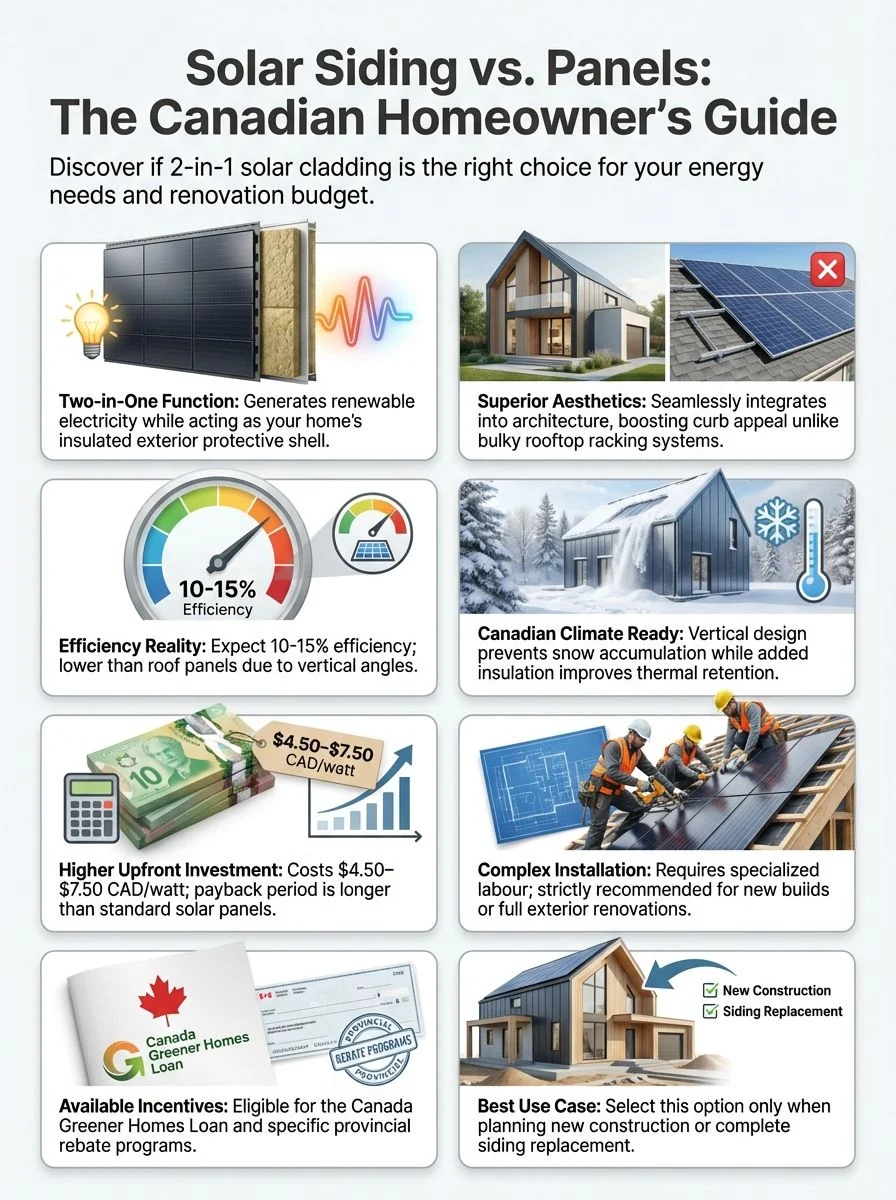
Solar siding, also called building-integrated photovoltaics (BIPV), combines energy-efficient cladding with solar energy technology.
This material replaces standard exterior walls and generates renewable electricity using sunlight. Unlike traditional panels, solar siding fits directly into the building’s architecture without large racks or visible mounts.
According to a 2025 market report, the global BIPV market is valued at approximately $13.45 billion and is projected to reach $38.33 billion by 2030. That represents explosive growth of 23.31% annually, driven by advancing technology and increasing sustainability mandates in building codes.
In Canada specifically, the technology is gaining traction among homeowners who value both performance and aesthetics. Toronto-based Mitrex manufactures solar cladding locally in nearby Etobicoke, specializing in panels that act as cladding, walls, roofs, and even balcony guards. Their panels generate up to 18 W/ft² (194 W/m²) of clean energy while meeting rigorous standards including UL 61730, UL 61215, and NFPA 285 fire classification.
Canadian homeowners are showing more interest in this approach because it works well for properties that don’t have enough roof space for regular panels. Solar cladding generates power and replaces exterior cladding. If you’re renovating anyway, you can also add insulation behind it, which improves thermal performance. As design demands increase, people want aesthetic building materials that match modern architectural solar design instead of appearing as external additions. With continued advancements in solar technology, many homeowners are eagerly waiting for 2026 solar technology, which promises even greater efficiency and integration capabilities. This could transform not only how we think about energy generation but also the aesthetics of buildings, making them more environmentally friendly without compromising on style. As innovative solutions emerge, the potential for solar cladding to become a standard feature in modern construction looks increasingly promising.
More families now choose these systems for their ability to blend style with green building practices even if the initial investment is higher than conventional options.
How does solar cladding work on your home?
Photovoltaic (PV) cells are built into the siding materials that form your building envelope.
These PV cells capture sunlight hitting your home’s exterior walls and convert it into electricity you can use right away or send back to the power grid. This cladding covers large wall surfaces, which is ideal in Canada where south-facing roofs often do not get enough sun during winter months.
This cladding covers large wall surfaces, which is ideal in Canada where south-facing roofs often do not get enough sun during winter months. Natural Resources Canada estimated in 2006 that about 71.34 TWh could be generated by installing BIPV technology in Canadian residential and commercial buildings. The construction trend toward highly-glazed multi-story buildings has further increased the area suitable for BIPV.
Homeowners selecting this technology gain a two-in-one product: renewable energy production plus insulated exterior siding. The installation requires more labour compared to traditional solar panel setups since each PV shingle or plank must be affixed separately as part of the outer shell of the home.
Solar cladding comes in several colours, making it easier to match with new builds or renovations when existing siding needs replacement anyway. Some installers report added R-value, improving overall energy efficiency while supporting sustainable architecture goals common among green building enthusiasts in regions like Ontario and Québec.
Comparing solar siding and traditional solar panels
Solar siding and traditional solar panels each offer unique benefits for residential solar energy. Keep reading to see how they compare in energy efficiency, installation methods, and sustainable building options for your Canadian home.
How do energy efficiency and output compare between solar siding and panels?
Energy efficiency and output are key considerations for anyone comparing solar cladding to traditional rooftop panels.
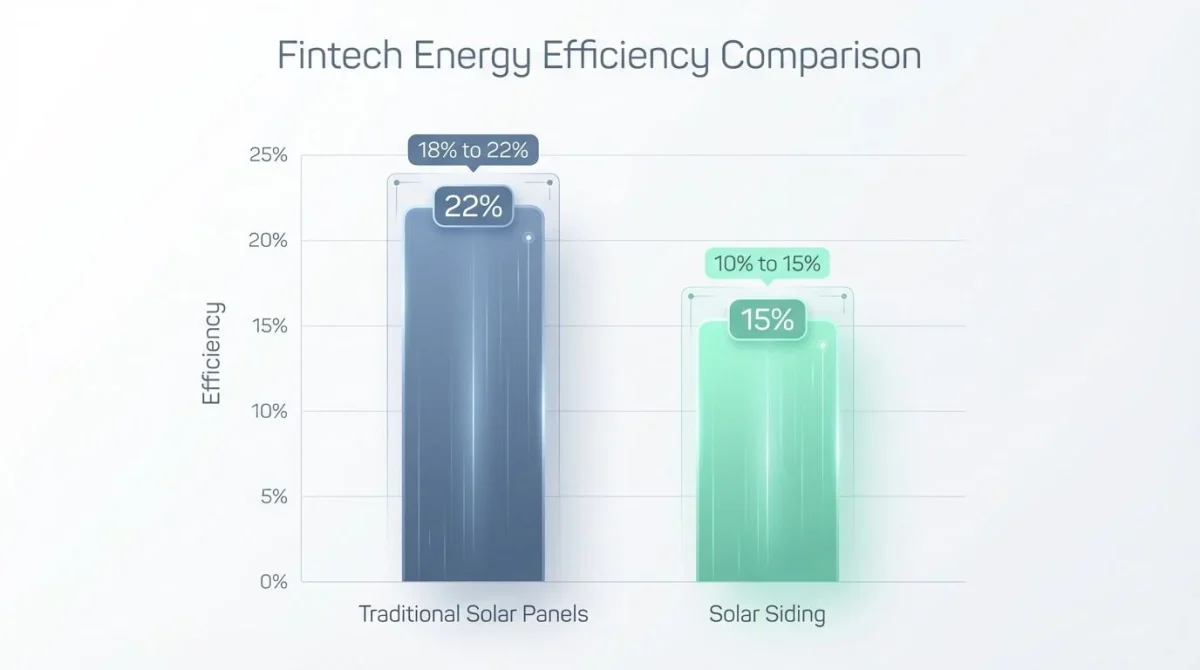
According to industry data from 2025, residential solar panels now typically achieve 18% to 22% efficiency, with some premium models reaching 23% or higher. In contrast, BIPV can use similar PV cells as rooftop panels, but facade orientation (vertical tilt), shading, and ventilation can reduce annual kWh per kW compared to an optimally tilted roof array.
The table below breaks down how these two options stack up for Canadian homes.
| Aspect | Traditional Solar Panels | Solar Siding (Cladding) |
|---|---|---|
| Typical Efficiency Range | 18% to 22% High due to optimal panel angles and cooling airflow. | 10% to 15% Lower because of vertical mounting and heat retention. |
| Orientation Impact | Usually south-facing for best sun exposure. | Follows building walls. Energy output drops if orientation is east or west. |
| Energy Output per Installed Watt | Higher. Standard installations in Canada yield 900 to 1,200 kWh per kW per year. | Lower. Output varies but is often 20% to 40% less than panels due to less sunlight. |
| Space Utilisation | Optimised rooftop placement maximises system size and output. | Limited by available wall area and architectural features. |
| Climate Suitability | Works well in cold Canadian climates. Snow slides off pitched roofs, keeping panels clear. | Snow can build up at the base of walls. Vertical angle reduces winter energy collection. |
| Best Choice for High Output | Recommended for homeowners wanting maximum energy from their investment. | Best for those who value aesthetics or lack suitable roof space, knowing output will be lower. |
What are the costs and investment returns of solar siding vs. panels?
Solar siding and traditional solar panels differ in initial investment, long-term savings, and payback periods.
The table below highlights key points for Canadian homeowners interested in solar energy.
| Criteria | Solar Siding (Cladding) | Traditional Solar Panels |
|---|---|---|
| Upfront Cost per Watt | Higher; often $4.50 to $7.50 CAD/watt installed | Lower; typically $2.80 to $4.00 CAD/watt installed |
| Cost for 7kW Home System | $31,500 to $52,500 CAD | $19,600 to $28,000 CAD |
| Payback Period | Longer; can reach 20 to 30 years depending on province and rates | Shorter; ranges from 10 to 25 years based on location and rates |
| Investment Returns | Energy bill savings add up over time; slower return due to higher install cost | Faster return as upfront cost is lower; savings start sooner |
| Durability and Dual Function | Acts as both siding and energy generator; offsets some exterior renovation costs | Powers home only; does not replace roofing or siding |
| Incentive Eligibility | Federal and provincial rebates may apply; check local programs for solar cladding inclusion | Wide access to incentives; well-established rebate pathways |
| Protection Against Energy Inflation | Locks in some energy savings; benefits grow as rates climb | Locks in energy savings; return on investment rises with higher hydro rates |
How do design and architectural integration differ between the two?
Solar panels are visible external additions that sit on top of the roof, often creating a clear distinction from the original building envelope.
Solar cladding acts as exterior cladding and integrates directly into the structure. It replaces or upgrades metal siding during renovations or new builds.
This integration supports modern aesthetics and improves curb appeal with multiple colour options to match different residential architecture styles. According to Mitrex, one of Canada’s leading BIPV manufacturers, their panels are available in a spectrum of colours, patterns, finishes, shapes, and sizes, allowing fully customizable solutions that seamlessly blend sustainability with architectural vision.
The installation process differs in complexity.
Installers can attach solar panels using standardised racking systems, which makes projects quicker and easier to plan for most homes. Solar siding requires more work because it must fit tightly within walls and be part of the overall building design from an early stage. This level of architectural integration appeals to homeowners seeking a clean look that complements sustainable design goals and green building principles.
Photovoltaic elements become part of both renewable energy production and exterior protection, giving architects flexibility in shaping energy-efficient homes across Canada’s climate zones.
What benefits does solar siding offer for Canadian climates?
It supports energy efficiency as part of a renovation package., which helps homes in cold provinces keep warm during long winters.
As part of the building envelope, photovoltaic solar cladding works harder than traditional siding by generating renewable energy while adding an extra insulated layer. This can mean lower heating bills and a smaller carbon footprint for Canadian homeowners.
Canada focused on retrofitting cold-climate buildings using hybrid BIPV modules that provide both electricity and insulation. According to a 2023 industry report, over 600 buildings globally adopted BIPV and solar thermal combinations for dual energy output, with cold climates like Canada and Scandinavia leading adoption.
Major solar technology companies now offer products made for diverse climates, including rainy coastal regions and snow-heavy areas like Alberta or Québec. As of 2023, there were over 50 commercial, institutional and residential BIPV projects in Canada, several of which are in Alberta.
Solar siding also supports green building goals because it uses renewable energy to reduce reliance on fossil fuels. Homeowners benefit even more when they pair this system with other upgrades such as heat pumps or home batteries, further improving sustainability and climate resilience across Canada’s unique weather patterns.
What installation challenges does solar cladding present and how can they be overcome?
After seeing how solar siding performs in Canadian climates, it is important to understand the installation challenges that come with building-integrated photovoltaics.
Addressing these issues early will help ensure long-term energy efficiency and system durability.
- Solar cladding requires detailed integration with your home’s structure, increasing both labour time and cost compared to traditional panels. Installation timelines typically take 4 to 12 weeks for permitting alone, requiring building permits, electrical permits, utility interconnection approval, and multiple inspections.
- Most retrofits on old siding are not recommended; the technology works best during new construction or complete exterior renovations.
- Labour hours for installation often double those of standard photovoltaic panel systems due to the precision and expertise required.
- Specialised contractors familiar with both home renovation and renewable energy systems are necessary to maintain structural integrity and electrical safety. BIPV products are regulated both as building materials and electrical materials, so they must meet two sets of requirements.
- Strict building codes must be met across provinces, which can slow projects unless contractors have experience with local regulations. BIPV has to meet both building-envelope requirements (NBC + provincial amendments) and PV electrical requirements under the Canadian Electrical Code (CSA C22.1, Section 64), plus local utility interconnection rules., and local amendments.
- Proper installation prevents poor performance, such as reduced energy output or shortened product life, so get expert assessments before starting any work.
- Upfront costs are higher than typical solar panels, but federal or provincial incentives for sustainable home improvements may offset some expenses.
- Incorrectly installed building-integrated photovoltaics can lead to water leaks or damage, requiring extra attention during mounting and sealing processes.
- Homeowners should request written estimates from multiple qualified installers who have proven experience in both siding and photovoltaic technology installation.
What factors should influence your decision to adopt solar siding?
After reviewing the installation challenges of solar cladding, it is important to weigh several key factors before choosing solar siding.
Aesthetic appeal stands out for many homeowners. Solar cladding works best if metal siding or a combined siding and renewable energy upgrade fits your renovation goals. Homeowners seeking long-term value and better technology integration often prefer this option.
House orientation also strongly affects your choice.
Homes facing east or west may gain more from ground-mounted solar panels since they catch optimal sun angles, unlike some vertical surfaces with limited sun exposure. According to solar energy research, vertical BIPV installations can produce 20% to 40% less energy than optimally angled rooftop panels due to less direct sunlight exposure.
Budget matters as well. Solar siding usually comes with a higher upfront cost compared to traditional rooftop panels, so consider whether cost-effectiveness or integrated technology ranks higher in your priorities.
If your roof needs replacing soon, standard panels might offer more flexibility and lower costs than investing in new building materials plus embedded solar modules at once.
Always look closely at both your home’s energy efficiency target and personal design preferences before making a final decision.
What federal and provincial incentives support solar energy in Canada?
The federal government previously supported solar energy with the Canada Greener Homes Loan, which helped offset installation costs for both solar siding and traditional panels.
However, as of October 1, 2025, the Canada Greener Homes Loan program is closed to new applications. The program was successful throughout Canada, with funding fully allocated. Homeowners could previously access up to $40,000 in interest-free loans through this program.
Other federal programs remain available:
- The Oil to Heat Pump Affordability program helps low- to median-income homeowners switch from oil heating to an eligible electric heat pump system, with details varying by province and territory.
- The Canada Greener Homes Affordability Program helps low- to median-income homeowners and tenants reduce their energy bills and greenhouse gas emissions through no-cost home retrofits, delivered through provincial and territorial partners.
Several provinces also offer their own tax credits, grants, subsidies or rebate programs that make adopting clean technology more affordable. For example, British Columbia runs the CleanBC initiative while Alberta’s incentives have changed over time and are not the same as the old Energy Efficiency Alberta rebates—always verify current provincial and utility programs before quoting.
Some municipal governments add extra rebates to encourage sustainable upgrades. These combined supports help reduce upfront investment in new technologies like solar cladding. Solar siding qualifies alongside panels for most of these programs if it meets technical standards set by each jurisdiction.
Incentive amounts and requirements vary from province to province and may change over time. Always check current eligibility before applying or installing a system.
Understanding incentive options is key before determining if solar siding fits your home’s needs and budget.
How can you determine if solar siding is suitable for your home?
Choosing solar siding for your house in Canada requires careful planning.
Several key factors can help you find the right fit for your energy efficiency goals and budget.
- Start by assessing your current and future energy needs through an energy audit. This step helps you estimate the output required from solar cladding to achieve energy independence.
- Check if your home’s exterior is due for siding replacement or a major renovation. Homes scheduled for new builds or upgrades are prime candidates for solar cladding integration.
- Compare installation costs of solar siding with traditional solar panels using local contractor estimates, factoring in incentives available in your province. Note that the Canada Greener Homes Loan closed to new applications in October 2025.
- Evaluate long-term value, such as warranties, service agreements, system degradation rates, and compatibility with technologies like electric vehicle chargers or battery storage. Top manufacturers like Mitrex offer 25-year performance warranties on their BIPV systems.
- Request detailed proposals from certified installers. Watch for red flags like mismatched systems, overpromised savings figures, or weak product warranties that may impact real-world performance.
- Consult reputable solar energy consultants such as SolarEnergies.ca, who offer unbiased assessments based on actual system results rather than brand reputation.
- Factor in property value improvements from building materials that boost sustainability credentials and curb appeal according to recent Canadian real estate market trends.
- Analyse utility bills and sun exposure maps to ensure your location offers enough sunlight throughout the year for effective renewable energy generation.
Next up, review which federal and provincial incentives can support your shift to renewable home improvement solutions.
Conclusion
Solar siding gives Canadian homeowners a new way to boost energy efficiency while keeping their homes attractive. With this innovative solution, homeowners can seamlessly integrate renewable energy generation into their property’s aesthetic. Additionally, the benefits of backcontact solar technology enhance energy production without compromising visual appeal, allowing for a more streamlined design. This approach not only supports sustainable living but also increases property value, making it an attractive investment for environmentally-conscious buyers.
It works well in cold climates and can cut electricity costs if the design matches your needs and budget. Compare solar cladding with panels by looking at energy output, installation needs, and financial incentives from federal or provincial programs.
Note that the Canada Greener Homes Loan closed to new applications on October 1, 2025, though other programs remain available. Speak to a qualified solar consultant before making decisions about renewable energy upgrades for your home.
This step helps you get the right fit for sustainable living and long-term savings.
FAQs
1. What is solar siding and how does it differ from traditional solar panels?
Solar siding, like the systems from Toronto-based Mitrex, replaces your exterior material with durable panels that generate energy while protecting your home. Unlike traditional racks that sit on your roof, this building-integrated technology turns your entire wall into a power source without sacrificing kerb appeal.
2. Does solar siding work well in Canadian weather conditions?
Actually, solar cladding often performs better here because cold air improves conductivity, and the vertical angle sheds snow much faster than rooftop panels. A study by the Northern Alberta Institute of Technology found that snow causes less than 6% annual energy loss, so you can count on reliable power even during our freezing winters.
3. Is solar siding more expensive than regular solar panels for Canadian homes?
While it costs more than basic vinyl, Canadian brands price their solar cladding to compete directly with premium materials like brick or stone, effectively giving you an energy-generating renovation for the price of a standard high-end façade upgrade.
4. Can I install solar siding on my existing Canadian home or only on new builds?
You can absolutely retrofit an existing home, though you will need to remove your old siding to install a proper ventilated rainscreen system that manages moisture and hides the wiring. This is a bigger project than a simple roof install, but it allows you to upgrade your home’s insulation and weatherproofing at the same time.