
Calgary Solar Panels ROI: The “Fees & Export” Calculator People Keep Missing
February 28, 2026
Ontario Solar Boom: Will Your Next Hydro Bill Actually Be Cheaper?
April 11, 2026Last Updated on May 27, 2026 by Vitaliy
For years, solar in Quebec had the same problem every time you ran the numbers: the idea looked good, but the payoff looked slow. Homeowners liked the thought of lower bills and cleaner energy, yet Quebec’s low hydro rates made most rooftop solar quotes feel hard to justify. That is why Hydro-Québec’s new solar grant matters so much. It changes the part that was holding the market back most: the upfront cost.
Under Hydro-Québec’s LogisVert program, eligible homeowners can now receive $1,000 per installed kW, up to 40% of eligible project costs. That is a serious rebate. It does not make every roof a perfect fit for solar, and it does not turn a weak quote into a smart investment. What it does do is make rooftop solar in Quebec worth another look for many households that would have said no a year ago.
I have looked at enough solar quotes over the years to know where homeowners usually get stuck. It is rarely the panels themselves. It is the feeling that you are spending a lot now to maybe feel good about it much later. Quebec has had that problem for longer than most provinces. This new program finally gives homeowners a reason to run the numbers again.
Key Takeaways
- Hydro-Québec’s solar grant pays $1,000 per installed kW, capped at 40% of eligible project costs
- Residential systems completed on or after June 30, 2025 may qualify through the LogisVert program
- Payback now depends heavily on system sizing and rate tier; the grant improves the math, but Quebec’s low electricity rates still require a careful quote review
- Net metering helps boost the value by turning surplus generation into kilowatt-hour credits
- Quote quality still matters because cheap electricity in Quebec means inflated pricing can still ruin the return
- Use licensed installers and verify credentials, especially now that a new subsidy is drawing more attention to the market
Why This Quebec Solar Subsidy Matters
Hydro-Québec announced the grant in early April 2026 through its official press release. The timing matters, though the bigger story is what the grant actually fixes.
Quebec was never short on interest in solar. It was short on financial urgency. Electricity here has been cheaper than in many other provinces for a long time, so homeowners did not get the same quick-bill-savings argument that helped solar grow elsewhere. The result was simple: solar often worked technically, but looked weak financially.
This program tackles that problem directly. Instead of asking homeowners to wait decades for savings to catch up, the grant cuts the purchase cost at the beginning. That changes how people think about the project. It also changes how installers can position solar in Quebec. The conversation is no longer just about long-term environmental value. It is now about whether the reduced upfront price and ongoing savings make the system worthwhile for your home.
How Much Is the Hydro-Québec Solar Grant?
The basic rebate formula
The grant is straightforward on paper: $1,000 per installed kilowatt, up to a maximum of 40% of eligible project cost.
That means:
- A 5 kW solar system can qualify for $5,000
- A 6 kW system can qualify for $6,000
- The final amount still cannot exceed 40% of the eligible invoice total
That last point matters more than it seems. The headline number sounds large, though homeowners should still look carefully at the total installed price. If your quote is high, the rebate helps but does not solve the problem. If your quote is fair, the rebate can move the project from “maybe later” into “this could make sense now.”
Hydro-Québec’s support is strongest when the installer price is reasonable and the system is sized properly for the home. That is where good planning matters. A bloated quote can eat up much of the advantage. A right-sized system on a good roof has a much better shot at delivering the return homeowners want to see.
What a typical homeowner might pay
Installed solar costs vary by equipment, roof design, electrical work, and installer margins. As a broad Canadian reference point, Green Building Canada puts a typical 5 kW residential system around $12,000 to $17,500. Quebec quotes can land above or below that range depending on the job, though it is still a useful benchmark.
With the grant applied, the picture improves quickly:
- $14,000 system → $5,000 grant → $9,000 net cost
- $16,000 system → $5,000 grant → $11,000 net cost
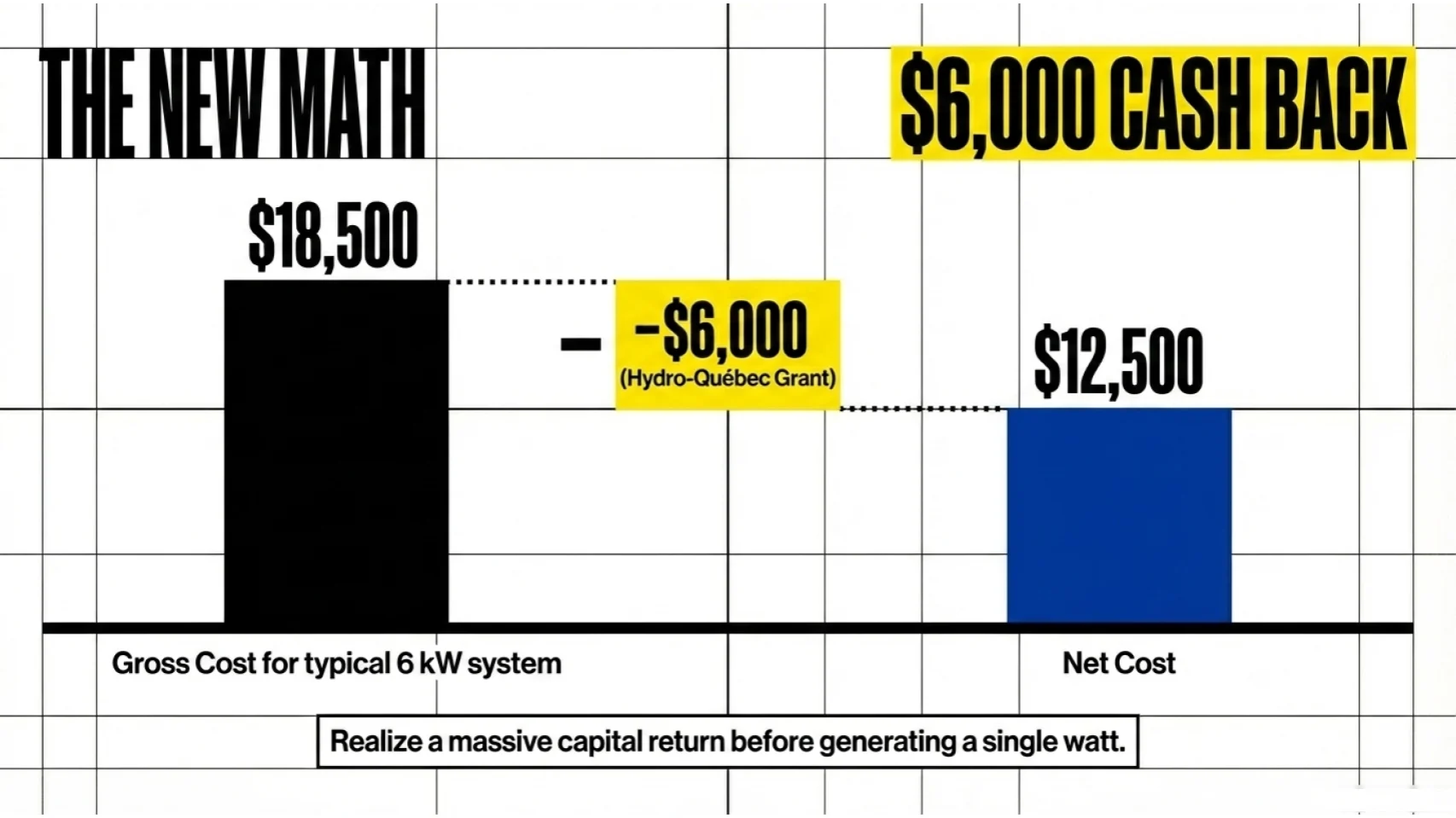
- $18,500 system with 6 kW → $6,000 grant → $12,500 net cost
This is the first time in a while that many Quebec homeowners can look at solar pricing and feel that the project is at least in the right zone financially.
Why Solar in Quebec Used to Feel Like a Slow Payoff
The simple answer is Hydro-Québec’s residential rates. According to the official electricity rates PDF effective April 1, 2026, Rate D energy charges are 7.065¢/kWh for the first tier and 11.142¢/kWh for additional consumption, plus the system access charge.
That is great news for electricity bills. It has not been great news for rooftop solar economics.
When grid electricity is inexpensive, every kilowatt-hour your panels produce is worth less in dollar terms than it would be in provinces where rates are higher. That stretches the payback period. Homeowners might still like solar for energy independence, home value, or environmental reasons, though the hard financial case was often weaker than the sales pitch.
That is why the grant is such a big step. It does not depend on future rate spikes or optimistic savings claims. It cuts the cost now, which is exactly what Quebec solar needed.
Quebec gets enough sun
There is another myth that needs to go. Quebec is not “too cloudy” for solar. Use production figures as planning estimates, then confirm the final output with Hydro-Quebec’s simulator, the roof direction, tilt, shading, snow cover, and local conditions. In plain language, rooftop solar can work here. The sunlight was not the main issue. The economics were.
I have had this conversation with homeowners more than once. Someone assumes solar makes sense in Alberta but not in Quebec because of weather. Then you look closer and realize the real difference was never the panels. It was the price of the power they were replacing.
Who Qualifies for the LogisVert Solar Grant?
The residential stream runs through Hydro-Québec’s LogisVert program. If you are planning a rooftop solar installation, the main eligibility points are fairly clear.
Eligibility checklist
- You must be a Hydro-Québec residential customer
- Your installation must be completed on or after June 30, 2025
- Your system must be authorized for connection
- The installation must meet Hydro-Québec’s technical requirements
- Your application must be submitted within nine months of the installation date
That nine-month deadline deserves attention. Homeowners spend a lot of time thinking about hardware and almost no time thinking about paperwork until it is too late. Do not do that here. Missing the filing window is a very avoidable way to lose a valuable incentive.
Tip for Quebec homeowners: ask your installer who handles the interconnection paperwork, who prepares the grant file, and what documents you need to keep. Get the answer before you sign, not after the panels are already on the roof.
Net Metering Makes the Grant More Useful
The grant lowers the entry cost, though net metering is what helps the system perform better over time.
Under Hydro-Quebec’s Option I net metering page, eligible main-grid customers can self-generate up to 1,000 kW, subject to demand and Hydro-Quebec approval. When your system sends excess electricity back to the grid, you earn kilowatt-hour credits. Those credits can help offset later usage, and unused credits are reset every 24 months. As of the 2026 rate chart, leftover credits at reset are valued at 4.730¢/kWh.
For a homeowner, that matters because solar production is not perfectly aligned with household demand. A roof may overproduce during sunny stretches and underproduce in winter. Net metering helps smooth that out by letting surplus summer production help with later bills.
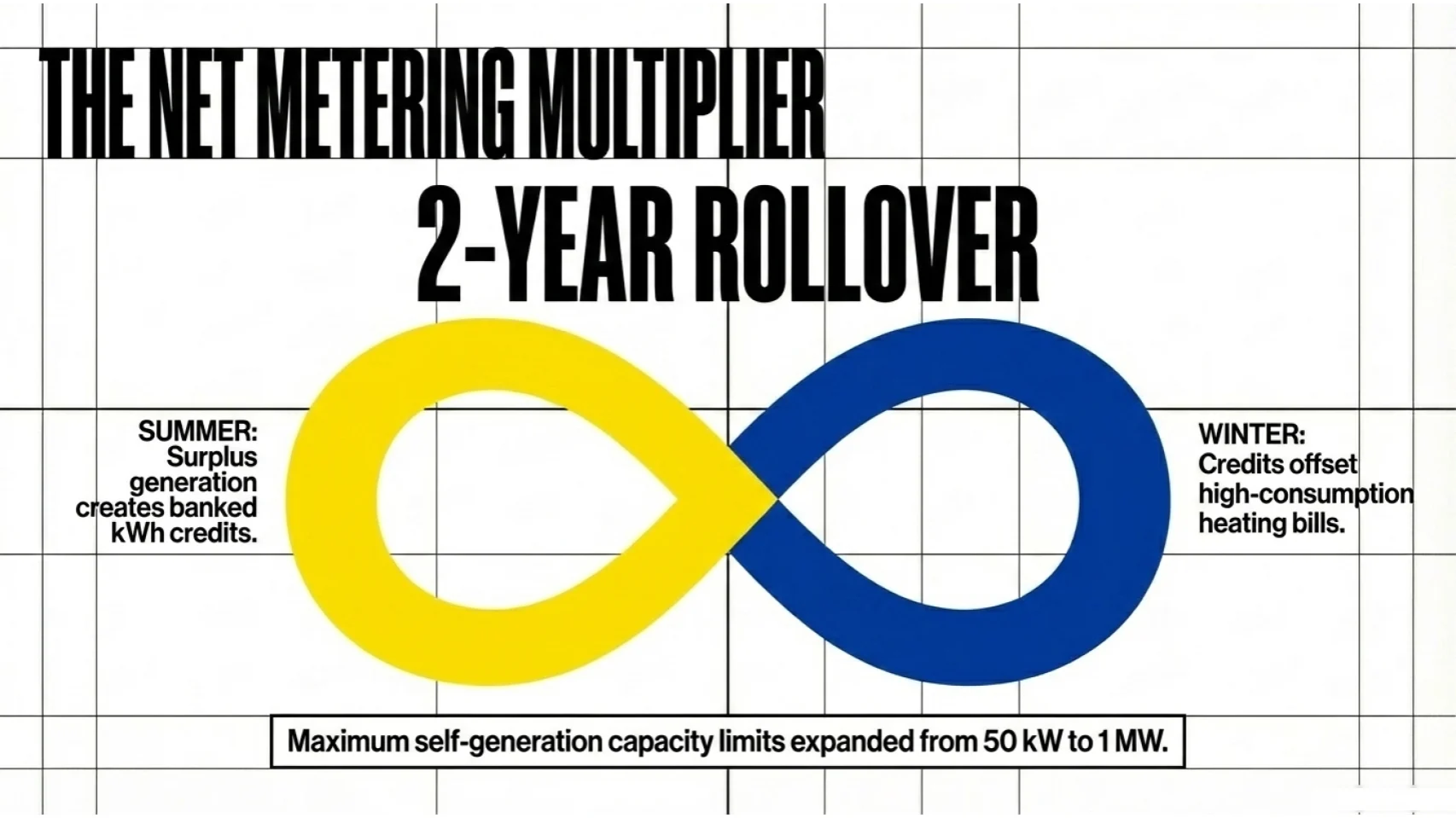
That does not mean every homeowner will wipe out every bill. It does mean the value of a well-sized system is higher than a simple one-month bill comparison would suggest.
A Real Example of the New Quebec Solar Math
Let’s use a realistic example.
A homeowner in Laval installs a 6 kW solar system. The all-in price is $18,500, including panels, inverter, mounting hardware, labour, and electrical work.
- Grant amount: $6,000
- Net system cost: $12,500
- Estimated annual production: project-specific; confirm with the Hydro-Quebec simulator and the installer’s shading, tilt, and orientation model
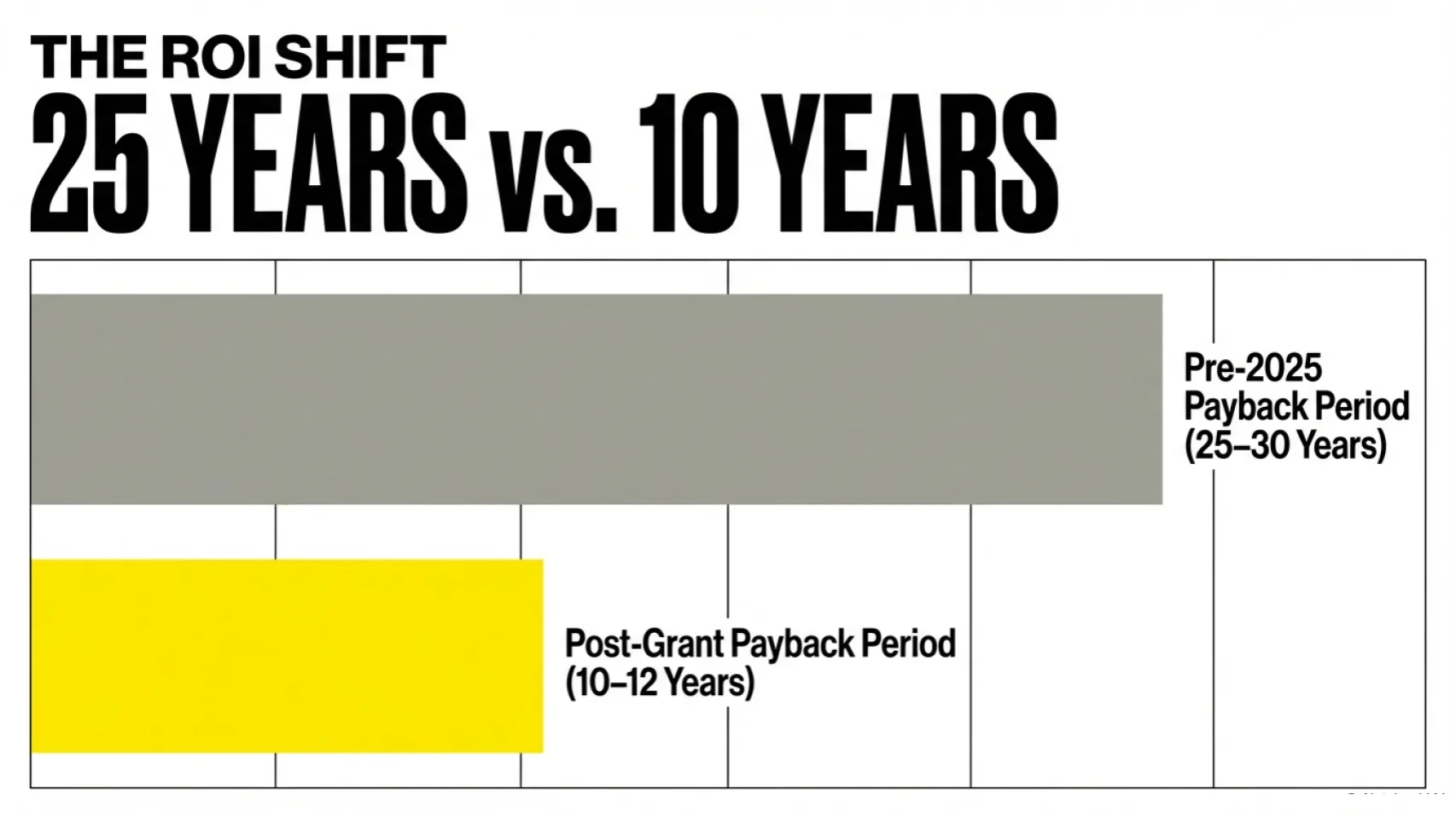
- Payback target: Hydro-Québec says the new structure can bring many residential systems into the 10 to 12 year range
That is a much different story from the long, slow returns that used to dominate Quebec solar discussions. It still depends on roof angle, shading, electricity use, and installer pricing. Still, the direction is clear. The project starts to look like a home upgrade with a reasonable financial path instead of a niche purchase that only appeals to the most patient homeowners.
Hydro-Québec has also said it is keeping residential rate increases to 3% in 2026, 2027, and 2028, according to its rate announcement. Even moderate increases raise the value of the electricity your system produces over time.
Is Solar Worth It in Quebec Now?
For many homeowners, yes. For every homeowner, no.
That is the honest answer, and it is the one more people need to hear.
Solar is worth a serious look if your roof has decent sun exposure, your quote is fair, your electrical setup is manageable, and you qualify for the grant. In that case, the economics are better than they have been in years.
Solar is less attractive if your roof has major shading, poor usable space, or a quote so high that the grant barely softens the blow. Quebec’s lower electricity rates still mean you need discipline on pricing. A weak project does not become strong just because there is money on the table.
I have seen homeowners get excited about the rebate first and the system second. That is backwards. The rebate is there to improve a good project, not to rescue a bad one.
What to Watch Out for Before You Sign
New incentives usually bring two things at once: better opportunities and worse sales behaviour.
Hydro-Québec itself warns that unsolicited outreach claiming to represent LogisVert is likely fraudulent. That should tell you enough. If someone cold-calls you, rushes the quote, avoids specifics, or pushes a same-day signature, step back.
Tip for choosing an installer: verify the contractor with the Régie du bâtiment du Québec (RBQ), ask for local references, and compare production estimates carefully. A company that promises too much on yearly output is not doing you a favour.
You also want to be careful about system sizing. Bigger is not always better. A system should match your household’s actual use, your roof layout, and the economics of the quote. Oversizing can leave you paying more upfront than the extra production is worth.
Useful Next Steps for Quebec Homeowners
If you are considering solar now, start with the boring parts first. Check your annual electricity use. Check your roof age. Check whether the roof has shade from trees, vents, or neighbouring structures. Then get quotes from installers who can explain the grant process clearly.
That step alone filters out a lot of weak sales operations. Serious installers should be able to explain the equipment, the interconnection process, the expected production range, the warranty terms, and the grant application steps without sounding vague.
It also helps to read related guides before making a decision. For a broader look at system costs and setup choices, see our Quebec solar panels cost guide. If you want to compare this new program with other provincial opportunities, check our guide to upcoming Quebec solar rebates.
Frequently Asked Questions
How much is the Hydro-Québec solar grant?
The grant pays $1,000 per installed kW, up to 40% of eligible project cost. A 5 kW system may qualify for up to $5,000, while a 6 kW system may qualify for up to $6,000 if the project cost supports the full amount.
Who is eligible for the Quebec solar subsidy?
Eligible applicants are Hydro-Québec residential customers with qualifying systems completed on or after June 30, 2025, with approved connection and a complete application filed within nine months of installation.
Does Quebec have net metering for solar?
Yes. Hydro-Québec’s Option I net metering program allows eligible self-generation systems to earn kilowatt-hour credits for surplus electricity sent to the grid. Unused credits are reset every 24 months.
Is solar finally worth it in Quebec?
For many homes, yes. The new grant improves the return by reducing upfront cost, which was the biggest barrier in Quebec. The best candidates still have good sun exposure, fair installation pricing, and sensible system sizing.
Can you combine this grant with federal solar incentives?
Do not assume that you can. Natural Resources Canada says the Canada Greener Homes Loan closed to new applications on October 1, 2025, and the Canada Greener Homes Grant is also closed. Check for newer programs separately instead of building your budget around old ones.
What is the biggest mistake homeowners can make?
The biggest mistake is treating the subsidy like a shortcut past careful planning. You still need a fair quote, a capable installer, clean paperwork, and a system that fits the house. The grant helps a lot. It does not replace good judgment.
Bottom Line
Quebec finally has a solar incentive that addresses the real problem. Rooftop solar here was never impossible. It was just stuck with weak economics for too long. Hydro-Québec’s new grant improves that in a direct way by lowering the price at the start and making payback more realistic for homeowners who were previously on the fence.
If you ruled out solar in Quebec before, this is a good time to look again. Just do it with a clear head. Check the roof, check the quote, check the installer, and make sure the paperwork is handled properly. The opportunity is better now. The need to be careful still has not gone anywhere.