
Hurricane-Proof Your Home: How Nova Scotia’s New Battery Rebate Pays for Your Peace of Mind
April 28, 2026
Alberta Solar Restrictions Lifted in 2026? What Really Changed and What Homeowners Should Do Now
April 30, 2026Last Updated on April 30, 2026 by Vitaliy
If you’re still wondering whether solar panels in winter Ontario weather can hold up, look at where solar is being installed now: airports, parking structures, public facilities, and commercial sites that can’t afford weak equipment or wishful thinking. These are not easy environments. They deal with wind, snow, ice, safety rules, constant operations, and serious energy bills.
Waiting too long has a cost, because every month you delay is another month buying electricity at rates you don’t control.
Toronto Pearson’s LIFT program is focused on long-term airport upgrades, passenger growth, and sustainability, including a move toward a more advanced and sustainable airport: Pearson LIFT program. South of the border, JFK Airport is building a 12 MW solar carport with 7.5 MW of battery storage, and Denver International Airport has brought its total solar capacity to 10 MW.
That’s the bigger point. Solar is no longer a fragile “maybe” technology. If airports can use it in demanding outdoor conditions, a properly designed Ontario rooftop system deserves a serious look.
Key Takeaways
- Solar panels convert light into electricity, not heat, and cold temperatures can improve panel efficiency.
- Winter reduces total production because days are shorter and snow can cover panels, but that does not mean solar stops working.
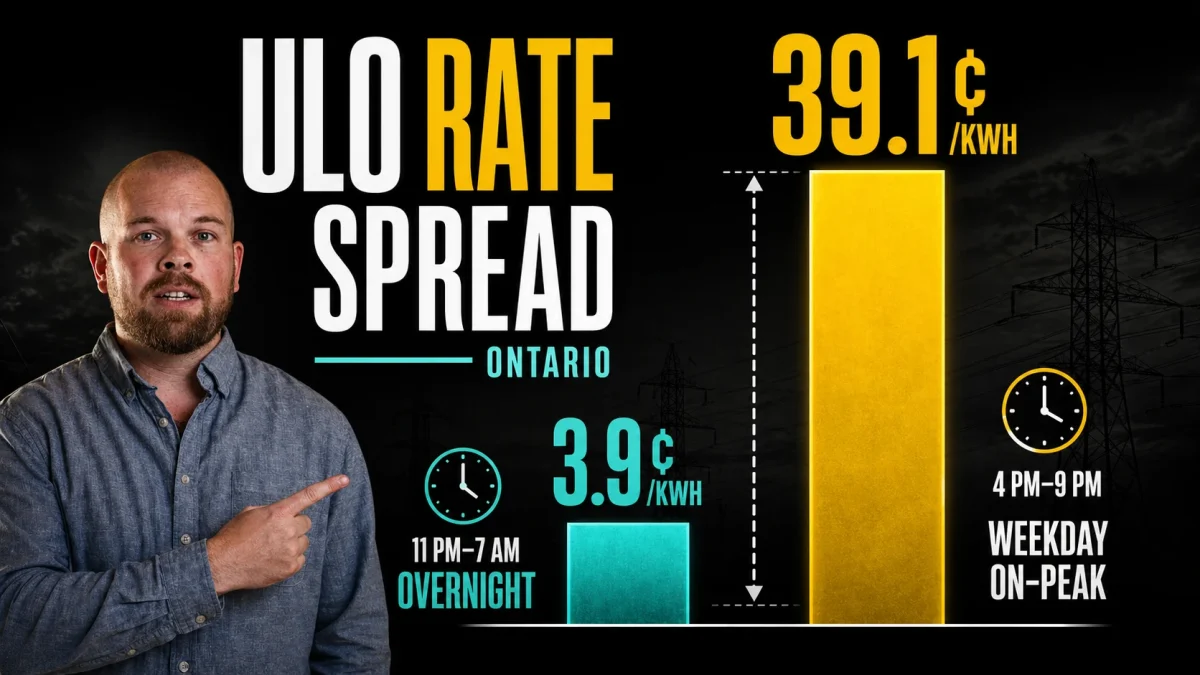
- Ontario’s current Ultra-Low Overnight plan has a 3.9 cents/kWh overnight rate and a 39.1 cents/kWh weekday on-peak rate, which makes solar and battery strategy more important: Ontario Energy Board’s electricity rates.
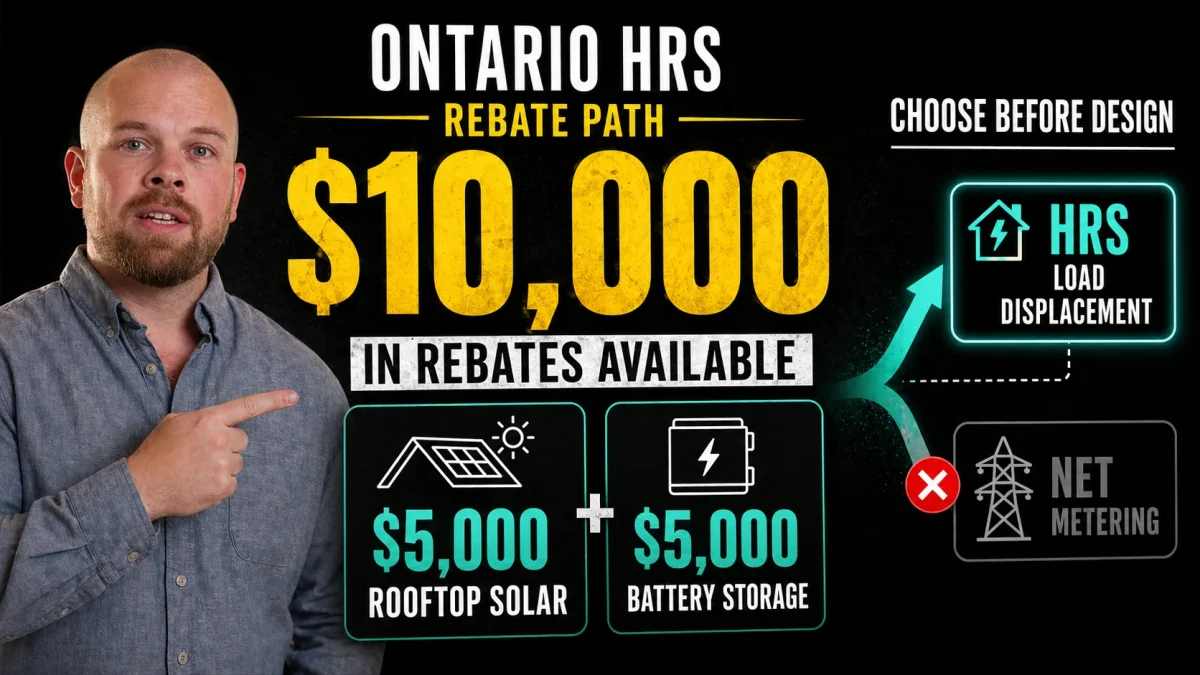
- Ontario homeowners can get up to $5,000 for rooftop solar and up to $5,000 for battery storage through the Home Renovation Savings program, but HRS solar incentives are for load displacement and are not eligible with a net-metering agreement: Home Renovation Savings solar program.
- Roof structure still matters. A good installer checks roof condition, attachment method, electrical design, utility rules, and local building requirements before selling you a system.
Why Airport Solar Matters for Ontario Homeowners
Airports are useful proof points because they are conservative by nature. They don’t add exterior electrical infrastructure just because it sounds good in a press release. They care about safety, uptime, snow management, wind exposure, glare, maintenance access, electrical interconnection, and long-term operating cost.
JFK’s project is a good example. It’s not just a few panels on a shed. TotalEnergies says the project is a 12 MW solar carport with 7.5 MW of battery storage, built in a long-term parking lot and expected to help reduce energy use during peak periods: TotalEnergies’ JFK Airport solar project announcement.
Denver is another good example because it deals with winter, hail risk, strong sun, and airport-scale operations. Its fourth solar array brought the airport to 10 MW of solar capacity: Denver International Airport’s fourth solar array announcement.
Your roof is not an airport. The lesson still applies. If large public infrastructure can justify solar with strict engineering and operating demands, a home or commercial building in Ontario should not dismiss solar just because January looks grey. For the broader Ontario bill conversation, see our guide to the Ontario solar boom and utility bill impact.
Do Solar Panels Work in Winter in Ontario?
Yes. They work in winter as long as light reaches the panels.
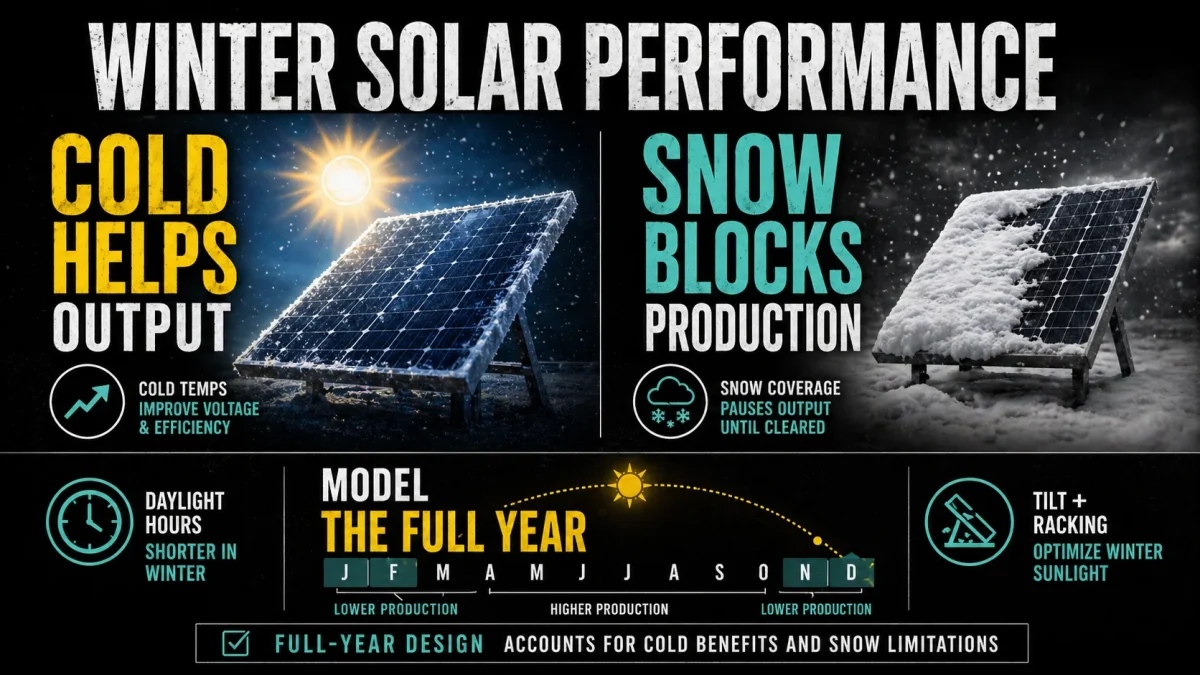
The U.S. Department of Energy explains that PV modules operate more efficiently in colder weather because high temperatures reduce voltage. The same page also makes the practical caution clear: ice and snow create design and operating challenges, and heavy snow can reduce production until it clears: U.S. Department of Energy’s winter PV guidance.
That’s the honest answer. Cold helps panel performance per hour of sunlight. Winter hurts total daily output because:
- daylight hours are shorter
- the sun sits lower in the sky
- storms and cloud cover reduce irradiance
- snow can block panels until it slides, melts, or is safely cleared
Solar is an annual investment, not a “how much did I make on one snowy Tuesday?” investment. A good system model looks at the whole year and uses winter as part of the design, not as an excuse.
Tip for Ontario Homeowners
Ask for monthly production estimates, not just annual production. If an installer only shows one big yearly kWh number, you can’t see how winter, roof pitch, shading, and rate plan choice affect your real savings. Our Solar Panels Ontario Installation Cost Guide is a useful companion if you’re comparing system size and payback.
Cold Weather Can Actually Help Panel Efficiency
Solar panels are tested at standard conditions, including a cell temperature of 25 C. When panels get hotter than that, output usually drops. When panels are colder, voltage can improve.
This is why a bright, cold February afternoon can be better for instant panel efficiency than a sweltering July afternoon. Summer still usually wins for total production because the days are much longer, but heat is not what solar panels need.
That point matters in Ontario. People often say, “We’re too far north for solar,” when the better question is, “How much usable sunlight does this roof get over a full year, and what rate am I offsetting?”
Can Solar Panels Handle Snow Loads?
Modern solar panels are exterior building materials. They are not indoor electronics placed outside and hoped for the best.
Panel datasheets often list mechanical load ratings such as 5400 Pa on the front side for snow loading and lower back-side ratings for wind uplift. Those numbers should still be matched to the actual product, racking, roof, and site conditions, but the basic idea is simple: snow and wind are part of the engineering conversation from the start.
For Canadian homes, the roof is just as important as the panel. Natural Resources Canada’s Solar Ready Guidelines say builders can account for extra dead load from common solar systems, and the document gives 0.24 kPa, or 5 psf, as an added design dead load for many parallel-mounted systems: Natural Resources Canada’s Solar Ready Guidelines.
That does not mean every roof is automatically ready. Older roofs, weak decking, poor truss access, unusual roof shapes, and heavy drift areas need a closer look.
Tip for Commercial Buildings
For flat roofs, ask about ballast weight, wind zones, parapet effects, drainage paths, roof membrane warranty, snow drifting, and access lanes. Commercial solar can be excellent, but the structural review should be treated as a normal part of the project, not a paperwork delay.
Winter Solar Performance Depends on Design
Winter solar performance is not just about the panel brand. It is about the full solar power system: roof pitch, tilt angles, racking, inverter sizing, shading, snow accumulation patterns, and how much direct sunlight reaches the array during the coldest months.
For a typical sloped roof in Southern Ontario, panels are usually mounted close to the roof plane. That keeps the system clean, simple, and strong. On flat commercial roofs or ground mounts, designers have more freedom to adjust tilt angles, leave room for snow to slide, and reduce shading from one row of panels to the next.
Bifacial panels can also help in some designs because they can capture reflected light from bright surfaces. Snow has high reflectance, so a clear winter day with snow around the array can sometimes improve solar panel efficiency. That does not erase the effect of shorter daylight hours, but it helps explain why winter sunlight still has value.
What is the 20 Rule for Solar Panels?
People use “the 20 rule” in different ways, so be careful with anyone who says it like it’s a building-code rule. In solar sales, it often means a quick screening idea: if your roof, shade, or available area would cut production by about 20% or more, the design needs a closer look before you assume the payback works.
I prefer a better version: don’t judge a solar investment from one factor. A properly sized solar system in Ontario should be tested against annual production, winter production, electricity rates, roof life, net metering rules, battery storage value, and your future power needs.
Is Winter a Good Time to Install Solar Panels?
Winter can be a good time to install solar panels if the roof is safe to work on, the weather cooperates, and your installer has the right crew schedule. Some homeowners like winter because they can get the project designed and installed before spring and summer production begins.
There are practical limits. Heavy snow, ice, steep roof slopes, and unsafe access can slow the job or push it back. A winter installation also needs a realistic inspection and utility connection timeline. The season for solar planning is any month. The season for the physical install depends on safety and site conditions.
Why Are Some People Removing Solar Panels?
Most people are not removing solar panels because the technology failed. Common reasons are roof replacement, storm damage repair, home renovations, poor original installation, undersized systems, or old equipment reaching the end of its useful life.
This is why roof age matters before you go solar. If your shingles have only a few good years left, replacing the roof first is usually cleaner than paying to remove and reinstall panels later. If production is already below expectations, this guide on what to do if solar panels underperform in Canada may help.
The Ontario Electricity Rate Problem
Solar gets more interesting when electricity gets more expensive.
The Ontario Energy Board’s current posted prices show three different residential and small-business pricing structures. Under Ultra-Low Overnight, power is 3.9 cents/kWh from 11 p.m. to 7 a.m., while weekday on-peak power is 39.1 cents/kWh from 4 p.m. to 9 p.m.: Ontario Energy Board’s current electricity rates.
That spread changes the conversation. Solar panels produce during the day. Batteries can shift energy into expensive evening hours. EVs and heat pumps can shift some load into cheaper periods. The best setup depends on your home, your load profile, and whether you are using net metering or the Home Renovation Savings solar stream.
| Option | Best Fit | Watch Out For |
|---|---|---|
| Solar with net metering | Homes that export extra daytime solar and want bill credits | HRS solar rebate is not available with net metering |
| Solar plus battery under HRS | Homes focused on load displacement, backup power, and rebate support | Must follow HRS rules and pre-approval steps |
| Battery with ULO strategy | Homes with high evening use or EV charging | Savings depend on battery size, controls, and rate plan |
| Solar only, no battery | Simpler projects with good daytime load or net metering | Less control over evening peak costs |
The Rebate Decision: HRS or Net Metering?
Ontario’s Home Renovation Savings program currently offers up to $5,000 for rooftop solar panels and up to $5,000 for battery energy storage: Home Renovation Savings solar and battery incentives.
This is good money, but read the rule that matters most: participants who receive HRS incentives for solar PV and battery storage are not eligible to participate in a net-metering agreement with their local distribution company. The program says these projects are for load displacement only.
So the decision is not “rebate or no rebate.” It is:
- Do you want a load-displacement solar and battery system with HRS support?
- Or do you want a net-metered solar system that can send excess power to the grid for credits?
Both can make sense. The wrong choice is picking one before anyone studies your bills, roof, utility rules, battery needs, backup goals, and long-term electrification plans. For broader incentive context, see our Canada Greener Homes Program 2026 update.
The Biggest Winter Solar Objections
“Snow will kill production.”
Snow blocks production while panels are covered. That part is true. But tilted panels often shed snow, light can return quickly, and winter losses are part of proper annual modelling. Solar is sized around yearly production and bill offset, not perfect output every single day.
“Cold weather damages panels.”
Cold is normal operating territory for quality solar equipment. The real design issues are snow load, wind uplift, water management, freeze-thaw effects around roof penetrations, and safe installation details.
“My roof will leak.”
A poor installation can create roof problems. A good installation uses proper flashing, attachment points, sealants, and layout planning. If your shingles are near the end of life, handle the roof before solar. That is not a solar problem; it is a sequencing problem.
“I should wait for better panels.”
Panel efficiency may improve, but your utility bill keeps arriving now. If your roof is good, your bills are high, and the system math works, waiting for a small future efficiency gain can cost more than it saves.
What I’d Check Before Installing Solar in Ontario
I’d start with the boring stuff because that is where good solar projects are made.
Check your last 12 months of electricity use. Look at your roof age, roof direction, shading, panel layout, main electrical panel, EV or heat pump plans, and whether you want backup power. Then compare net metering against the HRS solar and battery path.
For many Ontario homeowners, the best system is not the biggest system that can fit. It is the system that matches the bill, the roof, the rate plan, and the next 10 years of home energy use.
That’s where SolarEnergies.ca can help. We can look at the actual numbers with you and separate a good solar case from a weak one.
FAQ
Do solar panels work in winter in Ontario?
Yes. Solar panels work in winter when light reaches them. Cold temperatures can improve panel efficiency, but shorter days, low sun angle, cloud cover, and snow coverage reduce total winter production.
Are solar panels better in cold weather?
Per hour of strong sunlight, they can be. Heat reduces voltage, while colder conditions can improve panel performance. Summer usually produces more total energy because there are more daylight hours.
Will snow break my solar panels?
Quality panels and racking are built for outdoor loads, but the system must be engineered for your roof and local conditions. Roof structure, racking, attachment method, and snow drifting all matter.
Should I clear snow off my solar panels?
Usually, no. Many systems shed snow on their own. Climbing on a snowy roof is dangerous and can damage equipment. If snow clearing is needed, ask your installer for safe maintenance guidance.
Is the Ontario solar rebate worth it?
It can be, especially for solar plus battery projects, but the Home Renovation Savings solar stream is for load displacement and cannot be combined with net metering. Compare both options before choosing.
Is solar worth it if I’m on Ultra-Low Overnight rates?
It can be, but the best setup depends on your load profile. ULO creates a big spread between cheap overnight power and expensive weekday on-peak power, which can make batteries more useful for the right home.
What’s the first step?
Start with your electricity bills, roof condition, and goals. Then model solar production, rebate eligibility, net metering, and battery value before signing anything.