Airport Solar Projects Prove Winter Solar Works in Ontario
April 30, 2026
Why Canadian Utility Bills Could Rise After the Strait of Hormuz Crisis
May 8, 2026Last Updated on April 30, 2026 by Vitaliy
If you are trying to figure out whether Alberta solar restrictions lifted in 2026, here is the practical answer: the province is open to solar, but it is not a free-for-all. The 2023 moratorium on approvals for new renewable electricity projects ended in 2024, yet Alberta still has newer rules for agricultural land, viewscapes, reclamation, municipal input, and grid connection. Waiting for the rules to become perfectly simple could cost you a full summer of production, especially if your project needs utility review, municipal permits, or farm-site planning.
That does not mean solar is a bad move in Alberta. It means the right project in 2026 needs to be designed with the rules in mind from day one.
Key Takeaways
- Alberta’s renewable energy moratorium ended on February 29, 2024, but several restrictions and review requirements remain in place.
- Solar on homes, farms, and businesses is still allowed, especially when the system is sized and permitted as micro-generation.
- Larger ground-mount and farm projects need more care because Alberta’s rules now focus heavily on agricultural coexistence, reclamation security, viewscapes, and municipal participation.
- The Alberta Utilities Commission is still refining parts of the process in 2026, including a targeted municipal consultation on possible standardized setbacks for renewable projects.
- For homeowners and farm owners, the best next step is not to wait for perfect policy certainty. It is to get a site-specific design, utility check, and financing review before installer schedules fill up.
Were Alberta Solar Restrictions Lifted In 2026?
Not exactly.
The big approval pause was already lifted at the end of February 2024. What Alberta has now is a more restricted approval environment for some renewable energy projects, especially larger wind and solar projects on agricultural land or near protected viewscapes.
The Government of Alberta’s own policy summary says the Electric Energy Land Use and Visual Assessment Regulation takes an “agriculture first” approach. Renewable energy developments are not permitted on Land Suitability Rating System Class 1 and 2 lands unless the proponent can show crops or livestock can coexist with the project. In municipalities without Class 1 or 2 lands, Class 3 lands may be treated the same way. The province also requires irrigability assessments and reclamation security for projects in certain circumstances: Alberta renewable energy policy summary.
That is different from a simple “solar ban lifted” headline. Solar is moving forward, but some projects now have a heavier planning burden.
What Changed After The 2023 Renewable Energy Moratorium?
Alberta paused approvals for new renewable electricity projects in August 2023. The pause applied to projects over one megawatt and created a lot of uncertainty for developers, rural municipalities, and landowners.
After the moratorium ended, Alberta introduced new policy directions around four main issues:
| Issue | What It Means For Solar |
|---|---|
| Agricultural land | Projects on high-quality farmland may need to prove agriculture can continue. |
| Viewscapes | Some areas require visual impact review, and wind faces tighter limits in specified zones. |
| Reclamation | Developers may need security or bonds for end-of-life cleanup. |
| Municipal input | Municipalities have a stronger role in AUC project hearings and review. |
For a normal rooftop solar project on a home, this is usually not the central problem. Your bigger concerns are roof condition, electrical capacity, utility approval, permits, and whether the system size matches your annual electricity use.
For a farm, acreage, or commercial site with a ground-mounted system, these changes matter more. The design may need to show that the array will not remove productive land from use, that equipment can be reclaimed later, and that neighbours or municipal rules have been considered.
Why The Alberta Renewables Sector Feels So Confusing
The confusion comes from two things being true at the same time.
First, Alberta is still a strong province for renewable energy in a physical sense. The solar resource is good, farms and businesses use a lot of electricity, and the market-based electricity system can reward well-designed projects. Solar power, wind and solar projects, renewable generation, and energy storage still have a real role in Alberta’s electricity system.
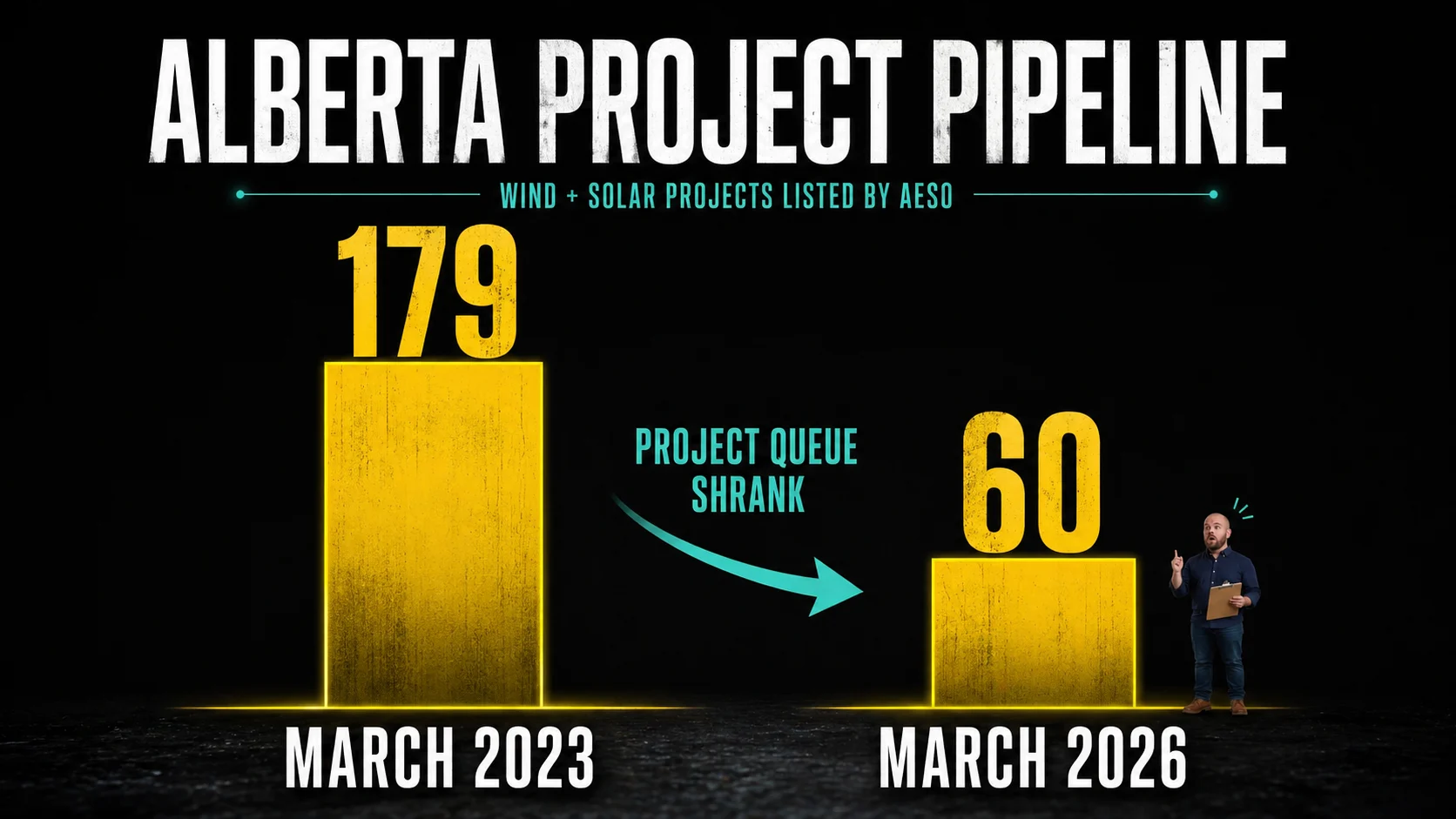
Second, investment in Alberta renewables has slowed after the moratorium and new rules. The Narwhal reported that the Alberta Electric System Operator’s March project list dropped from 179 wind and solar projects in March 2023 to 60 in March 2026, with many of the remaining projects having applied before the moratorium: The Narwhal’s Alberta renewables explainer.
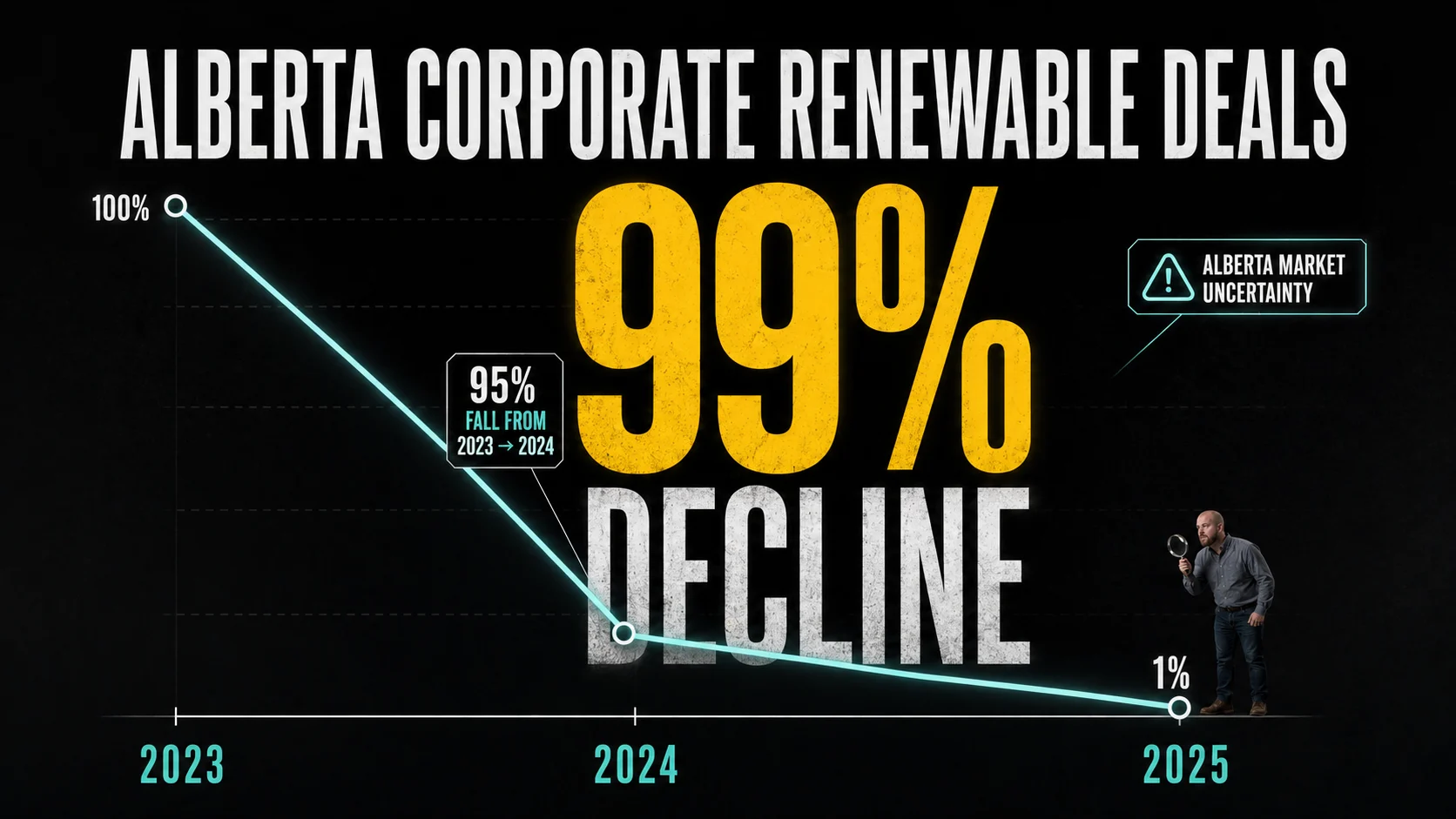
Business Renewables Centre-Canada reported that corporate renewable energy deals in Alberta fell 95 percent from 2023 to 2024, then dropped further in 2025 for a cumulative decline of 99 percent. It also said more than 800 MW of construction-ready solar projects and 300 MW of wind projects cancelled connection requests in 2025: Business Renewables Centre-Canada’s 2026 Alberta market analysis.
That matters because power purchase agreements, tax revenue for rural municipalities, and large renewable energy project approvals shape the installer market around smaller projects too. When developers, utilities, and municipalities are busy adjusting to new regulations, the paperwork environment can slow down.
For a homeowner, this does not mean you should avoid solar. It means you should choose an installer who understands Alberta’s new rules, AUC process, municipal permits, and utility interconnection.
Why Alberta Solar Is Still Worth Looking At In 2026
Alberta remains one of Canada’s strongest provinces for solar production. Long summer days, good solar resource, high electricity usage on many farms, and Alberta’s deregulated electricity market can make the numbers work when the system is designed properly.
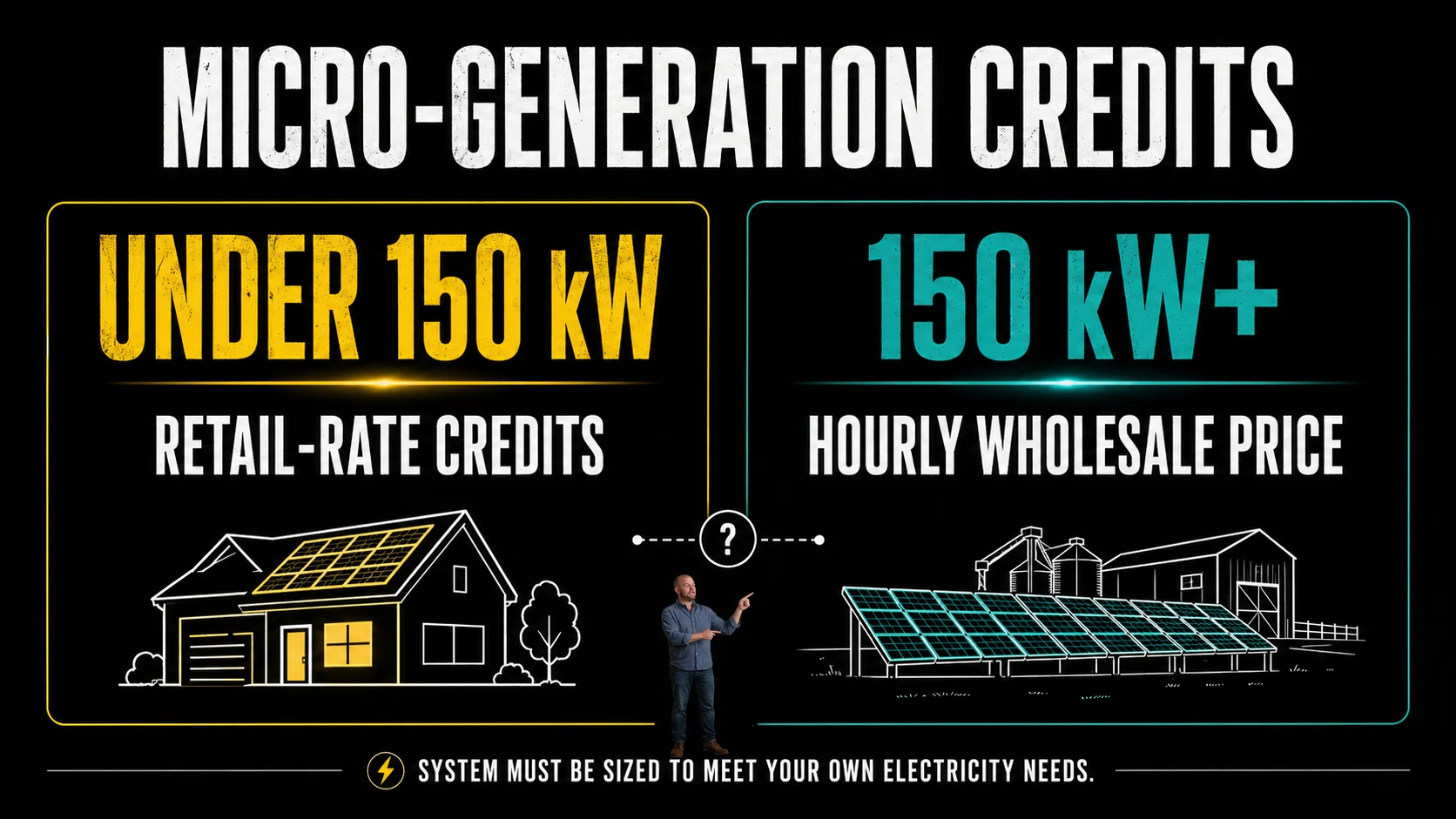
The province’s micro-generation rules are still the foundation for many residential, farm, and small business projects. Alberta defines micro-generation as renewable or alternative electricity production sized to meet the customer’s own needs. Small micro-generators under 150 kW receive credits for electricity sent back to the grid at their retail rate, while larger micro-generators are credited at the hourly wholesale market price: Alberta micro-generation rules.
That matters because Alberta solar is not just about producing power. It is about reducing the amount of electricity you buy, earning credit for surplus production, and protecting part of your budget from future electricity rate swings.
Tip for homeowners: do not size your system from a guess. Use your last 12 months of electricity bills, then check roof space, shading, panel layout, and utility limits before accepting a quote.
The Rules Matter More For Farms And Ground-Mount Solar
Farm solar has the most interesting opportunity and the most paperwork.
If your project is behind the meter and sized to serve your farm load, the micro-generation pathway may be the right fit. If you are leasing land to a developer or building a larger renewable energy project, the AUC approval process and provincial land-use rules become much more important.
Agrivoltaics can help. This is the use of land for both solar generation and agriculture, such as grazing, forage production, pollinator habitat, or crop production around and under the array. The key is not just saying “agrivoltaics” in a proposal. The project needs a credible design: proper row spacing, access for equipment, livestock safety, water movement, soil protection, and a plan for ongoing agricultural use.
Tip for farm owners: ask your installer or developer how the design handles agricultural coexistence before you ask about the lowest price per watt. A cheap ground-mount quote that creates permitting trouble is not cheap.
What Is Still Unclear In 2026?
Some pieces of Alberta’s renewable energy policy are still being worked through.
On April 7, 2026, the Alberta Utilities Commission announced a targeted consultation with municipalities on proposed standardized setbacks for renewable infrastructure. The AUC said the new Rule 007 did not include standard setback distance requirements, and the consultation is meant to consider default setback standards for renewable projects: AUC April 2026 setback consultation announcement.
That tells us something important. Alberta is not done refining the rules. If you are planning a larger solar project, you need current advice before you spend serious money on engineering, land options, or equipment.
At the same time, this should not scare normal homeowners away from solar. A rooftop residential project and a utility-scale solar farm are not treated the same way.
Incentives And Financing To Check Before You Sign
Residential rebates are thinner than they were during the Canada Greener Homes Grant period, but Alberta still has financing options and business tax incentives that can help the right project.
The Clean Energy Improvement Program, or CEIP, lets residential and commercial property owners in participating Alberta municipalities finance energy efficiency and renewable energy upgrades through their property tax bill. Alberta Municipalities says CEIP can cover up to 100 percent of project costs, with repayment attached to the property rather than the owner: Alberta Municipalities’ CEIP overview.
For businesses and farms, the federal Clean Technology Investment Tax Credit is worth reviewing with an accountant. The CRA describes it as a refundable tax credit for capital invested in new clean technology property in Canada from March 28, 2023, to December 31, 2034: CRA Clean Technology Investment Tax Credit guidance.
Eligible clean technology property includes equipment used to generate electricity from solar, wind, and water energy, as well as certain stationary electricity storage equipment.
Tip for businesses and farms: have your accountant review the ITC, capital cost allowance, GST treatment, and any grant stacking before you approve the final system size. Tax treatment can change the payback more than a small panel price difference.
How To Move Forward Without Getting Stuck
The best Alberta solar projects in 2026 will be boring in the right ways. Clear utility data. Clean permit package. Realistic production model. Proper electrical review. Equipment that is available. A contract that explains timelines, interconnection, and what happens if the utility asks for changes.
Use this checklist before signing:
| Step | Why It Matters |
|---|---|
| Review 12 months of bills | Confirms annual usage and avoids oversizing. |
| Check roof or ground conditions | Prevents expensive changes after contract signing. |
| Confirm utility requirements | Interconnection can affect schedule and design. |
| Ask about permits | Municipal timing can affect summer installation. |
| Review financing and incentives | CEIP, business tax credits, and grants are not automatic. |
| Ask who handles paperwork | A strong back office matters as much as good installers. |
I would rather see an Alberta homeowner install a properly sized 8 kW system that gets approved smoothly than chase an oversized system that looks better in a sales proposal and then gets delayed. Same with farms. A practical 50 kW or 100 kW system that fits the operation can beat a bigger project that triggers avoidable review problems.
So, Should You Install Solar In Alberta Now?
If your roof is in good shape, your electricity use is steady, and you plan to stay in the property long enough to benefit, solar is still worth pricing in Alberta in 2026.
If you own a farm or commercial property, the opportunity can be even stronger, but the planning needs to be tighter. You may have more load to offset, more space for panels, and more tax planning options. You may also face more review if the project is ground-mounted, large, or located on high-value agricultural land.
The short version: solar restrictions were not simply lifted in 2026, but Alberta solar is still very much alive. The smart move is to design around today’s rules instead of waiting for yesterday’s market to come back.
FAQ
Did Alberta lift its solar ban in 2026?
No. The province’s approval pause for large renewable projects ended on February 29, 2024, but Alberta still has newer rules that affect renewable energy development. The biggest issues are agricultural land, viewscapes, reclamation security, municipal participation, and connection costs.
For homeowners, that usually means solar is still straightforward if the system is rooftop, properly sized, and permitted. For farms and large ground-mount projects, the rules deserve a closer look before you sign anything.
Can I still install rooftop solar on my Alberta home?
Yes, in most cases. Residential rooftop solar usually follows the micro-generation process, which involves your utility, municipal permits, electrical work, and an interconnection agreement. Alberta says micro-generation is sized to meet the customer’s electricity needs and allows excess generation to receive credits.
Your roof condition, shading, electrical panel, and annual usage will matter more than the provincial renewable project restrictions that affect large developments.
Are farm solar projects allowed on Class 1 or Class 2 agricultural land?
They may be allowed, but the project needs to show agricultural coexistence. Alberta’s policy summary says renewable energy developments are not permitted on LSRS Class 1 and 2 lands unless the proponent can demonstrate that crops or livestock can coexist with the renewable generation project.
That makes design important. Grazing access, crop spacing, soil protection, and equipment access should be part of the plan early.
What is the biggest risk of waiting?
The biggest risk is losing time. A solar project is more than panel installation. It can include design, utility review, permits, financing approval, equipment ordering, and inspection. If you wait until peak season, a good installer may be booked, and your project may miss the highest-production months.
Policy can also keep changing. The AUC’s April 2026 consultation on standardized setbacks shows the rules are still being refined for larger renewable projects.
Does solar eliminate delivery charges in Alberta?
Not usually. Solar can reduce the energy you buy and earn credits for exported power, but many delivery, transmission, administration, and local access charges are fixed or partly fixed.
That is why the payback should be calculated from a real bill, not a simple cents-per-kWh estimate.
Is CEIP a rebate?
No. CEIP is financing, not free money. It can help because the repayment goes through the property tax bill and the financing can be attached to the property, but you still pay it back. Alberta Municipalities says CEIP lets participating municipalities offer long-term financing for energy efficiency and renewable energy upgrades.
Before using CEIP, compare the interest rate, term, project cost, expected solar production, and what happens if you sell the property.
Should I add batteries to an Alberta solar system?
Batteries can make sense if you need backup power, want more control over when you use solar electricity, or have a farm or business where outages are expensive. They do not automatically improve payback for every home.
For businesses, eligible stationary electricity storage may qualify under the federal Clean Technology ITC rules, but you should confirm the details with your accountant and installer before counting on the credit.