
Don’t Get Burned: 15 Solar Panel Myths Canadians Still Believe in 2025
September 9, 2025
The Hidden Costs of Going Solar in Nova Scotia and Who Is Paying After You Receive a Quote
September 11, 2025Last Updated on May 28, 2026 by Vitaliy
You’re wondering if solar panels in Canada are a smart financial move or just a feel-good project for your roof. The short answer is: it completely depends on where you live. Your postal code is the single biggest factor determining if you’ll break even in 8 years or 25.
The Big Picture: What Are You Really Paying For?
First, let’s talk about the initial hit to your wallet. The cost of a residential solar system in Canada typically falls between $2.40 to $3.50 per watt installed. For an average-sized home needing a 7.5 kW system, the price for a complete solar system is around $18,000 to $26,000 before any incentives. For a precise estimate, it’s best to use a solar panels calculator to run the numbers for your specific home.
This price tag covers:
- The solar panels themselves.
- The inverter, which converts the sun’s DC power into AC power for your home.
- Racking and mounting equipment.
- Professional installation, wiring, and permits.
That’s a serious investment, but it’s one that can potentially eliminate most of your electricity bill for the next 25+ years. The key is figuring out how quickly you can earn that money back by saving on your electricity bill.
Federal Help: The Money Everyone Can Get
Before we dive into the provinces, know that the old federal homeowner programs are no longer open to new applicants. The Canada Greener Homes Grant closed to new applicants in February 2024, and the Canada Greener Homes Loan closed to new applications on October 1, 2025. That makes provincial incentives and net metering more important in 2026.
Tip for Homeowners: The old Greener Homes Loan should not be treated as active for new applicants. An EnerGuide evaluation can still be useful because it shows where your home wastes energy before you size a solar system, but do not count on the former federal loan unless you were already approved under the old rules.
Province-by-Province Smackdown: Who’s The Real Solar King?
This is where the real story is. A province’s solar friendliness comes down to three things: how much sun it gets, its electricity rates, and available incentives. Rates are often highest in provinces relying on fossil fuels and lowest where massive hydro dams provide cheap power. High electricity rates are actually a good thing for solar owners—the more you pay for power, the more you save by generating your own.
Here’s my rating for each province, based on my experience and the current data.
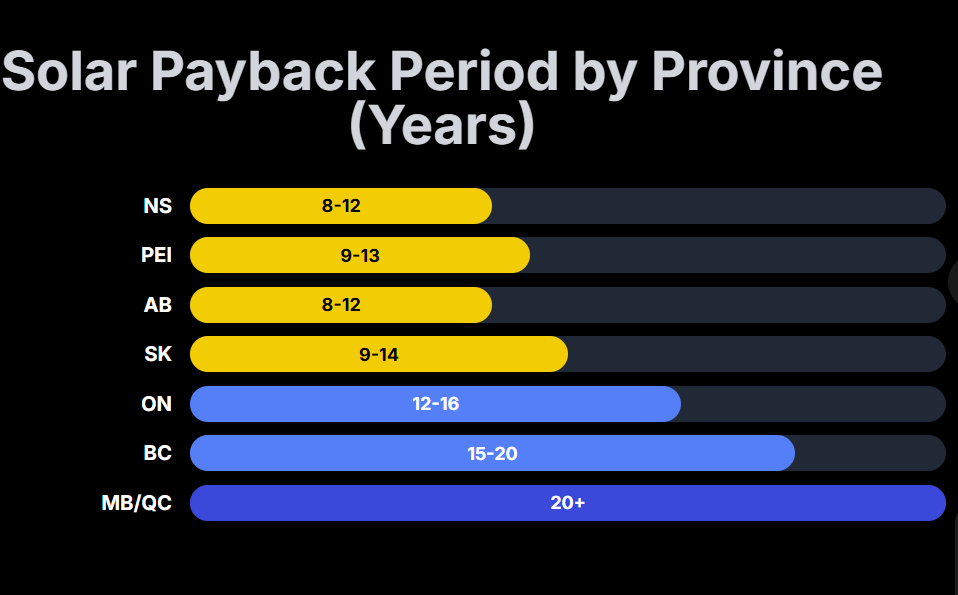
| Province | Grade | Avg. Payback Period | Key Factor(s) |
|---|---|---|---|
| Nova Scotia | A | 8-12 Years | Highest electricity rates in Canada. |
| Prince Edward Island | A- | 9-13 Years | Very high electricity rates. |
| Alberta | B+ | 8-12 Years | Excellent sunshine, high electricity rates. |
| Saskatchewan | B | 9-14 Years | Best solar potential in the country. |
| Ontario | B- | 12-16 Years | High electricity rates, but fewer incentives. |
| New Brunswick | C+ | 12-16 Years | Moderate rates and incentives. |
| British Columbia | C | 15-20 Years | Great rebates, but low hydro rates. |
| Newfoundland & Lab. | C- | 16-22 Years | Lower sun exposure, moderate rates. |
| Manitoba | D | 20+ Years | Excellent incentives, but rock-bottom electricity prices. |
| Quebec | C | 15-24 Years | New Hydro-Quebec solar support improves the math, but low electricity rates still make sizing critical. |
The Top Tier: Where Solar Shines Brightest
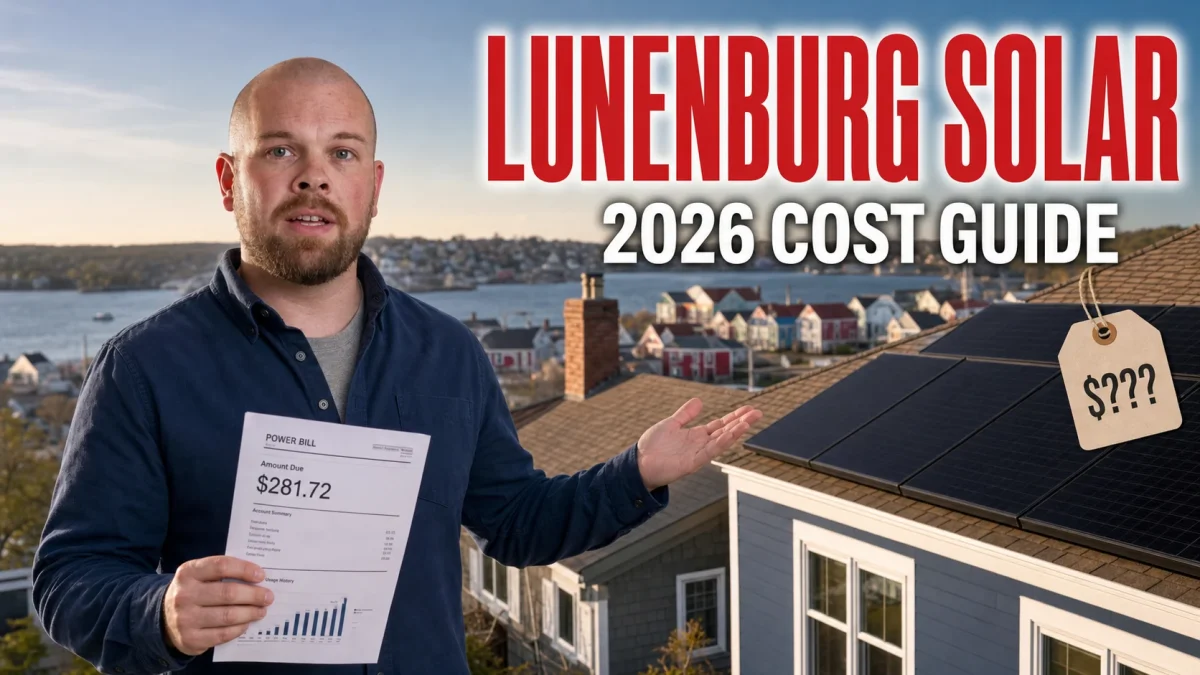
Nova Scotia Solar Panels Guide** (Grade: A)**
- The Good: Nova Scotia has some of the highest electricity rates in the country, hovering around 18.3 ¢/kWh. This means every kilowatt-hour your panels produce delivers huge savings. The province also offers rebates for solar in Nova Scotia.
- The Pain Point: The upfront cost is still a hurdle, but the fast payback period makes it one of the best financial cases in Canada.
- The Numbers: Expect a payback period of 8 to 12 years.
Prince Edward Island Solar Panels Guide** (Grade: A-)**
- The Good: Just like its maritime neighbour, PEI has very high electricity rates, so every kWh your panels offset can be valuable. Net metering still supports the case, but in 2026 you should run the numbers without assuming a new rebate approval. The current PEI solar cost guide has the latest rebate and rate caveats.
- The Pain Point: It’s a smaller market, and with the PEI solar rebate program now closed, the upfront cost is higher.
- The Numbers: A 9 to 13-year payback may still be possible for some homes, but PEI projects should be recalculated with current rates, the rebate pause, and the latest utility assumptions before a homeowner signs.
The Strong Contenders: Good Sun, Good Sense
Alberta Solar Panels Guide** (Grade: B+)**
- The Good: Alberta is one of Canada’s sunniest provinces. Combine that with high electricity rates (currently averaging over 25 ¢/kWh), and the savings add up fast. Many municipalities like Edmonton offer their own local rebates.
- The Pain Point: The former provincial rebate program is gone, so you’re relying on federal and municipal programs for help.
- The Numbers: Thanks to the sun and high rates, payback can be as quick as 8 to 12 years.
Saskatchewan Solar Panels Guide** (Grade: B)**
- The Good: According to Natural Resources Canada, Saskatchewan has the best solar potential in the entire country. The sun hours here are unmatched.
- The Pain Point: Electricity rates are moderate (around 19.9 ¢/kWh), which slightly extends the payback period compared to Alberta.
- The Numbers: You’re looking at a 9 to 14-year return on investment.
Ontario Solar Panels Guide** (Grade: B-)**
- The Good: With electricity rates around 14.1 ¢/kWh (and often higher with delivery fees and time-of-use pricing), the savings potential in Ontario is strong.
- The Pain Point: The generous feed-in-tariff programs of the past are long gone. The financial case isn’t the slam dunk it once was, but it’s still solid.
- The Numbers: Expect a payback period of 12 to 16 years.
The Middle of the Pack: It Can Work, But Do the Math
British Columbia Solar Panels Guide** (Grade: C)**
- The Good: BC has excellent rebates. Through the BC Hydro and FortisBC programs, you can get thousands back for your system.
- The Pain Point: The province runs on cheap, clean hydroelectricity. At around 11.4 ¢/kWh, the low electricity rate is the single biggest barrier to a quick payback.
- The Numbers: The payback period is longer, typically 15 to 20 years. It’s more of a long-term investment here.
My Experience in BC: I recently consulted with a family in Kelowna. They loved the idea of solar and were excited about the rebates. But when we ran the numbers against their low FortisBC bill, the payback was close to 18 years. They decided to go ahead for environmental reasons and to lock in their costs for the future, but it wasn’t a quick money-maker for them. It shows just how important your local electricity rate is.
The Tough Sells: Where Solar is More About Green than Greenbacks
Manitoba** & Quebec (Grade: D)**
- The Good: Manitoba has strong efficiency support, and Quebec now has Hydro-Quebec LogisVert solar support at $1,000 per installed kW, up to 40% of eligible cost for qualifying systems.
- The Pain Point: Low hydro-backed electricity rates still stretch payback in both provinces. In Quebec, the grant improves the upfront math, but unused net metering credits can reset at 4.730¢/kWh, so oversizing hurts returns.
- The Numbers: Manitoba can still exceed 20 years. In Quebec, the updated guide uses a 5 kW example of roughly 15 to 24 years after the grant, depending on the avoided electricity value and credit usage.
Real-World Headaches (And How to Handle Them)
Beyond the provincial differences, there are a few universal challenges.
- Net Metering vs. Net Billing: These terms sound similar but are critically different. With net metering, you get a one-for-one credit for every kWh you send back to the grid. With net billing, the utility might buy your excess power at a lower wholesale rate. Understanding if you can sell electricity back to the grid in Canada is crucial.
- Finding a Good Installer: The quality of the installation is just as important as the quality of the panels. A poorly installed system will underperform. Be sure to ask solar companies the right questions and watch out for common solar panel scams.
- Winter and Snow: Yes, panels still work in the cold. That’s just one of the many solar panel myths Canadians still believe. However, a thick layer of snow can stop production completely. A good angled installation helps snow slide off, but a heavy dump might require you to clear them.
- Navigating the Paperwork: Between municipal permits, utility interconnection, provincial rebate applications, and financing documents, the paperwork can be a headache. A good installer will handle most of this for you, but ask which programs are actually open before you sign.
The Bottom Line: Is It Worth It for YOU?
So, do solar panels pay for themselves in Canada?
- In Nova Scotia, PEI, Alberta, and Saskatchewan, the financial case is strong. The payback is reasonable, and you’ll enjoy over a decade of free electricity.
- In Ontario and New Brunswick, it’s a solid long-term investment that will protect you from rising electricity costs.
- In British Columbia, the generous rebates help, but be prepared for a long wait to break even.
- In Manitoba and Quebec, low electricity rates still stretch the payback. Quebec’s new grant makes the case better than before, but quote quality and system sizing matter a lot.
Ultimately, the choice is yours. The best first step is to get a personalized estimate with a solar panel cost calculator. From there, you can get multiple quotes and take control of your energy future. Instead of just paying a bill, you’ll be making a powerful investment in your home’s value and stability. When considering Calgary solar panels ROI, it’s important to evaluate how quickly you can expect to see returns on your investment. Factors such as energy savings, potential government incentives, and increasing property value can significantly enhance your financial outcomes. By understanding these aspects, you will be better equipped to make informed decisions about your solar energy options.