
Do Solar Panels Work On Cloudy Days In Canada? The Truth Behind It
December 17, 2025
Solar Siding Is HERE: Should You Install Solar Cladding Instead Of Panels On Your Canadian Home?
December 22, 2025
Have you ever been in the middle of dinner when suddenly, everything goes dark?
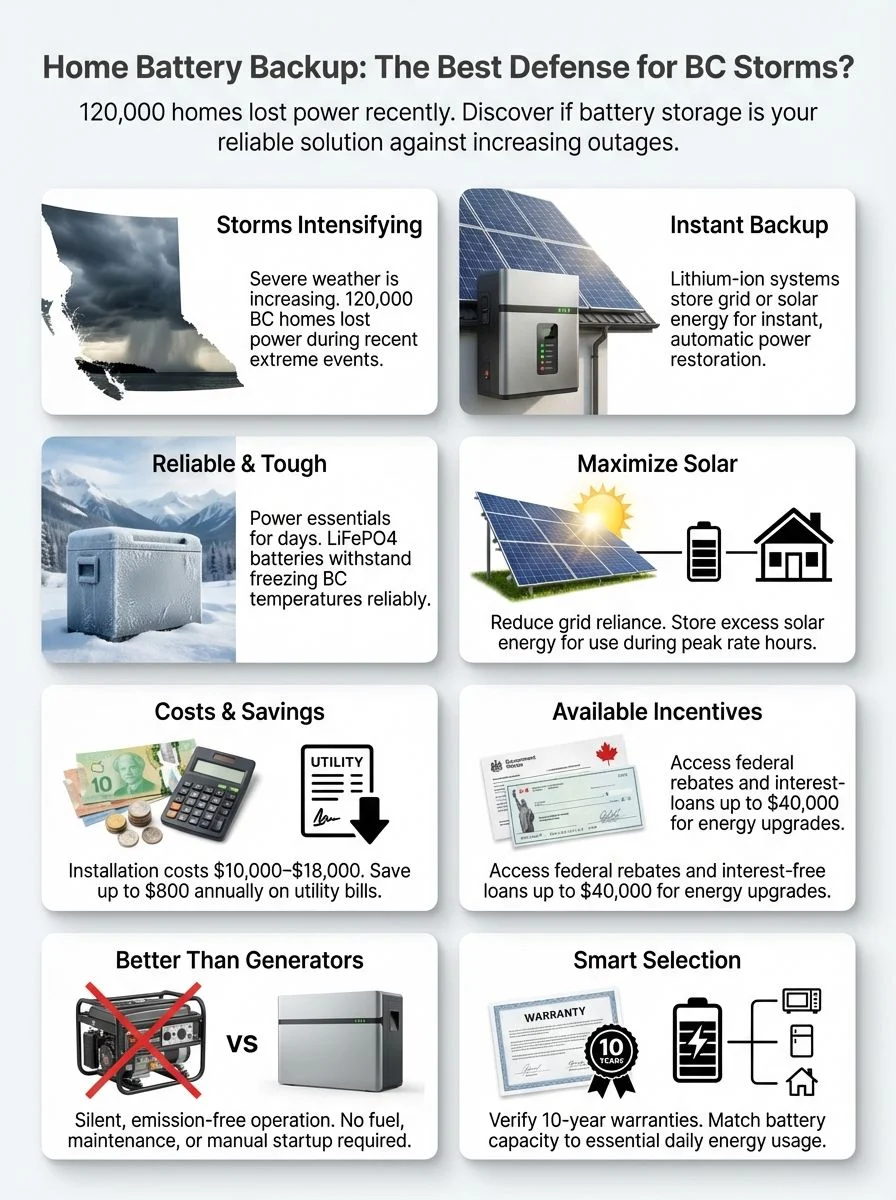
On December 17, 2025, that exact scenario hit over 120,000 BC Hydro customers.
Heavy wind and rain knocked out power across the Lower Mainland, Sunshine Coast, Vancouver Island, and Gulf Islands. Some families went without electricity for hours, watching their food warm up in the fridge and scrambling for flashlights. In my 12 years working with solar systems across Canada, I’ve heard countless stories like this, and the good news is there’s a solution that doesn’t involve noisy generators or frantic candle searches. A home battery backup system can keep your essentials running when the grid fails. This article explains how battery storage works, what it costs in Canada, and whether it’s the right backup power solution for your home.
Key Takeaways
- The December 2025 storm season affected over 320,000 BC Hydro customers, with one major storm alone impacting 120,000 homes on December 17, making 2025 the worst year on record for weather-related outages.
- Home battery systems like the Tesla Powerwall (13.5 kWh) or Enphase IQ Battery 10 (10.1 kWh) kept lights, fridges, and internet running for 1-2 days during recent BC storms.
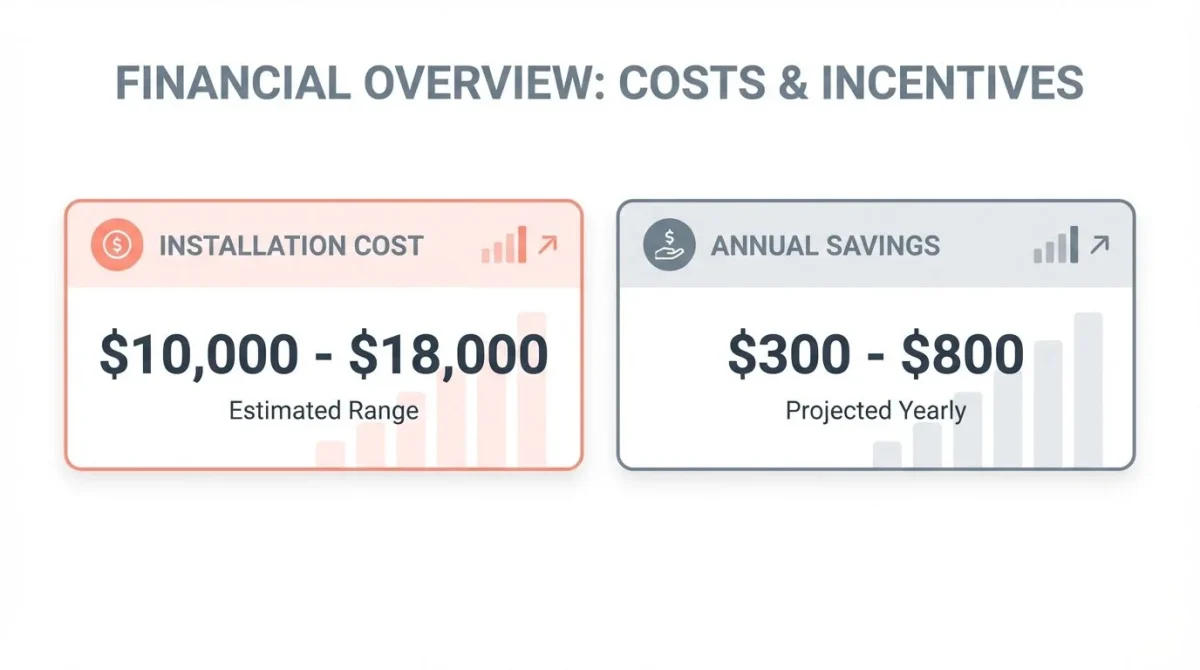
- Installation costs in Canada range from $10,000 to $18,000, but annual energy bill savings of $300 to $800 make these systems cost-effective over time.
- Battery systems activate automatically in under 10 seconds during outages, with zero noise or emissions, unlike gas generators that need fuel and regular maintenance.
- Combining solar panels with battery storage increases energy independence and provides renewable backup power during frequent BC storms.
Why are power outages increasing during BC storms?
BC’s storms are getting more intense.
In 2025, over 1.4 million BC Hydro customers experienced weather-related outages, marking it as the worst year on record. Three massive late-year storms on the South Coast and Vancouver Island accounted for roughly one million customer outages combined. The December 17, 2025 windstorm alone left over 120,000 homes without electricity across major regions.
Why is this happening more often?
Years of drought left many trees dry and weakened, making them far more likely to fall into power lines during wind events. BC Hydro has tripled its vegetation management budget to $150 million (compared to $50 million a decade ago) to combat these effects, but Mother Nature still has the upper hand. Cities like Vancouver saw around 8,200 customers lose power, Burnaby had about 7,200 affected, and Port Coquitlam had roughly 4,900 homes in the dark.
The good news?
BC Hydro restored service to 99% of the 320,000+ affected customers within 24 hours during that December storm. But those hours without power can mean spoiled food, no heat, and no way to charge phones or medical devices. That’s why many BC residents have started looking at home battery backup systems as a reliable insurance policy against the next big storm.
What is a home battery backup system?
Think of a home battery as a large rechargeable power bank for your entire house.
It sits inside your home, connects to your main electrical panel, and stores electricity for use during outages. Most Canadian homeowners choose lithium-ion batteries or lithium iron phosphate (LiFePO4) batteries. These two types offer high efficiency, long lifespan, and strong safety records, which matter when you’re storing kilowatt-hours of energy in your home.
How the system works
Your battery charges from two sources: solar panels on your roof or directly from the grid during off-peak hours when electricity rates are lower. When the power goes out, the system automatically switches to battery mode in under 10 seconds. Your fridge stays cold. Your router stays online. Your medical equipment keeps running.
Popular brands like Enphase Energy and SolarEdge make battery storage systems that perform well in cold climates. The Tesla Powerwall, for example, includes a “Heat Mode” that allows it to operate in temperatures as low as -20°C. The Enphase IQ Battery 10 holds 10.1 kWh of usable capacity and comes with a 15-year warranty, while the Tesla Powerwall stores 13.5 kWh and offers a 10-year warranty.
Battery types and what they mean for you
Here’s a quick breakdown of the most common options:
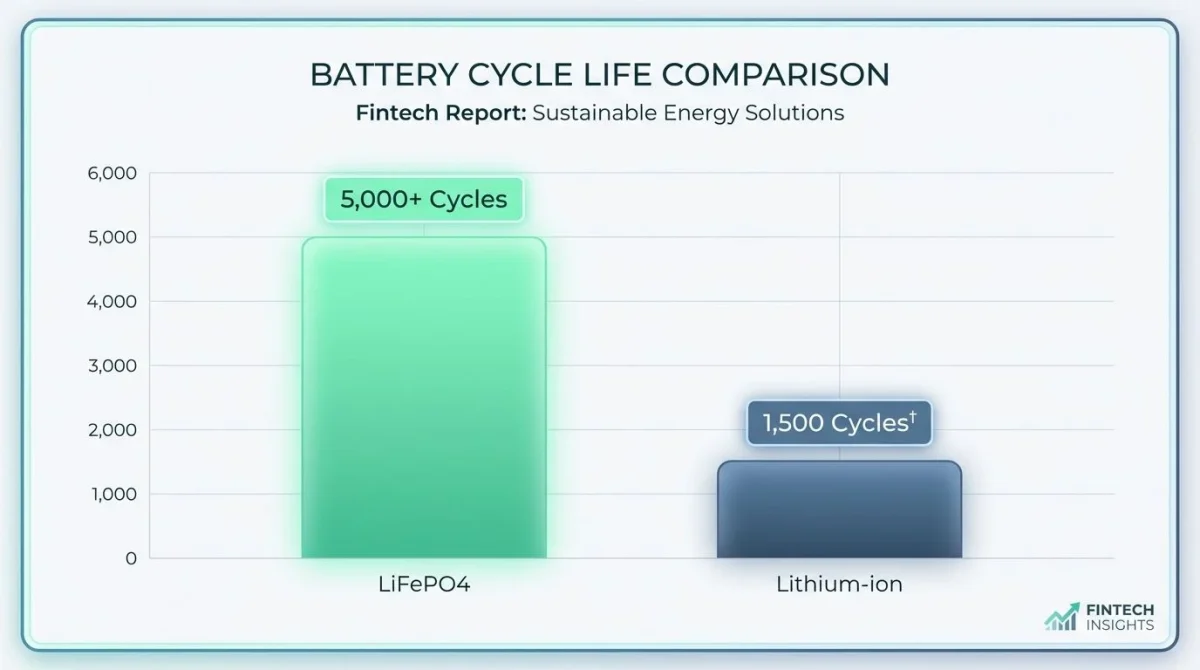
LiFePO4 batteries are inherently safer and more stable than older lithium-ion chemistries, making them excellent for Canadian winters where temperatures can swing dramatically.
| Battery Type | Key Feature | Best For |
|---|---|---|
| Lithium-ion | High energy density, compact size | Homes with limited install space |
| LiFePO4 (Lithium Iron Phosphate) | Excellent cold-weather performance, longest lifespan (5,000+ cycles) | Canadian climates with harsh winters |
| Lead-acid or VRLA | Lower upfront cost | Budget-conscious homeowners (requires more maintenance) |
You can charge your battery with solar energy during the day or pull power from the grid at night. Many battery management systems now track performance data in real time, so you always know exactly how much stored energy you have available. Properly installed systems provide continuous power during outages without the noise, fumes, or fuel needs of traditional generators.
Storing excess solar energy allows you to use it on cloudy days or overnight instead of sending it back into the grid through net metering alone. For BC residents facing frequent storms, a home battery proves to be a reliable solution that kicks in automatically when you need it most.
Benefits of home battery backup for storm preparedness
A battery backup system does more than just keep the lights on.
It gives you peace of mind knowing that when the next big storm rolls through, your home won’t skip a beat. Here’s how these systems deliver real value during BC’s increasingly unpredictable weather.
How does a home battery provide reliable power during outages?
Your battery system stores electricity from solar panels or the grid.
When an outage hits, smart controls detect the loss of power instantly and switch to battery mode within seconds. Your fridge, lights, and Wi-Fi stay powered without interruption. During the 2024 December storms in BC, homeowners with lithium-ion battery systems reported keeping critical devices running for up to two days.
The Tesla Powerwall 3, for instance, delivers 11.5 kW of continuous power, enough to run most household appliances simultaneously. The Enphase IQ Battery 5P provides 7.68 kW of continuous power and can be stacked in multiples to increase capacity. A properly sized system can power your home’s most important circuits for hours or even days, depending on your battery capacity and how much power you’re using.
How does a home battery reduce dependence on the grid?
Battery storage lets you use solar energy generated during the day, even after sunset or during outages.
Instead of sending all your excess solar power back to BC Hydro through net metering, you store it in your home battery. This reduces your reliance on grid electricity, especially during peak hours when rates are higher. Some battery systems in BC can even support partial or full off-grid operation if they’re properly sized and paired with enough solar capacity.
Charging a LiFePO4 battery with rooftop solar panels decreases your overall electricity consumption from BC Hydro. This translates to lower monthly utility bills and less demand on the grid during high-usage times like storms. You’re also avoiding the need for costly fossil fuel generators, which require regular maintenance and produce emissions.
What are the costs and incentives for home battery backup in BC?
Let’s talk numbers.
Costs and incentives directly shape whether a home battery makes financial sense for your situation. Here’s a clear breakdown using updated 2024/2025 figures specific to Canada.
| Category | Details |
|---|---|
| Typical Installation Cost (2024/2025) |
|
| Potential Savings |
|
| Government Incentives & Rebates (2025 Update) |
|
| Comparison: Battery Backup vs. Generator |
|
| Financial Considerations |
|
Even without the federal grant, pairing solar panels with a battery backup still increases reliability and long-term value. Your system protects you during storms while lowering your monthly electricity costs.
How can solar power be paired with home battery backup?
Solar panels and batteries work together like peanut butter and jam.
Your rooftop solar panels generate electricity during the day using renewable energy from the sun. A compatible home battery system stores the excess solar energy your panels produce instead of sending it all back to BC Hydro’s grid. When a power outage hits, that stored energy powers your home without delay.
Why this combination matters for BC residents
Many Canadian homes install lithium-ion batteries or LiFePO4 batteries with their photovoltaic systems to maximize both longevity and performance in cold weather. These batteries increase energy independence by allowing you to use more of your own clean electricity at night or on cloudy days when solar production drops.
A properly sized battery storage system can keep critical loads running for hours or even days, depending on its kilowatt-hour capacity and how much excess solar energy gets stored each sunny day. For off-grid living or areas with frequent outages, investing in a larger whole-home backup unit ensures that appliances like fridges, lights, and internet stay powered until BC Hydro restores regular service.
What to check before upgrading
Homeowners who already have solar panels should verify if their existing system supports integration with modern battery storage solutions before adding a battery. Most systems installed after 2015 use inverters compatible with AC-coupled batteries like the Tesla Powerwall or Enphase IQ Battery, but older setups may need an inverter upgrade.
In my experience consulting on over 500 residential projects, the biggest mistake homeowners make is buying a battery that’s too small for their actual needs during an extended outage.
How do I choose the right home battery backup for my needs?
Choosing the right battery system is less about buying the most popular brand and more about matching the system to your actual usage.
Here’s a practical checklist to guide your decision.
Start with your energy needs
- Calculate your average daily electricity use during outages. Focus on what you actually need to keep running: fridge, lights, internet, heat, and maybe a few outlets for charging devices.
- Research different battery types. Lithium-ion batteries and LiFePO4 batteries offer the longest lifespan and best cold-weather performance. LiFePO4 can safely operate in temperatures as low as -20°C, making it ideal for Canadian winters.
- Compare brands and warranties. Top options like the Tesla Powerwall 3 (13.5 kWh, 10-year warranty) and Enphase IQ Battery 10 (10.1 kWh, 15-year warranty) provide solid performance. The Enphase system is modular, so you can start with one battery and add more later.
Consider costs and compatibility
- Review installation costs and long-term savings. With federal grant programs now closed as of 2024/2025, focus on provincial rebates and the energy bill reductions your system will provide over its 10+ year lifespan.
- Decide if you want a solar battery system or plan to charge from the grid only. Both options work, but combining solar panels with battery storage offers the best value and energy independence.
- Check storage capacity to determine if you need whole-home backup or just essential circuit coverage. A 10-13 kWh battery typically powers essentials for 1-2 days, while 20+ kWh systems can handle larger loads or longer outages.
Technical considerations
- Verify compatibility with your existing solar system or future EV charging plans. Batteries like the Tesla Powerwall 3 include an integrated inverter, simplifying installation for new solar setups.
- Ask about ventilation requirements, building codes, and temperature limits. Some batteries perform better indoors, while others are rated for garage or outdoor installation in Canadian winters.
- Read independent reviews and real-world performance data. Sites like SolarEnergies.Ca provide honest assessments of how panels, inverters, and battery systems perform inside real Canadian homes.
- Calculate your expected payback period by comparing your current electricity pricing with projected savings after installing the battery. Factor in how often BC storms cause outages in your area to weigh the value of uninterrupted power.
A properly chosen system protects your home during storms, lowers your energy bills, and increases your energy independence for years to come.
Conclusion
BC storms have shown us one thing clearly: the grid isn’t as reliable as it used to be.
With 2025 marking the worst year on record for weather-related outages, a home battery system offers more than just backup power. It delivers peace of mind.
These systems keep your essentials running during storms, reduce your dependence on BC Hydro, and can lower your energy bills when paired with solar panels. Installation costs range from $10,000 to $18,000, but the long-term savings and storm protection make it a smart investment for many Canadian homeowners. Before making your choice, carefully assess your energy needs, compare battery brands like Tesla Powerwall and Enphase, and check if your existing solar system is compatible with modern storage solutions.
The next big storm is coming. Make sure your home is ready.
FAQs
1. What is a home battery backup system?
A home battery backup system, such as the Tesla Powerwall or EcoFlow Delta Pro Ultra, acts as a personal energy reservoir that instantly powers your home when the grid fails. These units typically use advanced Lithium Iron Phosphate (LFP) chemistry to safely run critical appliances like your fridge, heating, and internet during extended outages.
2. How does a home battery work with solar panels?
Your solar panels charge the battery with excess electricity during the day, creating a stockpile of renewable energy for use at night or during blackouts. When the grid goes down, an automatic transfer switch isolates your home from the utility line and seamlessly switches your power source to this stored solar energy.
3. What types of batteries are best for home backup power?
Lithium Iron Phosphate (LFP) batteries are the superior choice for Canadian homes because they offer thousands more charge cycles and better safety in variable temperatures than traditional lead-acid options. I recommend avoiding lead-acid entirely, as it requires messy maintenance and degrades quickly in our cold climate.
4. Can I get rebates or tax credits for installing a home backup battery system?
While the federal Canada Greener Homes Loan closed to new applicants in October 2025, residents in provinces like British Columbia can still access substantial rebates—up to $5,000 from BC Hydro for eligible battery systems. I strongly advise checking your specific provincial utility website immediately to catch active incentives before they change.
5. Is investing in a home battery worth it for Canadian storms?
Given the increasing intensity of winter storms and hurricanes causing multi-day outages across the country, a battery is a vital investment that prevents frozen pipes and food spoilage. Unlike loud, maintenance-heavy gas generators, a home battery provides silent, instant peace of mind the moment the lights go out.
6. Do I need solar panels to use a home battery backup?
No, you can simply charge the battery from the grid during off-peak hours to save on electricity rates and ensure you have reliable backup power for emergencies.