Western Super-Grid: Will Your Alberta Solar Finally Get a Better Deal from BC Hydro?
December 4, 2025
BC’s New COAST Challenge: Will It Fund YOUR Next Home Battery Upgrade?
December 5, 2025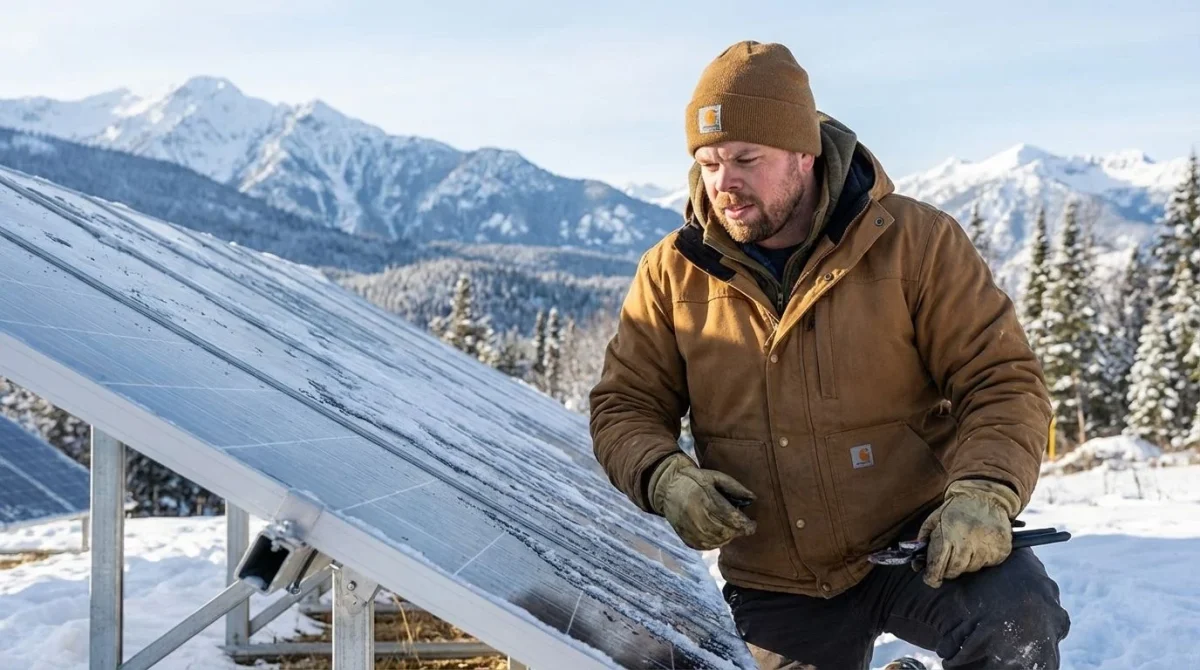
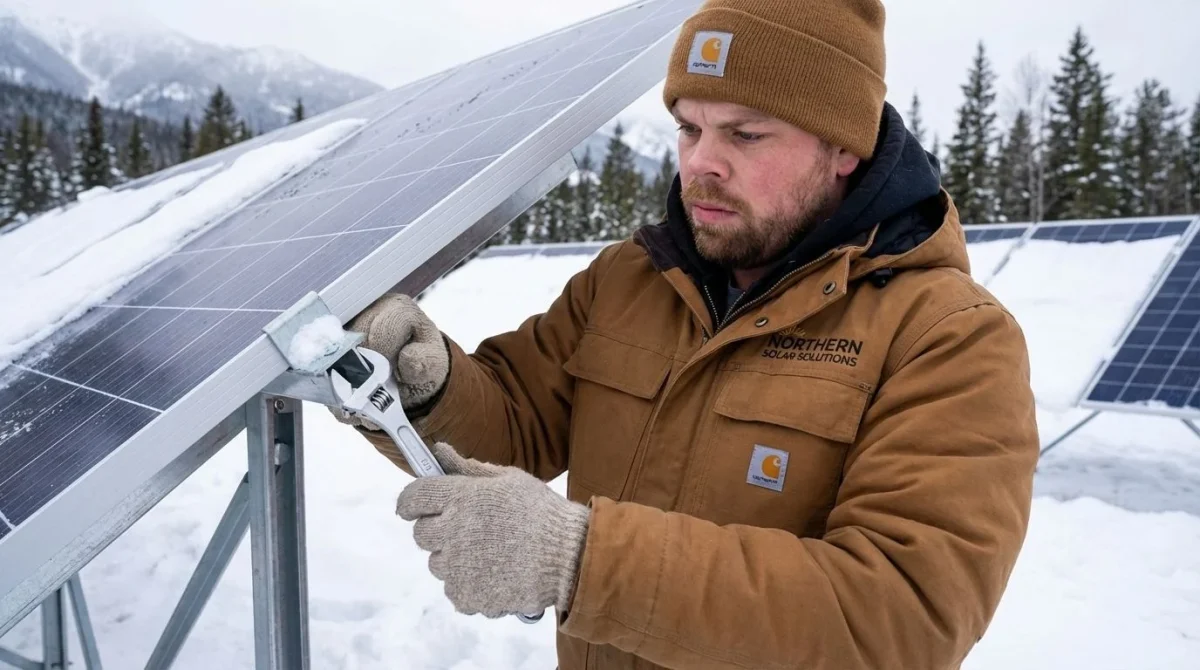
You might worry that Canadian winters will kill your power generation. It’s one of the most common solar myths Canadians still believe. It’s a common fear. But looking at Northern British Columbia tells a different story. Remote communities there rely on photovoltaic (PV) systems to keep the lights on in conditions far harsher than most suburbs face.
The data proves that renewable energy works in the cold if you set it up right. Here is what field-tested systems in the North teach us about durability and efficiency.
Key Takeaways
- Cold Boosts Output: Freezing temperatures improve solar cell conductivity, increasing efficiency by 5–15% over summer heat.
- Snow Helps (Mostly): Reflection from snow (albedo) can raise generation by ~10% on sunny days, while standard Tier-1 panels easily handle heavy snow loads (112 lbs/sq ft).
- Real Resilience: Northern off-grid success proves you need a “resilience stack“—typically solar plus 2–3 days of battery backup—not just AI buzzwords.
- Field-Tested Gear: Innovations forced by remote isolation, like walkable panels and industrial controls, provide a roadmap for durable home setups.
SCold Actually Boosts Efficiency
Heat degrades electronics; cold preserves them. Low temperatures improve electrical conductivity inside solar cells.
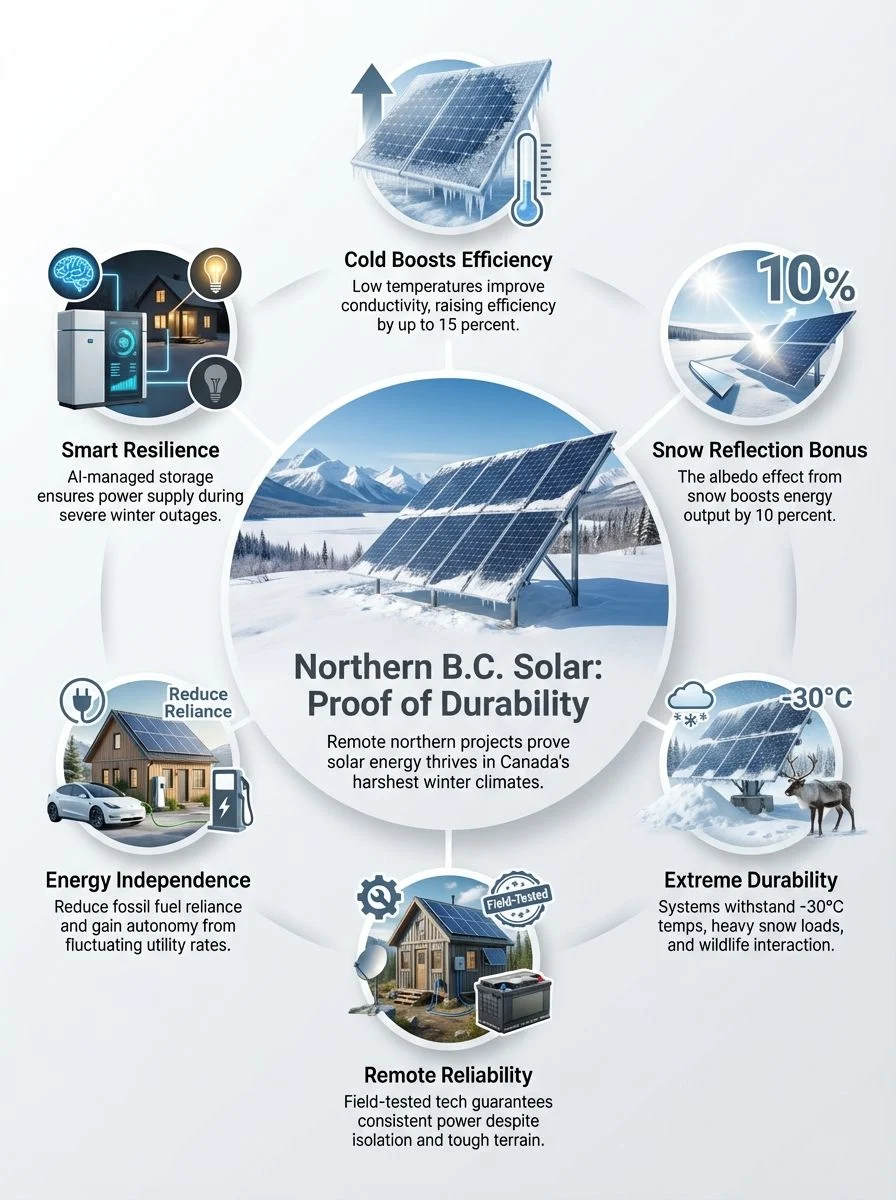
In Northern B.C., systems don’t just survive -30°C; they often perform better because of it. Data shows that cold temperatures can boost photovoltaic efficiency by roughly 5–15% compared to hot summer operating conditions. On clear, freezing days, that output can jump even higher. You aren’t losing power just because the thermometer drops.
Dealing With Snow Loads and Reflection
Snow covers panels. That happens. But it also acts as a mirror.
When the sun comes out, the white ground reflects light back up onto the array. This is called the albedo effect. In the right conditions, this reflected light can raise winter output by about 10% on sunny days.
The equipment handles the weight, too. You don’t strictly need a ‘made in Canada’ sticker, but you do need the best solar panels for Canadian winters. Many modern Tier-1 modules are rated for around 5,400 Pa of snow load. That is roughly 112 pounds per square foot. Installers in the North trust these specs to handle heavy accumulation without cracking.
Reliability Off the Grid
In remote areas, losing power isn’t an inconvenience; it’s a danger.
Projects like Canada’s largest off-grid solar project at Ulkatcho prove that reliability comes from a mix of technologies. They don’t rely on magic. They use a “resilience stack”: solar panels, battery storage, and smart controls.
While some marketing hype focuses on AI, the reality on the ground is about solid energy management systems. These systems balance charging and usage to keep power running during storms. For your home, the lesson is in the sizing. Off-grid design guides recommend 2–3 days of storage, also known as “days of autonomy.” You might not need that much backup for a grid-tied home, but understanding that buffer changes how you plan for outages. Incorporating a home battery system can significantly enhance your preparedness for unexpected weather events. The home battery benefits for storms extend beyond mere convenience; they also provide peace of mind knowing that essential systems remain operational during outages. By evaluating your energy needs and investing in adequate storage, you can create a resilient setup capable of navigating challenging conditions.
Innovation Born from Necessity
People in the North fix things because they have to. This leads to practical tech that works.
Take Forefront Energy. They build solar-powered systems to replace methane-venting devices on remote gas wells. It’s a specific industrial fix that proves solar can handle critical infrastructure tasks while cutting emissions.
Another example is an ultra-thin, walkable solar panel developed by a Prince George entrepreneur for an electric catamaran. It shows that solar tech isn’t just fragile glass; impact-resistant materials are becoming available for roofs and decks. The Northern Innovation Network encourages these makers to treat their field fixes as proper innovations—documenting and scaling them so the rest of Canada can benefit.
What You Should Do Differently
If you want a system that lasts 25 years—which is the standard performance warranty for maintaining ~85% output—you need to sweat the details.
- Check the Tilt: Steeper angles shed snow faster and catch more of the low winter sun.
- Verify the Ratings: Ensure your racking and panels are certified for high snow and wind loads.
- Manage Your Expectations: Solar works in the Arctic, but you need to size your system correctly. Use a solar calculator to check your load if you want backup power.
- Social Value: Beyond the technical specs, research on renewable energy in remote communities highlights that the real value is independence and local control. The same applies to your house.
Solar isn’t just for California. With the right setup, it works in the toughest parts of B.C., which means it will handle your winter just fine.
FAQs
1. Does extreme cold damage solar panels? Generally, no. Cold temperatures actually improve the conductivity of solar cells. As long as the materials (wiring, seals) are rated for low temperatures, the system will often produce more power per hour of sunlight in the cold than in the heat.
2. Do I need special “Arctic” panels for my home? You typically don’t need specialized Arctic gear. You need standard Tier-1 panels rated for high snow loads (5,400 Pa). Always check the datasheet to ensure the equipment is certified for the wind and snow conditions in your specific area.
3. How much extra power does snow reflection actually provide? On a clear, sunny day with fresh snow on the ground, the albedo effect can boost output by around 10%. However, don’t bank on this for your annual numbers; over a full year, the total gain is usually modest (often less than 5%).
4. How long do these systems last in the North? Data suggests they last as long as anywhere else. Most modern panels come with 25-year performance warranties. Case studies from cold climates show systems running effectively for two decades with minimal efficiency loss, provided they are maintained.