
Quebec Solar Subsidy: How Hydro-Québec’s New Grant Cuts Installation Costs by Up to 40%
April 10, 2026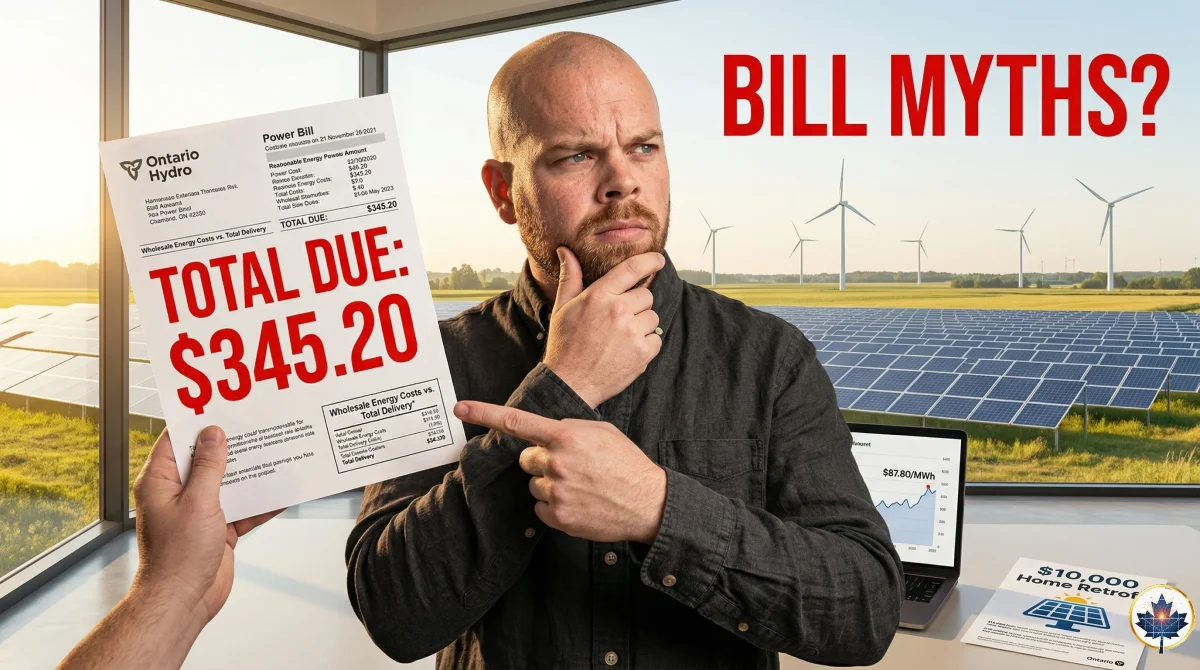
Ontario just approved 14 new renewable projects. That matters.
Your next hydro bill is not about to drop in a dramatic way. Still, Ontario’s latest power procurement is a real shift, and it matters more than the headline makes it seem.
Key takeaways
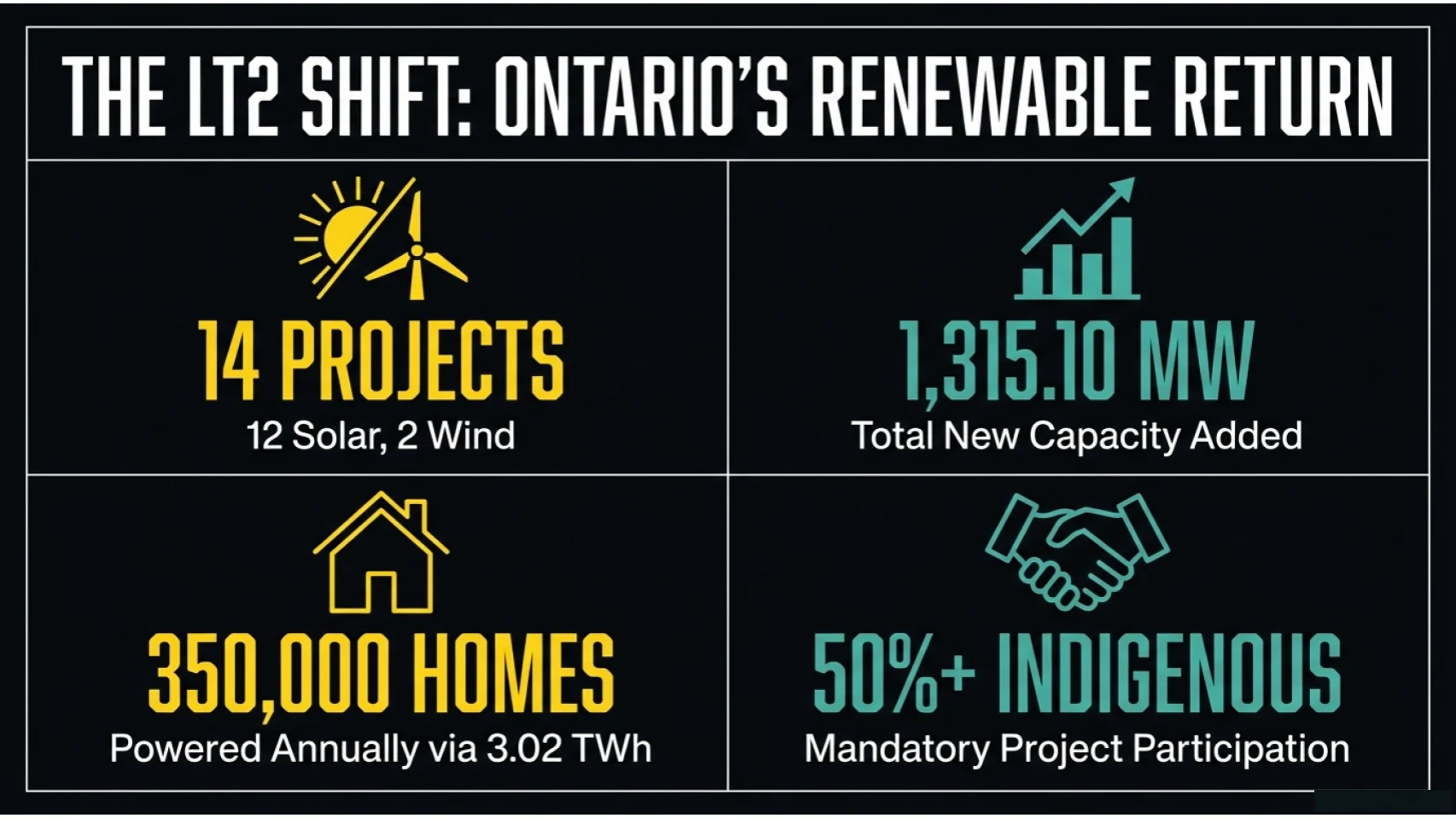
- Ontario selected 14 new renewable projects: 12 solar, two wind, 1,315.10 MW in total, with about 3.02 TWh of annual generation.
- Your next hydro bill probably won’t drop right away because residential bills include more than wholesale energy cost.
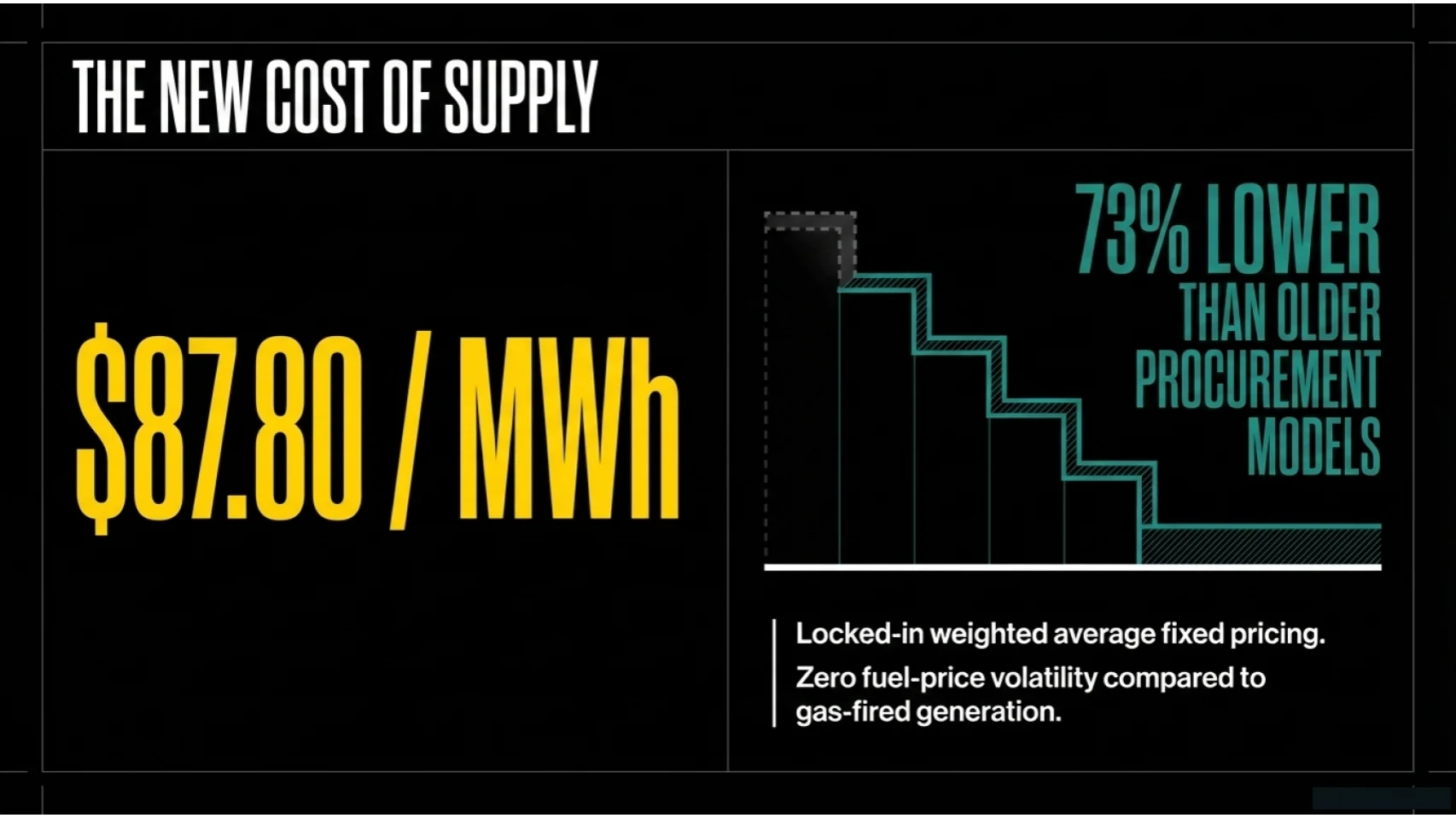
- LT2’s weighted average fixed price is $87.80/MWh, which Ontario says is 73% lower than older contract pricing.
- Net metering is where homeowners see direct value, especially when a system is sized to match annual usage and credits are used within 12 months.
- Home Renovation Savings is now the main Ontario retrofit path for many homeowners, with up to $10,000 for solar and battery storage.
- Good solar economics depend on your roof and usage, not on a generic sales pitch.
The Independent Electricity System Operator has now posted the final Long-Term 2 results: 12 solar projects, two wind projects, 1,315.10 MW of capacity, and about 3.02 TWh of expected annual production. Ontario says that is enough electricity to power more than 350,000 homes. Every selected project also includes at least 50% Indigenous participation, which is a major change from the old model where communities have often been treated as an afterthought instead of a core partner.
Numbers first. Then context.
| LT2 result | Final figure | Why it matters |
|---|---|---|
| Projects selected | 14 | Ontario is back in large-scale renewables after years of pause |
| Solar + wind mix | 12 solar, 2 wind | Most of the new build is solar |
| Total capacity | 1,315.10 MW | New supply for a grid that needs more power |
| Annual generation | 3.02 TWh | Useful new energy, not just nameplate capacity |
| Weighted average fixed price | $87.80/MWh | Long-term cost visibility for the province |
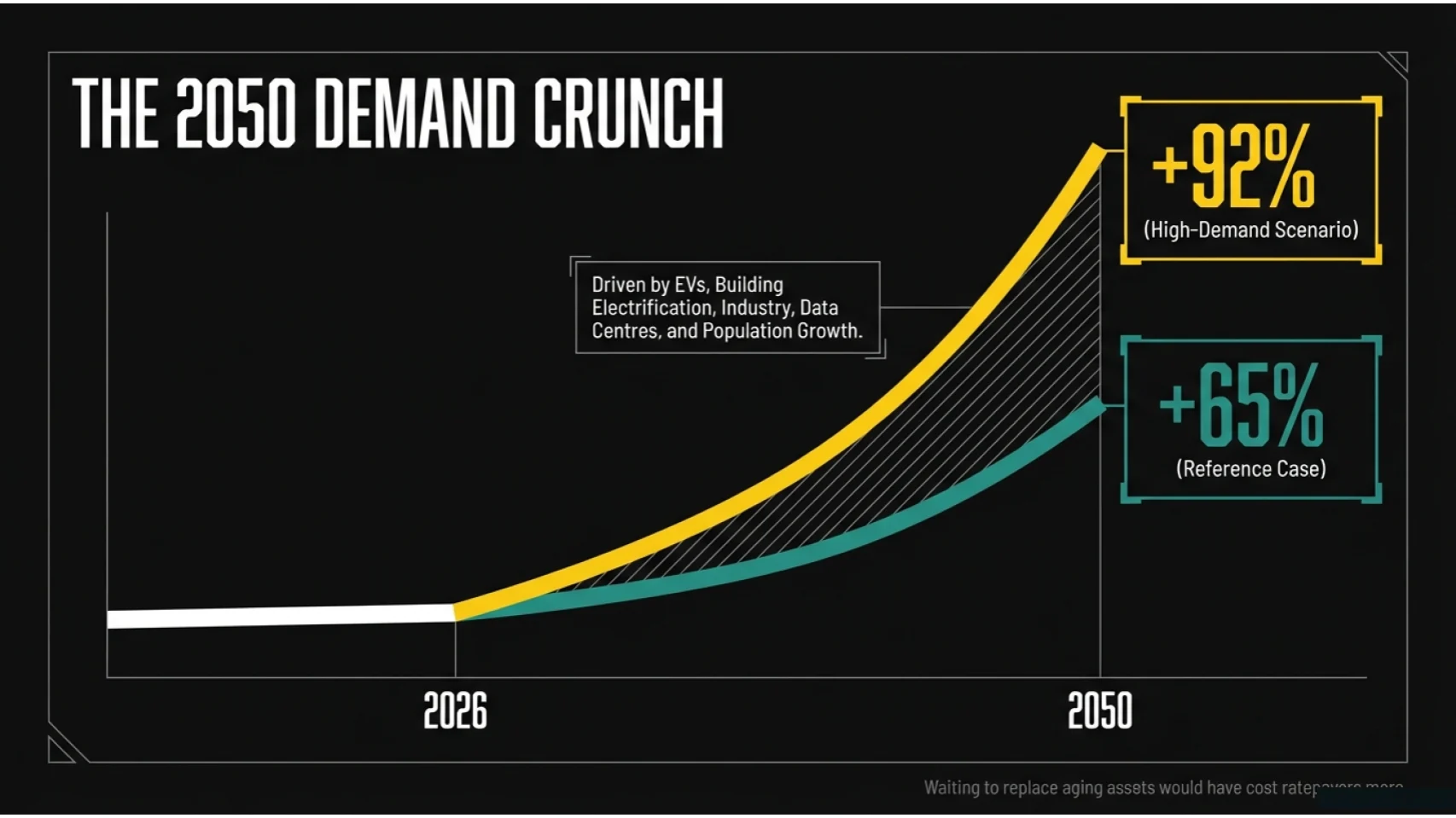
Ontario needed this. Fast. The IESO’s 2026 planning outlook says electricity demand could rise by 65% by 2050 in the reference case, and by as much as 92% in a high-demand scenario. That growth is tied to electric vehicles, building electrification, industry, data centres, and population growth. At the same time, older generation assets need refurbishment or replacement. Waiting would have cost more.
I’ve seen this question a lot from homeowners: “Great, province adds solar. Do I pay less next month?” Fair question. Wrong timeline.
Will your next hydro bill actually be cheaper?
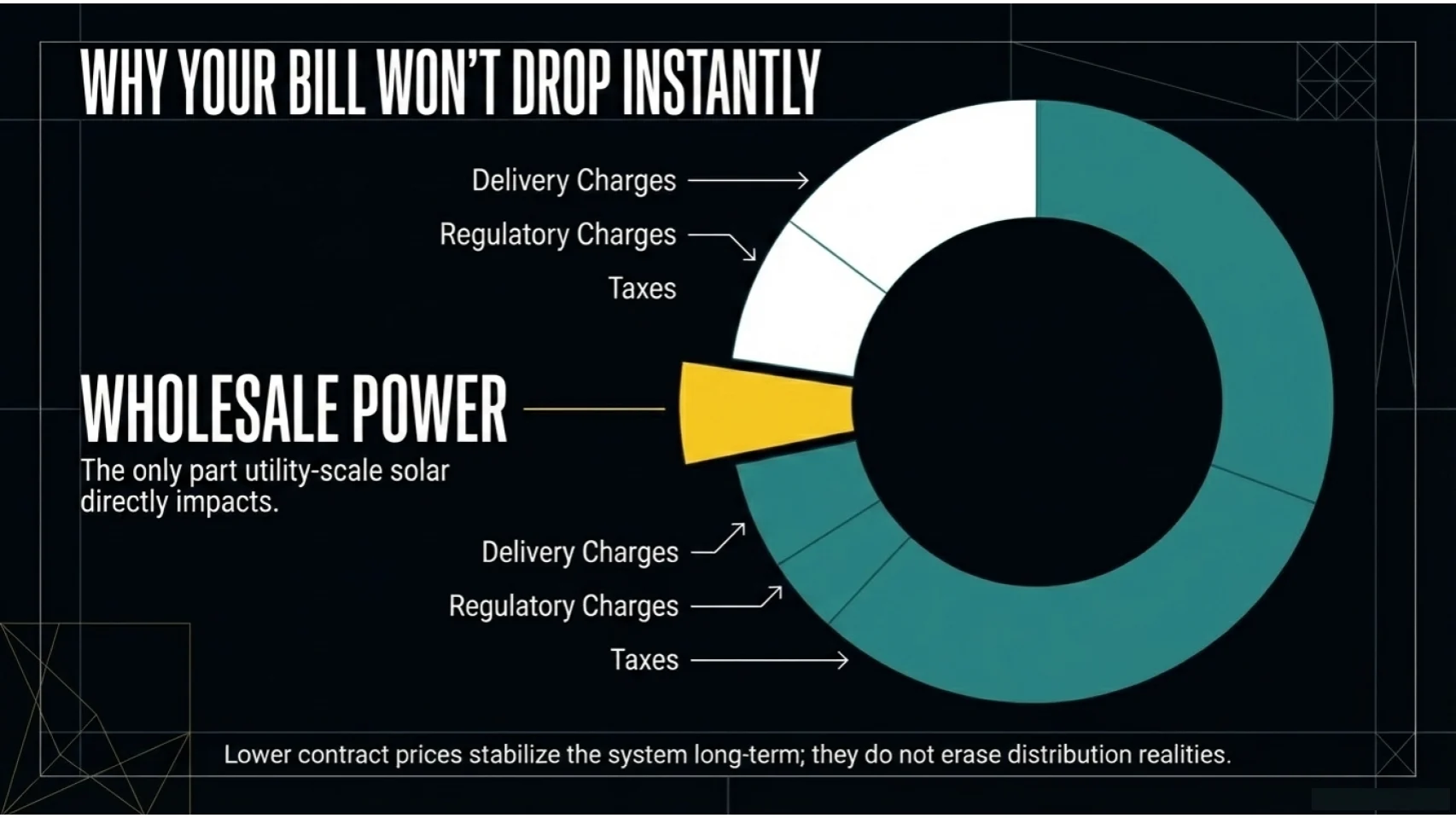
Not right away. Utility-scale solar does not show up as an instant discount on your next statement. It affects supply costs in the background first. Residential bills move slower because your bill is made up of more than just the energy price.
Here’s the split.
Wholesale power cost is only one part of your bill
Big solar farms sell into Ontario’s electricity system under long-term contracts. That helps shape system supply costs over time. Your home bill, though, still includes delivery charges, regulatory charges, taxes, and the structure of the Regulated Price Plan. So even if new generation is cheaper than older alternatives, you won’t see a one-month miracle.
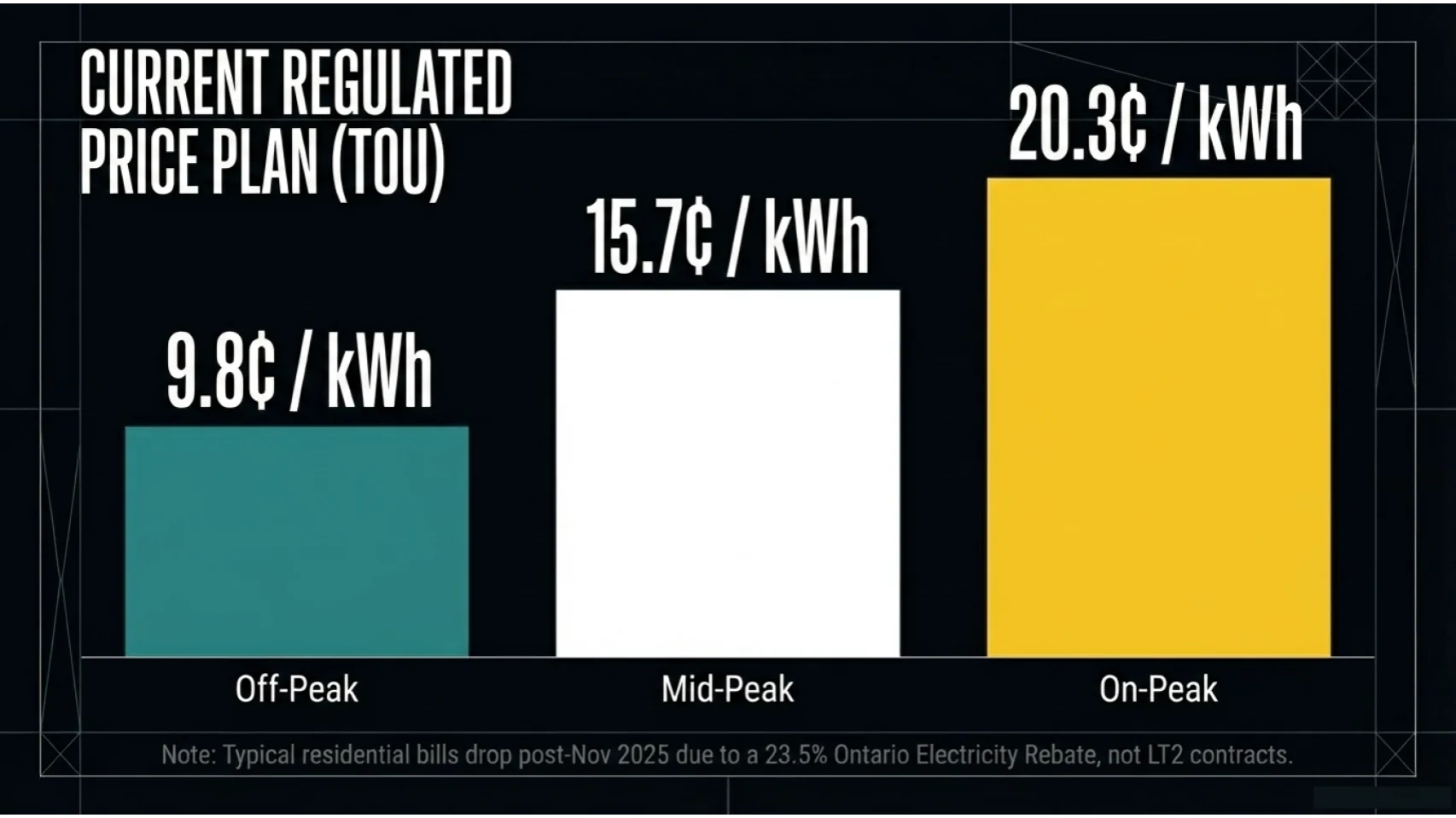
Current time-of-use rates show the point. Under the Ontario Energy Board’s current Regulated Price Plan period, off-peak is 9.8¢/kWh, mid-peak is 15.7¢/kWh, and on-peak is 20.3¢/kWh. Those prices matter. Yet they are only one layer of the full bill, and they do not instantly reset because Ontario signed new contracts. In fact, the same OEB update said a typical residential customer would see a lower total bill after November 1, 2025 because the Ontario Electricity Rebate increased to 23.5%.
Cheaper new supply still helps
This is where people get tripped up. A lower long-term contract price does not mean “cheap bill tomorrow.” It does mean Ontario is adding supply at a cost that is easier to plan around. The final LT2 weighted average fixed price came in at $87.80/MWh, and the province says that is 73% lower than earlier contracts signed under older procurement models. Fixed-price contracts also avoid fuel-price swings that come with gas-fired generation.
That stability matters. A lot.
Solar and wind have high upfront costs. After that, the fuel bill is basically zero. Gas plants are different. Build them, run them, then keep paying for fuel. That difference does not erase delivery charges or distribution upgrades, but it does help limit how much future generation costs can run away from ratepayers.
Storage is part of the story
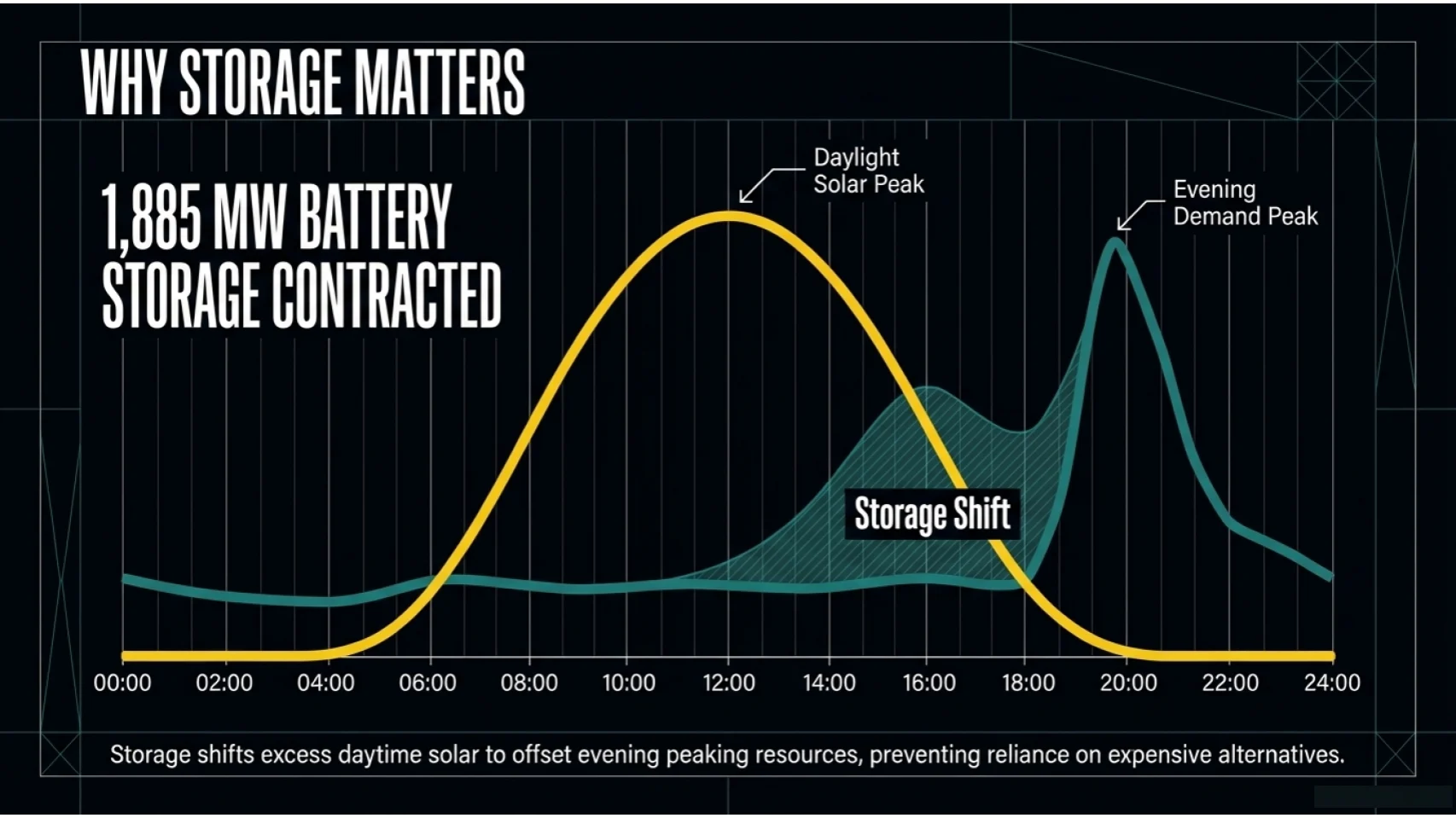
Ontario is not betting on solar alone. The province has already contracted about 1,885 MW of battery storage through recent procurements. That matters because solar output is strongest in daylight hours, while home demand often spikes later in the day. Storage helps shift some of that energy closer to the evening peak and reduces pressure on peaking resources.
Tip for bill expectations: Don’t judge utility-scale solar by next month’s bill. Judge it by whether Ontario adds new supply without locking ratepayers into even more expensive options later.
Why Ontario is buying solar again after years of silence
Back in 2018, Ontario cancelled 758 renewable energy contracts. That move froze a big chunk of the market and sent a clear message: large-scale renewables were out of favour. LT2 changes that picture.
Calling this a full clean-energy comeback would be too neat. Ontario is still using a mixed supply strategy that includes nuclear, storage, natural gas, hydro, wind, and solar. Still, this procurement is a clear signal that large-scale solar is back at the table. Real contracts. Real megawatts. Real delivery timelines.
Homeowners should care because Ontario’s supply choices affect the grid you rely on even if you never install a single panel on your roof. More low-cost renewable generation can moderate long-term supply costs. More storage can reduce stress during peaks. More diversity can make the system less exposed to one technology going down at the wrong time.
Net metering in Ontario: where homeowners feel the savings directly
Here’s the part that actually changes your own bill more directly: Ontario net metering.
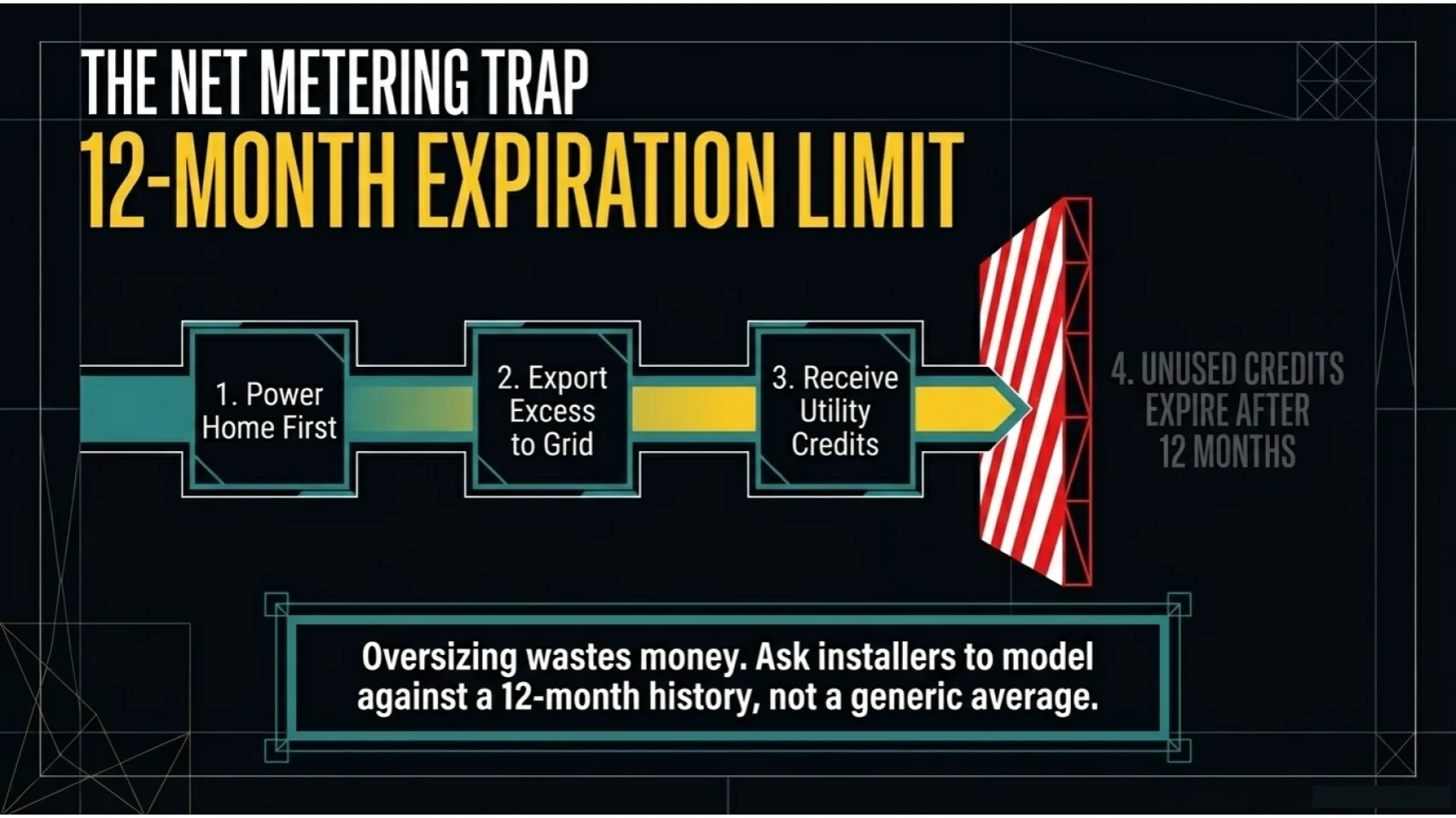
Under O. Reg. 541/05, your solar system powers your home first. Any extra electricity goes back to the grid, and your utility gives you a credit for the electricity portion you can use later. Those credits can be carried forward for up to 12 months. After that, unused credits expire. Gone.
That one rule changes the math.
I’ve had plenty of conversations with homeowners who wanted to oversize their system “just in case.” Bad move in most Ontario cases. Oversizing sounds smart until you realize you can build more production than you can reasonably use within that 12-month credit window. Then you paid for panels that produce credits you never use.
Best use of net metering
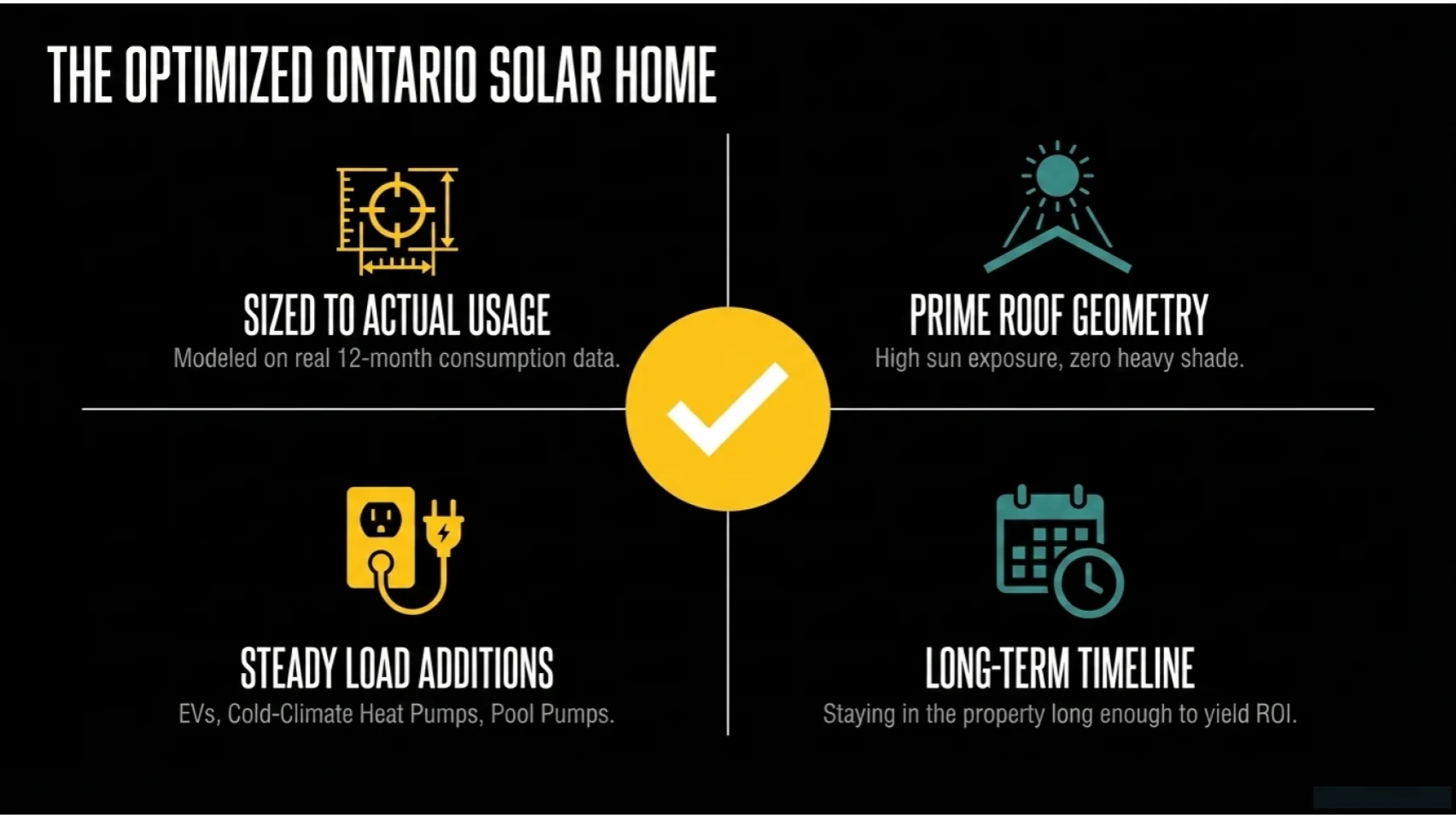
Ontario net metering works best when your system is sized close to your annual consumption, your roof has solid solar access, and your household uses enough electricity to soak up the credits across the year. Homes with electric heating, EV charging, pool pumps, or steady daytime loads often have stronger solar economics than very low-consumption households.
Tip for net metering: Ask your installer to model production against your last 12 months of usage, not against a generic household average. Generic averages waste money.
Plenty of people skip that step. Then they wonder why the numbers looked great on paper and average in real life.
Ontario solar rebates in 2026: what still exists and what is gone
Confusion here is brutal because a lot of old advice is still floating around online. Some of it is dead.
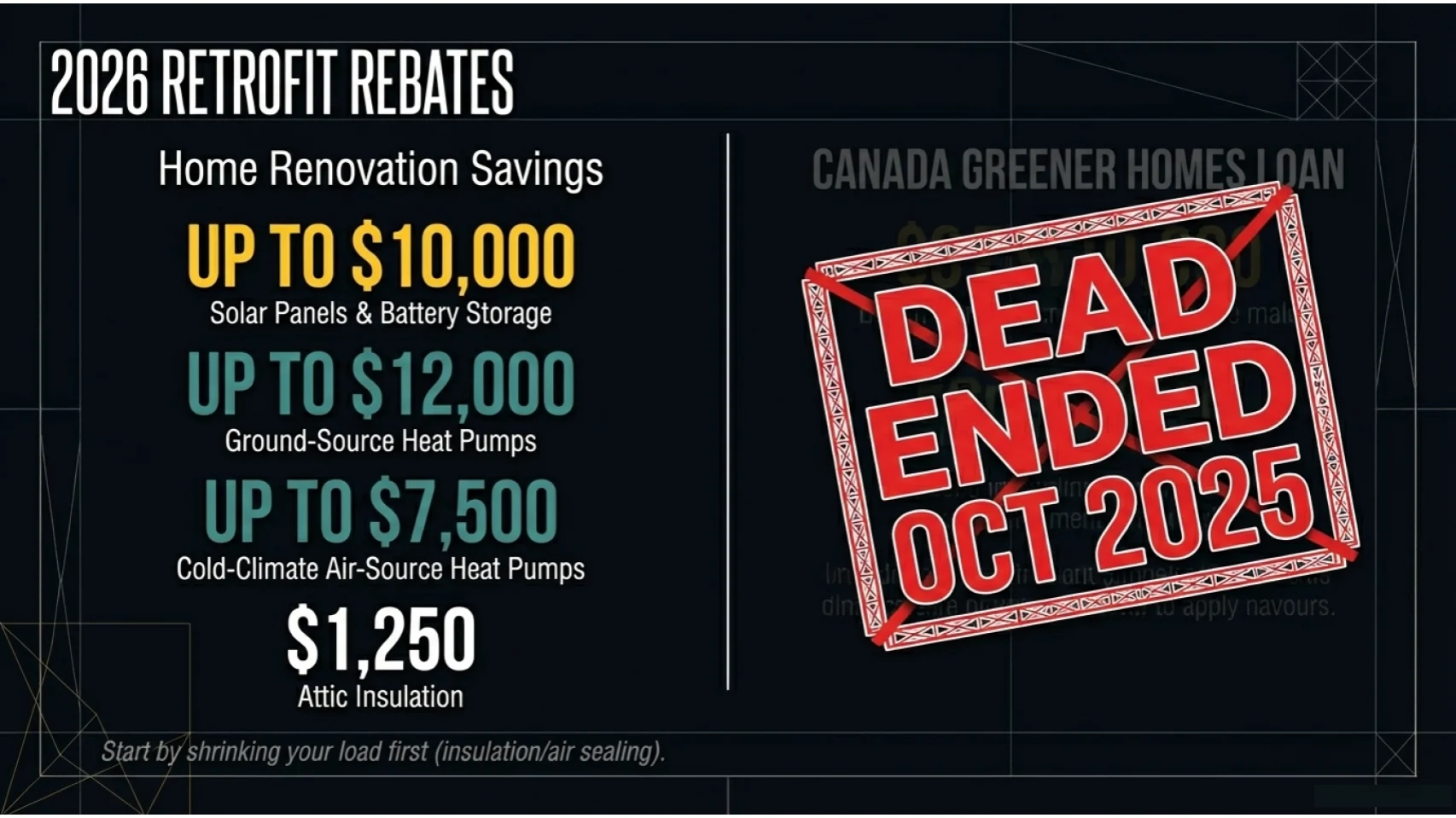
The federal Canada Greener Homes Loan stopped taking new applications on October 1, 2025. Ontario’s old Home Efficiency Rebate Plus path is also winding down. For many Ontario homeowners, the main current program is now Home Renovation Savings.
Core offers under Home Renovation Savings include:
- Up to $10,000 for solar panels and battery storage
- Up to $7,500 for cold-climate air-source heat pumps
- Up to $12,000 for ground-source heat pumps
- $1,250 for attic insulation
- $100 for a smart thermostat and up to $200 for some efficient equipment categories
Another useful detail: some Home Renovation Savings upgrade pathways let you skip a home energy assessment. That makes the process easier than the old federal grant workflow for certain upgrades, though eligibility rules still matter and program details can change.
Tip for rebates: Start with the measures that shrink your load first. Better insulation and air sealing can improve the economics of heat pumps and solar because you are fixing waste before adding equipment.
Are renewables really cheaper than nuclear or gas?
This part needs clean language because a lot of articles blur different technologies together.
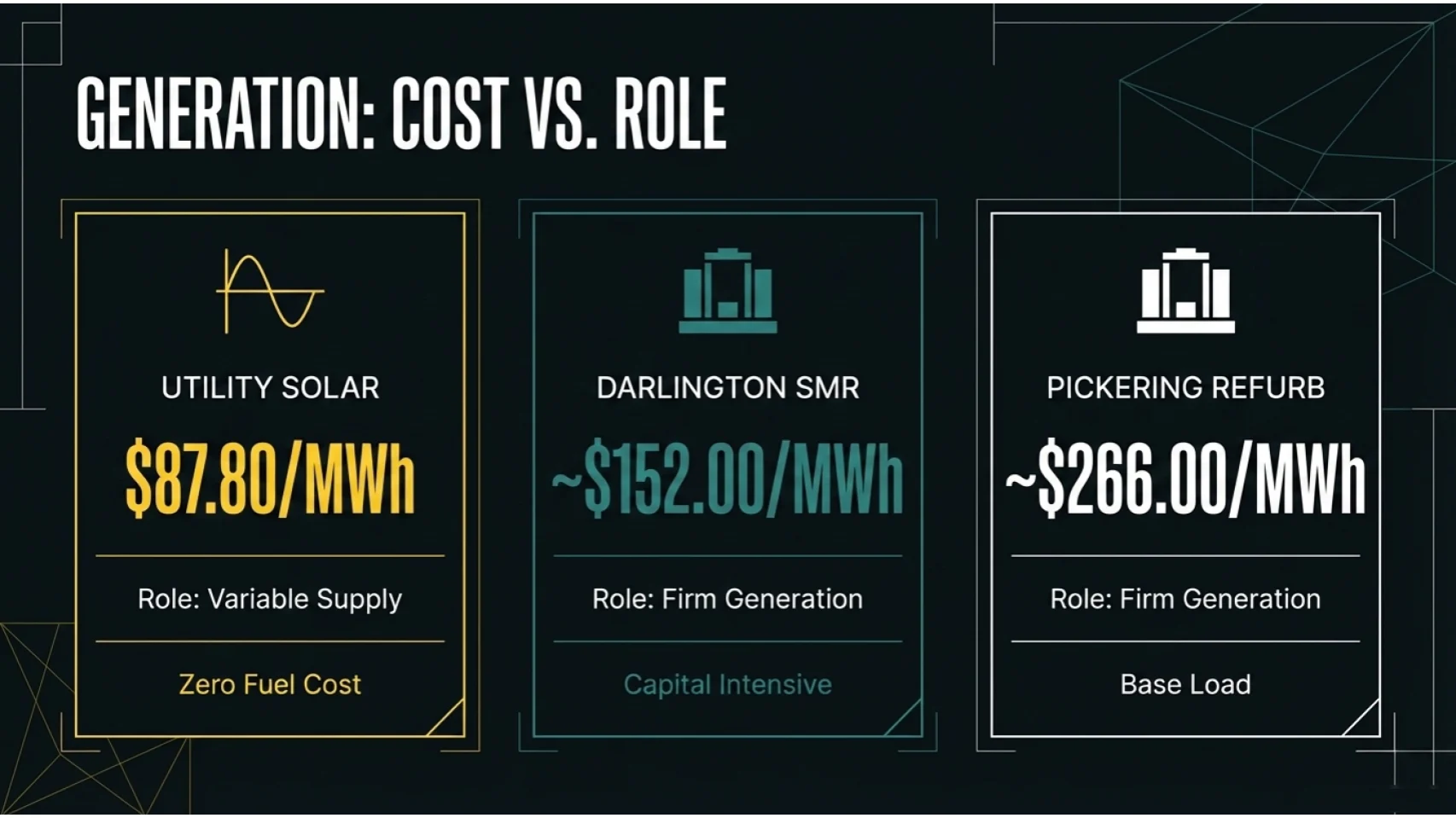
LT2’s $87.80/MWh weighted average fixed price is lower than some recent Ontario nuclear cost estimates cited by the Pembina Institute, including roughly $266/MWh for Pickering refurbishment and about $152/MWh for the Darlington SMR. That does not mean solar replaces nuclear one-for-one. It does not. Nuclear provides firm generation. Solar is variable. Different roles. Different operating profiles.
Still, price matters. Contract design matters too.
Fixed-price renewable contracts give Ontario long-term visibility. Gas costs are tied to fuel markets. Nuclear projects can come with very large capital exposure and long development timelines. No single source solves everything. Yet on cost alone, recent renewable procurements are much more competitive than many homeowners still assume.
Should you install solar on your own home now?
Depends on your roof, your load, and your local utility setup. That’s the honest answer.
A good Ontario home-solar candidate usually has a roof with decent sun exposure, enough annual electricity use to consume the credits, and a homeowner who plans to stay put long enough to benefit from the savings. Solar also gets more attractive if you expect higher future electricity use from an EV, heat pump, or electric water heating.
What does not work well? Heavy shade. Tiny power bills. Bad roof geometry. Systems sized for bragging rights instead of real consumption.
I’d also keep the goal realistic. Rooftop solar in Ontario is usually less about hitting a dramatic zero bill and more about controlling part of your long-term electricity cost. That is still a strong reason to do it. Just do not buy from a quote built on inflated production numbers.
For a broader timing question, read our guide on whether it makes sense to install solar panels now. If you already have panels and output looks weak, this piece on what to do when solar panels underperform in Canada is worth a look.
Could Ontario hydro rates go down later?
Maybe in pieces. Not in some dramatic overnight way.
Ontario rates are shaped by supply contracts, transmission, distribution, conservation programs, regulation, and rebate policy. That mix is exactly why big new renewable projects will not instantly cut your statement in half. Still, adding lower-cost supply now can help moderate future increases compared with doing nothing or relying too heavily on higher-cost new supply.
No official Ontario Energy Board announcement says time-of-use periods are about to be redesigned around solar. So don’t sell that as a near-certain outcome. What is fair to say is this: more solar and more storage give Ontario better flexibility later if the province wants to push load into cheaper daylight hours.
Frequently asked questions
How many solar projects were selected in Ontario’s LT2 procurement?
Twelve solar projects and two wind projects were selected, for a total of 14 projects.
How much new power is Ontario adding?
The final LT2 results show 1,315.10 MW of capacity and about 3.02 TWh of expected annual generation.
Will these projects lower my hydro bill this year?
Not in a big direct way. They can help moderate system supply costs over time, but your residential bill still includes delivery, regulatory charges, taxes, and rate-plan design.
What is the current Ontario net-metering credit window?
Unused electricity credits can be carried forward for up to 12 months. After that, any unused balance expires.
Can I still apply for the Canada Greener Homes Loan?
No. The program stopped taking new applications on October 1, 2025.
What rebate is available in Ontario for solar in 2026?
Home Renovation Savings offers up to $10,000 for solar panels and battery storage, subject to program rules and eligibility.
Is Ontario solar worth it for homeowners?
For the right home, yes. Best results usually come from a well-oriented roof, solid annual electricity use, and a system sized to your real consumption instead of a sales target.
Last Updated on April 11, 2026 by Vitaliy