How to Prevent Moss Growth Under Solar Panels on Roofs in Canada
January 3, 2026
Roof Moss Removal Victoria, BC Cost In Seconds Save Time And Money
January 6, 2026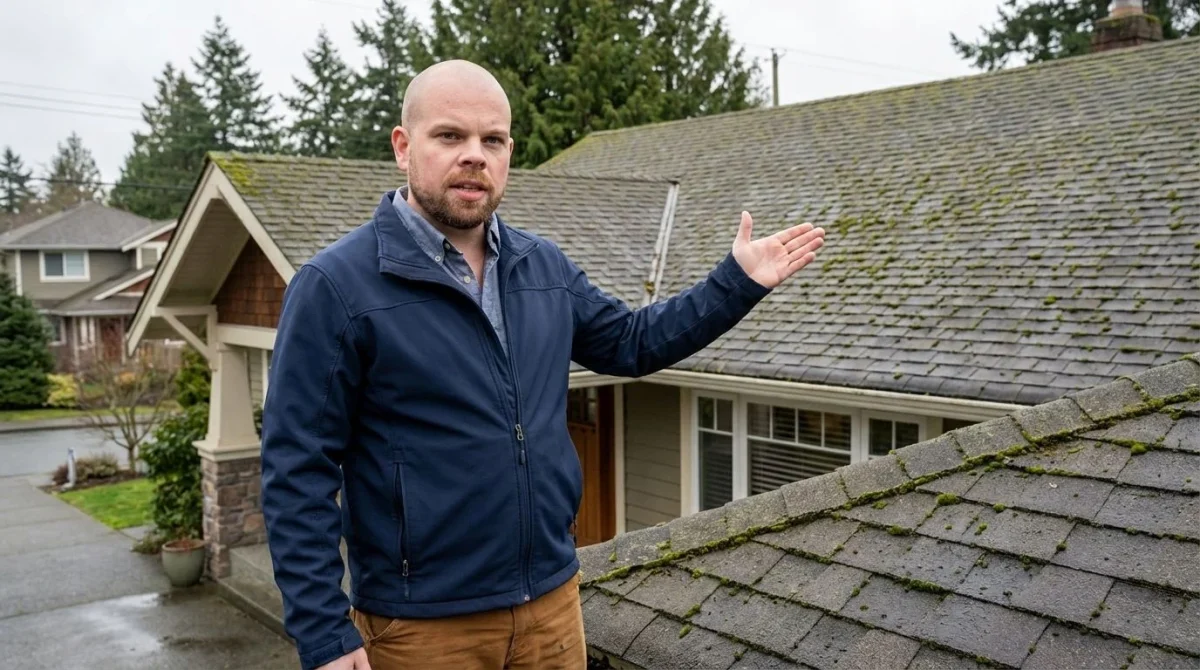
Have you ever booked a moss removal service, felt good about your clean roof, then spotted green fuzz creeping back before you even started planning solar?
Key Takeaways
- Climate Matters: Victoria Airport stats show about 901 mm of annual precipitation, creating ideal conditions for moss.
- Real Timelines: Expect moss to return in 12–24 months; companies often warranty for this period.
- Avoid Pressure: The Asphalt Roofing Manufacturers Association warns against high-pressure washing to protect shingle granules.
- Solar Impact: Dirty panels lose energy. IEA PVPS data suggests soiling causes global average losses of 4–7%.
- Safety First: WorkSafeBC regulations require fall protection for heights over 3m.
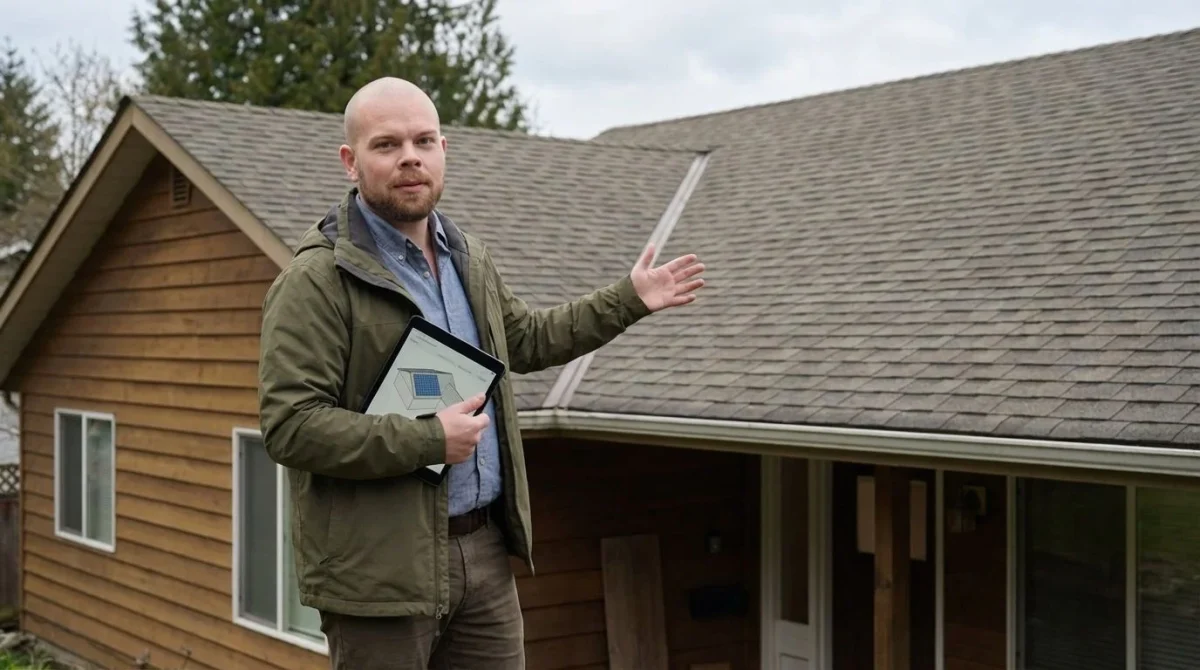
I see this pattern constantly. I help homeowners prepare for solar installations and review real-world system performance across Canada. I’m Vitaliy Lano, a Solar Energy Consultant with years of experience. I am going to share what homeowners in Victoria, BC tend to love, hate, and wish they knew before paying for roof moss removal in Victoria, BC.
We need to be honest about why your roof turns green. It is not bad luck. It is biology meeting a very wet environment.
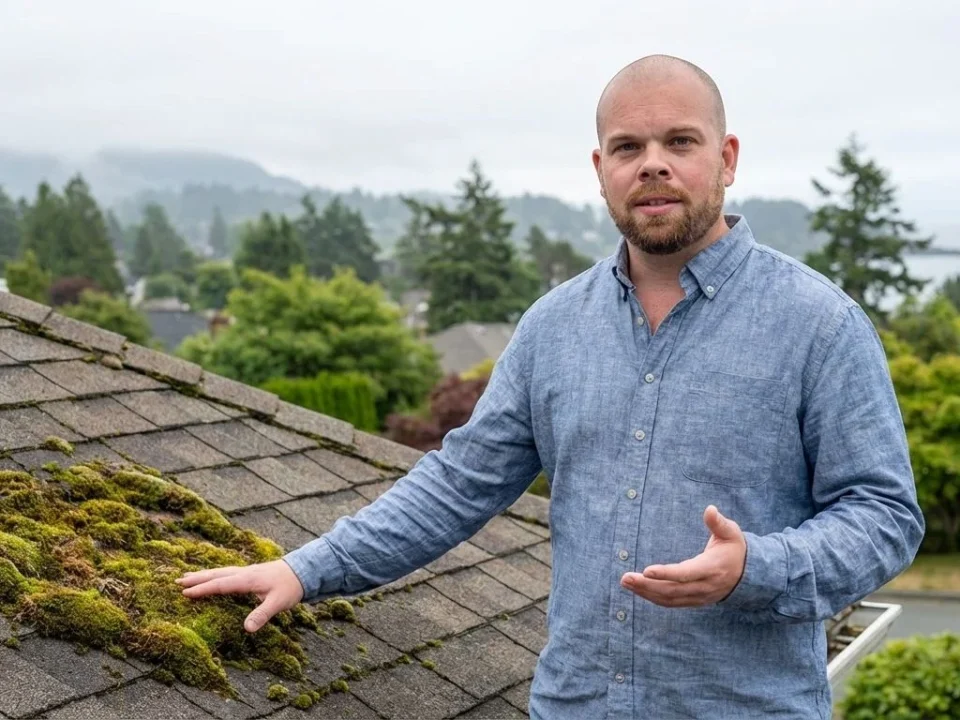
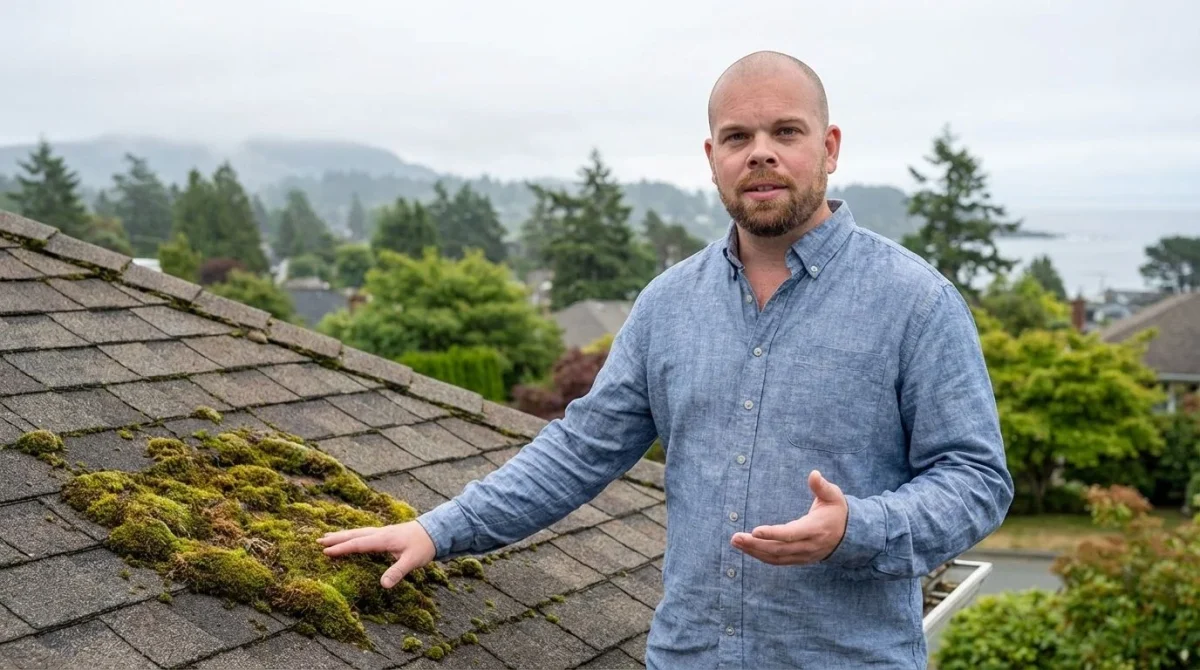
Why Roof Moss Keeps Coming Back in Victoria
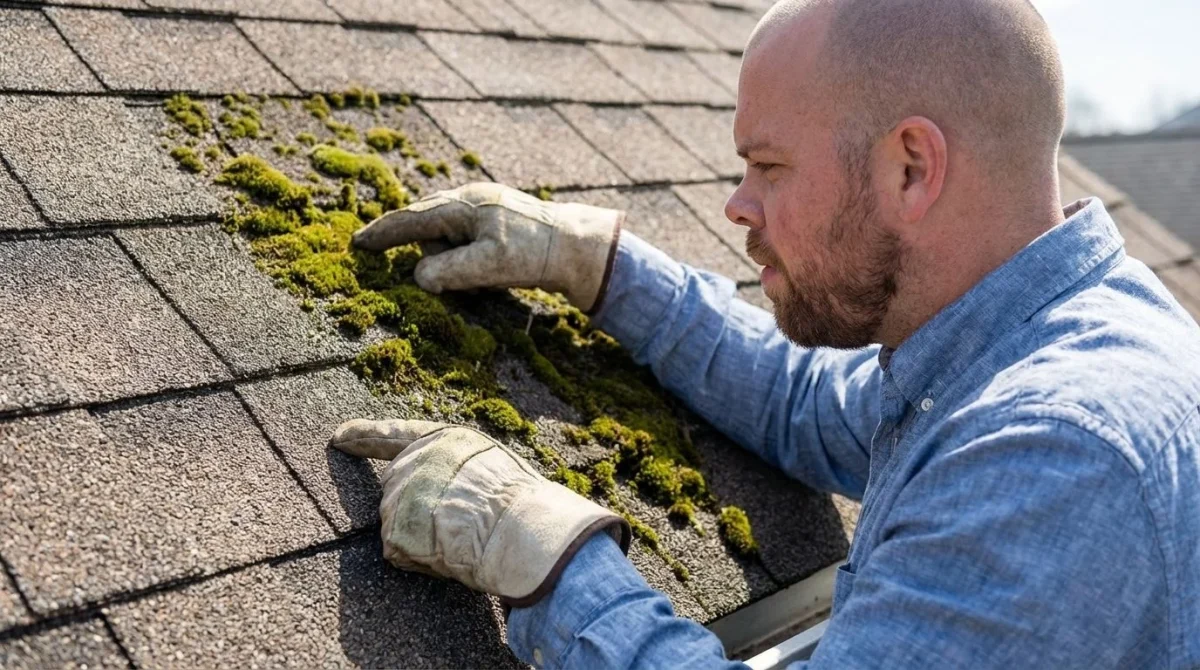
Victoria’s mix of shade, moisture, and organic debris acts as a perfect moss starter kit. If your roof stays damp, spores do not need much time to take hold again.
Let’s look at the actual numbers. Victoria Weather summaries based on Environment and Climate Change Canada’s 1991-2020 normals for Victoria Airport list about 901 mm of total annual precipitation. Furthermore, depending on which station you check, such as the data referenced on Wikipedia, Victoria typically sees well over 100 days a year with measurable precipitation.
That is a lot of wet days.
For solar, this matters immensely. A damp, debris-loaded roof is more likely to need repair or extra care around mounts and flashing before panels go on. I have seen this across the rainy coast while working on solar projects and home energy audits, especially in Langford and Sidney.
Here is the trap: a service that only scrapes moss off a shingle often looks great for a few weeks. But it does not change the conditions that helped moss thrive in the first place. Fast regrowth usually means the crew removed what you could see but left spores and moisture traps behind.
The Real Timeline for Regrowth
In my experience, “good cleaning” is not just about making the roof look clean for the invoice photo. It is about how long it stays that way.
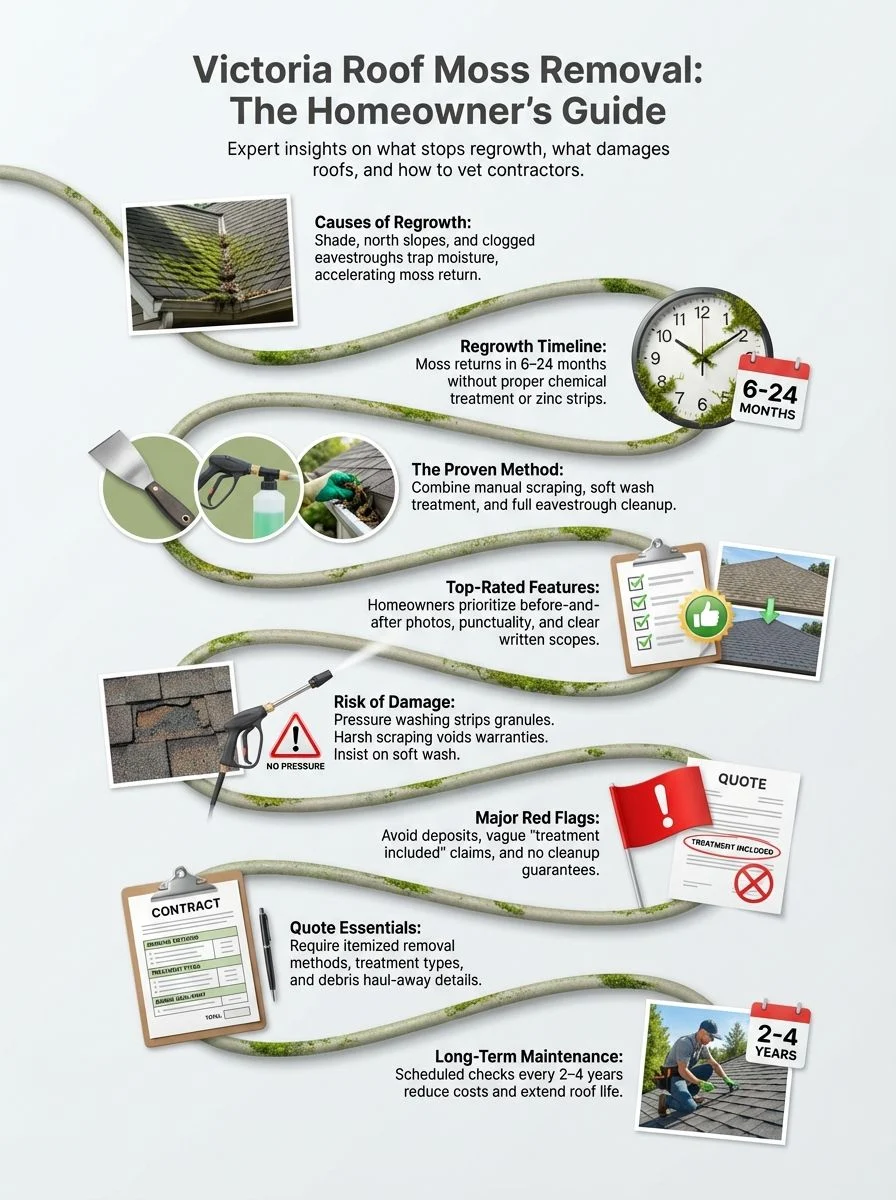
Many homeowners see regrowth somewhere between 12 to 24 months after a solid job. This aligns with standard industry warranties. For example, we offer a guarantee for that 12-to-24-month window, explicitly tying the duration to tree cover and shade.
On heavily shaded roofs—or roofs with clogged gutters—regrowth can show up much sooner, sometimes under a year. If a company promises you five years of moss-free living without a maintenance plan, be skeptical.
If you want a longer interval, you have to control the environment:
- Keep eavestroughs flowing.
- Clear valleys and roof transitions before the rainy stretch.
- Trim branches that block early-morning sun.
- Use a maintenance program that treats small patches before they turn into full mats.
Identifying the Regrowth Zones
If you want to predict where moss will return first, look for the parts of your roof that stay wet and dirty the longest.
Heavy Shade: Trees and morning shade slow drying. Moss loves this. Wet Debris: Needles, leaves, and roof grit act like a sponge. They hold moisture against the asphalt. North-Facing Slopes: These dry slower after rain and fog. Clogged Gutters: When water backs up, it keeps the roof edge and fascia damp.
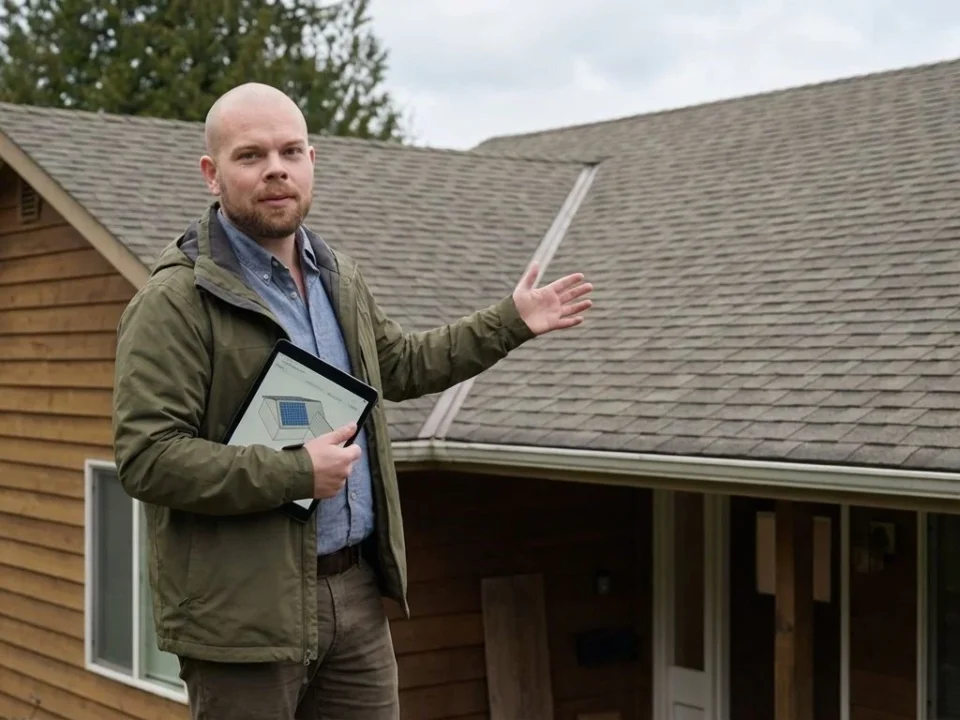
For solar homeowners, I add one more: panel edge zones. Moss under solar panels can create small shade bands and catch debris at the lower edge. I prefer roof plans that specifically call out where the array will sit so we can prep those areas.
What Homeowners Love vs. Hate
When you analyze hundreds of reviews, you stop looking at the star rating and start reading the stories. The difference between a 5-star job and a 1-star nightmare is rarely about the price. It is about communication and respect for the home.
What Homeowners Love
The best reviews usually describe the same feeling: “They treated my roof like it mattered.”
- Careful Manual Removal: Homeowners appreciate crews who take the time to brush by hand rather than blasting everything with water.
- Clear Scope: You want to know exactly what “service” includes. Does it include the gutters? The cleanup?
- Photo Proof: Before-and-after photos help you verify valleys, edges, and problem zones you cannot see from the ground.
- Solar Awareness: Crews who ask about future solar (or existing panels) tend to work more carefully around flashings.
What Homeowners Hate
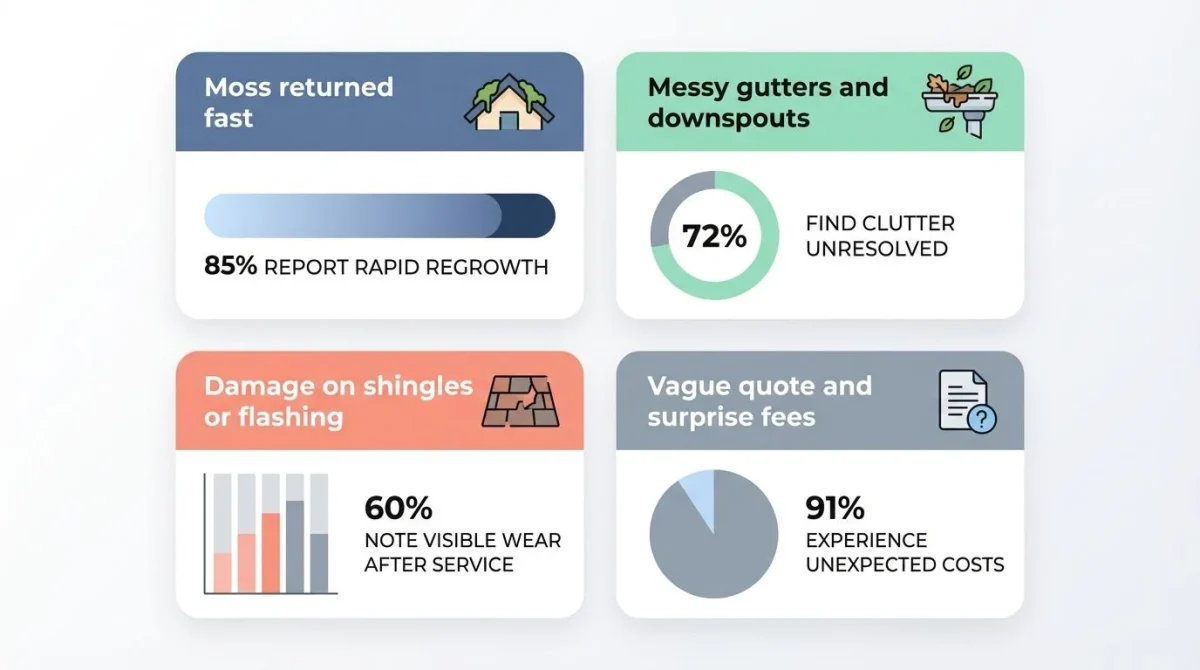
| What homeowners complain about | What it usually means | What to ask next time |
|---|---|---|
| Moss returned fast | No real treatment, weak treatment, or skipped follow-up | “What’s the retreatment plan, and what triggers a return visit?” |
| Messy gutters and downspouts | Debris was loosened but not removed | “Do you clear and flush downspouts, and will you show photo proof?” |
| Damage on shingles or flashing | Too much pressure, harsh scraping, or sloppy ladder placement | “Do you avoid pressure washing on asphalt shingles?” |
| Vague quote and surprise fees | Scope gaps that allow add-ons later | “What’s included in the base price, in writing?” |
The most common complaint is simple: moss comes back fast, and the homeowner feels like they paid for a cosmetic quick-fix instead of real maintenance.
- Messy Gutters: Debris was loosened from the roof but left to clog the downspouts.
- Damage: Torn shingles, bent flashing, or granules stripped away.
- Surprise Fees: The price went up after the crew arrived.
- No Treatment: They scraped the moss but didn’t apply anything to kill the remaining spores.
The Danger of “Speed-First” Methods
Most roof damage complaints trace back to methods designed to be fast, not safe.
Pressure Washing Risks You might think high pressure is the best way to clean, but for asphalt shingles, it is risky. The Asphalt Roofing Manufacturers Association (ARMA) advises against using high-pressure washing systems on asphalt roofing. High pressure can dislodge the granules that protect the shingle from UV light.
GAF, a major shingle manufacturer, also explicitly warns that power washing can remove granules and contribute to premature failure.
Safety Shortcuts Roof work is dangerous. If a crew is running around your roof without gear, that is a liability risk for you. WorkSafeBC regulations generally require fall protection systems when work is being done at a height of 3 meters (about 10 feet) or more.
Furthermore, for steeper roofs (often defined as a slope of 8:12 or greater), WorkSafeBC guidelines suggest additional specific safety planning. A professional crew knows this. They also know that Part 20 of the OHS Regulation prohibits using an eavestrough to support a crawl board or ladder. If you see a ladder resting right on your gutter, speak up.
What “Done Right” Looks Like
A proper roof demossing job should read like a checklist.
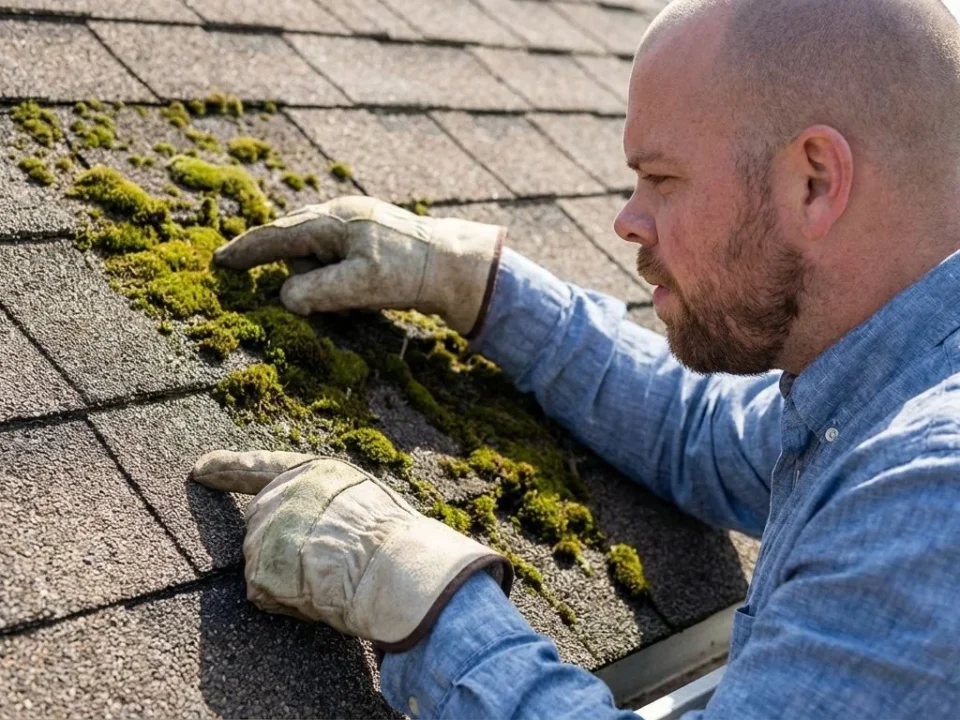
- Manual Removal: Careful hand work or brushing on thick patches. This gets the bulk of the material off without abrasion.
- Soft Wash: A low-pressure application of a cleaning solution. This treats the algae and lichen you cannot scrape off.
- Targeted Treatment: You want coverage that actually dwells on the surface long enough to work.
- Gutter Cleaning: You must clear the gutters and flush the downspouts. If the water cannot leave, the moss will return.
- Full Cleanup: Debris off paths, patios, and landscaping.
A pro-tip for solar clients: if a crew will not write these steps down, they probably will not do them in order on your roof.
Controlling the Runoff
Here is a question many homeowners skip: “How do you control the water coming off the roof?”
The City of Victoria states that only clean water is allowed in storm drains. Their flood prevention guidance reinforces that we should not be flushing debris into the system.
A professional should be able to explain how they protect catch basins. Do they bag the gutter debris? Do they divert the rinse water? If they look confused when you ask, that is a red flag.
Understanding the Quote and Pricing
A good quote should be boring. Boring means clear.
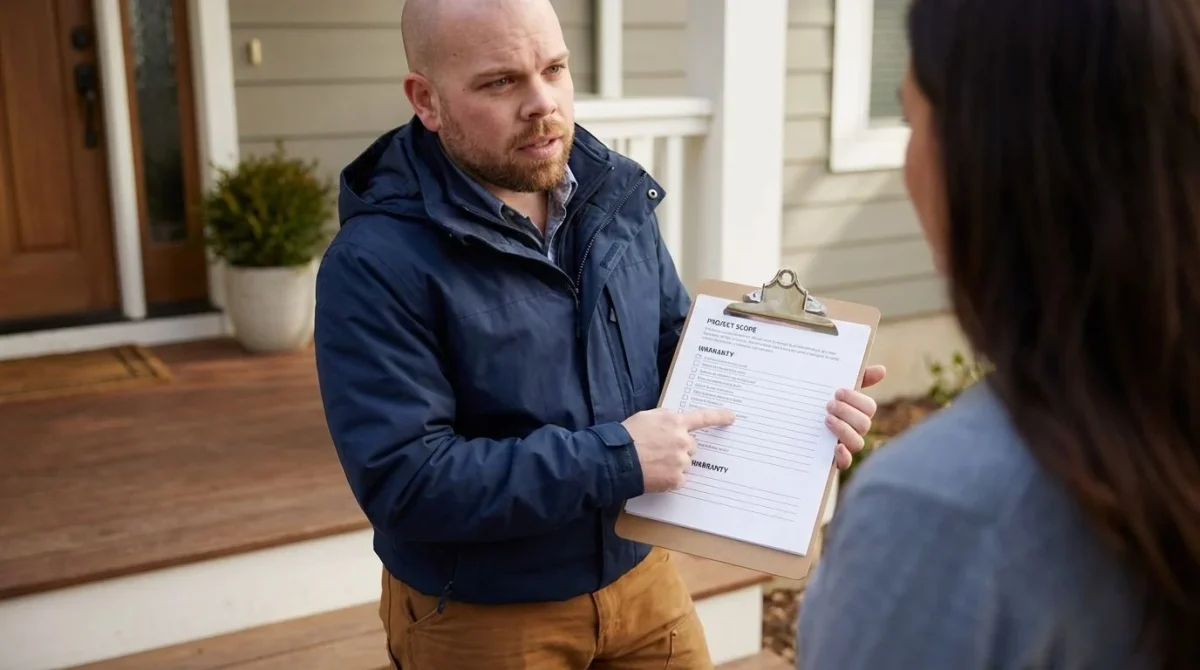
You want a written scope that tells you exactly what happens.
- Removal Method: Hand, brush, or air?
- Treatment: What chemical? Will it harm your plants?
- Gutters: Are they included?
- Cleanup: Will they haul the debris away?
- Warranty: Is it written down?
Price Reality Check As of 2025, pricing varies, but you can find published ranges to help you budget. For example, Shine Pros lists soft wash pricing around $0.30 to $0.75 per square foot, with moss removal specifically around $0.20 to $0.70 per square foot depending on severity.
Use ranges like these as a reality check. If someone quotes you half the market rate, ask what steps they are skipping. Usually, it is the cleanup or the insurance. You should also verify the roof moss removal cost details in writing before work begins to avoid surprises.
What Changes the Price?
| Factor | Why it changes the price | What a fair quote should show |
|---|---|---|
| Roof size (square metres) | More surface area means more labour and more treatment | Measured size, or a clear method used to estimate it |
| Roof pitch and storeys | Steeper roofs need more safety setup and slower movement | Pitch note, storey count, and the safety approach |
| Access | Tight yards, fragile landscaping, and limited ladder placement add time | Access notes and any protection steps |
| Moss thickness | Thick mats take longer to remove by hand and require more cleanup | A severity note with photos, and a matching plan |
| Add-ons (gutter cleaning, minor repair) | Extra work can be real, but it must be optional and itemized | Line items, not a surprise bill |
- Roof Size: More area, more time.
- Pitch: Steeper roofs require more safety gear and slower movement.
- Access: Can they get a ladder up easily?
- Moss Thickness: Thick mats are heavy. They take longer to remove and cost more to dispose of.
Prevention vs. Cure
| Prevention option | What it helps with | Where it disappoints |
|---|---|---|
| Routine gutter cleaning | Helps the roof edge dry faster, reduces overflow and backups | Does not kill existing moss on the roof surface |
| Targeted treatments | Keeps small colonies from turning into mats | Needs a schedule, not a one-time spray |
| Zinc strips | Can slow regrowth near edges and flow paths when installed well | Less effective where shade and debris stay heavy |
| Protective coatings (for example, GoNano) | Can reduce re-rooting pressure for a period of time | Still needs spot treatments and clean gutters |
Prevention is the part homeowners often skip, then they wonder why moss removal becomes a yearly subscription.
If you plan to install solar, prevention is non-negotiable. The IEA PVPS program notes that soiling—dirt, dust, and organic growth on panels—causes average global energy losses of about 4% to 7%. Keeping the roof clean supports both your shingles and your energy production. Whether you are dealing with standard shingles or considering solar panels vs old roofs, getting the surface right first is critical.
Maintenance Plans If your home sits under trees, a maintenance plan is usually cheaper than letting the moss grow back fully.
- Annual Treatment: Kills spores before they root.
- Gutter Cleans: Keeps the edges dry.
- Zinc Strips: These can help, but they are often overwhelmed by heavy debris in Victoria.
How to Pick a Provider Without Getting Fooled
Star ratings are easy to game. Look for the details in the text.
- Do they mention photos?
- Do they mention written quotes?
- Do they mention cleanup?
- Do they mention gutters?
If you have solar, look for reviews that mention working around panels. You do not want a crew that steps on your array.
Quick Decision Guide
Use this filter before you book:
- Inspect: Choose a provider who actually looks at your roof valleys and vents.
- Scope: Ask for manual removal, soft wash, and treatment in writing.
- Proof: Require before-and-after photos.
- Warranty: Read the terms.
- Timing: Schedule for a dry stretch if possible.
Final Thoughts
If you are planning solar, treat roof moss removal like a construction project, not a cosmetic clean. The best results come from clear scope, gentle methods, and a plan that keeps your roof dry.
That is how you turn moss removal from a headache into a predictable part of caring for your biggest asset.
FAQs
1. What do Victoria homeowners love about roof moss removal? Many homeowners in Victoria praise fast, clean work and better curb appeal. They report a safer roof and longer roof covering life after removal. The best feedback usually centers on crews who respect the property and leave the yard tidy.
2. What do people hate in the reviews? Homeowners complain about high pricing that changes mid-job, missed spots in valleys, and occasional roof damage from pressure washers. They also dislike poor follow-up and unclear warranty terms.
3. What do homeowners wish they knew before hiring a moss removal firm? They wish they had asked about eco-friendly treatments, insisted on a written quote, and clarified the warranty. Many say regular maintenance cuts long-term costs, and some are surprised when moss returns in two years if the underlying moisture issues aren’t fixed.
4. How can I use reviews to pick the right Victoria roof moss removal service? Read the 3-star and 4-star reviews to get a balanced view. Look for consistent comments on safety, results, and pricing transparency. Check for WorkSafeBC coverage and liability insurance, ask for references, and confirm they offer follow-up care.
5. Does moss affect solar panels? Yes. Moss can grow along the edges of frames, creating shade on the cells. Furthermore, IEA PVPS data indicates that soiling can reduce energy output by 4-7%. A clean roof is essential for an efficient solar array.
If the quote is vague now, the “service” will feel vague on your roof.
Last Updated on January 6, 2026 by Vitaliy