
Stop Paying for Roof Moss Removal in Victoria, BC
February 2, 2026
Calgary Solar Panels ROI: The “Fees & Export” Calculator People Keep Missing
February 28, 2026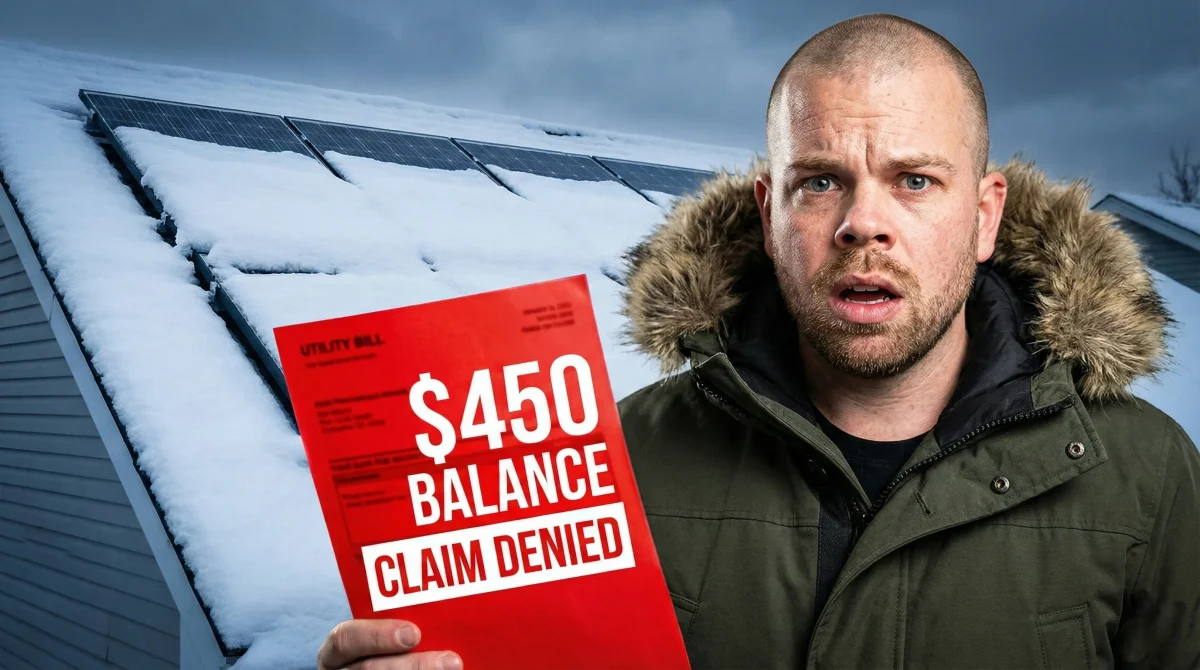
You open the envelope from BC Hydro or EPCOR. You expect a zero balance. You owe $145. Panic sets in. Your solar array is supposed to offset your entire usage. You check your phone app. Production is down 20%. The result? Pure frustration. You call your installer expecting a swift refund. They point to a clause on page nine. Your claim is denied.
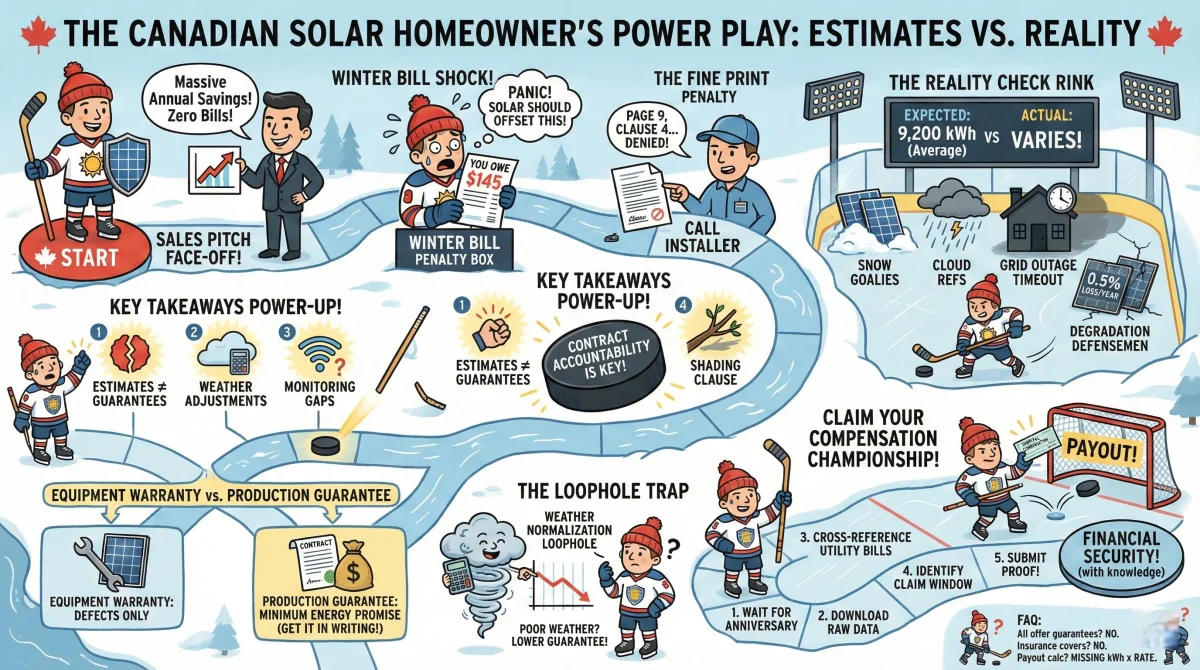
Homeowners across Canada face this exact scenario in winter. Sales representatives hand out charts showing massive annual savings. Those charts are software estimates based on long-term typical weather files and baseline assumptions about tilt, azimuth, and system losses. Read the data sources. Reality involves dirt, snow, grid outages, and gradual panel degradation. You need contract-level accountability to protect your investment. Let go of the solar panel myths Canadians still believe. Demand hard facts.
Key Takeaways
- Estimates are not guarantees. An estimate isn’t automatically enforceable unless your contract includes a production or performance guarantee with defined remedies.
- Weather adjustments change claim outcomes. Installers calculate your guaranteed output based on actual weather data using weather normalization frameworks.
- Monitoring gaps complicate disputes. If your system goes offline, you lose visibility and delay critical troubleshooting.
- Read the shading clause. Many contracts explicitly exclude new shading or customer-caused shading changes from the warranty.
The Reality of Solar Production Estimates
A typical Canadian home solar estimate relies on photovoltaic potential for your specific location. Natural Resources Canada (NRCan) publishes detailed mapping showing these expectations in kilowatt-hours per kilowatt installed. Look at the numbers. Canada-wide average PV potential sits around 1,150 kWh/kWp per year according to IEA PVPS reports. An 8 kW system generates roughly 9,200 kWh annually on a long-term average basis. Real-world results vary by location, roof geometry, and shading. Check your own roof potential using a reliable solar panels calculator.
Installers use tools like Aurora Solar or HelioScope to model shade and simulate production. They feed Typical Meteorological Year (TMY) datasets into the software. Software makes assumptions. Assumptions fail. Production guarantees aren’t universal across Canada. Many installers provide estimates, not guaranteed production.
What Exactly is a Solar Production Guarantee?
A production guarantee is a written promise. The system will produce at least a stated amount of energy over a stated period. You receive a defined remedy if it falls short. The remedy is usually a credit or a check calculated at a specific dollar-per-kWh rate. Know your rate. Add this to your list of questions to ask solar companies before signing anything.
Equipment Warranties vs. Production Guarantees
Do not confuse your hardware warranty with your production guarantee. They do different things.
- Equipment Warranty: Covers physical defects, materials, and workmanship for panels and inverters. Durations vary widely by component and brand.
- Performance (Module) Warranty: Dictates the panel will still produce a stated percentage of its rated power after 25 years. Look at this Canadian Solar warranty example. It specifies a 0.6% annual decline after year one. Learn what happens to solar panels after 25 years so you understand long-term degradation.
The Fine Print: Where Guarantees Fall Apart
Companies limit liability through specific contract exclusions. They dictate measurement methods covering weather variability, shading changes, and required maintenance. Read your specific contract.
The Weather Normalization Loophole
Some production frameworks use weather normalization concepts. They compare actual performance against weather-adjusted expectations. A severe winter hits Ontario. Cloud cover increases drastically. You might wonder do solar panels work on cloudy days, and the answer is yes, but output drops significantly. The installer runs a calculation. They adjust your guaranteed baseline downward to match the poor weather. You get zero compensation.
Grid Outages and System Downtime
Grid-tied inverters shut down during outages. This is a mandatory anti-islanding safety requirement confirmed by manufacturers like Enphase and SolarEdge. Your panels produce zero electricity during a blackout. Installers subtract this downtime from your annual target.
Internet connectivity causes massive disputes. If your monitoring goes offline, you delay troubleshooting. You lose visibility into what happened during the missing period. Enphase notes that data needs time to sync after reconnection. Fix connection issues immediately.
Snow and Winter Losses
Snow reduces winter production. Annual snow loss stays in the single digits in many settings, but winter-month losses hit much harder depending on your roof tilt and site conditions. A NAIT study in Edmonton showed roughly a 3% annual loss from snow. Contracts explicitly make homeowners responsible for clearing shading obstacles. Expect lower outputs if heavy snow sits on your array for weeks.
Panel Degradation
Your panels lose efficiency over time. NREL research shows median degradation for PV modules sits around 0.5% per year. Manufacturer warranties reflect this specific annual decline. Do not expect Year 1 numbers a decade later. Track the degradation schedule.
Tip for Reviewing Contracts: Always ask for the weather normalization formula in writing before signing.
Real Data: How Often Do Panels Actually Underproduce?
I review actual production logs from across Canada daily at SolarEnergies.ca. High-quality systems installed by reputable crews rarely miss targets due to hardware failure. The cause is almost always external.
I reviewed a contract for a homeowner in Calgary last year. Read our Alberta solar panels guide for local context on weather patterns. He demanded a check for a 1,200 kWh shortfall. The solar company refused. Why? Tree growth. His neighbor planted a spruce three years prior. The branches cast a permanent shadow. His contract explicitly excluded new shading or customer-caused shading changes from the warranty. He lost the case. Check your yard constantly. If you don’t, ignored landscaping quickly turns into one of the hidden costs of going solar.
Step-by-Step: How to Claim Your Shortfall Compensation
You confirmed you have a legally binding production guarantee. You are ready to file a claim. Follow the exact procedure outlined in your document.
- Wait for the anniversary. Guarantees operate on strict 12-month cycles. Let the full year conclude.
- Download the raw data. Export the hourly production data for the entire 12-month period.
- Cross-reference utility bills. Pull your imported and exported energy logs from your utility provider. Compare these numbers against your solar app.
- Identify the claim window. Some contracts have short claim windows and strict notice requirements. Check yours.
- Submit the required proof. Send the data export and utility bills exactly as outlined in the warranty terms.
FAQ
Do all solar companies in Canada offer production guarantees? No. Many installers provide estimates, not guaranteed production. You must request a financially backed production guarantee in writing and verify the terms.
How is a shortfall payout calculated? The company subtracts your actual annual production from the guaranteed amount. They multiply the missing kilowatt-hours by a defined rate. Ensure this rate matches your retail electricity cost.
Does my homeowner’s insurance cover solar underproduction? No. Home insurance covers physical damage and liability. Policies do not cover lost generation or financial savings due to bad weather or degraded equipment. Read the Acera overview for exact coverage details.
Last Updated on February 27, 2026 by Vitaliy