
Vancouver Island Solar Panel Installation: Cost, Rebates, + Calculator
August 30, 2025Solar Panels on Farmland: Where in Canada Is It Worth It?
September 4, 2025Last Updated on May 27, 2026 by Vitaliy
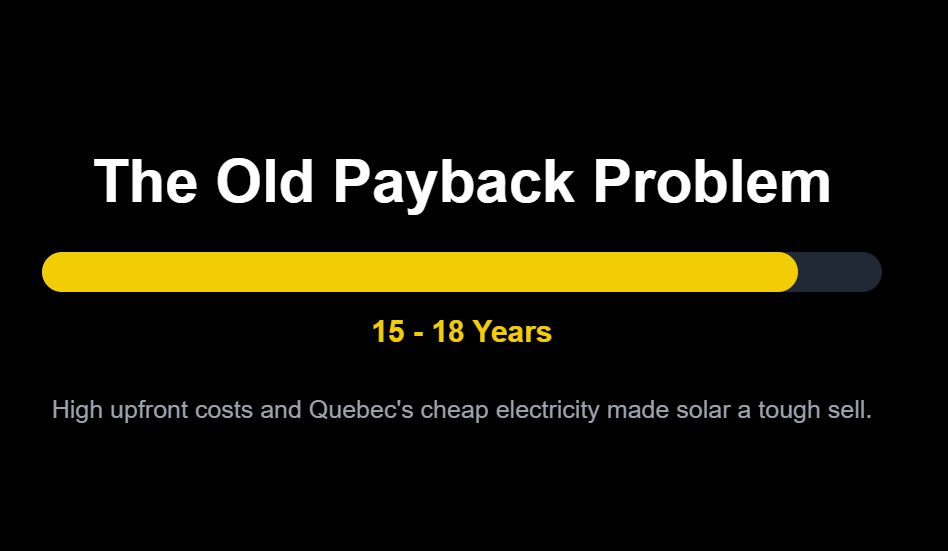
For years, Quebec has been a tough market for solar energy. With some of the lowest electricity rates in North America, the math for switching to solar just didn’t add up for most people. The payback period was often 15 to 18 years, which is a long time to wait. But things are changing, and it looks like 2025 is the year solar power finally makes sense in Quebec.
Hydro-Québec dropped a surprise announcement on July 31st, introducing new subsidies that could cut the time it takes to pay off your solar system nearly in half. This is a significant shift, one that the industry has been pushing for. Let’s break down what this actually means for you, whether you’re a homeowner or a business owner.
What Quebec Solar Incentives are Available for 2025?
The big news is the new subsidy program from Hydro-Québec. It’s a direct response to years of lobbying from groups like Énergie Solaire Québec who argued that the province was falling behind on renewable energy adoption. The goal is to make grid-connected solar systems a practical choice, not just something for off-grid cabins.
Are there any New Solar Rebates coming in 2025?
Yes. The main incentive for residential properties is a straightforward financial rebate. Hydro-Québec is offering $1,000 per kilowatt (kW) of solar panels installed. There’s a cap, though—the rebate can’t exceed 40% of the total installation cost.
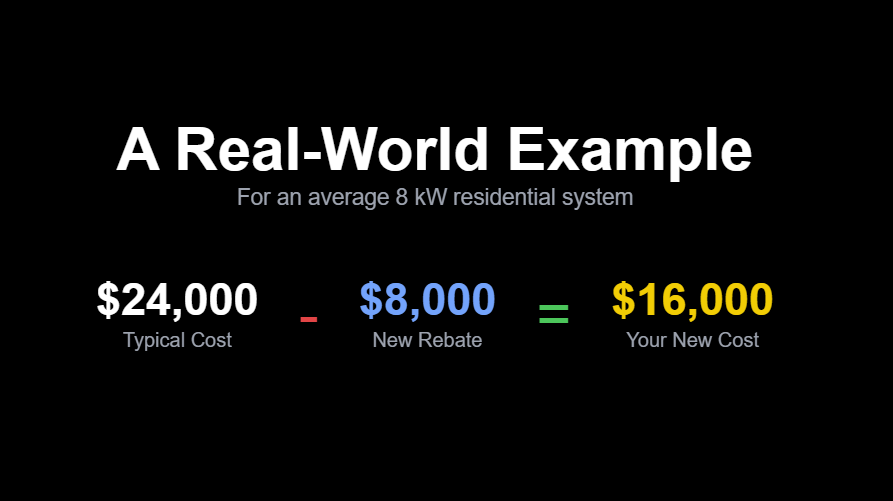
Let’s look at the numbers. The average residential solar system in Canada is around 8 kW.
- Without subsidy: An 8 kW system might cost around $24,000.
- With subsidy: You would get an $8,000 rebate ($1,000 x 8 kW).
- New upfront cost: $16,000.
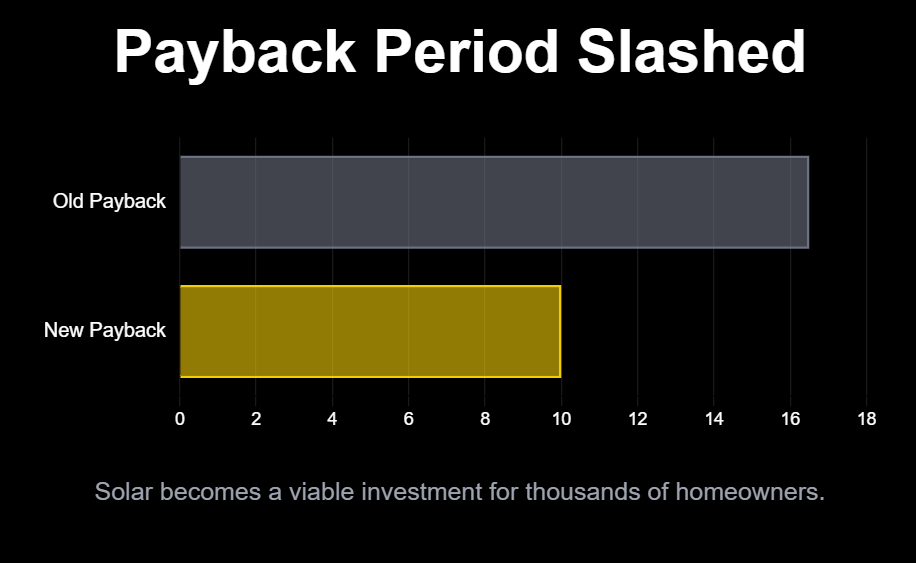
This single change is projected to slash the payback period from that daunting 15-18 year range down to about 10 years. This calculation also factors in the expected 3% annual electricity rate hikes Hydro-Québec has forecasted, which makes generating your own power even more valuable over time.
Tip for Homeowners: When you get quotes for a solar installation, ask the installer to show you the payback calculation both with and without the new Hydro-Québec rebate. Make sure they use the 40% cap in their calculation if it applies to your system’s cost.
2026 update: Hydro-Québec now processes residential solar support through LogisVert after project completion. Eligible residential solar panels must have been installed on or after June 30, 2025, and the request must be submitted within nine months of installation. Hydro-Québec also requires official authorization before grid connection and recommends waiting for conditional acceptance before buying self-generation equipment.
How do Quebec Solar Incentives compare Across Canada?
For a long time, Quebec has lagged behind other provinces. Let’s compare:
| Province/Territory | Typical Incentive | Notes |
|---|---|---|
| Quebec (New) | $1,000/kW (up to 40% of cost) | Aims to make solar financially viable against low electricity costs. |
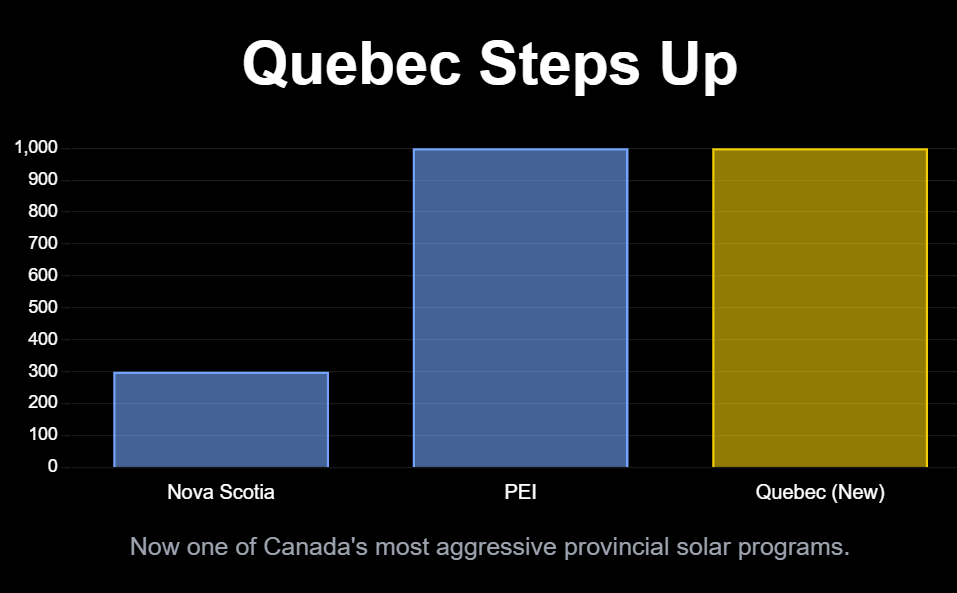
| Nova Scotia | Up to $0.30/watt ($300/kW) | Lower than Quebec’s new offer. |
| Prince Edward Island | Up to $1,000/kW, capped at $10,000 | Similar rate to Quebec, but with a hard cap. |
| Federal | Canada Greener Homes Grant (Closed) | This popular $5,000 grant is no longer accepting new applicants. |
As you can see, Quebec’s new program is one of the more aggressive provincial incentives in the country, designed specifically to overcome its unique economic barrier of cheap hydro power.
How Does Hydro-Québec’s Net Metering Program Work?
The new financial incentive is great, but it works alongside the existing net metering program. Understanding this is key to seeing the full picture of your solar investment.
What happens to Surplus Solar Energy generated by my Solar Panel System?
Your solar panels will often produce more electricity than you’re using, especially on long, sunny summer days. This surplus power doesn’t go to waste. Through the net metering program, it’s sent back to the grid. In exchange, Hydro-Québec gives you a credit for every kilowatt-hour (kWh) you export.
How does Net Metering affect my Electricity Bill?
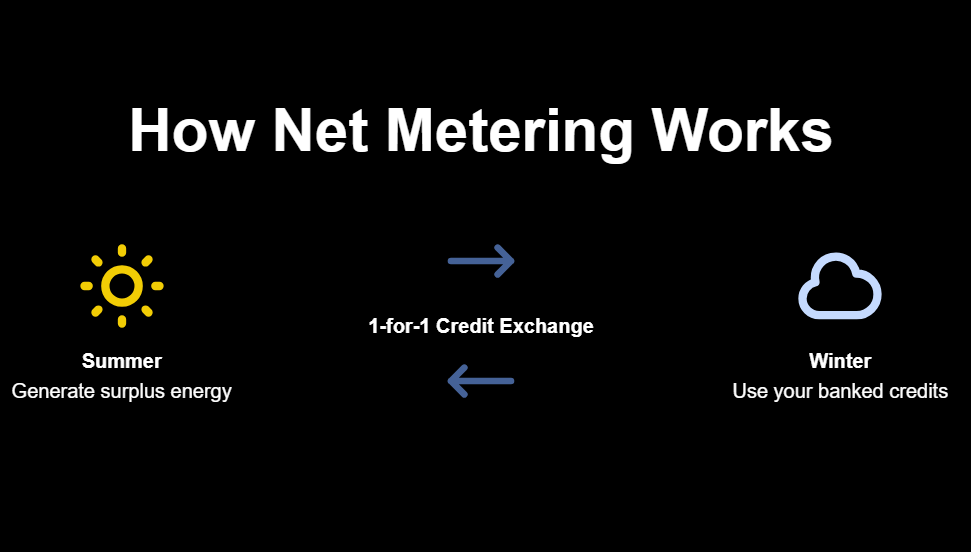
Instead of paying you cash, Hydro-Québec gives you credits on your electricity bill. It’s a 1-for-1 exchange. If you send 1 kWh of electricity to the grid, you get a credit for 1 kWh that you can use later.
For example, you’ll build up a surplus of credits during the summer. Then, in the winter when your solar production is lower and your heating costs are higher, you’ll draw electricity from the grid and use those credits to offset your bill. As of the 2026 rate chart, unused Option I credits are reset every 24 months and credited at the average cost of electricity supply, listed at 4.730 cents/kWh. The real benefit is in using the credits before reset, not treating surplus production like a retail-rate cash sale.
What are the requirements for Grid connection with Hydro-Québec?
To connect your solar system to the grid and participate in net metering, you need to follow Hydro-Québec’s technical requirements. Your installer will handle most of this, but it involves getting approval for your system’s design and ensuring it has safety features that prevent it from sending power to the grid during an outage. This process also includes the installation of a bi-directional meter from Hydro-Québec, which is needed to measure both the power you draw from the grid and the surplus power you send back. This protects utility workers from being injured.
The Bigger Picture: Quebec’s Broader Energy Strategy
This initiative is part of a much larger strategy. Hydro-Québec’s filing with the Régie de l’énergie (the provincial energy board) isn’t just about solar. It’s about diversifying Quebec’s energy sources and managing future demand.
What are the specific goals of Québec’s Clean Energy transition?
The province relies heavily on hydroelectricity, but demand is growing. Instead of building massive new dams, the government is looking at decentralized energy sources—like rooftop solar—to help meet future energy needs. The goal is to add more renewable energy to the grid without massive infrastructure projects. Reports from firms like Dunsky Energy + Climate Advisors have previously highlighted the untapped potential for solar in Quebec.
A major concern is avoiding the mistakes made elsewhere. In France, for example, sudden and retroactive cuts to solar subsidies caused market chaos. Industry professionals in Quebec are urging a more measured approach, perhaps starting with pilot projects to work out the kinks before a province-wide rollout. The rapid 1.5 GW solar expansion in Sweden in 2023 is being cited as a model of what’s possible with good planning, even in a northern climate.
Commercial Solar Incentive Programs in Québec
The announcement wasn’t just for homeowners. There are new incentives for commercial and industrial solar projects too.
Are there specific Incentive Programs for Commercial Solar PV projects?
Yes. Hydro-Québec added solar support for eligible business projects through Efficient Solutions / OSE 6.0. The OSE 6.0 rules apply when the project start date is on or after March 31, 2026. Hydro-Québec defines the project start date as the earlier of the first contractor contract date or the first equipment purchase date.
How does the Investment Tax Credit apply to Commercial Solar Installations?
The federal Clean Technology Investment Tax Credit can reduce the cost of eligible business solar projects, but it is not a homeowner rebate. CRA lists the regular rate as up to 30% for eligible property available for use from March 28, 2023, to December 31, 2033. If the claimant does not elect into the labour requirements, the rate is reduced by 10 percentage points. Businesses should confirm eligibility and government-assistance treatment with a tax professional.
How to Choose a Solar Panel Installer in Quebec?
With these new incentives, we’re going to see a lot of new companies pop up. Choosing the right one is more important than ever. I’ve been in the home improvement industry for over a decade, and I’ve seen what happens when a boom brings in unqualified players.
What certifications and qualifications should I look for in a Solar Panel Installer?
Your installer must be a licensed electrician with the CMEQ and hold liability insurance—don’t be afraid to ask for proof of both. While not mandatory in Quebec, certifications from groups like the North American Board of Certified Energy Practitioners (NABCEP) are a strong indicator of expertise and dedication to the industry.
Tip for Vetting Installers: Ask for references from past customers in your area. A reputable installer will be happy to provide them. Also, check their reviews online, but be critical. A few negative reviews aren’t a deal-breaker, but look for patterns.
Énergie Solaire Québec has published a helpful public-facing guide with checklists for choosing an installer. It’s a great resource created with industry experts to help you make an informed decision.
What is the future of Solar Power and the Solar Industry in Quebec?
This is a turning point. The new subsidies make the financial case for solar in Quebec. But there are still unanswered questions.
A big one is about batteries. Currently, the subsidy program does not include energy storage. With net metering, batteries aren’t strictly necessary for cost savings, but they provide backup power during outages. The inclusion of batteries is a major point of advocacy for industry groups. Adding them to the subsidy would not only provide homeowners with valuable backup power but also enhance grid stability. This is the next logical step, and we’ll be watching for policy updates closely over the next year.
The road ahead requires careful planning. The industry needs a structured rollout to avoid supply chain issues and a shortage of qualified installers. The conversations happening this fall between Hydro-Québec and industry groups will be critical in shaping an effective and stable solar market for years to come. For now, Quebec is finally on the right track to harness the sun.