
Solar Siding Is HERE: Should You Install Solar Cladding Instead Of Panels On Your Canadian Home?
December 22, 2025
Solar Panels vs. Old Roofs: The Nanotech Option in BC Homeowners Should Know
December 26, 2025Last Updated on December 26, 2025 by Vitaliy
What are BC/IBC solar panels, and why do they look “all black” (no front grid lines)?
You might wonder why some solar arrays look like a sleek sheet of black glass while others have a grid of silver lines. After 12 years working with Canadian homeowners and installers, I get asked this constantly.
Key Takeaways: Why BC Solar Panels Are Winning in Canada
- The “All-Black” Look is Functional: Back-Contact (BC) panels move wiring to the rear. This isn’t just for style; removing front grid lines exposes 100% of the cell to sunlight.
- Efficiency King: BC panels reach 24%+ efficiency (e.g., LONGi HPBC 2.0 at 24.8%) compared to the ~21% of standard panels. This is critical for homeowners with small or complex roofs who need to maximize power density.
- Better in “Grey” Weather: They perform better in low-light and diffuse light conditions, which matters during Canada’s long, cloudy winters.
- Built for Freeze-Thaw: The rear-contact structure is more resistant to micro-cracking caused by thermal cycling (rapid temp swings) than traditional front-soldered panels.
- Cost vs. Value: Expect to pay a ~20% premium upfront. However, higher long-term yields and 25-40 year warranties often result in a better ROI over the system’s life.
- Incentives Apply: You can use the $5,000 BC Hydro rebate and federal interest-free loans to offset the higher initial price tag.
The difference is the wiring.
BC (Back-Contact) and IBC (Interdigitated Back Contact) panels move all the electrical contacts to the back of the cell. Conventional panels put metal ribbons right across the front, which blocks a bit of sunlight. By moving everything to the rear, manufacturers create that solid “all black” aesthetic.
It isn’t just about curb appeal.
Removing those front lines exposes the entire cell surface to the sun. This usually means higher efficiency per square metre, which is critical when your roof space is tight. Current BC technology pushes module efficiency into the mid-24% range. Compare that to the ~21% efficiency of a standard panel. On a small roof, that gap means significantly more total power generation without adding more panels. Additionally, the integration of advanced materials enables even better performance in varying weather conditions, maximizing energy output year-round. Homeowners can particularly benefit from these innovations, as they translate to lower energy bills and a quicker return on investment. The emerging nanotechnology benefits for homeowners make solar power an increasingly attractive option for sustainable living.
Manufacturers back this tech with serious guarantees. Many offer 25-year warranties, and some, like Maxeon, go up to 40 years. That longevity makes them a solid play for Canadian projects aiming for long-term reliability.
BC vs PERC vs TOPCon vs HJT: the real homeowner differences, fast
BC panels use that rear-wiring design to eliminate shading from the grid lines themselves. Standard panels often lose a large chunk of output (33%) if a single leaf covers a cell. The unique internal wiring of many BC panels handles these partial blockages far better, keeping the active parts of the panel pumping out power.
Comparing the numbers helps. Many mainstream rooftop panels (PERC or standard TOPCon) sit in the low-to-mid 20% efficiency range. High-end BC products push higher. Aiko Solar’s Neostar series, for example, advertises efficiencies up to 24.3%.
HJT (Heterojunction) is another strong contender with great temperature handling, but it typically retains visible grid lines.
For Canadians, the difference often comes down to low-light performance. On cloudy days, all panels produce less power because the light is diffuse rather than direct. However, the higher efficiency per square metre of BC panels helps you squeeze more energy out of the available light. It’s not magic—it’s just better surface area utilization.
Durability matters here too. LONGi states that their BC design reduces stress on the wafers, cutting micro-cracking risks by 50%. In our freeze-thaw climate, resisting cracks means your system stays productive longer.
Do BC panels actually make more power on Canadian roofs (cloud, shade, small roof space)?
Yes, primarily because they pack more power density into the same footprint.
If you have a small roof or complex angles, you need every square centimetre working for you. A higher efficiency rating means you generate more kilowatt-hours (kWh) from that limited space compared to older tech.
I’ve reviewed data from many projects where homeowners saw better-than-expected results by choosing high-efficiency modules. This performance ties directly into financial incentives. The BC Hydro solar rebates, which were announced in June 2024 and became available later that summer, make high-performance systems more accessible.
Reliable output matters for ROI. If your roof has shading issues from a neighbour’s second story or mature trees, the superior shade tolerance of BC architecture helps maintain voltage better than some conventional string-inverter setups using older modules.
Efficiency-per-square-metre: why BC wins when your roof is tight
Some Canadian homes just don’t have a massive south-facing roof. This is where efficiency density wins.
As mentioned, LONGi’s latest modules hit 24.8% efficiency. Standard panels might require 12 modules to hit your energy target; with high-efficiency BC, you might do it with 9 or 10. This saves racking, wiring, and labour.
Real estate logic applies here too. A cleaner, more efficient system adds value without cluttering the roofline. You get the kWh you need for net metering without covering every inch of shingles.
Cloudy + low-light performance: what “more kWh” really means in Canada
Most Canadian cities see plenty of grey days. While no solar panel works at 100% in the dark, BC panels are optimized to capture diffuse light.
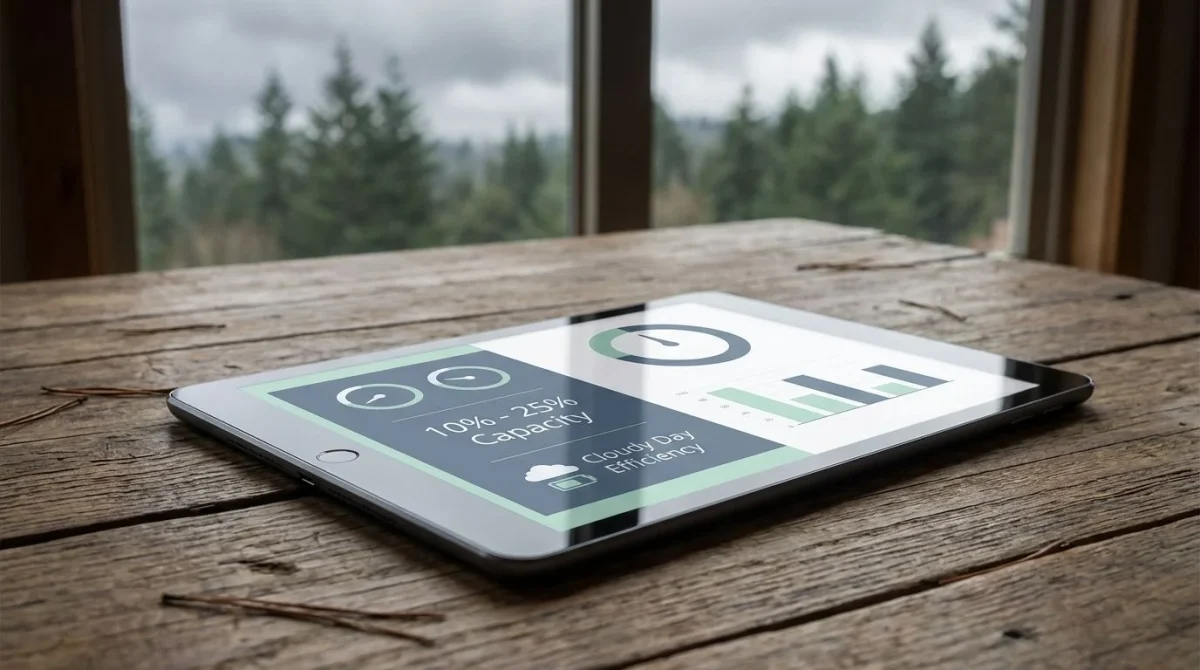
On heavy overcast days, output drops sharply for any solar technology—often to 10-25% of rated capacity depending on cloud thickness. The BC advantage is that its base efficiency is higher, so that “10%” represents a larger amount of actual energy compared to a lower-tier panel.
This extra yield adds up over months of winter gloom. It leads to better self-sufficiency and lower bills, which is the whole point of going solar in a northern climate.
Are BC panels tougher for Canada’s freeze-thaw, snow load, and hail?
Our weather destroys weak gear. Temperatures swing drastically in 24 hours, causing materials to expand and contract. This “thermal cycling” causes microcracks in standard solar cells.
Standard panels rely on thin metal ribbons soldered across the front, which can snap under heavy snow loads. BC panels remove these fragile front connectors entirely, replacing them with a solid rear foundation that handles pressure much better.
Regarding snow: Many premium modules are rated for 5400 Pa of snow load. Always check the specific datasheet, but top-tier BC panels frequently exceed basic standards.
Warranties reflect this toughness. You aren’t just getting a 10-year product guarantee anymore. 25 years is the new standard for quality BC panels, with some pushing to 30 or 40 years. That tells you the manufacturer isn’t worried about Canadian winters.
Microcracks and long-term degradation: what the data and warranties show
Microcracks are invisible fractures that kill performance over time. They happen during shipping, installation, or heavy snow events.
Back-contact design inherently reinforces the cell. LONGi claims their Hi-MO 9 module increases mechanical strength significantly compared to traditional wafers.
Lower degradation rates mean the panel produces more power in year 15 or year 20 than a cheaper alternative would. When you calculate the payback of a system, that long-tail production is pure profit. Installers I talk to report fewer issues with these robust panels during the install process itself, which saves everyone headaches.
What do BC panels cost in Canada, and when does the premium make sense?
You will pay more upfront. As of 2025, typical residential solar installations in Canada range between $2.50 and $3.50 per watt. However, with massive manufacturing scaling from giants like LONGi and Aiko in 2024-2025, this price gap is closing fast compared to just a few years ago.
For a 7 kW system, you might look at $17,500 to $24,500. Pricing varies by province. Green Building Canada notes that in British Columbia specifically, solar installations average $2.60 to $3.27 per watt depending on complexity.
Incentives change the math:
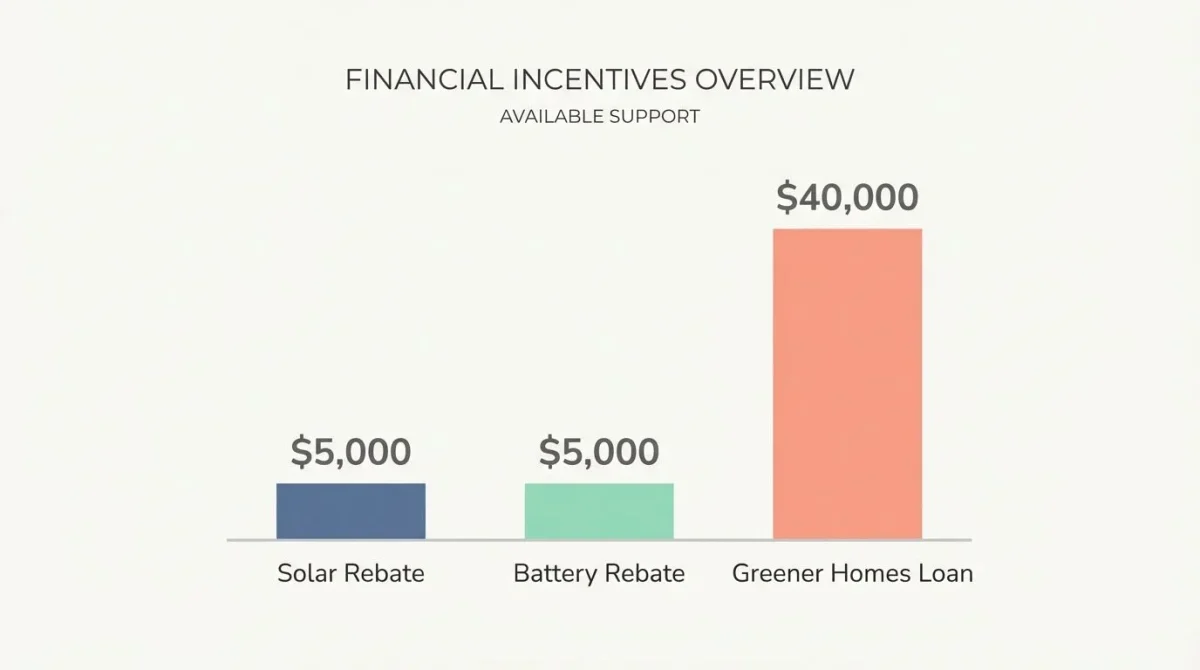
- BC Hydro Solar Rebates: Up to $5,000 for solar ($1,000/kW) and another $5,000 for batteries.
- Canada Greener Homes Loan: Interest-free financing up to $40,000. Note that new loan applications closed in October 2025, but existing ones are still processing.
Pay the premium if you have limited space or plan to stay in the home for decades. If you have acres of roof and a tight budget, standard panels might offer a faster ROI.
Payback math: premium panels vs more standard panels
High efficiency lets you hit your energy goals with less hardware.
Using nine premium BC modules instead of twelve standard ones cuts down on rails, clamps, and roof penetrations. Sometimes that labour and material saving offsets the higher per-panel cost.
Long-term, the math favours durability. A system that degrades 0.4% per year (common for BC) versus 0.6% or 0.7% (standard) generates thousands more kWh over its life. With net metering credits from BC Hydro, that extra production covers winter bills.
Replacement risk later: matching modules, warranty swaps, and how to plan it
Big brands are safer. LONGi, Maxeon, and Aiko are massive manufacturers. LONGi Europe recently hit 10GW in BC deployments.
This scale matters because if a panel breaks in 10 years, you want a company that still exists to honour the warranty. Proprietary tech can be harder to match later, so sticking to major players ensures you aren’t left with an orphaned system.
Ensure your installer records serial numbers. It speeds up warranty claims immensely.
Who should buy BC panels in Canada (and who should skip them)?
Buy them if:
- You have a small or complex roof.
- You have partial shading issues.
- You want the best aesthetics (all-black).
- You want maximum long-term durability and warranty.
Skip them if:
- You have a massive, unshaded barn roof (cheaper panels work fine here).
- You are moving in 2-3 years.
- Budget is your only priority.
Best-fit homes: limited roof, high usage, premium look, long time horizon
If you drive an EV and have a heat pump, your electricity usage is high. You need maximum density. BC panels deliver that.
They also protect resale value. A sleek black array looks like a premium upgrade; a mismatched blue-grid array looks like a science project. For modern homes, that curb appeal counts.
Ask your installer these 7 questions before you pay for BC panels
Don’t just sign the quote. Ask your installer these 7 questions:
- What verified efficiency ratings do these panels have? Look for datasheets showing >23-24%.
- Does the inverter match the BC technology? You are paying for premium performance; don’t let a cheap inverter bottleneck it. Module-level electronics (MLPE) ensure that if one high-output panel is shaded, it doesn’t drag down the rest of the array.
- Can you show me a site-specific shade report? Don’t guess about trees.
- What is the snow load rating? Ensure it meets local code.
- What are the exact warranty terms? Look for the degradation rate.
- Have you installed this specific brand before? Experience matters.
- How do we handle the rebates? Ensure they manage the BC Hydro application paperwork.
Why LONGi’s massive BC project in Europe matters for Canadians
It proves the tech isn’t a niche experiment. LONGi and partners are building a 450MW plant in Hungary using Hi-MO 9 modules.
When utility companies buy gigawatts of a product, it signals bankability and reliability. It means supply chains are stable, and costs for Canadian homeowners should stabilize too. You aren’t being a guinea pig; you’re using proven infrastructure tech.
Practical tips to squeeze more kWh from BC panels in Canada
- Tilt: optimize for your latitude (e.g., 49° near Vancouver) to shed snow.
- Monitor: Watch your app. If one panel drops, you want to know instantly.
- Clean: A quick rinse in spring gets rid of winter grime and pollen. Don’t use harsh chemicals on the glass.
Bottom line: a simple checklist to decide in 60 seconds
- Roof Check: Is it small or shaded? Yes = Go BC.
- Bill Check: High usage? Yes = Go BC.
- Look Check: Hate silver lines? Yes = Go BC.
- Rebate Check: Qualify for the BC Hydro grant? Use it to offset the premium cost.
FAQs
1. What makes back-contact solar panels different? BC panels move all wiring to the back. This eliminates front shading, boosts efficiency to the mid-24% range (seen in LONGi and Aiko models), and creates a solid black look.
2. Why are they good for Canada? High efficiency per square metre helps smaller roofs generate enough power, and they handle low-light/diffuse light conditions better than many older technologies.
3. Do they cost more? Yes, typically 20% more than standard modules. However, federal loans and provincial rebates can offset this, and the higher yield improves long-term ROI.
4. Are they durable? Very. The back-contact structure resists micro-cracking from thermal cycling (freeze-thaw). Warranties often run 25 to 40 years.