
BC Hydro Net Billing: Should You Pay Back Your $5,000 Solar Rebate?
April 20, 2026
Balcony Solar in Canada VS Germany: Is It Legal in 2026? (Rules, Cost, Alternatives)
April 21, 2026Last Updated on April 21, 2026 by Vitaliy
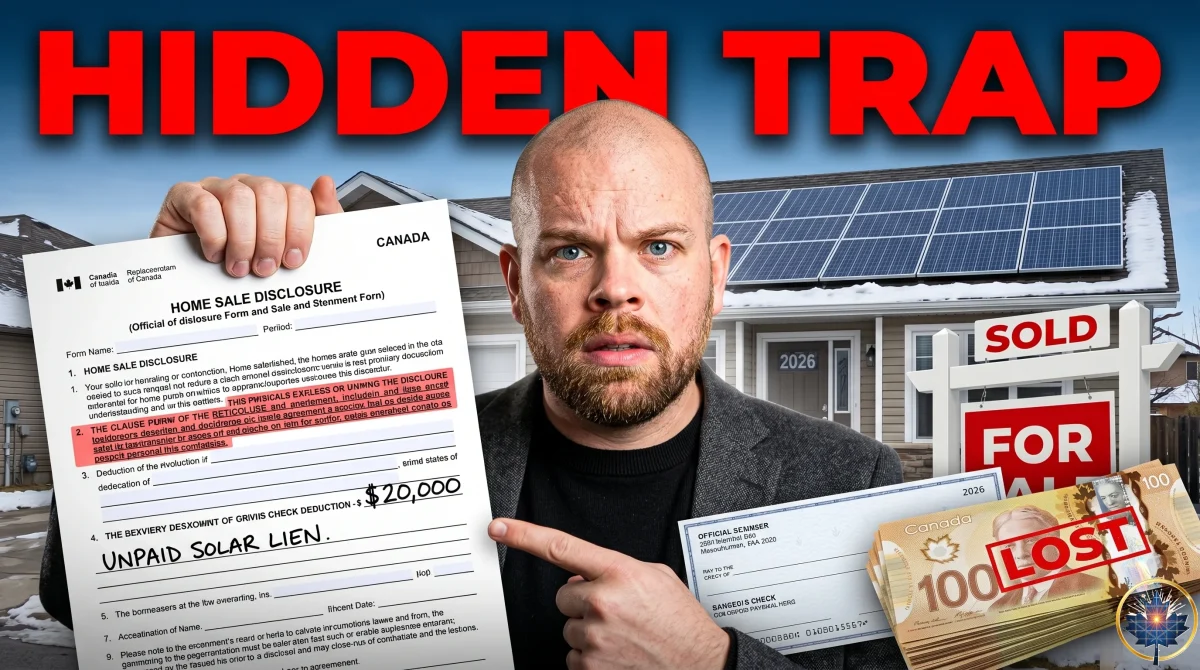
Your solar premium may not survive the sale. That sounds harsh, but the numbers back it up. A Canadian homeowner with a legacy Ontario microFIT contract can walk into a closing expecting the buyer to inherit decades of premium-rate payments — and walk out having handed over roughly $20,000 in equity for free. Not because the panels stopped working. Because the utility right never belonged to the roof in the first place. It belonged to the account holder.
Key Takeaways
- Solar value lives in three layers: physical hardware, transferable rate rights, and banked credits. Only the hardware clearly moves with the roof.
- Most Canadian utility rights attach to the customer of record, not the property. A buyer is treated as a new customer.
- Ontario legacy microFIT is the single biggest equity risk in the country — roughly $20,000 can disappear if assignment isn’t completed properly.
- BC, Alberta, Quebec, and Nova Scotia carry smaller but real risks: new agreements, credit bank settlements, and paperwork timing.
- Start the utility review before listing. Price the home on what the buyer can legally keep, not on what the seller currently earns.
- Use disclosures, conditional clauses, and holdbacks to protect both sides when transfer is uncertain.
That distinction is where Canadian solar resale goes sideways in 2026. Most sellers, agents, and even appraisers still price a solar home like the savings are baked into the shingles. They aren’t. The savings ride on a utility agreement, a program enrollment, or a specific contract between one named customer and one named utility. Change the customer? Change the math.
Here’s the honest version of what’s happening, province by province, and what to actually do about it before you list.
The Real Trap Isn’t the Panels — It’s the Utility Account
Look past the hardware. A solar home carries three separate layers of value, and only one of them is bolted to the roof.
Layer one is the physical system — inverters, racking, modules. That equipment keeps producing regardless of who owns the house. Layer two is the utility program economics — the rate, the credits, the contract. That layer is usually tied to a customer of record, not a property. Layer three is the banked credit balance — the kilowatt-hour credits sitting in the utility’s ledger under the seller’s name.
Most Canadian utility tariffs and program agreements say something close to this in plain English: only an “eligible customer” or “eligible generator” qualifies; participation requires a signed application or program agreement; service and interconnection agreements often can’t be assigned without consent; and banked credits settle under the utility’s own rules, which may mean they expire, cash out at a lower rate, or stay with the closed account.
The roof doesn’t get the rate. The account does.
BC Hydro spells this out directly in its Electric Tariff. Ontario’s Distribution System Code ties net metering to an “eligible generator” who is a customer of the distributor. Nova Scotia Power’s terms require the customer to notify the utility the moment ownership changes and meet added conditions to continue, transfer, or terminate participation.
Different wording. Same message. The buyer is a new person to the utility, and that person has to earn the spot.
Province-by-Province: Where the Equity Actually Lives
Canadian solar resale risk isn’t uniform. It varies wildly by province and program. Here’s the honest read on each major market.
Ontario — The Biggest Risk Zone
Ordinary net metering is fine — the buyer can usually re-enroll by signing a new connection agreement and program agreement with the LDC. Legacy microFIT and FIT? Completely different animal.
Those legacy contracts paid up to 39.6¢/kWh under the January 1, 2014 price schedule. Compare that to current Ontario residential tiered prices discussed in this Ontario utility bill breakdown. The gap is enormous. And it doesn’t travel automatically.
Assignment is possible. Not automatic. It requires both seller and buyer filing paperwork through the IESO’s online assignment portal and the local distribution company, along with title documentation and a new utility account. Hydro One’s published process warns about a one-time setup fee and a one-month payment delay during transfer. Miss a step or close before the paperwork clears? Tens of thousands in remaining contract value evaporates from the deal.
If you’re selling a microFIT home, start this process before the listing goes live. Not after conditions are waived. The IESO’s official assignment page walks through it.
British Columbia — Watch the 2026 Rule Changes
BC has a real timing issue in 2026. Legacy RS 1289 closes to new customers on July 1, 2026, and the new self-generation rate RS 2289 takes over. Existing RS 1289 customers are grandfathered for up to 10 years from their initial service start — but BC Hydro service agreements aren’t assignable, as outlined in BC Hydro’s self-generation rate updates.
Practical read: a buyer should assume they come in as a new customer under whatever rate exists on the day they close. If a seller is baking legacy RS 1289 economics into the asking price, get written confirmation from BC Hydro first. No written confirmation, no premium. Price accordingly.
Alberta — Customer-Specific Paperwork
Alberta runs on micro-generation rules under AUC Rule 024 and Alberta’s micro-generation framework. No province-wide long-term residential premium tariff exists here. Small micro-generators are credited at retail rates, or optionally at hourly wholesale with proper metering.
FortisAlberta’s terms say rights under an interconnection agreement can’t be assigned without utility consent. The buyer re-papers everything — notice, interconnection, permits, retailer. The financial hit at resale is usually small. Delay and admin friction is the real cost.
Quebec — The Credit Bank Problem
Hydro-Québec’s self-generation option has a clause most sellers don’t read until closing week: the surplus bank can’t be transferred from one subscription to another. When the bank can no longer be applied to bills, it gets paid out at Hydro-Québec’s average supply cost — currently 4.730¢/kWh.
That’s well below residential Rate D energy prices in 2026. So if the seller has a fat surplus bank built up, closing the subscription means that value settles at a lower rate instead of offsetting future retail bills. Not catastrophic. Still real money.
Tip for Quebec sellers: Plan the closing date around your surplus bank. If you can, run the bank down by applying it to bills before the subscription closes. Don’t let it settle at supply cost if you can avoid it. For broader Quebec context, see this Hydro-Québec solar subsidy guide.
Nova Scotia — Notify the Utility Early
Nova Scotia Power’s Regulation 3.6 and its net-metering terms require the customer to notify the utility when ownership transfers and meet any extra conditions to continue, transfer, or terminate participation. Credits carry forward for one year, with surplus at year-end bought at the retail rate.
Timing matters here. Closing date versus annual cycle date can change who ends up with the year-end payout. Put that allocation in the purchase contract. Assumptions get expensive.
How to Price a Solar Home Properly
A disciplined valuation splits the solar premium into three pieces, then tests each one.
First piece: ordinary post-closing bill savings the buyer actually gets under whatever tariff applies on the day they take ownership. Those savings belong in the price. Second piece: any transferable contract or rate premium that legally survives the sale. If transfer is allowed and documented, include it. If transfer isn’t allowed, zero it out. Third piece: banked credits — whatever the purchase contract assigns between the parties, using the utility’s actual settlement rule, not wishful thinking.
The Appraisal Institute of Canada’s guidance on valuing solar is clear on this: use discounted cash flow, understand the contract, don’t default to a blanket premium or a zero. Where transfer is uncertain, probability-weight it or make closing conditional on written utility confirmation.
Tip for agents: When buyers ask “how much will this solar save me?”, don’t quote the seller’s last 12 months of bills. Quote the buyer’s post-closing tariff applied to the system’s production. Those two numbers can differ by thousands per year. For a related baseline, see how solar can affect home value in Canada.
The $20,000 Ontario microFIT Example
Here’s what the math actually looks like. A 10 kW rooftop system producing 11,000 kWh in year one, legacy microFIT rate of 39.6¢/kWh, six years left on the contract, 0.5% annual degradation, 6% discount rate. Year-one value differential versus no-contract successor economics: $4,356. Present value at risk over the remaining six years: roughly $21,000.
Same system. Same panels on the same roof. One paperwork miss and that number walks out the door. I had a seller tell me last year his agent promised the solar was “included and worth $30k.” He hadn’t started the IESO assignment. The buyer’s lawyer caught it two days before closing. We started the IESO assignment overnight and held back funds until the transfer was confirmed. It worked — barely. Cutting it that close shouldn’t be normal.
Your Solar Rate Transfer Check — Before You List
Run this checklist before the home goes on MLS.
- What province and utility is the home in? Rules differ sharply.
- What exact program applies today — ordinary net metering, self-generation, or legacy microFIT/FIT?
- Who is the current utility account holder?
- Is there a signed interconnection or program agreement? What does assignment language say?
- Is the right automatically transferable, conditionally assignable, or flat-out non-transferable?
- Are there banked credits, year-end payouts, or anniversary dates in play?
- What’s the buyer’s likely post-closing tariff if no transfer happens?
- Is the system financed, leased, or under a PPA? Separate title and control issues apply.
- Has the utility or program administrator confirmed the path in writing?
- Does the purchase contract allocate credits, pay delays, and holdbacks?
Any “no” or “unclear” on that list is a negotiation point. Not a footnote.
Sample Clauses That Protect Both Sides
Listing disclosure language worth using:
“Property includes a photovoltaic solar system. Current utility billing treatment, net-metering treatment, and any grandfathered export or production payments are subject to utility and regulatory rules and may require new account setup, reapplication, consent, or formal assignment upon sale. Seller does not represent that any current account-specific credits, grandfathered rates, or contract rights will transfer to buyer unless confirmed in writing by the utility.”
For legacy microFIT or similar premium contracts, a holdback is cleaner than a last-minute fight: an amount held back from closing proceeds, released when the administrator confirms effective transfer of the specified right, or credited to buyer if transfer fails. Your lawyer refines the exact wording for your province.
FAQ
Do solar panels automatically increase my home’s resale value?
The hardware adds some value, yes. The rate contract tied to the old account often doesn’t transfer automatically. Price the home on what the buyer actually gets after closing, not on the seller’s historic savings.
What’s the risk with Ontario microFIT contracts on resale?
These contracts paid premium rates up to 39.6¢/kWh and have real transfer value. Assignment requires coordinated paperwork through the IESO and your local distribution company. Miss it and $20,000 or more in remaining contract value disappears at closing.
Can a buyer keep my BC Hydro legacy RS 1289 rate?
Not automatically. BC Hydro service agreements aren’t assignable, and RS 1289 closes to new customers on July 1, 2026. A buyer likely comes in under the new RS 2289 self-generation rate. Get written confirmation from BC Hydro before pricing in legacy economics.
What happens to my Hydro-Québec surplus bank when I sell?
It can’t be transferred to the buyer’s subscription. Any remaining balance settles at Hydro-Québec’s average supply cost — currently 4.730¢/kWh — which is below Rate D retail pricing. Try to run the bank down before closing.
Does Nova Scotia Power require notice when I sell a solar home?
Yes. Program terms require the customer to notify the utility about an ownership change and meet added conditions to continue, transfer, or terminate participation. Build that notice into your closing timeline.
Should I disclose the solar rate situation in my listing?
Yes. Clear disclosure protects you from post-closing disputes. Use language that separates physical system value from transferable rate value.