
Solar Panels Burnaby 2026: Cost, Rebates, Shade, Roof Risk and Quote Checklist
June 19, 2026
Solar Panels Langley 2026: Costs, Rebates, Township Roofs and Quote Math
June 20, 2026Last Updated on June 22, 2026 by Vitaliy
Solar panels in Coquitlam can make sense, but the answer depends on your exact roof, your BC Hydro usage, and how the installer models shade. A home with an EV charger, heat pump, electric hot water or high summer cooling load may have a stronger case than a low-usage home under tall trees.
The cost of a weak quote is not just overpaying. It can mean buying the wrong system size, missing a rebate rule, installing panels on low-production roof planes, or adding battery storage that does not solve the problem you actually have.
Key Takeaways
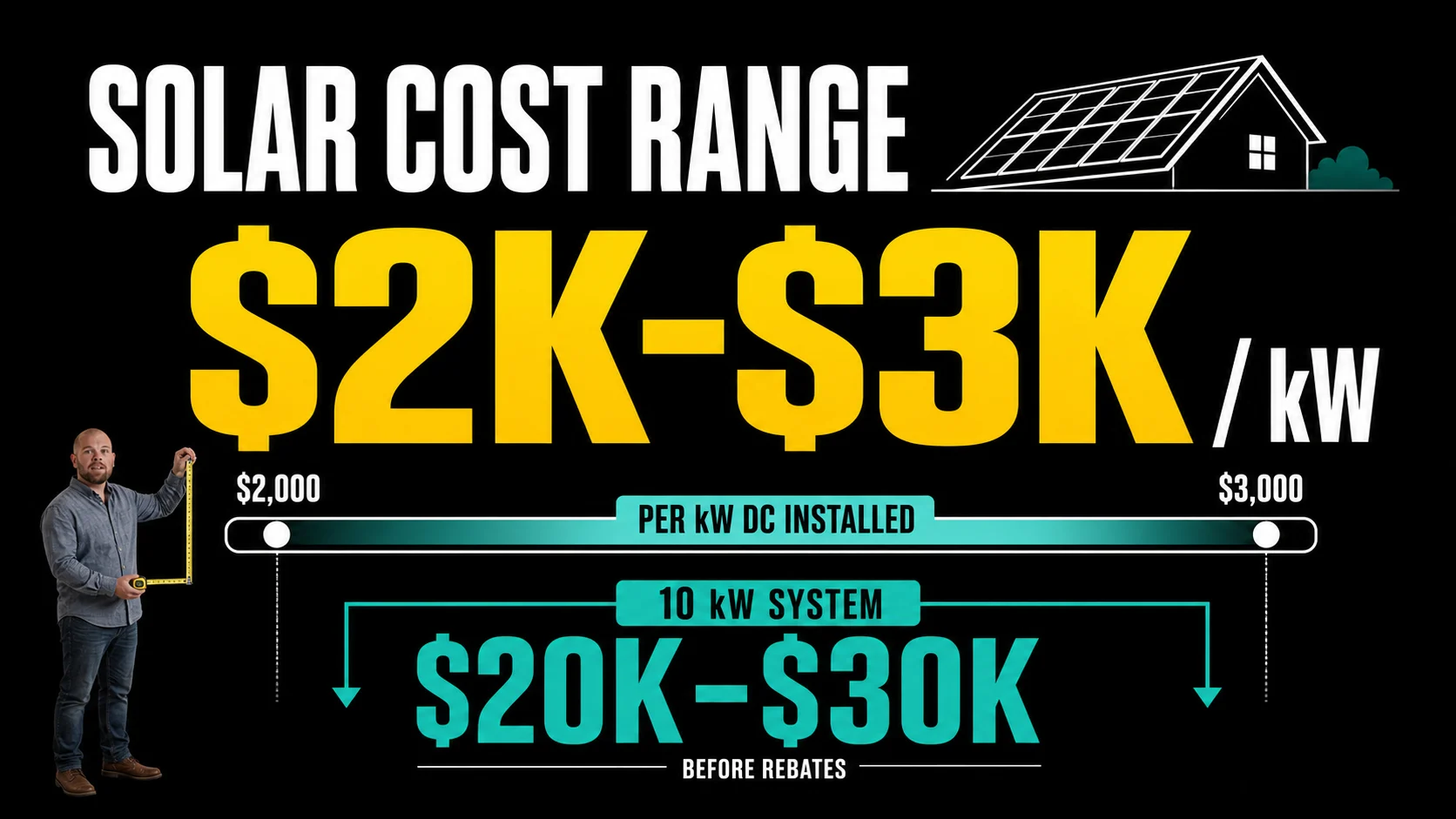
- BC Hydro says a solar PV system in British Columbia typically costs about $2,000 to $3,000 per kW DC installed, so a 10 kW residential system commonly lands around $20,000 to $30,000 before rebates. See BC Hydro solar panel cost guidance.
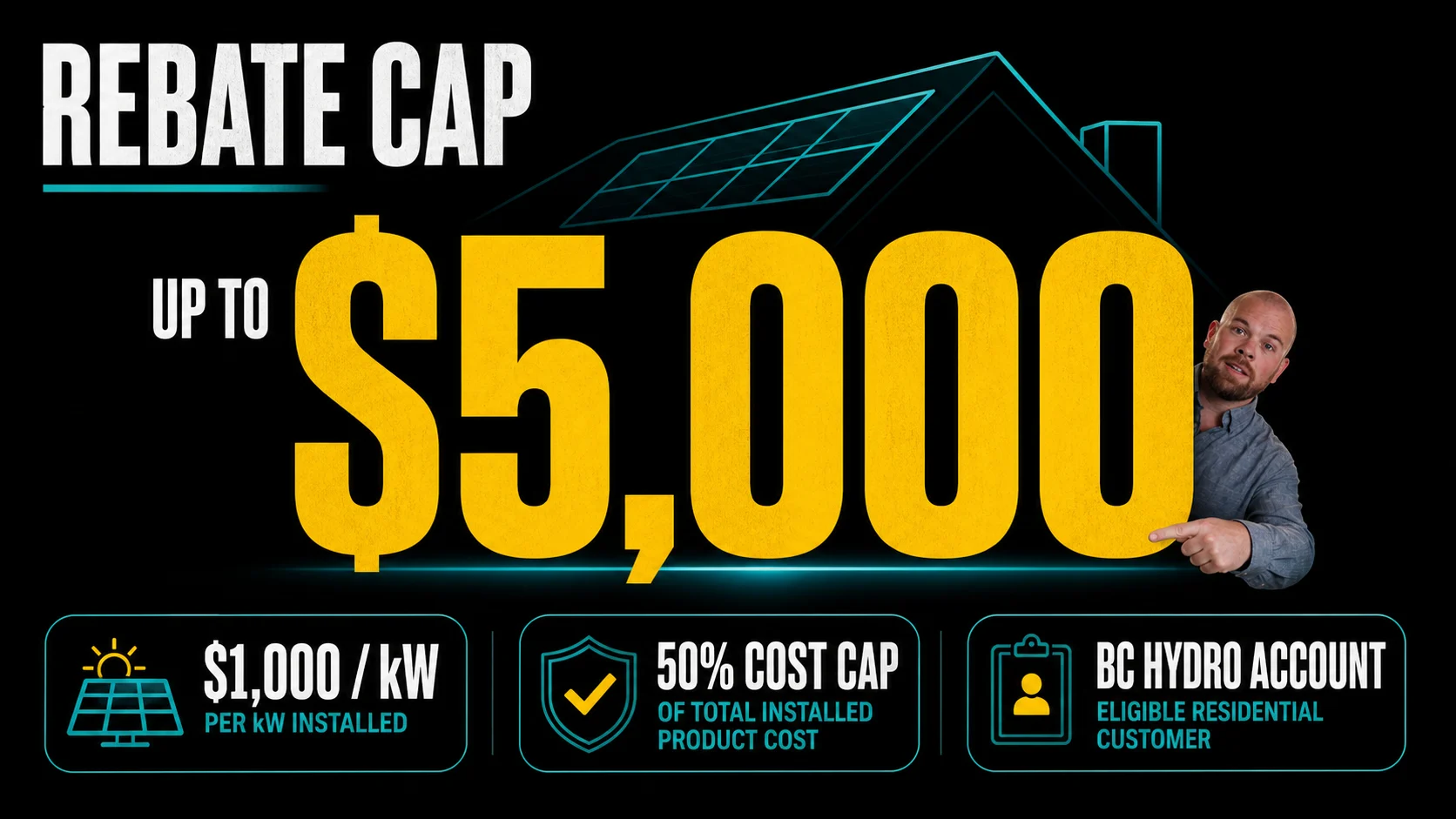
- BC Hydro’s residential solar rebate is up to $1,000 per kW, capped at 50% of total installed product cost, with a maximum rebate of $5,000. See BC Hydro solar and battery rebates.
- These rebate numbers apply to eligible BC Hydro residential accounts. Customers of other B.C. utilities, such as FortisBC, are not eligible for BC Hydro’s residential solar and battery rebates.
- Beginning June 1, 2026, solar and battery installations must be completed by a Home Performance Contractor Network member for BC Hydro rebate eligibility. See BC Hydro contractor requirements.
- Effective July 1, 2026, BC Hydro closes Rate Schedule 1289 to new customers and applies Rate Schedule 2289, where excess generation is credited at 10 cents per kWh each billing cycle. See BC Hydro self-generation rate updates.
Is Solar Worth It In Coquitlam?
Solar is worth pricing in Coquitlam when your roof has a clean production window and your home uses enough electricity to benefit from the system. That usually means workable south, west or east exposure, plus a household load large enough to use a meaningful share of the power.
Coquitlam is not a simple city for solar power. Some homes have open roof planes and good afternoon sun. Others sit near ravines, hillside trees, steep slopes, complex rooflines or neighbouring homes that create shade at the wrong time of day.
That is why a generic Vancouver solar estimate is not enough. The right solar system in Coquitlam should be sized around your roof, your electrical panel, and your actual BC Hydro usage.
Tip for local buyers: pull 12 months of BC Hydro usage before you ask for quotes. A solar installer can design a better system when they know how many kWh you use, whether your winter load is high, and whether an EV or heat pump is coming soon.
Solar Panels Coquitlam Cost In 2026
Using BC Hydro’s published cost range, solar panels Coquitlam cost can be planned like this before detailed site design:
| System size | Common local fit | Gross planning range | Possible BC Hydro solar rebate | Net planning range |
|---|---|---|---|---|
| 5 kW | Smaller roof or partial shade | $10,000 – $15,000 | Up to $5,000 | $5,000 – $10,000 |
| 8 kW | Average detached home | $16,000 – $24,000 | Up to $5,000 | $11,000 – $19,000 |
| 10 kW | EV, heat pump or larger household | $20,000 – $30,000 | Up to $5,000 | $15,000 – $25,000 |
| 12 kW | High-use home with strong exposure | $24,000 – $36,000 | Up to $5,000 | $19,000 – $31,000 |
This table is a planning tool, not a promise. Local adders can include steep-roof labour, roof repairs, structural review, main panel upgrades, service upgrades, trenching for detached structures, panel-level electronics for shade, battery backup, or extra design time for split roof planes.
If upfront cost is the sticking point, ask each installation company to separate the cash price, financed price, rebate assumptions and any available financing options. Some buyers may qualify for 0% financing with $0 down payment, depending on approval and program terms, but the final system still needs to make sense on production and bill value.
If you want a quick first check, use the SolarEnergies.ca online solar calculator before you start collecting quotes. It will not replace a shade model, but it can help you decide whether installing solar panels is worth a proper assessment.
BC Hydro Rebates, Batteries And Pre-Approval
BC Hydro’s residential solar panel rebate can materially reduce project cost, but the rules matter. The property must have a BC Hydro residential account, be a grid-connected residential home in BC Hydro’s service territory, and connect the solar generation system through self-generation. BC Hydro also says self-installations are not eligible; the system must be designed and installed by a licensed contractor with a GST number and a valid B.C. licence.
Important rebate note: for rebate projects, do not buy equipment first. BC Hydro says homeowners must receive application pre-approval before purchasing equipment and technical pre-approval before a licensed contractor installs the system.
Battery storage rebates also have details worth checking before you sign:
| Battery setup | 2026 BC Hydro rebate |
|---|---|
| Battery paired with solar | Up to $1,500 |
| Battery enrolled in Peak Saver | Up to $5,000 |
| Battery only, not enrolled in Peak Saver | Not eligible |
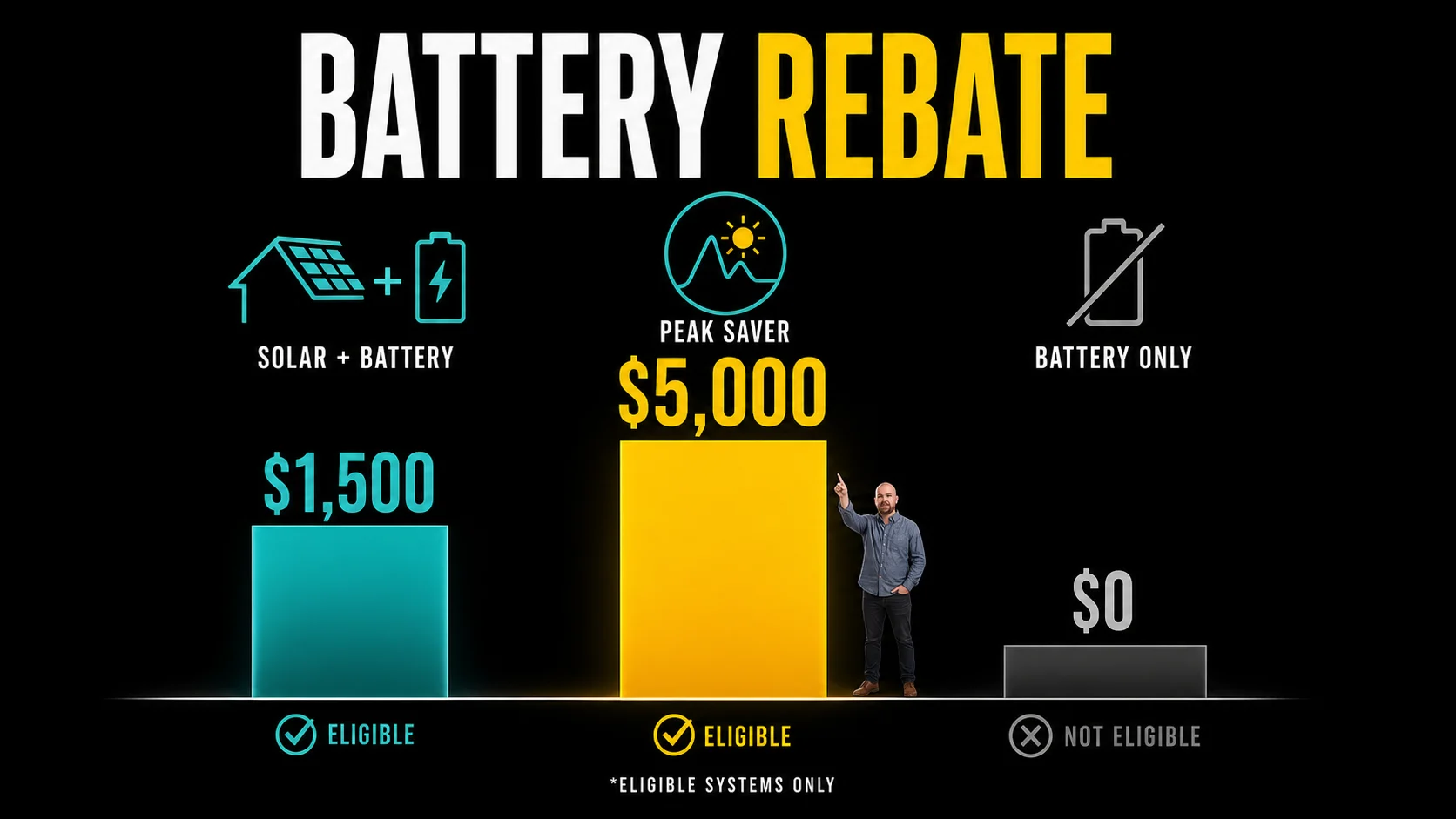
BC Hydro says eligible battery energy storage systems must meet certification requirements, including CUL 1973 and CUL 9540, with CUL 9540A testing requirements when installed in habitable or living space. Eligible Peak Saver batteries must be enrolled within 14 days after interconnection approval to qualify for the larger rebate.
Tip for rebate paperwork: ask who handles the self-generation application, who submits final inspection documents, and what happens if BC Hydro asks for changes before interconnection approval.
Net-Metering And Self-Generation In 2026
Older B.C. solar conversations often use the term net-metering. For new BC Hydro customers, the wording and bill math are changing.
Effective July 1, 2026, BC Hydro closes the current net metering service rate, Rate Schedule 1289, to new customers. New self-generation customers use Rate Schedule 2289. Under that rate, BC Hydro purchases excess generation at 10 cents per kWh and compensates the customer each billing cycle instead of banking excess kWh credits under the old structure.
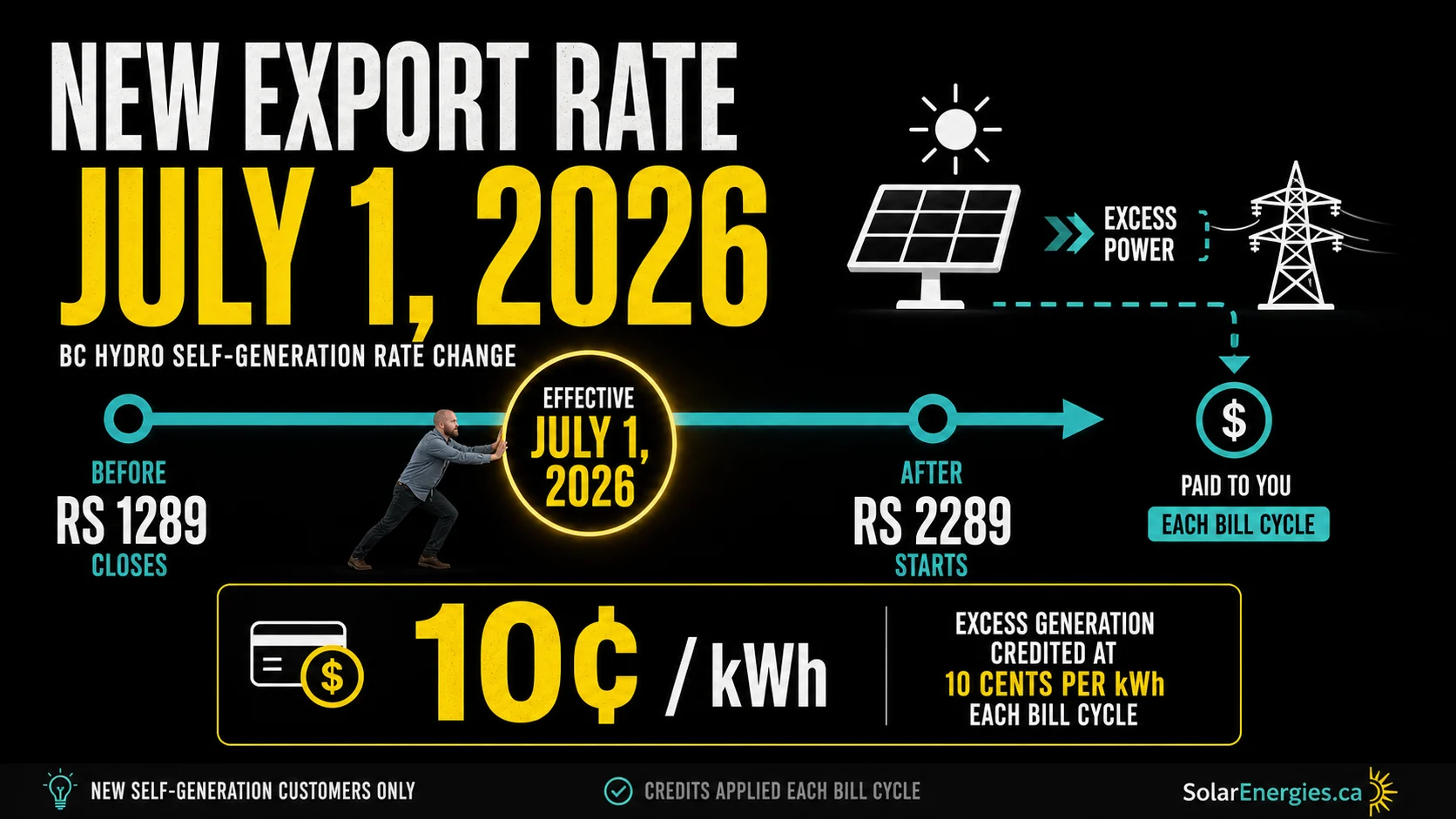
That makes self-consumption more important. If your home uses solar electricity while the panels are producing, you reduce electricity costs by avoiding grid purchases. If your system produces more than you use at that moment, the excess power is exported at the self-generation credit value.
A slightly smaller solar PV system on the best roof planes can sometimes beat a larger system that adds marginal panels just to increase nameplate kW.
Roof, Shade, Inverter Design And Batteries
Shade is often the project.
A solar panel system in Coquitlam should be designed with a real shade model, not just a roof sketch. The installer should show how trees, hills, dormers, vents, chimneys, neighbouring homes and roof pitch affect energy production through the year.
East and west roof planes can still be useful. They may produce less at peak noon than a strong south roof, but they can match morning and afternoon household usage better. Ask for production by roof plane, not just one blended annual kWh number.
Also ask whether the design uses string inverters, optimizers or microinverters. In simple sun conditions, a standard inverter design may be fine. On a split or shaded roof, panel-level electronics can protect production from weak sections, though they also add cost and equipment.
Most Coquitlam homes should think about grid-tied solar first. A grid-tied system can reduce electricity bills while keeping the home connected to BC Hydro. It does not automatically provide backup during a power outage unless the system includes the right battery and backup equipment.
Battery backup can be useful if you care about outage resilience, critical loads or storing excess generation for later use. It is not automatically required for solar. Be cautious with off-grid language: a normal residential solar project is usually grid-tied, not fully off-grid.
Ask what the battery will actually run. A fridge, internet router, sump pump, lights and a few outlets are very different from whole-home backup with electric heating, hot water and EV charging.
Local Project Sizes And Bill Value
BC Hydro says a typical 10 kW residential solar PV installation in B.C. can generate about 10,000 to 12,000 kWh per year, while the average household uses about 10,000 kWh per year, with large variation by heating type, home size and other factors.
Public installer project listings show Coquitlam residential examples around 7.3 kW and 9.7 kW. Treat those as real-world sizing examples, not citywide averages. Polaron lists both a 7.3 kW Coquitlam solar PV system and a 9.7 kW Coquitlam solar PV system.
The bill-value range below uses 10 cents per kWh as the new BC Hydro export value and 14.08 cents per kWh as the Tier 2 residential energy charge reference from BC Hydro’s residential rate notes. Your actual result depends on self-consumption, fixed charges, taxes, rate plan, time-of-day choices, seasonal production and future electricity use.
| Example size | Scaled annual production range | Rough annual bill value range | Rough monthly average |
|---|---|---|---|
| 7.3 kW | 7,300 – 8,760 kWh | $730 – $1,233 | $61 – $103 |
| 9.7 kW | 9,700 – 11,640 kWh | $970 – $1,639 | $81 – $137 |
These numbers are intentionally broad. A high-self-consumption home with EV charging or a heat pump may value more of its solar energy at avoided retail electricity rates. A low-use home that exports a large share may see weaker savings.
What To Ask A Solar Company Before Hiring
NeuronWriter shows the search intent for this topic is strongly local and buyer-focused. That means the useful question is how to choose the right solar power energy company in Coquitlam and avoid a thin quote.
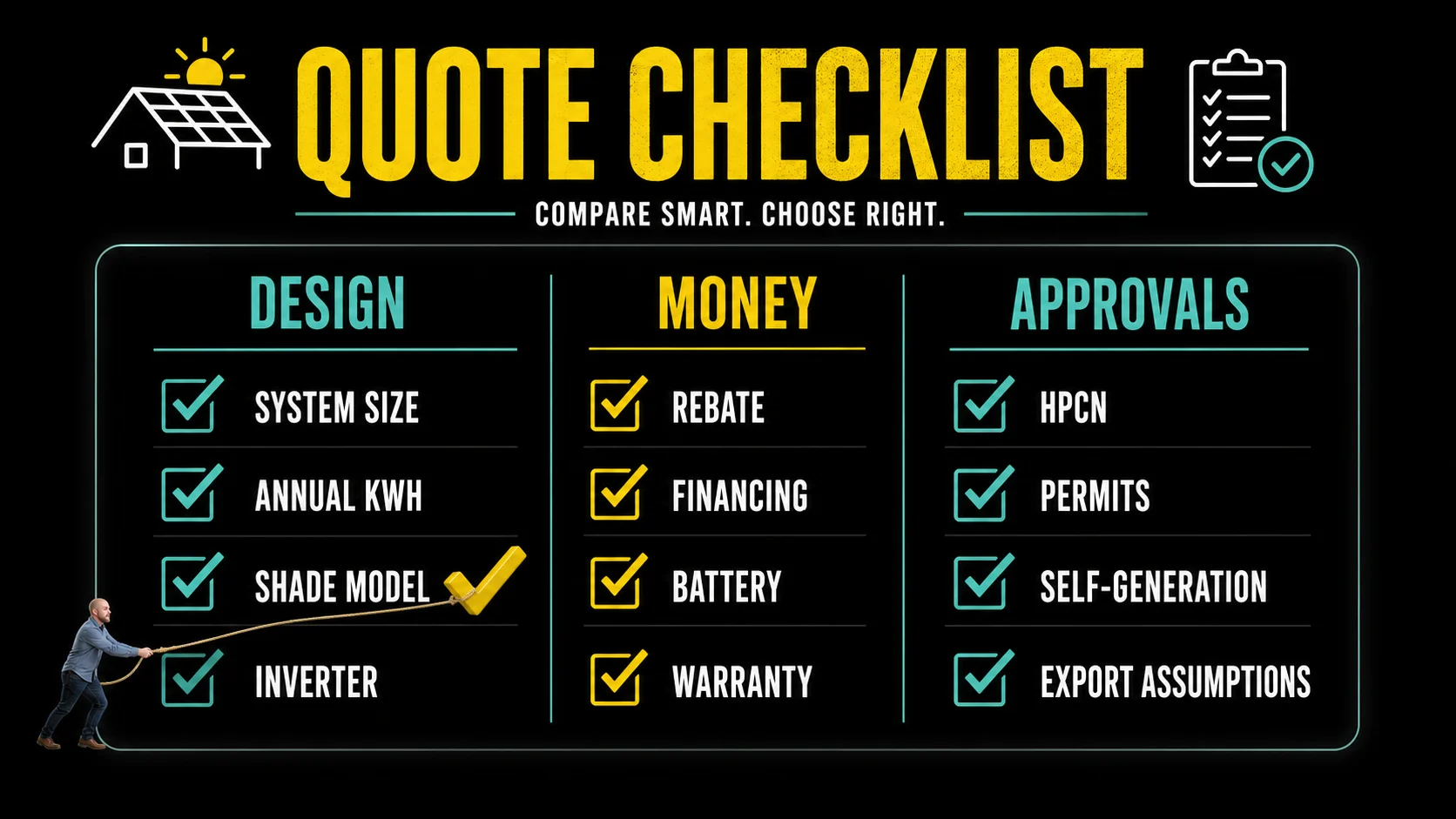
Ask every installer:
- Are you an HPCN member for BC Hydro rebate eligibility?
- Are you a licensed contractor with the required B.C. licence, GST number and local business licensing?
- Can you show a roof-specific shade model?
- Which roof planes are used, and how much does each plane produce?
- What system size do you recommend, and what happens if we remove the weakest panels?
- Which inverter design are you using, and why?
- Does my electrical panel support solar, EV charging and heat-pump loads?
- Who handles BC Hydro self-generation approval and final inspection documents?
- What is the cash price, financed price and estimated net cost after rebates?
- Are battery options priced separately from the solar-only system?
- What workmanship warranty, product warranty and production assumptions are included?
SolarEnergies.ca can connect Coquitlam homeowners with a certified installer network with 14,000+ installs across Canada, so you can compare real options instead of guessing from one proposal.
Permits, Trees And Local Site Issues
Electrical work should be checked before installation, not after. Technical Safety BC says homeowner electrical permits are required for many home alterations, including installing solar equipment, and that a licensed contractor normally applies on the homeowner’s behalf. See Technical Safety BC homeowner electrical permit guidance.
Coquitlam accepts electronic applications for all permit types through its building permit process, and development permit areas can affect some projects. Source: Coquitlam building and construction guidance.
Trees need care too. Coquitlam says its Tree Management Bylaw applies to private properties, and normal trimming is not regulated as long as it does not violate the bylaw. Tree removal is different. In most cases, private property owners can remove up to two protected-size trees per year without a permit, but permits can apply in situations such as steep slope areas, riparian or SPEA areas, protective covenants, and removing more than two protected trees. Sources: Coquitlam tree management and Coquitlam tree cutting permit guidance.
Tip for shaded properties: model the roof as it is first. Then price tree work or panel changes separately.
Best Next Step
Start with your BC Hydro usage, roof age and a roof-specific solar assessment. Then compare at least a few detailed quotes side by side. Look at equipment, system size, annual kWh, self-consumption, export assumptions, warranties, financing, permits, battery design and installer qualifications.
For solar panels Coquitlam buyers, the best proposal is usually not the biggest system or the lowest price. It is the one that explains the roof math clearly and gives you a realistic path from rebate approval to interconnection. For broader B.C. context, compare this local guide with our solar panels in BC guide. Understanding solar panel costs in Richmond can significantly influence your decision-making process. Local incentives and installation options vary widely, making it essential to research your specific area. By comparing different providers and assessing their offerings, you can find a solution that meets both your budget and energy needs. Many residents may be eligible for free solar panel programs in Victoria, which can significantly reduce their upfront costs. Participating in these programs not only helps minimize expenses but also promotes renewable energy usage in the community. It’s vital to explore all available options and see which incentives align with your specific solar energy plans.
FAQ
Are solar panels worth it in Coquitlam?
They can be worth it when the roof has good exposure, shade is manageable and the home uses enough electricity. EV chargers, heat pumps, larger households and higher annual kWh use can improve the case because more solar power offsets real household demand.
How much do solar panels cost in Coquitlam in 2026?
BC Hydro’s B.C. planning range is about $2,000 to $3,000 per kW DC installed. That puts a 10 kW residential system around $20,000 to $30,000 before rebates, with possible adders for roof work, electrical upgrades, battery storage, advanced equipment or difficult access.
What BC Hydro rebate can I get for solar panels?
Eligible BC Hydro residential customers may qualify for $1,000 per kW of installed generator capacity, capped at 50% of total installed product cost, up to a maximum of $5,000. BC Hydro says you must receive application pre-approval before purchasing equipment and technical pre-approval before installation.
Do FortisBC customers in Coquitlam qualify for BC Hydro rebates?
No. BC Hydro’s residential solar and battery rebate is for eligible BC Hydro residential accounts. Customers of other B.C. utilities, such as FortisBC, are not eligible for these BC Hydro rebates.
What changes on July 1, 2026?
Effective July 1, 2026, BC Hydro closes Rate Schedule 1289 to new customers and applies Rate Schedule 2289 for new self-generation customers. Under Rate Schedule 2289, excess generation is purchased at 10 cents per kWh and compensated each billing cycle.
Do I need a battery with solar panels in Coquitlam?
Not automatically. A battery can help with backup and storing excess energy, but it adds cost and should be designed around a clear need. Ask for a solar-only quote and a battery quote separately.
Does hillside shade ruin a solar project?
Not always. Shade needs to be modelled. Some hillside or tree-adjacent roofs still have strong production windows, especially on open west, east or south planes. Others should use fewer panels or wait.
Are east and west roofs useful for solar PV?
Yes, they can be. East and west roofs often produce less at peak noon than a strong south roof, but they can match morning and afternoon household usage better.
Should I replace my roof before installing solar panels?
If the roof is near replacement, usually yes. Solar panels can last for decades, and removing them for roof work later adds cost. Ask the installer how roof age affects the quote and whether a roofer or structural review is needed.
What is the best first step for a Coquitlam solar quote?
Download 12 months of BC Hydro usage, check your roof age, and request a roof-specific assessment with shade modelling. Then compare multiple quotes instead of choosing the first solar contractor who gives you a number.