
Solar Panels Abbotsford 2026: Cost, Rebates, Fraser Valley Roofs And Farm Loads
June 19, 2026
Solar Panels Coquitlam 2026: Cost, Rebates, Shade, Batteries and Quote Checklist
June 20, 2026Last Updated on June 22, 2026 by Vitaliy
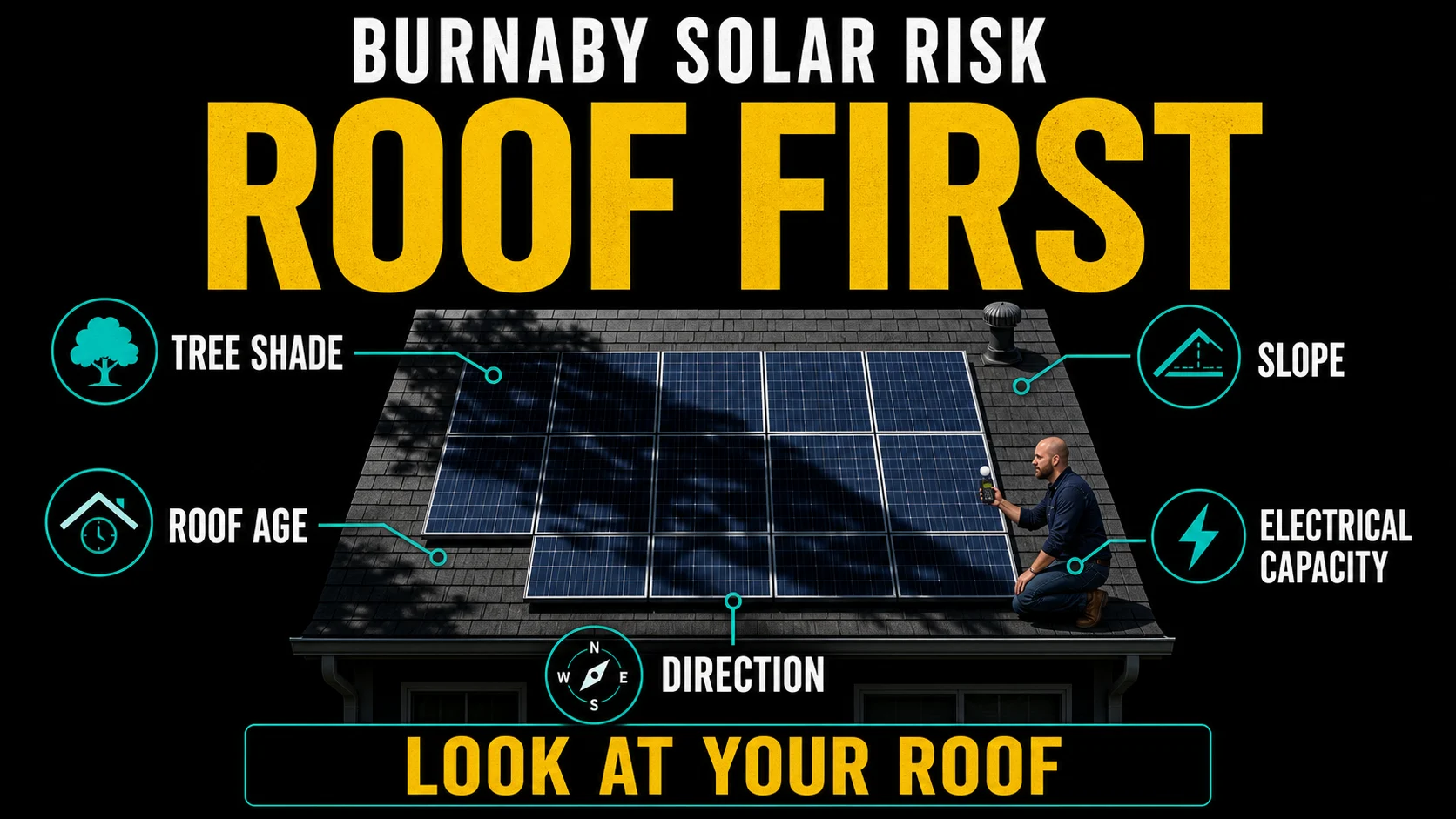
If you are looking at solar panels in Burnaby, do not start with the panel brand. Start with the roof. Burnaby has mature trees, hills, older houses, dense lots and electrical upgrade questions that can change solar payback faster than a small difference in panel efficiency.
A bad Burnaby solar quote can make the project look easy by skipping the hard parts: shade, roof age, panel upgrade costs, battery expectations and BC Hydro’s new export-rate rules. A good quote should make those issues visible before you spend money.
Key Takeaways
- BC Hydro says B.C. residential solar PV projects typically cost $2,000 to $3,000 per kW DC installed, with a 10 kW system typically around $20,000 to $30,000 before rebates. See BC Hydro solar panel guidance.
- For many Burnaby homes, rain is not the main issue. Roof exposure, tree shade, slope, roof age and electrical capacity usually matter more.
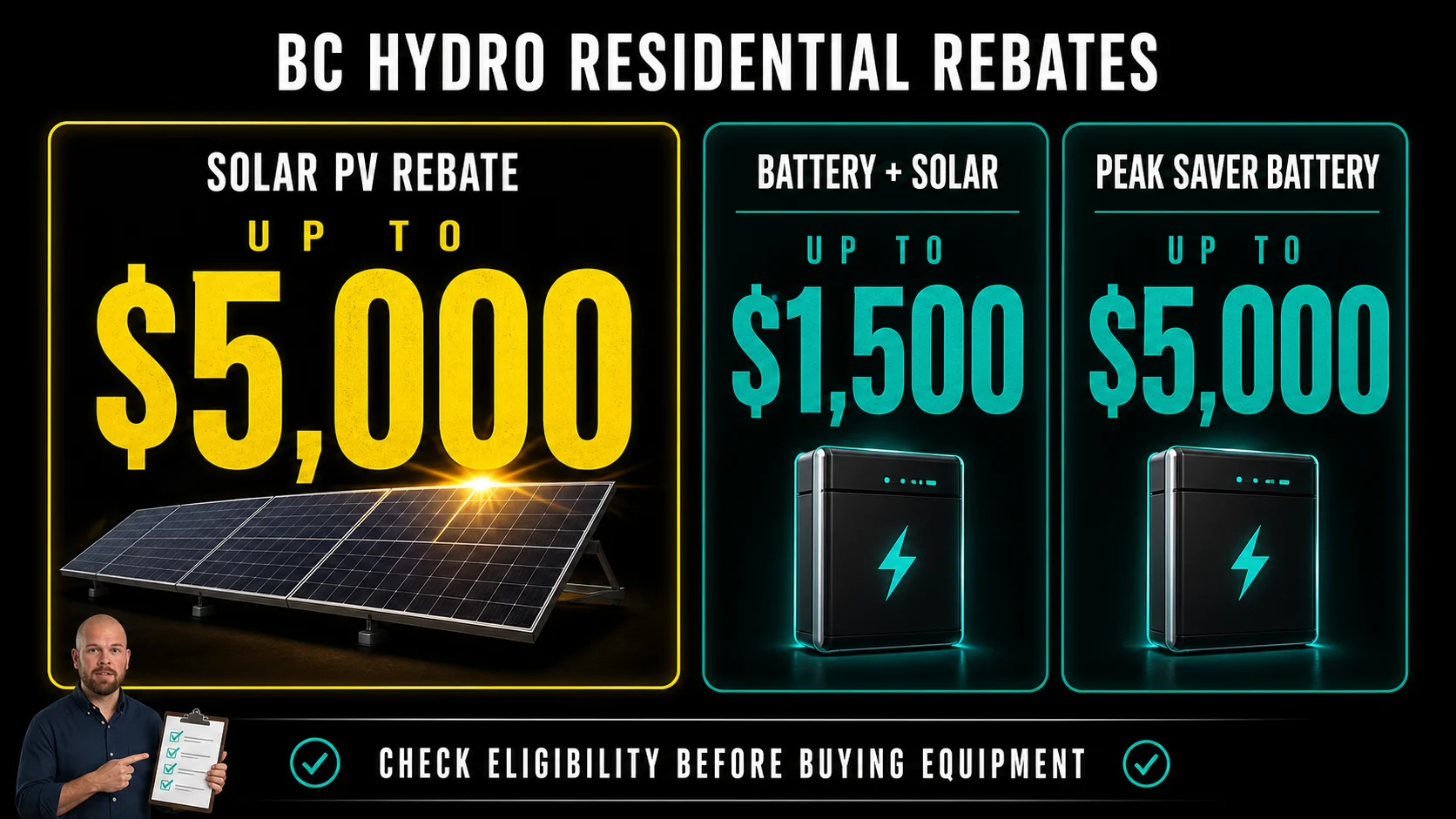
- BC Hydro’s solar rebate can be worth up to $5,000, and battery rebates depend on whether the battery is paired with solar or enrolled in Peak Saver. See BC Hydro solar and battery rebates.
- From June 1, 2026, rebate eligibility requires an HPCN installer.
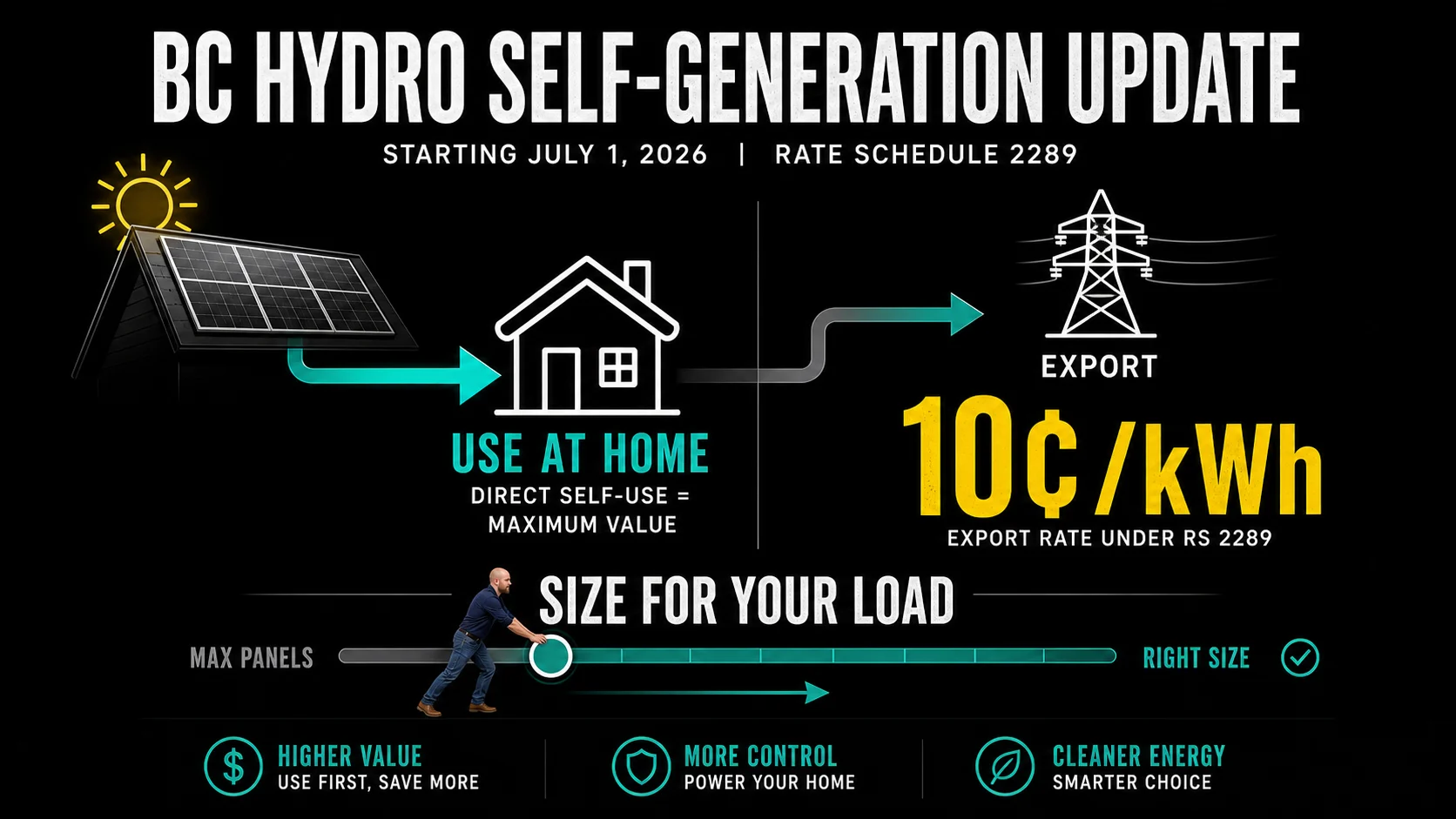
- From July 1, 2026, new self-generation customers export excess at 10 cents per kWh under Rate Schedule 2289. See BC Hydro self-generation rate updates.
Is Solar Worth It In Burnaby?
Solar can be worth it in Burnaby when your roof is open enough and your electricity use is high enough. Homes with heat pumps, EVs, air conditioning, electric hot water or larger family loads are better candidates than homes with very low BC Hydro bills.
The opposite is also true. If your roof is shaded by mature trees, broken into small roof planes, or due for replacement, solar may be a “not yet” project.
Tip for Burnaby homeowners: Ask for a shade model, not just a satellite screenshot. In Burnaby, a few trees can turn a good-looking quote into an average one.
For a nearby Lower Mainland comparison, the solar panels Abbotsford guide shows how roof shape, loads and rebate assumptions can change the project from one B.C. city to the next.
Solar Panels Burnaby Cost In 2026
Using BC Hydro’s B.C. cost range, a Burnaby system may look like this:
| System size | Burnaby fit | Gross planning range | Possible solar rebate | Net planning range |
|---|---|---|---|---|
| 5 kW | Small roof or lower-use home | $10,000 – $15,000 | Up to $5,000 | $5,000 – $10,000 |
| 8 kW | Average detached home | $16,000 – $24,000 | Up to $5,000 | $11,000 – $19,000 |
| 10 kW | EV, heat pump or larger load | $20,000 – $30,000 | Up to $5,000 | $15,000 – $25,000 |
| 12 kW | Large roof and high usage | $24,000 – $36,000 | Up to $5,000 | $19,000 – $31,000 |
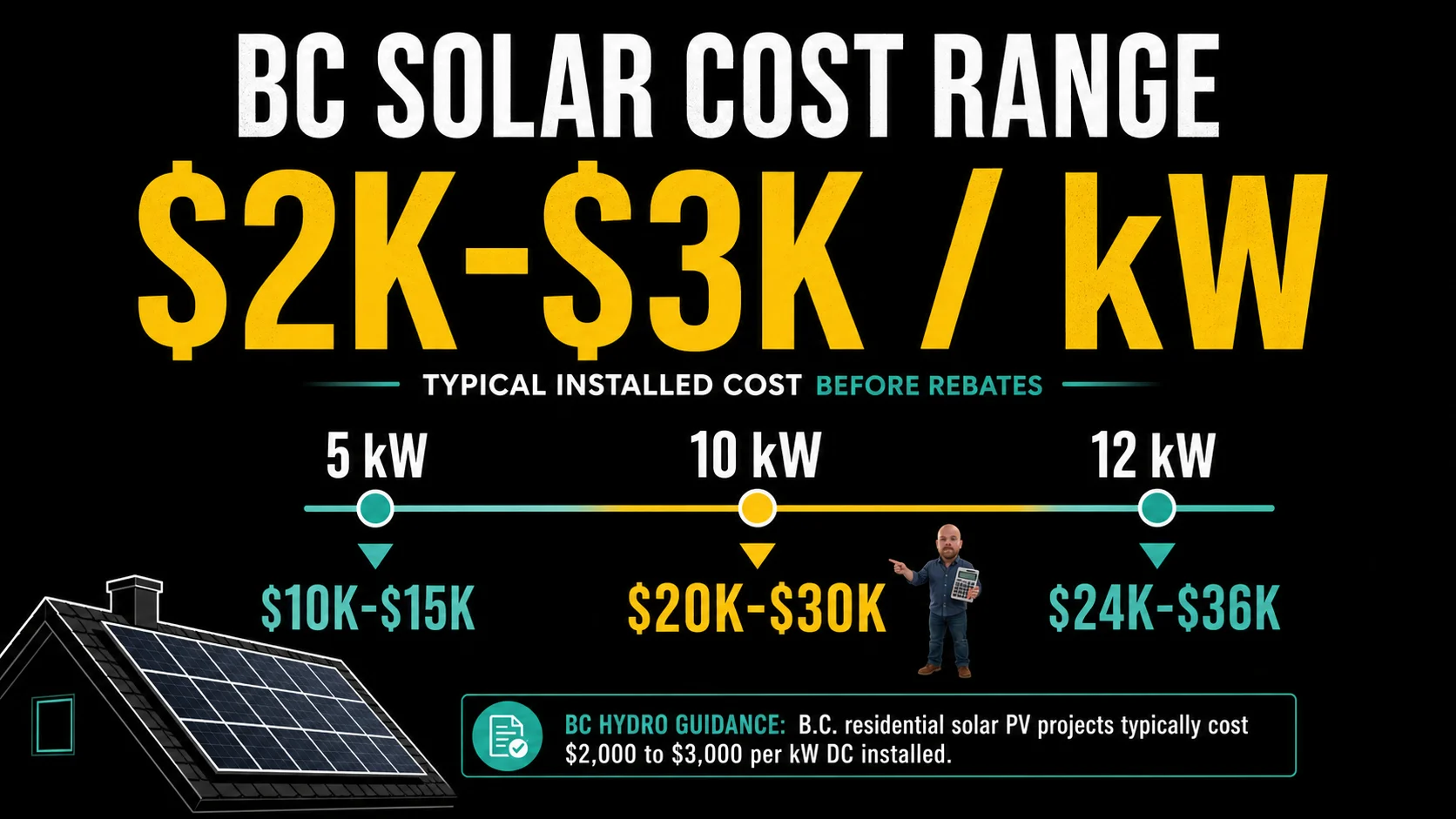
Burnaby projects can cost more if they need a main panel upgrade, roof work, steep-roof labour, optimizers for shade, or battery storage.
Use the SolarEnergies.ca online solar calculator for a first estimate, then verify the design with 12 months of BC Hydro usage, shade modelling and a contractor quote. The cheapest number is not always the best deal if the production estimate, warranty or roof plan is weaker. Understanding the cost of solar panels in Richmond can help you gauge the potential savings on your energy bills. It’s important to consider not just the initial investment but also long-term benefits such as increased home value and environmental impact. Additionally, exploring local incentives and rebates can further reduce your overall expenses.
Solar Panels Burnaby Calculator
Rebates, Batteries And BC Hydro Rules
BC Hydro’s solar rebate is up to $5,000, calculated at $1,000 per kW and capped at 50% of installed product cost. Check the current BC Hydro solar and battery rebate requirements before you sign.
Battery rebates changed April 1, 2026:
| Battery setup | 2026 rebate |
|---|---|
| Battery paired with solar | Up to $1,500 |
| Battery enrolled in Peak Saver | Up to $5,000 |
| Battery only, not enrolled in Peak Saver | Not eligible |
BC Hydro’s self-generation update matters for Burnaby because exports are weaker than direct self-use. Under the new Rate Schedule 2289, excess exported power is purchased at 10 cents per kWh. A system should be sized around your use, not around the maximum number of panels that fit.
If you want more background on how the utility changes affect sizing and payback, see the SolarEnergies.ca breakdown of BC Hydro’s Power Smart 2.0 plan and solar in B.C..
Do not buy equipment first. BC Hydro says customers need to submit a self-generation application before installation, receive technical pre-approval before the licensed contractor installs the system, and receive application pre-approval before purchasing equipment.
Burnaby Permits And Pre-Approval
BC Hydro approval is not the only checkpoint. The City of Burnaby says its residential alteration guides include installing solar panels, and its home improvement permit information is worth checking before you assume the project is only an electrical job.
Electrical work matters too. Burnaby’s residential trade permit page says electrical work and installations for single-family and duplex dwellings require an Electrical Permit Application.
Tip for Burnaby permits: Ask the installer to state, in writing, who handles the BC Hydro self-generation application, technical pre-approval, electrical permit, final inspection documents and any building or alteration permits that apply to your roof.
What Burnaby Homeowners Usually Need To Sort Out First
In Burnaby, the first question is usually the roof. A homeowner can have a good annual Hydro bill for solar and still have a weak project if the best roof plane is shaded by mature trees or broken into small sections.
A public Metro Vancouver solar discussion shows the objections many local homeowners raise before buying: BC Hydro rates are still relatively low, payback can feel slow, and the numbers change if you are adding an EV, heat pump or air conditioning. Those concerns make sense. They are exactly why a Burnaby quote should be built from your real usage, not from a generic “average home” estimate.
Tip for handling the common objections: Ask the installer to show two versions of the math. One should use your current 12-month BC Hydro usage. The other should include planned load changes, such as an EV charger, heat pump, electric hot water or cooling. Then ask how much of the power is expected to be used in the home versus exported at BC Hydro’s self-generation credit.
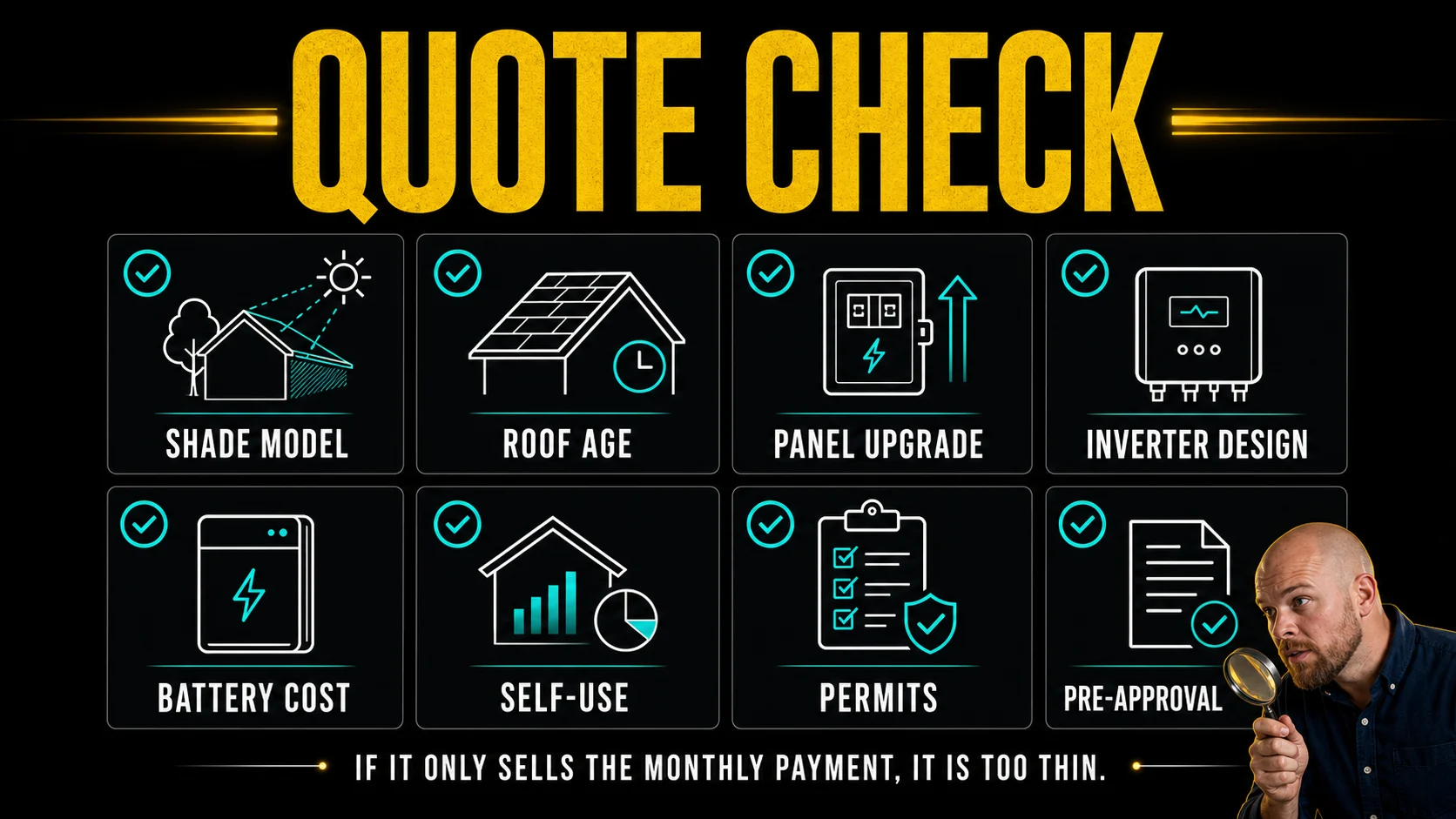
A good Burnaby quote should make the hard parts visible before the homeowner signs: shade model, roof age, panel upgrade, inverter design, battery cost, expected self-use and payback assumptions. If the quote only sells the monthly payment, it is too thin.
System Size And Bill Context
For planning, many Burnaby homes will be quoted somewhere between a small 5 kW system and a larger 10 kW or 12 kW system. Treat that as a rough size range, not a verified case study. Shade, roof shape and electrical limits can push the best design smaller.
BC Hydro’s solar guidance says a typical 10 kW residential system in B.C. can generate about 10,000 to 12,000 kWh per year. The bill-value range below uses 10 cents per kWh as the new export value and 14.08 cents per kWh as the Tier 2 residential energy charge reference from BC Hydro’s residential tiered rate notes. Treat this as planning math, not a promise.
| Example size | Scaled annual production range | Rough annual bill value range | Rough monthly average |
|---|---|---|---|
| 5.0 kW | 5,000 – 6,000 kWh | $500 – $845 | $42 – $70 |
| 8.0 kW | 8,000 – 9,600 kWh | $800 – $1,352 | $67 – $113 |
| 10.0 kW | 10,000 – 12,000 kWh | $1,000 – $1,690 | $83 – $141 |
| 12.0 kW | 12,000 – 14,400 kWh | $1,200 – $2,028 | $100 – $169 |
For Burnaby, the best design is the one that produces useful kWh from the least compromised roof area. A smaller system with cleaner exposure may beat a larger system spread across shaded planes.
What Can Go Wrong With A Solar Quote In Burnaby?
First, the installer may understate shade. Burnaby trees can make a big difference in winter and shoulder seasons.
Second, an older electrical panel can change the budget. If the home is adding an EV charger or heat pump too, solar should be planned with the full electrical load.
Third, the roof may be too old. Installing panels on a roof that needs replacement soon can create a removal and reinstall cost later.
Fourth, the quote may use outdated export assumptions. In 2026, direct self-use is more valuable than exporting extra power.
Fifth, batteries may be sold as if they are required. They are not. They are useful for backup power, but expensive and should be priced separately.
How To Choose A Burnaby Solar Installer
Ask:
- Are you an HPCN member?
- Can you show a real shade model?
- What happens if my roof needs replacement in 5-10 years?
- Does the quote include electrical upgrades?
- How does the system perform under BC Hydro Rate Schedule 2289?
- Is the battery optional?
- What is the cash price and total financed cost?
- Who handles Burnaby permits, BC Hydro pre-approval and final inspection documents?
SolarEnergies.ca can help you compare licensed, rebate-eligible installers, including HPCN members where required, through a network with 14,000+ installs across Canada. HPCN membership is a rebate eligibility requirement, not a BC Hydro guarantee of workmanship, so still compare equipment, warranties, production estimates and permit handling.
For more installer-selection context in the Lower Mainland, compare this checklist with the guide to best solar companies in Vancouver for solar panel installation. Understanding solar panel costs in British Columbia is crucial for making informed decisions. The price of solar panels can vary significantly depending on the quality, installation, and available government incentives. By researching local options, residents can find competitive pricing and potentially save money on their energy bills.
If upfront cost is the sticking point, ask whether financing options are available, whether approval is required, and what the total repayment cost is compared with the cash price. If a quote mentions 0% financing with $0 down, get the terms in writing before treating it as part of your savings math.
Final Burnaby Quote Review
Burnaby homeowners should compare quotes less like appliance shopping and more like a roof-and-electrical project. Panel wattage matters, but it is rarely the deciding factor. Shade modelling, roof condition, inverter design, electrical upgrade assumptions and self-generation math usually matter more.
A strong proposal should include a roof map, annual production estimate, shade assumptions, system size, inverter or optimizer design, rebate assumptions and a clear statement of who handles permits, BC Hydro self-generation approval and technical pre-approval. If the quote says the system will “cover” your bill, ask what that means after fixed charges, winter production, export crediting and your actual rate plan.
It is also worth asking for a smaller alternate design. In Burnaby, a system that avoids the worst shaded roof plane can sometimes be cleaner than a larger design spread across marginal surfaces. The smaller design may produce less energy, but it may produce better energy for the money spent.
The SolarEnergies.ca article on why buying solar panels can stall a BC solar project goes deeper into rebate timing, installer requirements and the risk of buying equipment before approval. Free solar panel programs in Victoria provide an excellent opportunity for homeowners to reduce their energy costs. By participating in these initiatives, residents can contribute to a more sustainable future while enjoying significant savings. It’s essential to stay informed about eligibility criteria and application procedures to take full advantage of these benefits.
Burnaby Trouble Scenarios To Price Separately
Ask installers to price these items separately where they apply:
- Main electrical panel upgrade
- Roof replacement or roof repair
- Tree trimming or shade mitigation
- Optimizers or microinverters
- Battery and critical-load panel
- Financing cost versus cash price
That separation makes it easier to decide whether solar is the right next project or whether the roof, electrical service or heat pump should come first.
Burnaby Homes That Should Wait
Some Burnaby homes are better served by waiting. If the roof has only a few good years left, replace it first. If heavy tree shade covers the best roof planes for much of the day, get the shade model before spending design money. If the electrical panel is already tight and an EV charger is planned, solve the electrical plan before treating solar as a separate purchase.
Waiting is not the same as rejecting solar. It can mean sequencing the work properly: roof, electrical upgrades, heat pump or EV charger, then solar sized around the new load.
FAQ
Are solar panels worth it in Burnaby?
They can be, especially if you have higher electricity use and a roof with limited shade. Heavy tree cover, old shingles or electrical upgrades can weaken the case.
How much do solar panels cost in Burnaby?
BC Hydro’s B.C. guidance suggests $2,000 to $3,000 per kW before rebates. A 10 kW Burnaby system often starts around $20,000 to $30,000 gross.
Does Burnaby get enough sun?
Yes, but do not judge the project by city weather alone. BC Hydro says a typical 10 kW B.C. residential roof system can generate about 10,000 to 12,000 kWh per year. In Burnaby, roof direction, tree shade, roof age and electrical capacity decide whether that production estimate is realistic for your home.
What rebate is available?
Eligible BC Hydro customers can receive up to $5,000 for solar PV. Batteries may qualify for up to $1,500 when paired with solar or up to $5,000 if enrolled in Peak Saver.
The order matters. BC Hydro says you need application pre-approval before purchasing equipment, and rebate eligibility depends on the self-generation application process and installation requirements.
Do I need a Burnaby permit for solar panels?
You should assume permits may be part of the project and confirm the details before signing. Burnaby says residential alteration guides include installing solar panels, and electrical work for single-family and duplex dwellings requires an Electrical Permit Application.
Ask your installer which permits apply to your roof, who submits them, and whether permit costs are included in the quote.
Do I need a battery?
No. Grid-tied solar works without a battery. Add one if backup power matters enough to justify the extra cost.
What is the biggest Burnaby solar risk?
A quote that ignores shade, roof age or electrical capacity. Ask for those items in writing.
Should I replace my roof before solar?
If the roof is near end of life, yes. Removing and reinstalling panels later can be costly.
Can solar work on a partially shaded Burnaby roof?
Sometimes. The design may need fewer panels, different roof planes or panel-level electronics. The important thing is to model the shade before accepting the savings estimate.
Should I compare more than one installer?
Yes. Burnaby roof complexity makes quote comparison valuable. Ask each installer to explain production, shade, roof age, electrical work and rebate eligibility in the same level of detail.
What should I prepare before asking for Burnaby quotes?
Gather 12 months of BC Hydro usage, roof age, photos of the main electrical panel, planned EV or heat-pump upgrades and photos showing nearby trees or hillside shade.