Alberta Solar Restrictions Lifted in 2026? What Really Changed and What Homeowners Should Do Now
April 30, 2026
Nova Scotia Solar Financing: How $30,000 Municipal Loans Change Solar and Battery Planning
May 11, 2026Last Updated on May 8, 2026 by Vitaliy
Canadian homeowners are asking a fair question right now: if the energy shock started on the other side of the world, why should it show up on my power bill?
The short answer is that Canada is not sealed off from global energy prices. Oil, liquefied natural gas, diesel, freight, fertilizer, imported goods, utility construction costs, and wholesale electricity markets are all connected. Oil, freight, fertilizer, and commodity prices can react quickly. Regulated electricity bills usually move slower, but utilities eventually recover higher fuel, equipment, financing, and infrastructure costs through rates.
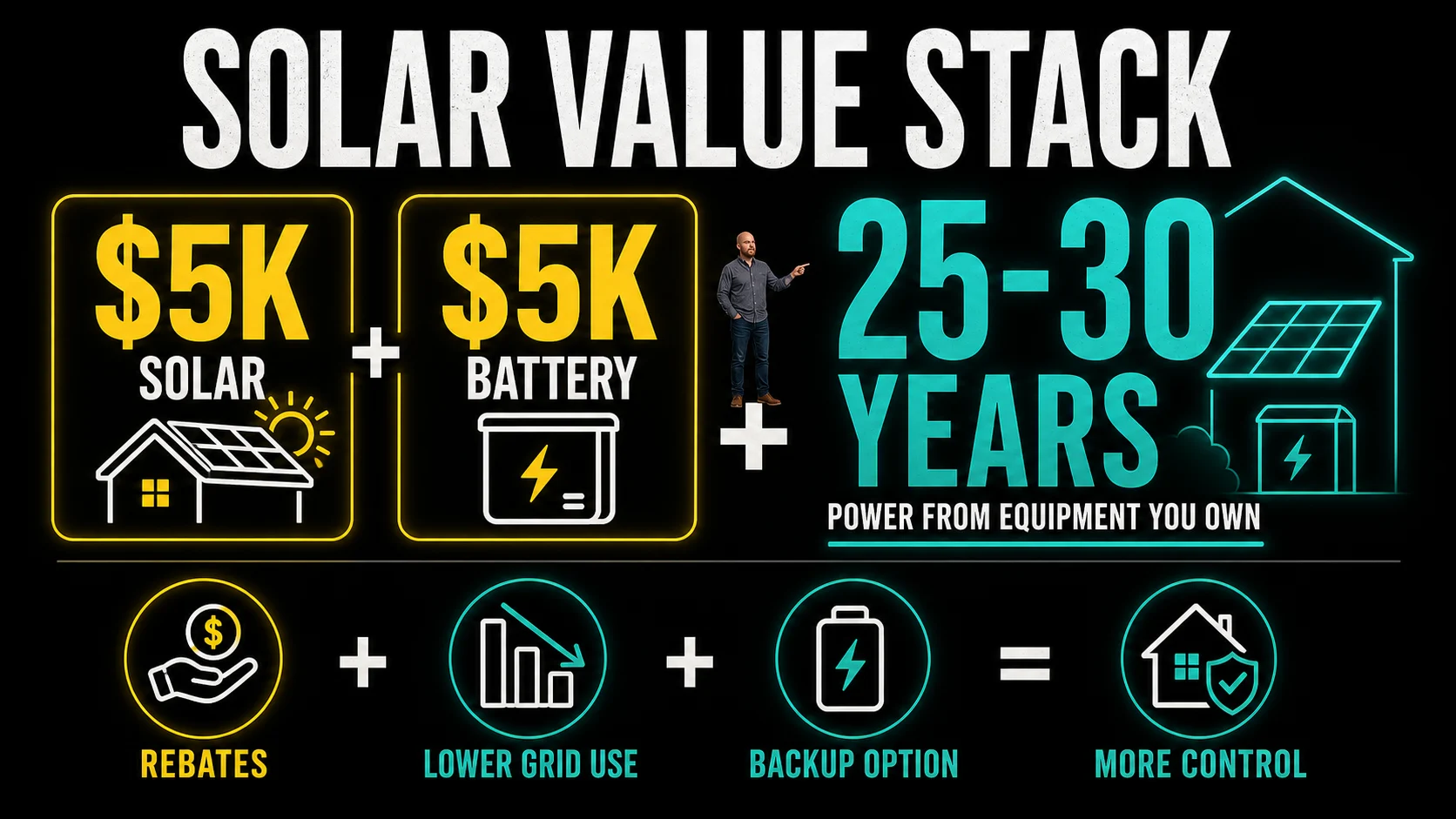
Waiting can be expensive if your household is already exposed to high electricity rates, heating oil, time-of-use pricing, or an aging provincial grid. Solar panels will not make a home immune to every energy cost, but they can reduce how much electricity you need to buy from the utility for the next 25 to 30 years.
Key Takeaways
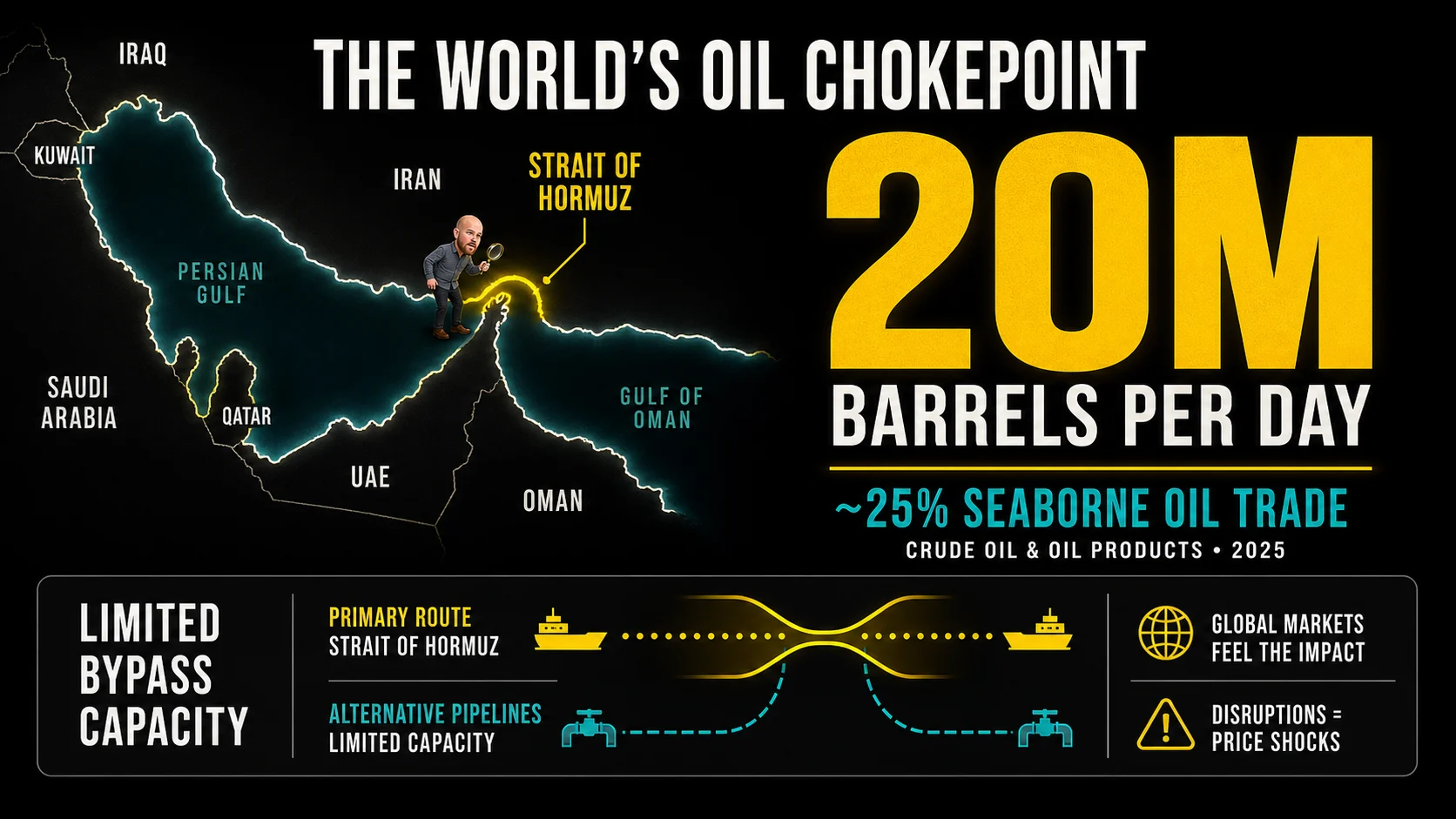
- The Strait of Hormuz handled about 20 million barrels per day of crude oil and oil products in 2025, according to the International Energy Agency’s Strait of Hormuz factsheet.
- The same route also matters for LNG. The IEA says LNG from Qatar and the UAE moving through the Strait represented almost 20% of global LNG trade in 2025.
- Canada produces oil and gas, but Canadian households still pay prices shaped by global energy markets.
- Canadian electricity bills are rarely exposed to oil prices directly. The pressure usually comes indirectly through natural gas generation, imported power, freight, equipment costs, borrowing costs, and grid investment.
- Solar is most attractive where high all-in electricity prices, fair export credits, good roof exposure, and current rebates line up.
- Batteries are becoming more useful in Ontario and B.C., where rate design and new incentive rules reward better control over when power is used.
Why A Shipping Chokepoint Can Hit A Canadian Power Bill
The Strait of Hormuz is one of the most important energy corridors in the world. The IEA says nearly 20 million barrels per day of oil moved through it in 2025, with limited pipeline capacity available to bypass the route. It also reports that almost 20% of global LNG trade depends on LNG exports from Qatar and the UAE passing through the same area.
That matters because energy prices are set at the margin. A barrel of oil in Alberta does not become cheap for Canadians just because it was produced in Canada. Producers, refiners, shippers, and utilities react to global benchmarks and replacement costs.
There is also a second path that people miss: shipping and construction. Higher oil and diesel prices raise freight costs. That can make food, building materials, electrical equipment, transformers, solar panels, batteries, and utility infrastructure more expensive. Utilities eventually recover many of those costs through rates.
The IEA also met with Canadian leaders in Ottawa in May 2026 to discuss energy market turmoil tied to the Middle East conflict. That does not mean every household bill jumps overnight. It does mean the issue is no longer theoretical.
Canada Exports Energy, But Households Still Pay Market Prices
Canada’s energy exports help government revenue and energy companies when commodity prices rise. That is not the same thing as protecting a family budget.
Gasoline prices move with crude oil. Heating oil moves with crude oil. Canadian natural gas prices are still shaped mainly by North American supply and demand, but LNG exports are increasing the link between local gas markets and global gas prices. Electricity rates rise when utilities face higher fuel, labour, equipment, financing, and reliability costs.
Tip for homeowners: do not judge your exposure only by your province’s average electricity rate. Look at your full bill, your heating fuel, your peak pricing plan, your delivery charges, and whether your province is adding large grid investments to meet demand from EVs, heat pumps, data centres, and population growth.
Why This Won’t Hit Every Province The Same Way
Canada’s electricity system is provincial. That matters. Hydro-heavy provinces like Quebec, Manitoba, and B.C. are less directly exposed to fossil fuel generation costs, although they still face equipment, grid, and import-cost pressure. Alberta is more exposed to gas-fired market pricing. Saskatchewan faces utility capital-cost pressure. Ontario’s issue is less fuel price today and more rate design, peak pricing, and future system costs.
How Oil And LNG Pressure Can Become Electricity Pressure
Electricity is local, but the inputs are not always local.
In Alberta, natural gas often plays a major role in setting wholesale power prices. When gas-fired generators are needed to meet demand, the cost of fuel can influence the market-clearing price. The AESO guide to Alberta’s electricity market explains how Alberta’s competitive market works.
In Saskatchewan, the issue is less about hourly market swings and more about long-term utility costs. SaskPower announced that it is seeking 3.9% rate increases for both 2026 and 2027, citing reliability, rising demand, aging infrastructure, and major capital investment.
In B.C., hydro power still keeps many bills lower than fossil-heavy grids, but costs are moving. FortisBC says its electricity rates increased 3.63% on January 1, 2026. BC Hydro also introduced new solar and battery rules and rebates, which is a clear signal that self-generation is now part of the utility planning conversation.
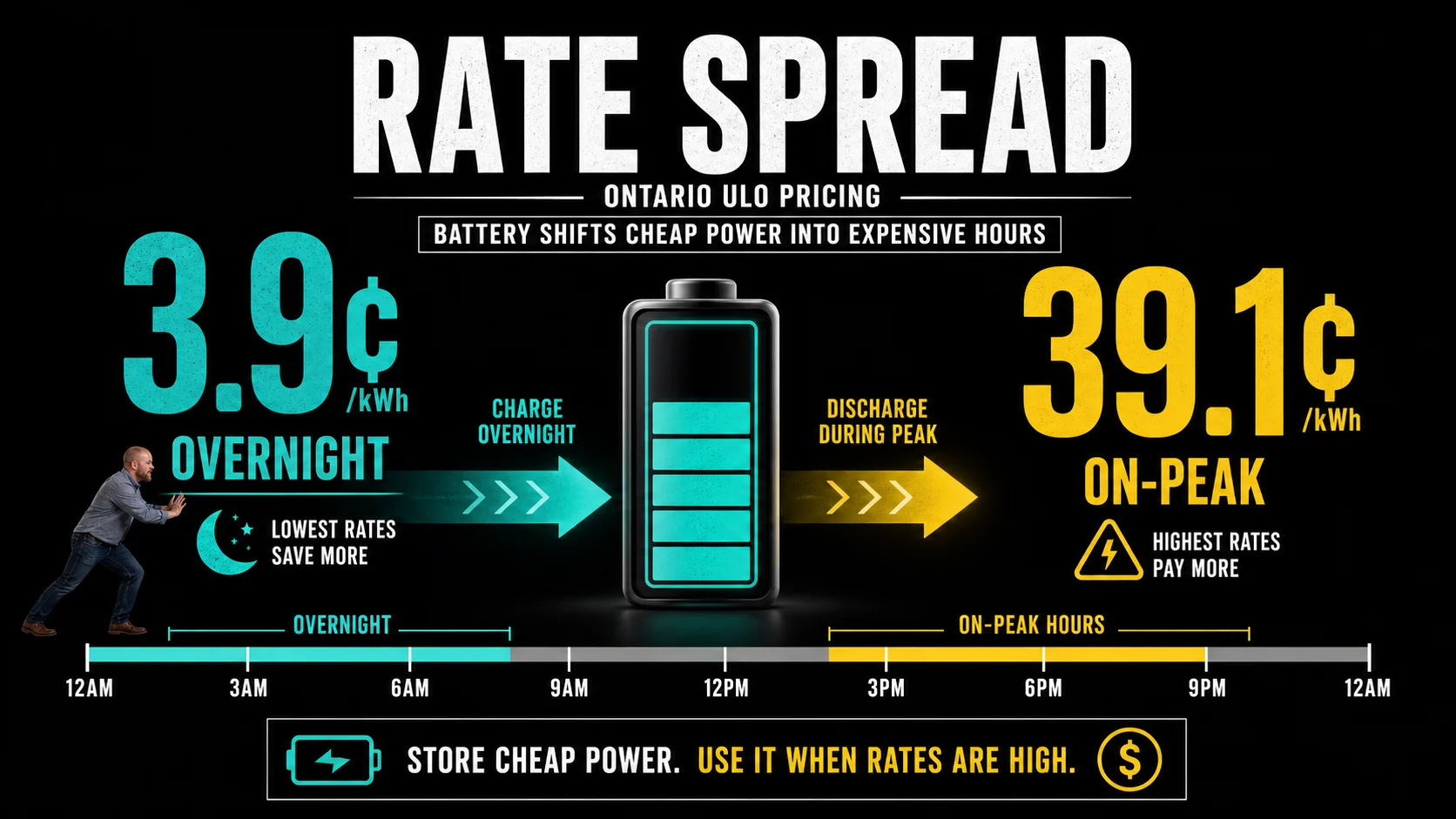
In Ontario, the retail price is regulated, but households still face strong time-based price signals. The Ontario Energy Board’s current residential prices list ULO on-peak power at 39.1 cents/kWh, compared with 3.9 cents/kWh overnight.
That gap is exactly why batteries are getting more interesting.
Where Solar Makes The Most Sense In 2026
Solar is not a panic purchase. It is a math decision.
The strongest candidates usually have at least one of these conditions:
| Household situation | Why solar can help |
|---|---|
| High electricity rates | Every kWh generated on the roof avoids buying more from the grid. |
| Time-of-use or ULO pricing | Solar plus storage can reduce peak-period grid purchases, but the payback depends on installed cost, usable capacity, round-trip efficiency, battery lifespan, and your actual hourly usage. |
| EV charging | Solar can offset part of a new, large electricity load. |
| Heat pump adoption | A solar system can help reduce the new power demand from electrified heating. |
| Good provincial rebates | Incentives shorten payback and reduce financing pressure. |
| Concern about outages | Batteries can provide backup for selected loads. |
Alberta, Saskatchewan, Nova Scotia, Prince Edward Island, and the territories often deserve closer solar analysis because power costs can be high. Ontario and B.C. deserve a different kind of analysis: rate structure, rebates, batteries, and future utility rules matter as much as the base price per kWh.
Solar payback depends on your roof, local utility rules, export credits, financing rate, equipment cost, and actual usage. Don’t use provincial averages as your final number.
Rebates Changed. Timing Matters More Now.
For homeowners, the old federal grant-and-loan picture is mostly gone. Commercial and business projects still need to check federal tax-credit options separately. Natural Resources Canada states that the Canada Greener Homes Grant is closed, and that Canada Greener Homes Loan applications closed on October 1, 2025. That change is why current solar power incentives in Canada should be checked before a homeowner builds a payback plan.
That does not mean incentives disappeared. They became more regional.
In B.C., BC Hydro offers residential rebates of up to $5,000 for solar panels and up to $5,000 for battery storage, with battery rebate rules changing in 2026. Batteries enrolled in Peak Saver can qualify for the larger battery rebate, while non-enrolled batteries paired with solar have a lower cap.
In Ontario, the Home Renovation Savings Program launched through Save on Energy and Enbridge Gas to support upgrades including solar panels and battery storage. Homeowners should confirm the current solar and battery amounts before signing, because program pages and delivery partners can change details faster than old blog posts get updated.
For commercial projects, the federal Clean Technology Investment Tax Credit can still be a major part of the decision, but eligibility should be confirmed with a tax professional before a business builds the payback case around it.
Tip for Ontario homeowners: if you are on ULO pricing, a battery is not just backup. It can shift cheap overnight electricity into expensive late-afternoon hours. The economics depend on battery cost, usable capacity, cycle life, your load profile, and whether solar is included.
Tip for B.C. homeowners: check the current BC Hydro self-generation and rebate rules before assuming old-style net metering economics. The rebate can help, but the rate structure matters.
What Solar Cannot Do
Solar is not a full shield against inflation. It will not remove delivery charges, fixed utility fees, natural gas heating bills, gasoline costs, or every outage risk.
It also will not perform the same on every roof. Shading, roof age, orientation, snow, electrical panel limits, local permitting, and utility interconnection rules all affect the final design.
That is why I do not like vague promises like “solar will erase your bill.” Sometimes it nearly can. Sometimes the smarter goal is to reduce the most expensive part of your usage, support an EV or heat pump, or pair solar with storage for more control.
The right question is not “will solar save me from the global energy crisis?” The better question is “how much of my household energy cost can I lock in with equipment I own?”
What I Would Check Before Deciding
Start with your last 12 months of electricity bills. Look at total kWh, seasonal peaks, delivery charges, and the actual all-in cost per kWh. If you are in Ontario, compare TOU, Tiered, and ULO plans using your real usage pattern. If you are in Alberta, look at import and export rates, especially if you are considering a Solar Club plan. If you are in B.C., confirm the current BC Hydro or FortisBC interconnection rules.
Then check your roof. A good solar quote should account for roof age, shading, panel layout, inverter choice, snow, service panel capacity, and whether a battery is worth it.
My practical view: if your roof is strong, your bills are high, and your province still has meaningful incentives, it is worth pricing solar now. You do not need to rush into a bad contract. You do need current numbers.
FAQ
Will the Strait of Hormuz crisis definitely raise my Canadian electricity bill?
Not in the same way everywhere. Alberta is more exposed to gas-fired power and market pricing. Saskatchewan is facing rate pressure from infrastructure and reliability investment. Ontario households may feel the pressure through future regulated price changes and peak-period rates. B.C. has lower-cost hydro, but utility costs and self-generation rules are changing.
The broader point is simple: a global energy shock raises the cost of fuel, freight, equipment, and reliability planning. Those costs can reach utility bills even when the original conflict is far away.
Does solar still make sense now that the Canada Greener Homes Grant is closed?
Yes, in many cases, but the payback depends more on provincial programs and your local bill. The federal grant and loan made the decision easier for many homeowners. Now the best cases are usually in provinces with high rates, strong utility rebates, good net metering or export rates, and homes with strong solar exposure.
Use current local incentives, not old federal-grant assumptions. For more detail on that shift, see the SolarEnergies.ca update on the Canada Greener Homes Program in 2026.
Should I add a battery with solar?
Add a battery if it solves a real problem: backup power, high peak rates, weak export compensation, or a utility program that pays enough to improve the economics. In Ontario, the spread between 3.9 cents/kWh overnight ULO power and 39.1 cents/kWh on-peak ULO power makes batteries worth studying. In B.C., BC Hydro’s Peak Saver-linked rebate can improve the case.
If your province has simple one-for-one net metering and few outages, a battery may still be more about resilience than pure payback.
Is it better to wait for solar prices to fall?
Maybe, but waiting has risk. Hardware prices can fall, but labour, financing, freight, electrical equipment, permitting, and utility rates can rise. Incentive budgets can also close or change.
The safer move is to compare a current quote against your actual bill and current rebates. If the numbers are weak, wait. If the payback is strong and the roof is ready, delaying may cost more than it saves.
What is the first step if I want a serious solar quote?
Gather 12 months of utility bills, take photos of your electrical panel, confirm your roof age, and note any future loads such as an EV, heat pump, hot tub, or basement suite. A proper solar design should use those details, not a rough guess from your postal code.
SolarEnergies.ca can help you compare the numbers by province, incentive, rate plan, and system size before you decide.