Study Confirms Canada Needs More Solar: A Call for Utility-Scale Mega-Projects
December 14, 2024
Ontario’s Energy Efficiency Rebates: Impacts, Opportunities, and Challenges
January 8, 2025Last Updated on January 2, 2025 by Vitaliy
Does Solar Power Make Electricity More Expensive in Canada?
-
Vitaliy

0
Solar energy is gaining popularity as a clean, renewable energy source. But a hot question is whether it makes electricity more expensive, especially in Canada. Let’s unpack the facts, tackle the concerns, and find out why solar might actually be your wallet’s new best friend.
Is Solar Power Driving Up Electricity Prices?
At first glance, it might seem so. Solar energy has costs that go beyond the panels and inverters—like energy storage, backup systems, and grid upgrades. Critics argue that these additional expenses can inflate overall electricity prices. For example:
-
Backup Energy Needs: Solar’s intermittent nature means we rely on backup power, often from natural gas, during cloudy days or at night. Maintaining dual systems is undeniably costly.
-
Grid Integration: Upgrading grids to handle renewable energy comes with hefty upfront investments. For instance, utility-scale solar farms require enhanced infrastructure for storage and distribution.
-
Government Incentives: Subsidies like Canada’s Greener Homes Grant help lower costs for solar adopters but may indirectly increase electricity rates for everyone by reallocating funds.
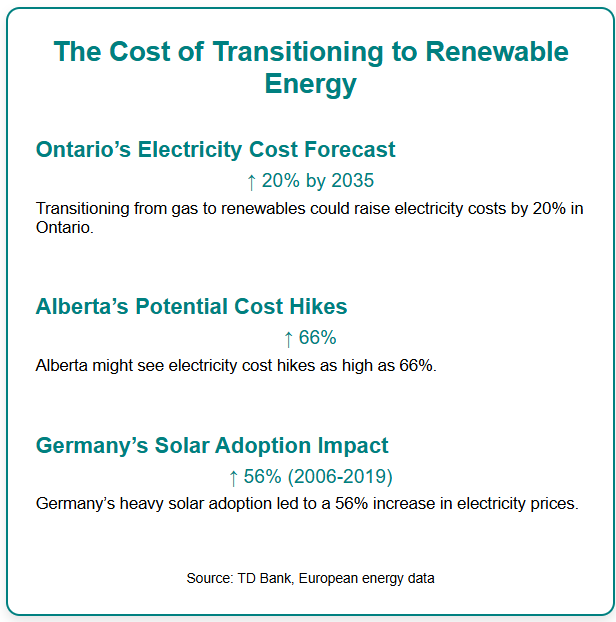
Let’s look at real-world data. In Ontario, TD Bank estimates that transitioning from gas to renewables could increase electricity costs by 20% by 2035. Alberta might see hikes as high as 66%. Meanwhile, European countries like Germany, with heavy solar adoption, saw a 56% rise in household electricity prices from 2006 to 2019
Why Solar Still Makes Financial Sense
While critics focus on higher short-term costs, the long-term outlook for solar is undeniably brighter:
-
Falling Solar Costs: Since 2010, the cost of solar panels has dropped by over 85%, with installation costs in Canada now ranging between $2.51 and $3.16 per watt. Compare that to fossil fuel plants, which remain volatile due to fluctuating fuel prices.
-
Government Support: Federal incentives like the Canada Greener Homes Grant ($5,000) and the SolarHomes rebate in Nova Scotia ($0.30/watt) can make installations far more affordable.
-
Energy Independence: By installing solar, homeowners shield themselves from rising electricity rates, which in Nova Scotia have increased consistently and are projected to grow further by 2.4% in 2025

Elementor #1158
Is Solar Energy Worth It in Nova Scotia in 2025?
Study Confirms Canada Needs More Solar: A Call for Utility-Scale Mega-Projects
How Trump Will Change Solar Energy in Canada
Agriculture and Solar Mixing in Nova Scotia: Exploring Agrivoltaics
Solar Panels Nova Scotia Rebates Everything You need to Know
The Canadian Solar Advantage
In provinces like Nova Scotia, where electricity costs average 18.3 cents per kWh—higher than the national average—solar is an attractive option. A typical 5 kW system in Halifax costs around $15,000 after rebates and can save homeowners over $30,000 in electricity bills across 25 years.
A Detailed Example:
-
Annual Solar Production: 5,365 kWh
-
First-Year Savings: $965 (at 18 cents/kWh)
-
Cumulative 25-Year Savings: $30,452
It’s like having a dividend stock yielding a 10% return.
Environmental and Economic Wins
Let’s not forget the broader benefits:
-
Reduced Carbon Footprint: Each kW of solar capacity offsets 660 grams of CO2 per kWh, supporting Canada’s goal of 80% renewable energy by 2030.
-
Healthier Communities: Lower reliance on fossil fuels means cleaner air and fewer health issues linked to pollution.
The Way Forward: Solar with a Twist
The key to making solar truly cost-effective lies in innovation and planning:
-
Battery Storage: Modern lithium-ion batteries are increasingly affordable, allowing homeowners to store excess solar energy for peak usage times. Programs like Nova Scotia’s Home Battery Pilot offer rebates of up to $2,500.
-
Net Metering: This policy lets you sell unused solar power back to the grid, further reducing electricity costs. Check your province’s net-metering policies for details.
-
Community Solar Projects: Shared solar farms allow homeowners to invest in solar without installing panels on their property, making clean energy accessible to renters and apartment dwellers.
Overcoming the Myths
Common Concern: “What about winter?”
While snow can temporarily reduce solar output, panels are designed to shed snow efficiently. Plus, the bright winter sun can still generate electricity.
Common Concern: “Is my roof suitable?”
Most south-facing roofs with minimal shading are ideal. Even east- or west-facing roofs can work, though efficiency may drop slightly. Professional assessments can clarify suitability.
Action Steps for Homeowners
If you’re ready to explore solar:
-
Assess Your Roof: Use tools like Google’s Project Sunroof to estimate solar potential.
-
Explore Incentives: Check federal and provincial rebates, such as the Canada Greener Homes Grant and Nova Scotia’s SolarHomes program.
-
Contact Solar Installers: Get quotes from reputable local companies. Many offer free consultations.
-
Consider Financing: Take advantage of low-interest loans like Halifax’s Solar City program.

The Bottom Line
Yes, solar power introduces upfront costs and requires smart integration. But with falling prices, robust government incentives, and clear environmental benefits, it’s a no-brainer for long-term savings and sustainability. The sooner you switch, the more you’ll save—both financially and environmentally.
Don’t let myths about high costs scare you off. Solar isn’t just a good investment; it’s the smart choice for a cleaner, cheaper energy future.
Why Canada’s Hydropower Challenges Mean It’s Time to Think Solar
- November 29, 2024
- 10 mins read
-
In
Solar News

Solar Energy Growth In Past 10 Years In Different Countries
- November 29, 2024
- 10 mins read
-
In
Solar Energy

Agriculture and Solar Mixing in Nova Scotia: Exploring Agrivoltaics
- December 10, 2024
- 5 mins read
-
In
Nova Scotia

Vitaliy
Vitaliy Lano is a solar energy enthusiast with over 12 years of experience in home improvement and sustainability. His passion lies in making green living accessible and practical for everyone, breaking down complex solar options into clear, relatable insights. Whether it’s reviewing solar companies, exploring incentives, or guiding homeowners through the transition to renewable energy, Vitaliy combines expertise with a no-nonsense approach. His goal? To connect people with the right solar solutions—free from fluff and full of value. If there’s a way to make solar work better for your home and wallet, Vitaliy is the guy to show you how.