
Ontario’s 12 kW Micro-Embedded Generation Threshold Is Live: What It Means for Home Solar
May 15, 2026
Renewable Energy Certificates in Canada: Real Clean Power or Paper Solar?
May 29, 2026Last Updated on May 21, 2026 by Vitaliy
If you live in British Columbia and you’re thinking about solar panels in British Columbia, BC Hydro’s new Power Smart 2.0 plan changes the conversation. It does not make solar less useful. It makes sizing, timing, battery storage, and future electricity use more important.
The mistake would be simple: install solar based only on last year’s electricity bill, then add a heat pump, EV charger, or battery later and wonder why the system no longer fits the home.
Key Takeaways
- BC Hydro’s Power Smart 2.0 is a three-year, $1-billion-plus efficiency and demand-response plan for homes and businesses in B.C.
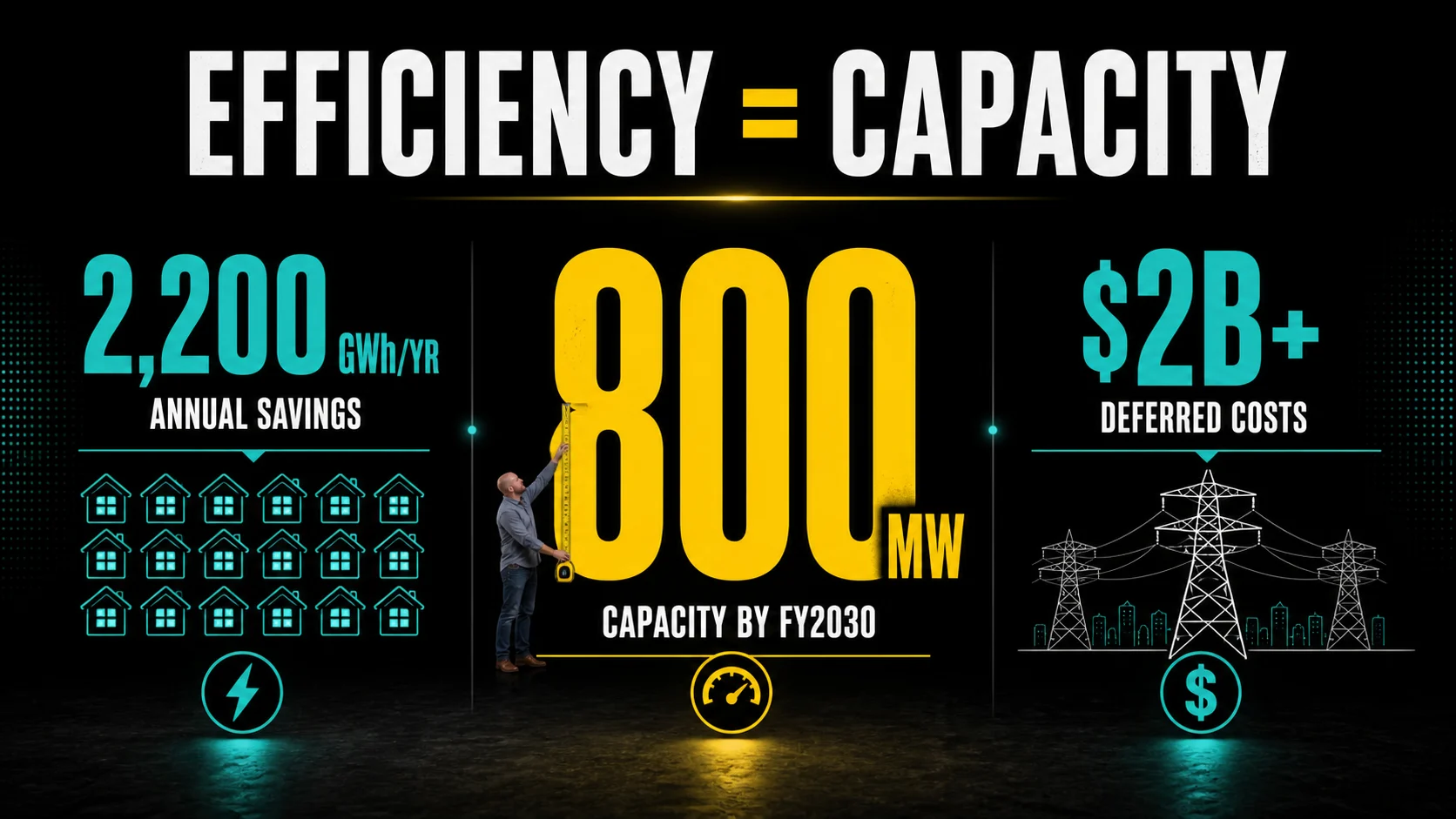
- The plan is expected to save 2,200 GWh of electricity per year, 800 MW of capacity by fiscal 2030, and more than $2 billion in future grid costs, according to BC Hydro’s Power Smart 2.0 plan.
- Efficiency can reduce the solar system size a home needs, but electrification can increase it.
- BC Hydro’s solar and battery rebates still matter: residential customers can qualify for up to $5,000 for solar PV and up to $5,000 for eligible battery storage through BC Hydro solar and battery rebates.
- Starting July 1, 2026, BC Hydro’s old net metering rate closes to new customers, and the new self-generation rate pays 10 cents per kWh for exported excess power, according to BC Hydro’s customer generation rate update.
- For many B.C. homes, the best answer is not “efficiency or solar.” It is efficiency first where it reduces waste, then solar sized for the home you’re actually building toward.
What BC Hydro Announced
On May 19, 2026, the Province of British Columbia announced Power Smart 2.0, calling it BC Hydro’s largest conservation investment. The B.C. government news release says the plan includes free smart thermostats, bigger customer rewards, income-qualified supports, instant rebates, and business efficiency funding.
BC Hydro says the plan invests more than $1 billion over three years in rebates, rewards, and programs to help customers reduce and shift electricity use. It expects the plan to deliver 2,200 GWh of annual energy savings, enough to power 220,000 homes, plus 800 MW of capacity savings by fiscal 2030. BC Hydro also says the plan could avoid or defer more than $2 billion in generation, transmission, and distribution costs.
For homeowners, the most visible pieces are free smart thermostats for homes with electric baseboard heating, expected in fall 2026; new residential rewards of up to $200 per year; expanded income-qualified support worth up to $325 annually; instant rebates of $10 to $200 on efficient products at more than 300 stores; and a new mobile app expected in fall 2026.
For businesses, BC Hydro says commercial and industrial customers may be able to access expanded funding, including up to 100% of eligible project costs in some cases. This matters for solar because BC Hydro’s plan treats efficiency and demand response as part of its grid planning, since the program is expected to avoid or defer more than $2 billion in infrastructure costs.
Why Power Smart 2.0 Changes Solar Sizing
Solar sizing starts with one basic question: how much electricity will this property use?
Power Smart 2.0 changes that number in two opposite directions.
Efficiency upgrades can push electricity use down. Better insulation, smarter heating controls, efficient appliances, heat-pump water heaters, and demand-response tools can reduce wasted power. The U.S. Department of Energy makes the same point in its homeowner’s guide to solar: energy efficiency can reduce the amount of solar energy a home needs.
Electrification can push electricity use up. A heat pump can lower total energy cost and emissions, but it often moves heating load onto the electric bill. An EV charger can add a large new load. A heat-pump water heater, induction cooking, basement suite, hot tub, or workshop can also change the home’s future demand.
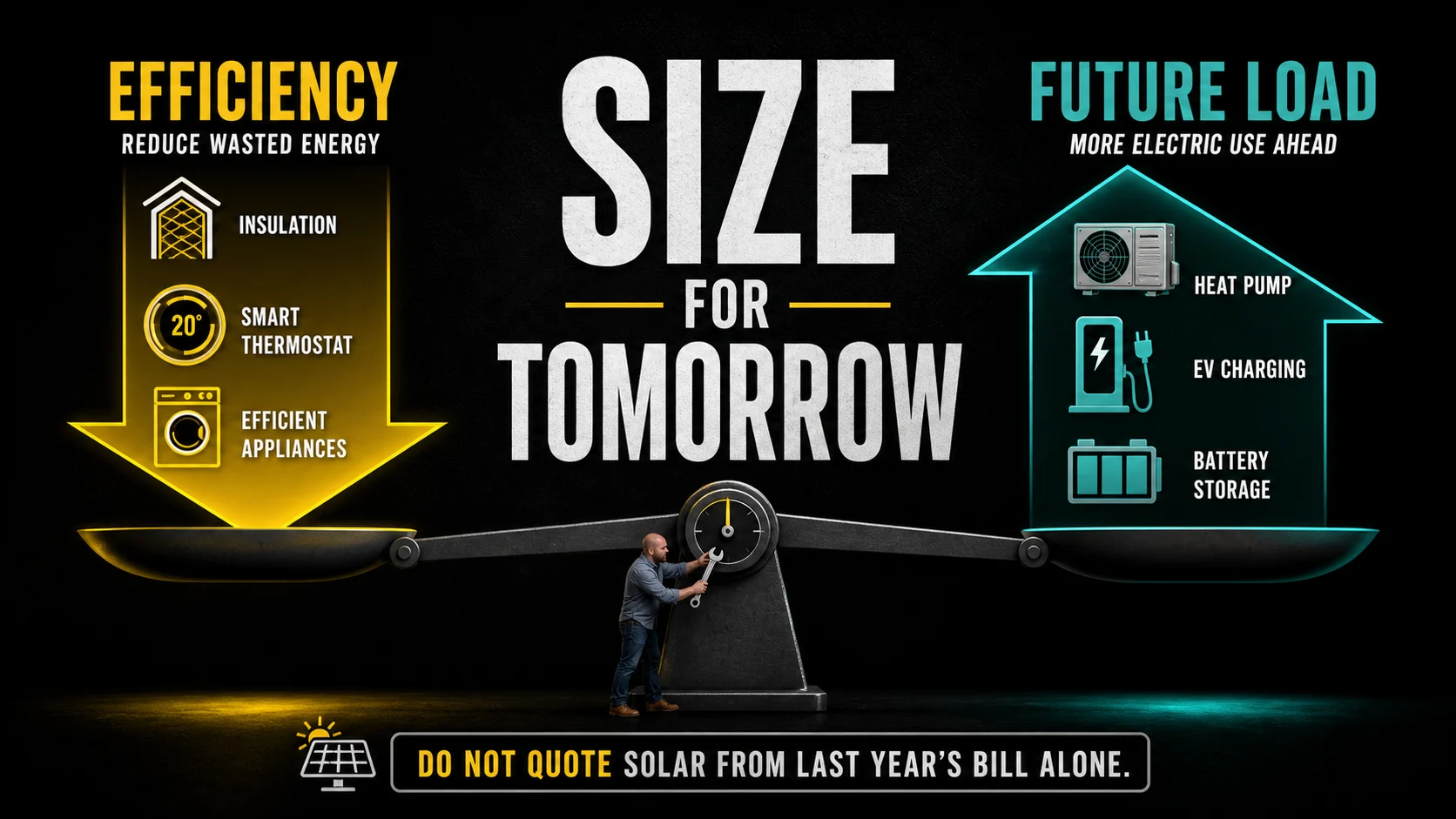
That is why Power Smart 2.0 is good news for careful solar buyers and bad news for lazy sizing.
If an installer sizes your system from old bills without asking about upcoming efficiency upgrades, heating changes, EV plans, or battery goals, the quote may look neat but still be wrong.
Tip for B.C. homeowners: before you accept a solar quote, ask the installer to model two loads: your current annual kWh and your expected annual kWh after efficiency upgrades, heat pumps, EV charging, or other planned changes.
If you want a fast first check, use the SolarEnergies.ca solar panel calculator to estimate whether solar makes sense for your roof before you collect detailed quotes.
Is Power Smart 2.0 a Reason to Wait on Solar?
Sometimes, yes. Often, no.
Waiting makes sense if you are about to make a major change that will clearly alter your electric load. If your baseboard-heated home is getting insulation upgrades, better windows, and smart controls in the next few months, it may be smart to size solar after you understand the new usage pattern. Waiting can also make sense if your roof needs replacement, your electrical panel is not ready, or you still do not know whether you are buying an EV.
But waiting can become expensive if it turns into vague delay. BC Hydro’s residential bills rose by a net 3.75% as of April 1, 2026, according to BC Hydro residential rate information. The old net metering structure also closes to new customers on July 1, 2026.
The better question is not “Should I wait?” It is “What decisions are still unknown?”
A Simple Decision Table
| Your situation | Best next step |
|---|---|
| Electric baseboard home with poor insulation | Do efficiency planning first, then size solar |
| Gas-heated home adding a heat pump | Size solar for the future electric load |
| EV purchase likely within 1-2 years | Include estimated EV charging in the solar model |
| High evening use or outage concerns | Compare solar-only against solar plus battery |
| Roof near end of life | Replace or repair roof before solar |
| Current bills are high and plans are clear | Start quotes now, especially before rebate or rate details change again |
The New Export Rules Make Self-Consumption More Important
BC Hydro’s solar math is also changing because of the self-generation rate update.
Effective July 1, 2026, BC Hydro is closing the old net metering rate to new customers. Under the old net metering rate, excess generation was banked as kWh credits that could offset current and future consumption. Under the new self-generation rate, BC Hydro says customers can export excess generation and earn 10 cents per kWh.
That 10-cent export price needs context.
BC Hydro’s residential rate pages list tiered energy charges at 11.87 cents per kWh for the first 675 kWh per month and 14.08 cents per kWh after that. The flat residential rate is 12.70 cents per kWh, according to BC Hydro’s official residential rate pages; BC Hydro also notes on its tariffs and terms page that the official BCUC-approved tariff prevails if there are differences.
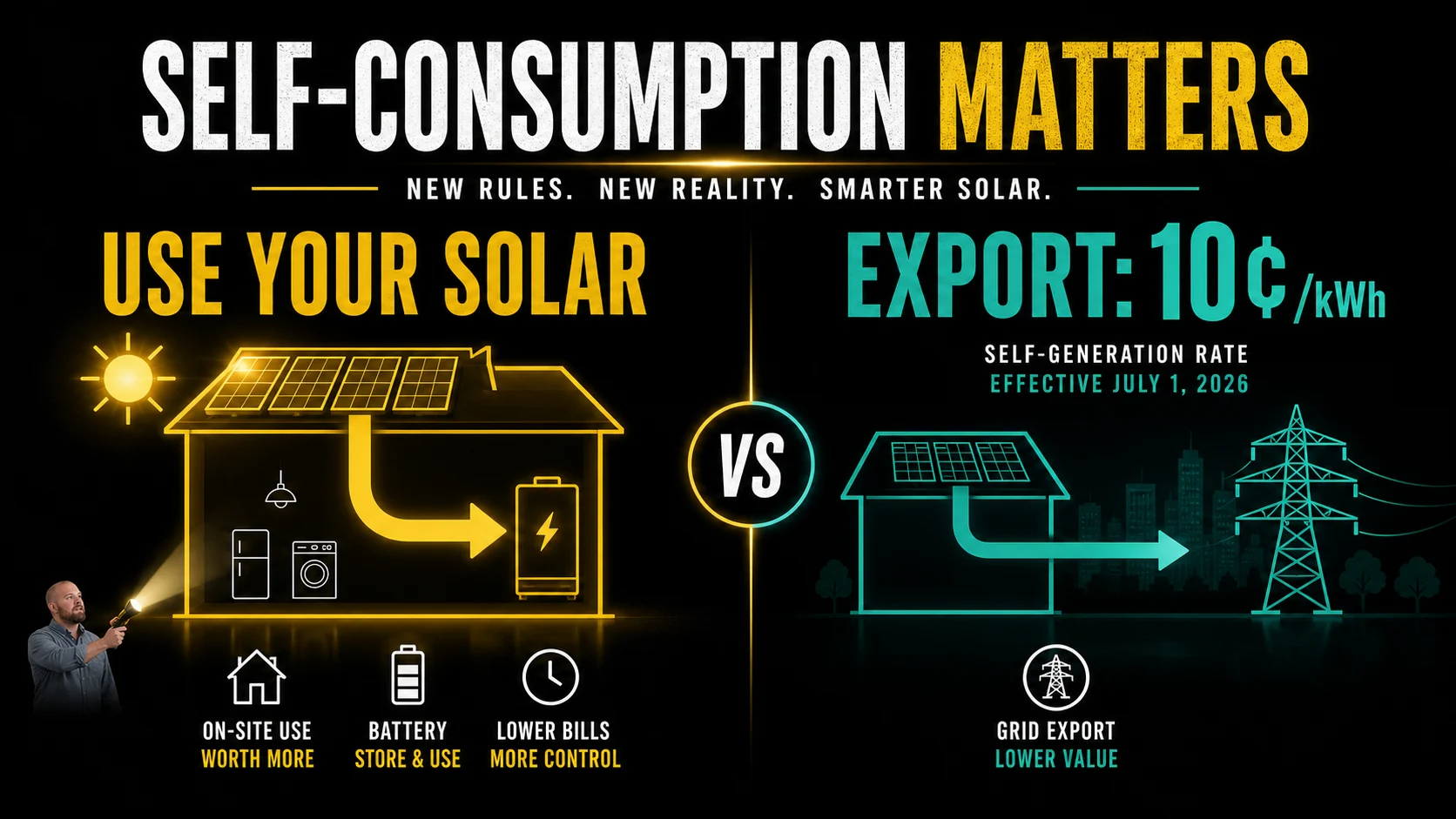
That means exported solar is generally worth less than power you avoid buying from BC Hydro. This does not kill solar. It changes the design target.
Oversizing a system just to export a lot of midday power may be less attractive. A system that covers more of your own daytime use, supports flexible loads, or pairs with battery storage may make more sense.
Tip for quote comparisons: ask each installer to show expected annual self-consumption, expected annual exports, and the payback calculation under the new self-generation rate. A low quote with weak modeling is not really a better quote.
Where Batteries Fit Under Power Smart 2.0
Battery storage becomes more interesting when export value is lower and evening electricity use is higher.
BC Hydro’s current solar and battery program offers up to $5,000 for eligible grid-connected solar panels. Battery rebates changed on April 1, 2026. BC Hydro now lists up to $1,500 for batteries paired with solar, or up to $5,000 for batteries enrolled in Peak Saver, with battery-only systems outside Peak Saver no longer eligible.
That is a strong signal. The rebate structure points in that direction: the higher battery rebate requires Peak Saver enrollment. In plain English, BC Hydro wants batteries to help the grid, not just sit quietly in a garage. For homeowners, the value of a battery depends on your load shape. If your home uses a lot of electricity in the evening, a battery may help you use more of your own solar. If you have outage concerns, a battery may also provide backup for selected circuits. If your daytime use is already high and outages are rare, battery payback may be weaker.
SolarEnergies.ca can connect you with certified installers who have completed 14,000+ installs across Canada, so you can compare system size, battery design, warranty, equipment, and financing side by side. If upfront cost is the sticking point, available financing options may include 0% financing with $0 down payment, depending on approval and program terms.
Three B.C. Homeowner Scenarios
1. The Electric Baseboard Home
This homeowner may be the biggest winner from Power Smart 2.0. Free smart thermostat offers, rewards, and efficiency rebates can reduce waste before solar is installed. If the home uses less electricity after controls and insulation, the right PV system may be smaller and cheaper. Best move: do the efficiency work, then size solar with a future-load plan.
2. The Heat Pump and EV Household
This home may use more electricity in the future, even if it becomes more efficient overall. A heat pump can replace fossil fuel heating. An EV can replace gasoline. Both may be good decisions, but they can increase the kWh that solar needs to cover. Best move: do not size solar from last year’s bill. Model the heat pump and EV load before choosing system size.
3. The High Evening-Use Home
This household may need a solar-plus-storage conversation. If most electricity use happens after sunset, a solar-only system may export more midday power and buy more evening power. Under the new 10-cent export rate, that timing matters. Best move: compare solar-only, solar plus battery, and smart-load shifting before signing.
Before choosing an installer, compare a few detailed quotes. Look beyond the headline price. Equipment quality, production estimate, interconnection plan, warranty, monitoring, battery controls, and financing terms can change the real value of the project. For a deeper cost check, compare your quote against the pieces that drive a complete home solar system price.
My Take
Power Smart 2.0 is good news for solar in British Columbia, but only if homeowners treat efficiency as part of the design.
It is not a reason to forget solar. BC Hydro is still offering solar and battery rebates, still allowing self-generation, and still preparing for higher electricity demand. The plan is really saying this: every kWh now matters more.
If your home is wasting electricity, fix the waste. If your future includes a heat pump, EV, battery, or bigger electric lifestyle, size solar for that future. Do not let an old bill become the blueprint for the next 25 years. If rebates are the main reason you’re comparing timelines, check the current solar panel rebates in BC before you choose a system size.
FAQ
Does BC Hydro’s Power Smart 2.0 make solar panels less useful in B.C.?
No. Power Smart 2.0 makes solar planning more precise. Efficiency can reduce the system size you need, while heat pumps, EVs, and other electric upgrades can increase future electricity use. The right move is to model both.
Should I complete efficiency upgrades before installing solar?
Yes, if those upgrades will happen soon and will materially change your electricity use. Insulation, air sealing, smart thermostats, efficient appliances, and heating controls can all affect solar sizing. If the upgrades are uncertain or years away, get solar quotes now and include future-load assumptions.
What happens to BC Hydro net metering in 2026?
BC Hydro says the old net metering rate closes to new customers on July 1, 2026. The new self-generation rate pays 10 cents per kWh for exported excess electricity. Existing net metering customers may have different transition rules, so check BC Hydro’s current self-generation page before making a final decision.
Are BC Hydro solar rebates still available?
Yes, as of the current BC Hydro program page. Qualifying residential customers can receive up to $5,000 for eligible grid-connected solar PV, based on $1,000 per kW and capped at 50% of installed product cost. Battery rebates may add up to $5,000, depending on Peak Saver enrollment and eligibility.
Do I need a battery in British Columbia?
Not always. A battery may help if you want backup power, have high evening use, want to increase solar self-consumption, or can qualify for the larger Peak Saver-linked rebate. If your home uses most power during daylight hours and outages are not a major concern, solar-only may still be the cleaner financial choice.
How should I compare solar quotes after Power Smart 2.0?
Ask every installer to show current load, future load, expected solar production, self-consumption, exports, rebate assumptions, battery assumptions, and payback under the post-July 1, 2026 self-generation rate. A quote that ignores future heat pumps, EVs, or efficiency upgrades is incomplete.
Is this a good time for B.C. homeowners to look at solar?
Yes, if you have a suitable roof, clear electricity plans, and access to qualified installers. Power Smart 2.0 does not remove the case for solar. It rewards homeowners who plan the whole home: efficiency, electrification, solar, storage, and rate choice.