
Nova Scotia Fire Hall Solar Project: Why Solar Is Becoming a Budget Tool, Not a Luxury
June 12, 2026
Solar Panels Burnaby 2026: Cost, Rebates, Shade, Roof Risk and Quote Checklist
June 19, 2026Last Updated on June 22, 2026 by Vitaliy
Abbotsford is one of the more practical B.C. cities for solar because the homes and properties are so varied. Standard suburban roofs, rural acreages, farms, shops, barns, larger detached houses, heat pumps, EV chargers and business-rate loads all show up in the same local market.
That mix makes Abbotsford solar quotes more interesting, but also easier to get wrong. A roof can be large and sunny while the electrical design, ownership, load location, rebate category or BC Hydro self-generation math still needs careful review. A weak quote can make the payback look cleaner than it really is, especially if it treats a farm building like a normal house.
Key Takeaways
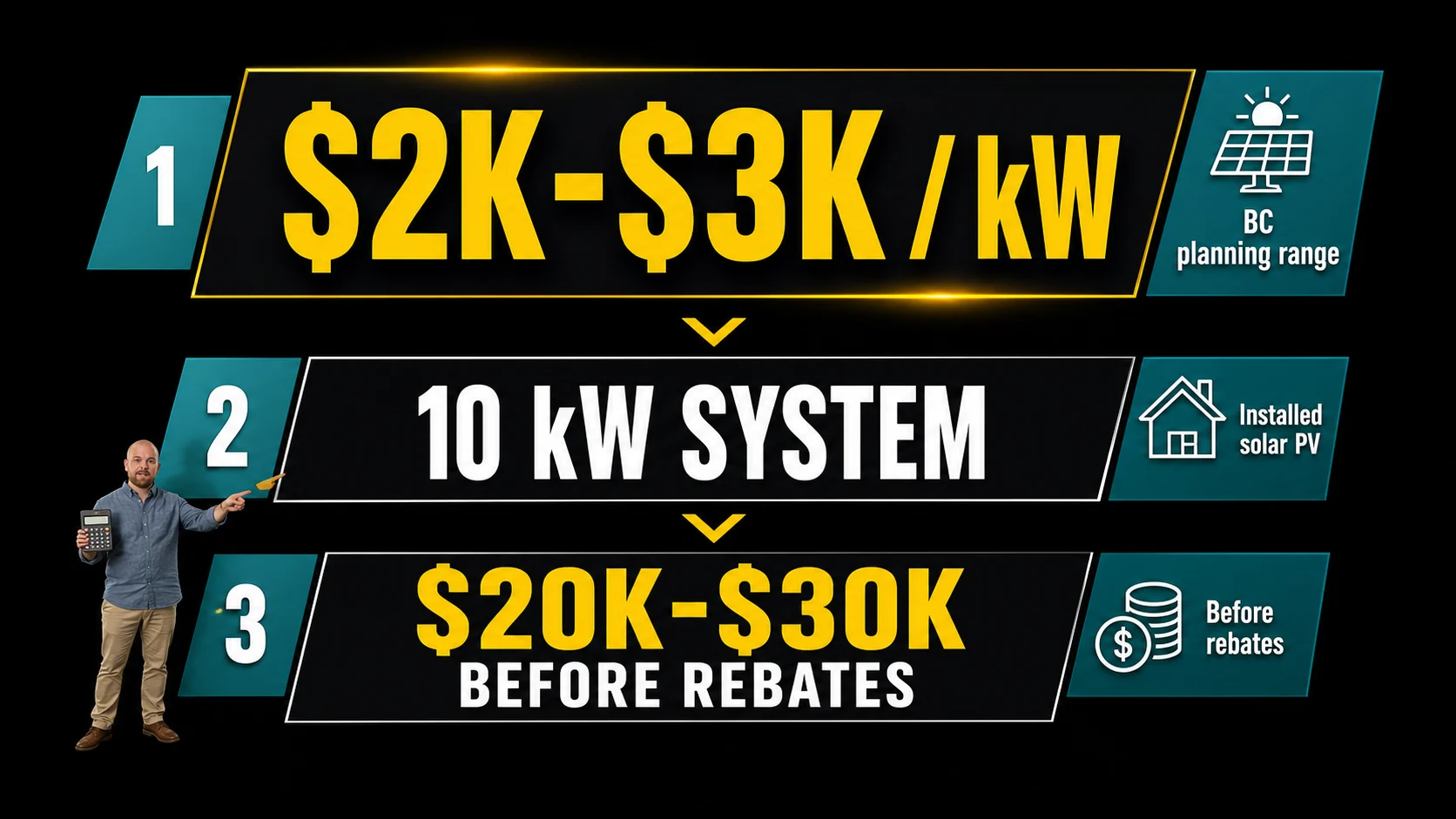
- BC Hydro says B.C. solar PV projects typically cost about $2,000 to $3,000 per kW DC installed, and a 10 kW residential system often falls around $20,000 to $30,000 before rebates. See BC Hydro solar panel guidance.
- Abbotsford homes with EV charging, heat pumps, electric hot water, shops, barns or farm loads may have enough electricity use to make solar worth a proper quote.
- BC Hydro’s residential solar rebate can be worth up to $5,000 for eligible systems. Business accounts use a separate program with solar rebates up to $10,000. See BC Hydro residential solar and battery rebates and BC Hydro business solar and battery rebates.
- Since June 1, 2026, BC Hydro says installations must be completed by an HPCN member for solar and battery rebate eligibility. See BC Hydro contractor requirements.
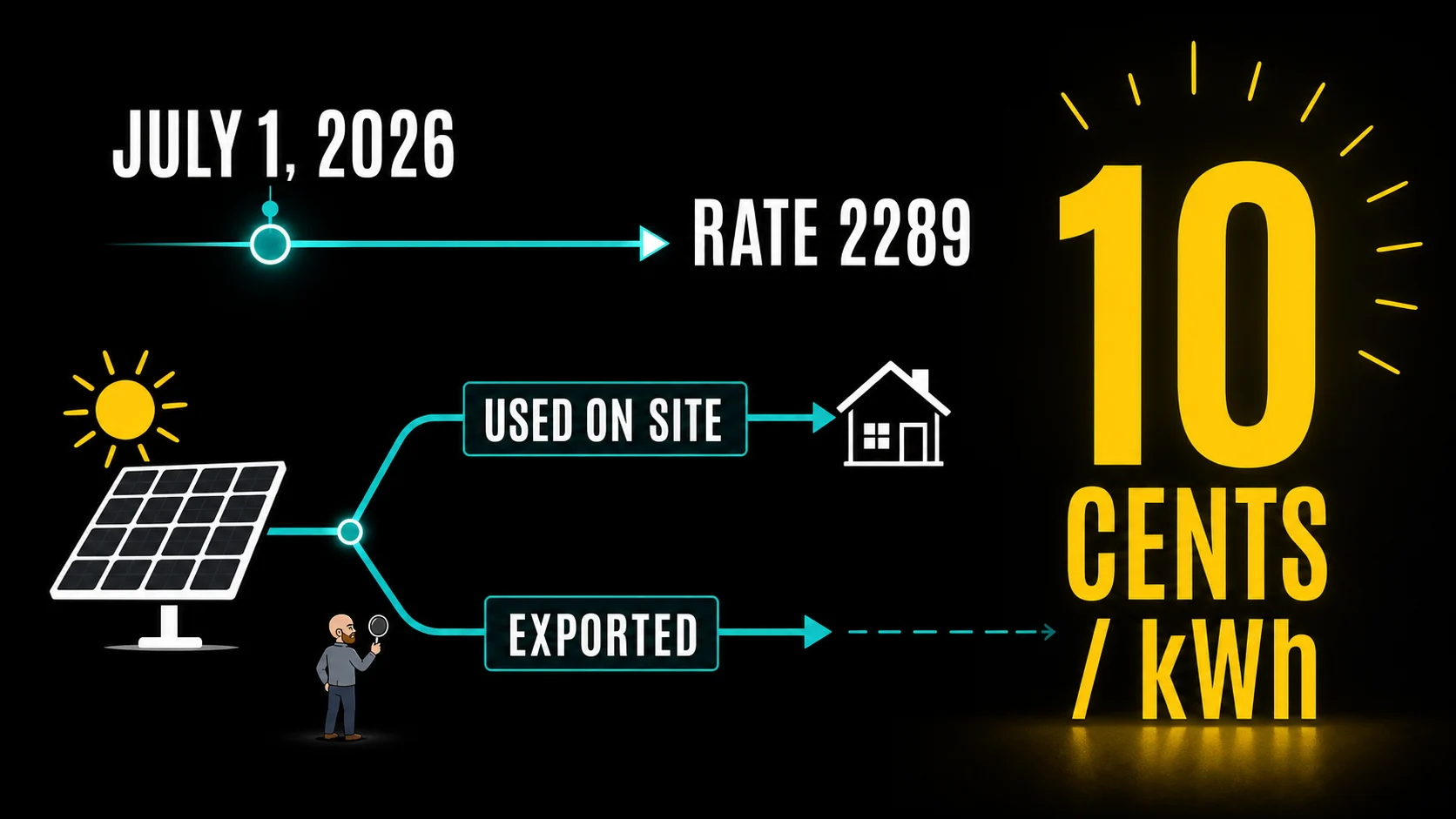
- Starting July 1, 2026, new BC Hydro self-generation customers export excess generation at 10 cents per kWh under Rate Schedule 2289, with transition rules for existing net metering and rebate customers. See BC Hydro self-generation rate updates.
Is Solar Worth It In Abbotsford?
Solar can be worth it in Abbotsford when the property has good exposure and a meaningful electrical load. A larger home with an EV, heat pump and high annual BC Hydro usage is often a better candidate than a small home with low consumption. For a nearby B.C. payback example, see our guide to solar payback in B.C.
Rural properties add another layer. A barn or shop roof may be the biggest and cleanest roof, but the solar system still needs to connect safely and sensibly. The installer should know where the load is, how the meter is configured, whether the building is structurally suitable and whether the project is being treated as residential, farm or commercial.
Solar is weaker when the quote ignores roof age, electrical upgrade costs, long wire runs or export-heavy production. Abbotsford gives many homeowners room to install a larger array. That does not always mean the largest possible array is the best financial choice.
Solar Panels Abbotsford Calculator
Solar Panels Abbotsford Cost In 2026
Using BC Hydro’s B.C. cost guidance, solar panels Abbotsford cost can be estimated like this:
| System size | Abbotsford fit | Gross planning range | Possible solar rebate | Net planning range |
|---|---|---|---|---|
| 5 kW | Smaller home or lower usage | $10,000 – $15,000 | Up to $5,000 | $5,000 – $10,000 |
| 8 kW | Average detached home | $16,000 – $24,000 | Up to $5,000 | $11,000 – $19,000 |
| 10 kW | EV, heat pump or larger family | $20,000 – $30,000 | Up to $5,000 | $15,000 – $25,000 |
| 12 kW+ | High-use home, shop or acreage | $24,000 – $36,000+ | Up to $5,000 | $19,000 – $31,000+ |
Common adders for Abbotsford and Fraser Valley properties can include rural trenching, long conductor runs, service upgrades, roof repair, structural review for outbuildings, monitoring hardware and battery storage.
The cost question should not stop at “How much per panel?” Ask for the installed cost, permits, racking, inverter, monitoring, electrical work, BC Hydro application support and battery pricing as separate lines. Understanding solar panel costs in British Columbia can greatly influence your decision-making process. It’s essential to consider future maintenance expenses along with initial setup costs. Additionally, exploring potential incentives or rebates available in the region could significantly lower your overall investment.
If you want a quick first check before collecting quotes, use the SolarEnergies.ca online solar calculator to see whether solar makes sense for your Abbotsford property, your usage and your roof before you commit to a design.
Rebates, Batteries And Self-Generation Rules
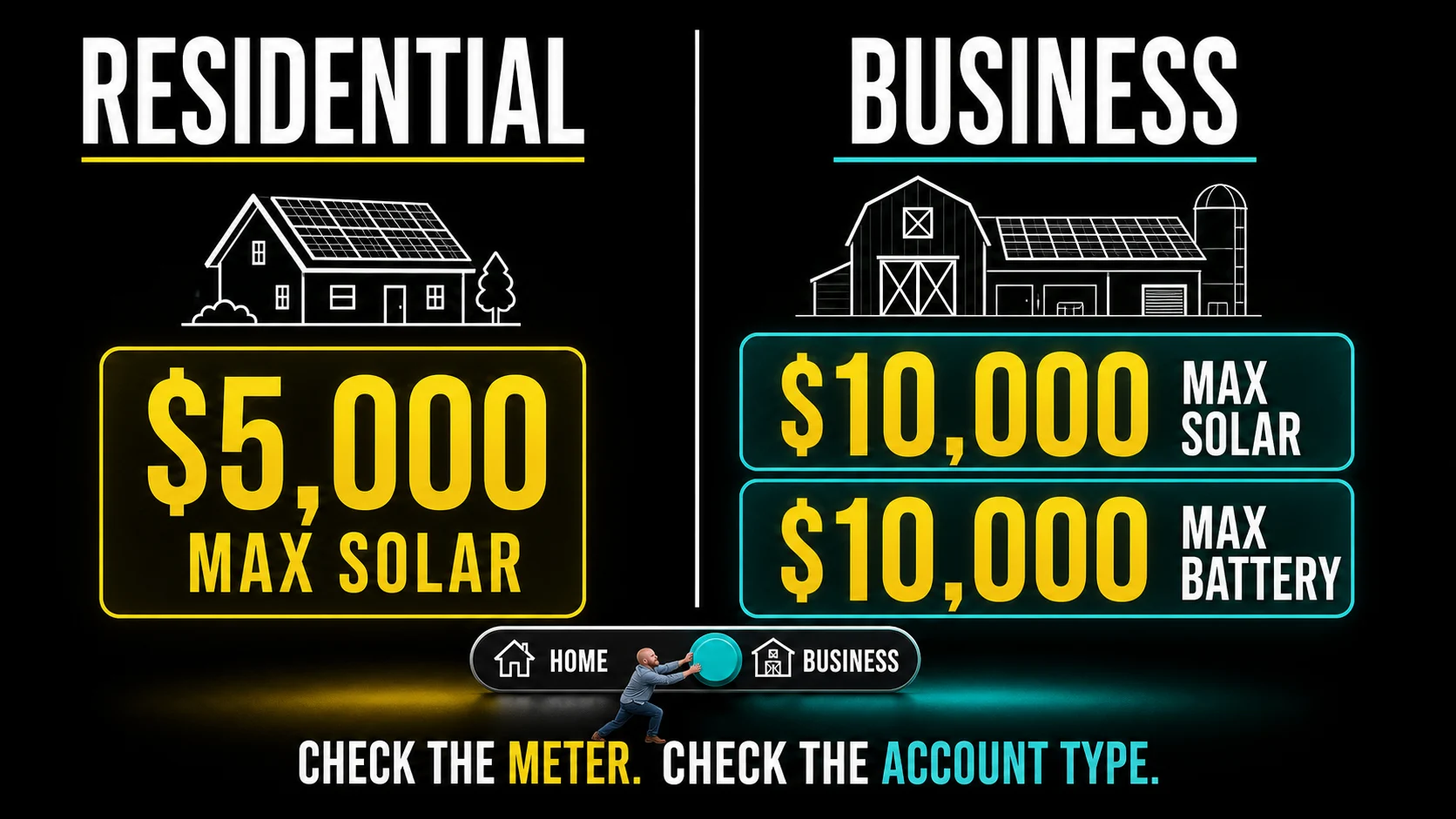
BC Hydro’s residential solar rebate is listed at $1,000 per kW of installed generator capacity, capped at 50% of installed product cost, with a maximum of $5,000.
In Abbotsford, do not assume every barn, shop or farm load fits the residential rebate. BC Hydro residential rebates require an eligible residential account. Business accounts use a separate BC Hydro business rebate program, with solar rebates up to $10,000 and battery storage rebates up to $10,000 for qualifying projects. Mixed-use properties need the meter, account type and project category checked before anyone applies residential numbers.
Battery rebates changed in 2026:
| Battery setup | 2026 BC Hydro rebate |
|---|---|
| Battery paired with solar | Up to $1,500 |
| Battery enrolled in Peak Saver | Up to $5,000 |
| Battery only, not enrolled in Peak Saver | Not eligible |
For the higher Peak Saver battery rebate, BC Hydro says eligible batteries must be enrolled no later than 14 days after interconnection approval. For more battery and permit context in the province, see our guide to off-grid solar in B.C.
BC Hydro also says self-generation customers must use eligible renewable generation, connect to the distribution system and receive approval before connection. The self-generation path lists a 100 kW aggregate nameplate limit. Larger projects are not a normal residential quote conversation; they move into a different BC Hydro interconnection process. See BC Hydro self-generation.
What Abbotsford Homeowners Usually Need To Sort Out First
In Abbotsford, the solar question often starts with load, not panels. A suburban home with an EV and heat pump has a different bill profile from an acreage with a shop, barn, well pump or farm equipment. That is why a quote based only on roof size can be misleading. Free solar programs in Victoria BC can provide residential homeowners with significant savings on their energy costs. These initiatives often include incentives that make it easier for families to transition to renewable energy sources. Understanding the specific benefits available in each region is crucial for making informed decisions about solar investments.
In a public Metro Vancouver solar discussion, homeowners came back to a practical point: the math changes after an EV or heat pump. For Abbotsford, that is useful context, but it is not a result for any one property.
The real trouble spot is scope. A barn roof can look excellent from satellite view, but the quote still has to answer boring questions: Is the structure ready? Where is the meter? How far is the wire run? Which building uses the power? Is the project residential, farm, or commercial? Those answers can change the final price more than the panel brand.
Production And Bill Context
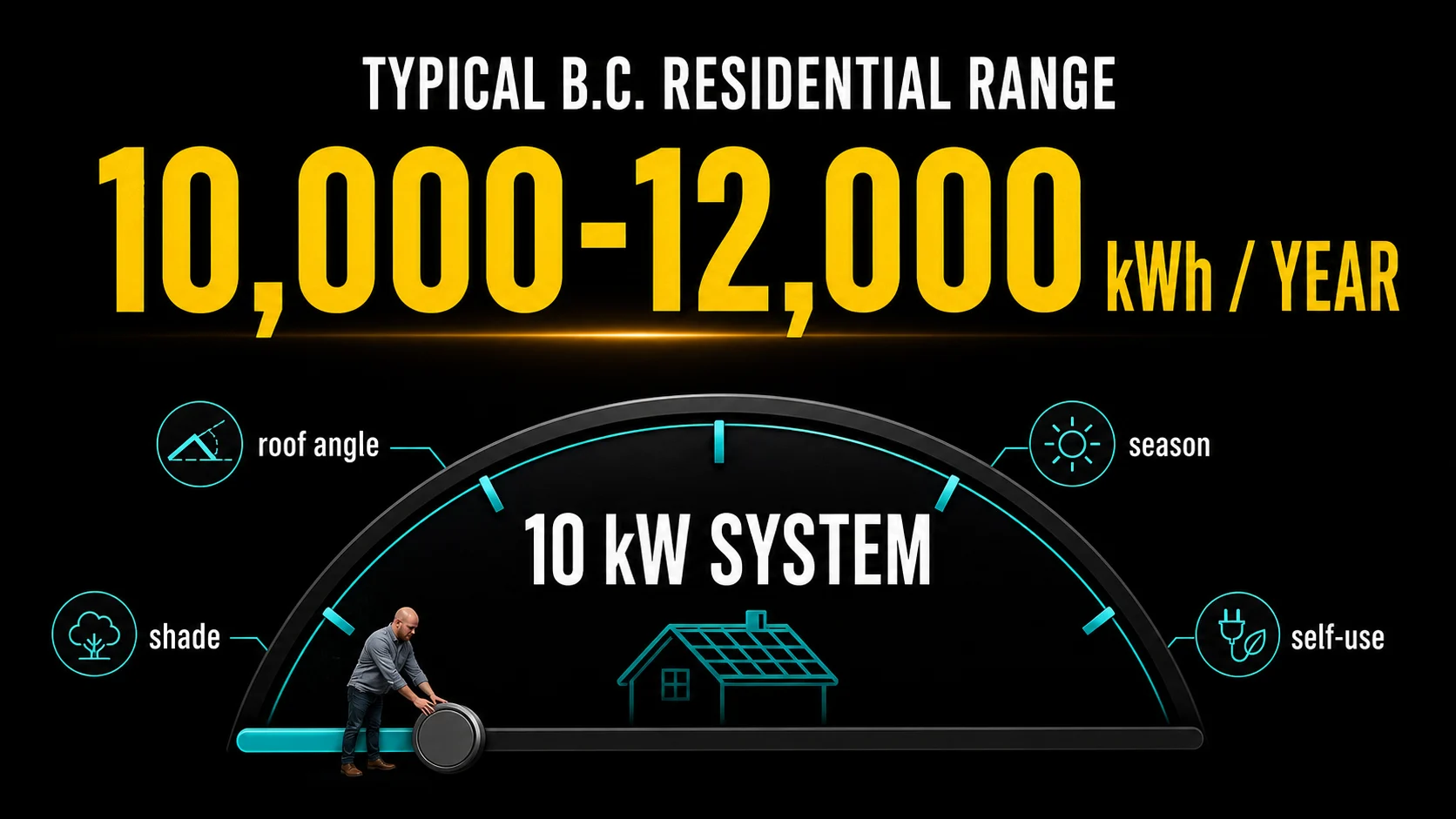
BC Hydro’s solar guidance says a typical 10 kW residential system in B.C. can generate about 10,000 to 12,000 kWh per year. Natural Resources Canada’s photovoltaic potential and solar resource maps also estimate grid-connected PV output in kWh/kWp for locations across Canada on a roughly 2 km grid.
For bill context, the table below scales BC Hydro’s 10 kW production range. It uses 10 cents per kWh as the new BC Hydro export value and 14.08 cents per kWh as the Tier 2 residential energy charge reference from BC Hydro’s residential tiered rate notes.
This table is a rough energy-value estimate only. It is not a utility-bill forecast. Real savings depend on how much solar is used on site, how much is exported, whether the home is on Tiered, Flat, or Time-of-Day pricing, taxes, basic charges, seasonal production, and whether future loads like EVs or heat pumps actually arrive.
| Example size | Scaled annual production range | Rough annual bill value range | Rough monthly average |
|---|---|---|---|
| 7.6 kW | 7,600 – 9,120 kWh | $760 – $1,284 | $63 – $107 |
| 9.7 kW | 9,700 – 11,640 kWh | $970 – $1,639 | $81 – $137 |
| 10.0 kW | 10,000 – 12,000 kWh | $1,000 – $1,690 | $83 – $141 |
| 10.1 kW | 10,100 – 12,120 kWh | $1,010 – $1,706 | $84 – $142 |
For an Abbotsford homeowner, the important part is not copying one of those sizes. It is comparing the system size to the property’s actual annual kWh use and the amount of solar likely to be used on site instead of exported.
What Can Go Wrong With A Solar Quote In Abbotsford?
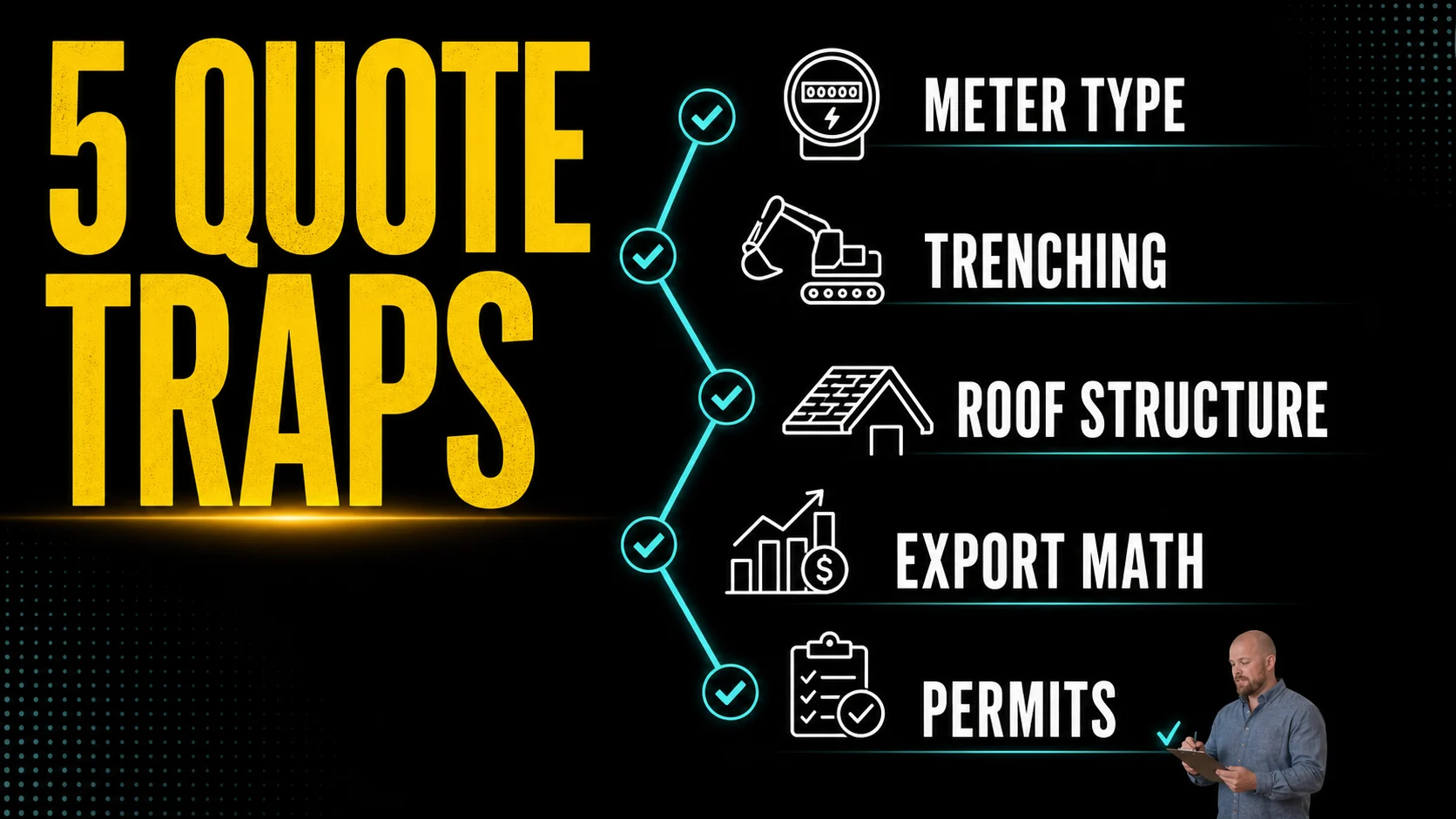
First, the quote may treat a rural property like a standard house. That can miss trenching, outbuilding wiring, service limitations and structural review.
Second, it may blur residential, farm and commercial assumptions. Tax treatment, financing and incentive eligibility can differ. Ask the installer to identify which category the quote assumes and link to official sources where needed.
Third, it may oversize for export. A huge barn roof can create a beautiful layout, but excess export under the new BC Hydro rate has different economics than direct self-use. If you want more context on the 2026 rule change, see our article on the BC Hydro July 1 net metering deadline.
Fourth, it may underprice electrical upgrades. EV chargers, heat pumps, shops and solar may all touch the same service-capacity question.
Fifth, it may bundle a battery without explaining backup circuits. A battery should come with a list of loads, not just a glossy image.
Installer Checklist For Abbotsford
Ask:
- Are you an HPCN member for rebate eligibility?
- Have you installed solar in Abbotsford or the Fraser Valley?
- Do you work on acreages, barns, shops or farm buildings?
- Which meter and account will the system connect to?
- Are trenching, long wire runs and service upgrades included?
- Who handles BC Hydro self-generation approval?
- Who handles the City of Abbotsford building permit, electrical permit, inspections and final documents?
- How much of the power is expected to be used on site?
- Can you separate residential, farm/commercial and battery assumptions?
The City of Abbotsford building permit page says permits help make sure construction meets structural, safety, land-use and code requirements. For solar, ask who handles the City of Abbotsford building permit, the electrical permit, inspections and final documents. Solar is not just panels on a roof. It is structural, electrical, utility and rebate paperwork.
Before choosing an installer, compare a few detailed quotes side by side. The cheapest number is not always the best deal if the equipment, warranty, production estimate, financing terms or installation approach are weaker. SolarEnergies.ca can connect Abbotsford homeowners with certified installers who have completed 14,000+ successful installs across Canada, so you can compare real options instead of guessing.
Abbotsford Quote Math To Double-Check
Ask for residential and non-residential assumptions to be separated. A home, farm building, shop and commercial account can have different usage patterns and financial considerations. The proposal should not mix them together in a way that makes the payback look cleaner than it really is.
For rural properties, ask where the electricity is used during the day. A dairy, shop, greenhouse, home office or EV charger may use power at different times. The more solar is used directly on site, the stronger the case tends to be under current BC Hydro export rules.
Also ask for an alternate design if the first system is large. Abbotsford roofs can be generous, and it is easy to build a quote around roof space instead of usage. A smaller system that avoids expensive wiring or service upgrades can sometimes be the smarter first phase.
Next Steps
Pull your 12-month BC Hydro usage, identify future loads such as EVs or heat pumps, and decide which roof areas are realistic. For rural properties, collect photos of the house, shop, barn, meter area and electrical panels before requesting quotes.
Then run the SolarEnergies.ca online solar calculator and use the result as a starting point, not a final design. If upfront cost is the sticking point, ask installers about available financing options, which may include 0% financing with $0 down payment depending on approval and program terms. For B.C. financing context, see our guide to whether a Financeit solar loan is right for B.C.
FAQ
Are solar panels worth it in Abbotsford?
They can be, especially for homes with higher electricity use, open roofs and EV or heat-pump loads. Rural properties need extra electrical and structural review.
How much do solar panels cost in Abbotsford?
BC Hydro’s planning range is about $2,000 to $3,000 per kW before rebates. A 10 kW system is commonly planned around $20,000 to $30,000 before incentives.
Can I put solar panels on a barn or shop?
Often yes, but the roof structure, electrical connection, meter setup and load location must make sense. Ask for those details in writing.
Does Abbotsford get enough sun for solar?
Yes, solar panels can work in the Fraser Valley. Annual production, not a single rainy month, is what matters.
Is a battery worth it in Abbotsford?
It depends on outage concerns, backup loads, rebate eligibility and cost. Get solar-only and solar-plus-battery pricing separately.
Should I size for my future EV or heat pump?
Yes, if the upgrade is realistic and near-term. Ask the installer to show current usage and future-load scenarios separately.
What quote warning signs should I watch for?
Watch for missing HPCN status, vague farm/commercial assumptions, no service review, no BC Hydro approval path and savings based mostly on exported power.
What is the best first step?
Gather usage data, roof age, panel photos and future load plans. Then use the SolarEnergies.ca online solar calculator for a first pass and compare detailed quotes, not just total price. Understanding solar panel costs in Langley is crucial for determining the financial feasibility of your project. Many factors can affect these costs, including local incentives and installation fees. It’s advisable to consult with local contractors to get the most accurate estimates and options available.
Can an Abbotsford solar project be phased?
Sometimes. A homeowner may start with the house roof and leave a shop or battery for later. Ask whether the inverter, electrical design and BC Hydro approval would allow future expansion.