
Solar Panels Langley 2026: Costs, Rebates, Township Roofs and Quote Math
June 20, 2026
Solar Panels Surrey 2026: Cost, Rebates, Permits and Quote Checks
June 21, 2026Last Updated on June 22, 2026 by Vitaliy
Solar panels in Richmond can make sense, but only when the quote is built around the roof, the home load and the current BC Hydro rules. Richmond has many homes with open exposure and flatter roof planes, which can help solar production. The catch is that an easy-looking roof can still become an expensive project if the installer skips waterproofing, wind, roof age or export-rate details.
A bad Richmond quote can cost you in two ways: you may overpay for a system that exports too much power, or you may save a little upfront and create roof problems later.
Key Takeaways
- BC Hydro says solar PV in B.C. typically costs about $2,000 to $3,000 per kW DC installed, and a 10 kW residential system typically costs $20,000 to $30,000 before rebates. See BC Hydro’s solar panel cost guidance.
- BC Hydro says a typical 10 kW residential roof system in B.C. can generate about 10,000 to 12,000 kWh per year. Richmond still needs site-specific modelling because shade, roof orientation, roof membrane, inverter setup and self-use affect the result.
- BC Hydro’s solar rebate is $1,000 per kW of installed generator capacity, capped at 50% of installed product cost, with a maximum solar rebate of $5,000. See BC Hydro solar and battery rebates.
- As of June 1, 2026, BC Hydro says solar and battery systems must be installed by an HPCN member for rebate eligibility. See BC Hydro’s contractor requirement notice.
- For the new self-generation service rate starting July 1, 2026, BC Hydro says excess generation is purchased at 10 cents per kWh under Rate Schedule 2289. See BC Hydro self-generation rate updates.
Is Solar Worth It In Richmond?
Solar can be worth it in Victoria when your home uses enough electricity, your roof has useful sun exposure and the system is sized to offset your own use first. EV charging, heat pumps, electric hot water, air conditioning and daytime occupancy can all improve the case because the home has more electricity load for solar to serve directly.
Richmond can also be easier to model than some hillside Lower Mainland areas because many neighbourhoods have less severe slope-driven shading. That does not mean every roof is simple. Low-slope roofs, parapets, vents, dormers, chimneys, neighbouring homes and trees can still reduce production or complicate the layout.
Start with three numbers:
- Your last 12 months of BC Hydro usage in kWh.
- The system’s estimated annual production in kWh.
- The split between power used by the home and power exported to the grid.
If the quote only shows total production and a monthly savings estimate, ask for more detail before comparing it with other options.
Solar Panels Richmond Cost In 2026
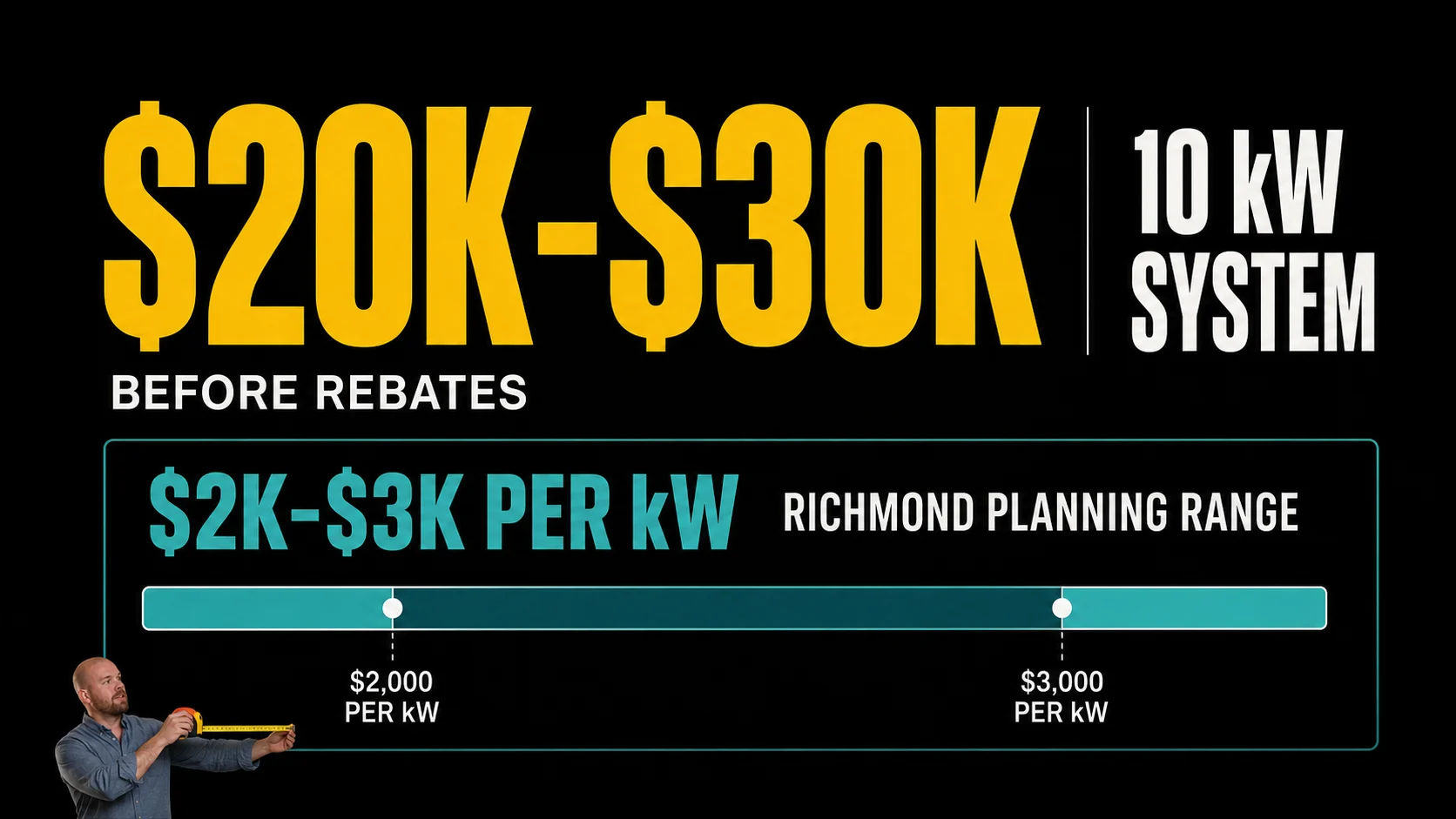
Using BC Hydro’s B.C. cost guidance, solar panels Richmond cost can be planned like this before site-specific adders:
| System size | Richmond fit | Gross planning range | Possible solar rebate | Net planning range |
|---|---|---|---|---|
| 5 kW | Smaller home or limited roof area | $10,000 to $15,000 | Up to $5,000 | $5,000 to $10,000 |
| 8 kW | Average detached home | $16,000 to $24,000 | Up to $5,000 | $11,000 to $19,000 |
| 10 kW | EV, heat pump or larger household | $20,000 to $30,000 | Up to $5,000 | $15,000 to $25,000 |
| 12 kW | High-use home with open roof | $24,000 to $36,000 | Up to $5,000 | $19,000 to $31,000 |
Those are planning ranges, not a finished quote. Richmond-specific costs can include low-slope racking, ballast or attachment design, membrane protection, structural review, corrosion-resistant fasteners, electrical upgrades, inverter location work, battery storage and extra permitting support.
Use the SolarEnergies.ca online solar calculator for a quick first check before you commit to quotes. Then ask installers to show the assumptions behind the system size, annual production, self-consumption, export and roof work.
Tip for Richmond flat and low-slope roofs
Do not treat the roof attachment as a small line item. On a membrane roof, the solar design should explain equipment weight, drainage paths, service access, ballast or penetrations, flashing, roof warranty impact and future roof maintenance. A cheap solar quote that creates leak risk is not a cheap quote.
Rebates, Batteries And BC Hydro Rules
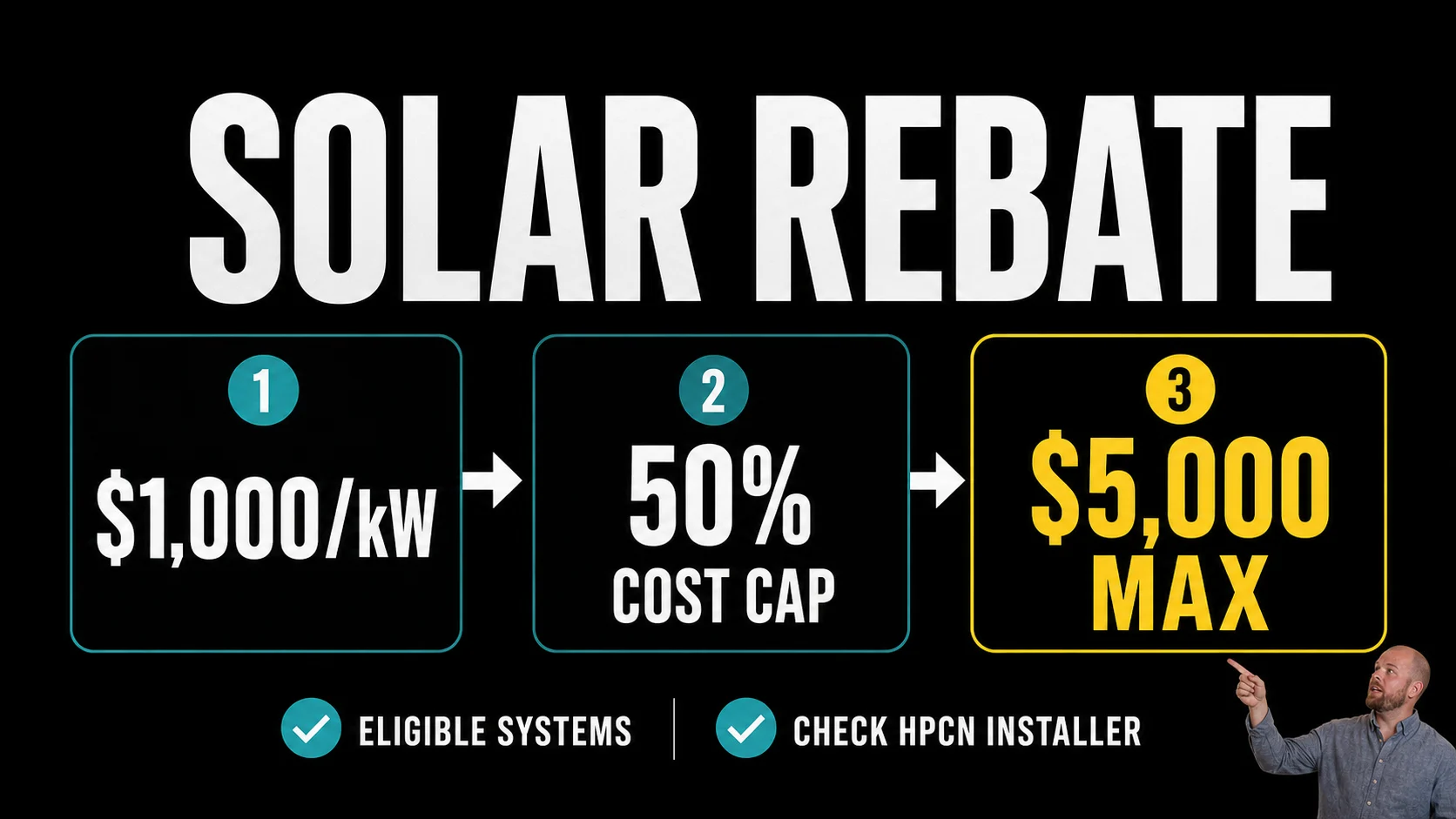
BC Hydro lists the residential solar rebate at $1,000 per kW of installed generator capacity, capped at 50% of installed product cost, with a maximum solar rebate of $5,000. For batteries, BC Hydro says the April 1, 2026 changes include up to $1,500 for batteries paired with solar, up to $5,000 for batteries enrolled in Peak Saver and no rebate for battery-only systems that are not enrolled in Peak Saver.
The application process matters. BC Hydro says customers should submit a self-generation application before installation, receive technical pre-approval before the licensed contractor installs the system and submit final inspection documents for interconnection approval. BC Hydro also says even small grid-connected generation systems need approval before connecting to the grid. See BC Hydro self-generation requirements.
For Richmond homeowners, the practical point is simple: do not buy equipment first and sort out approval later. Confirm the installer, equipment, self-generation application, rebate pathway, electrical permits and inspection plan before installation starts.
The 10-Cent Export Rate Changes The Math
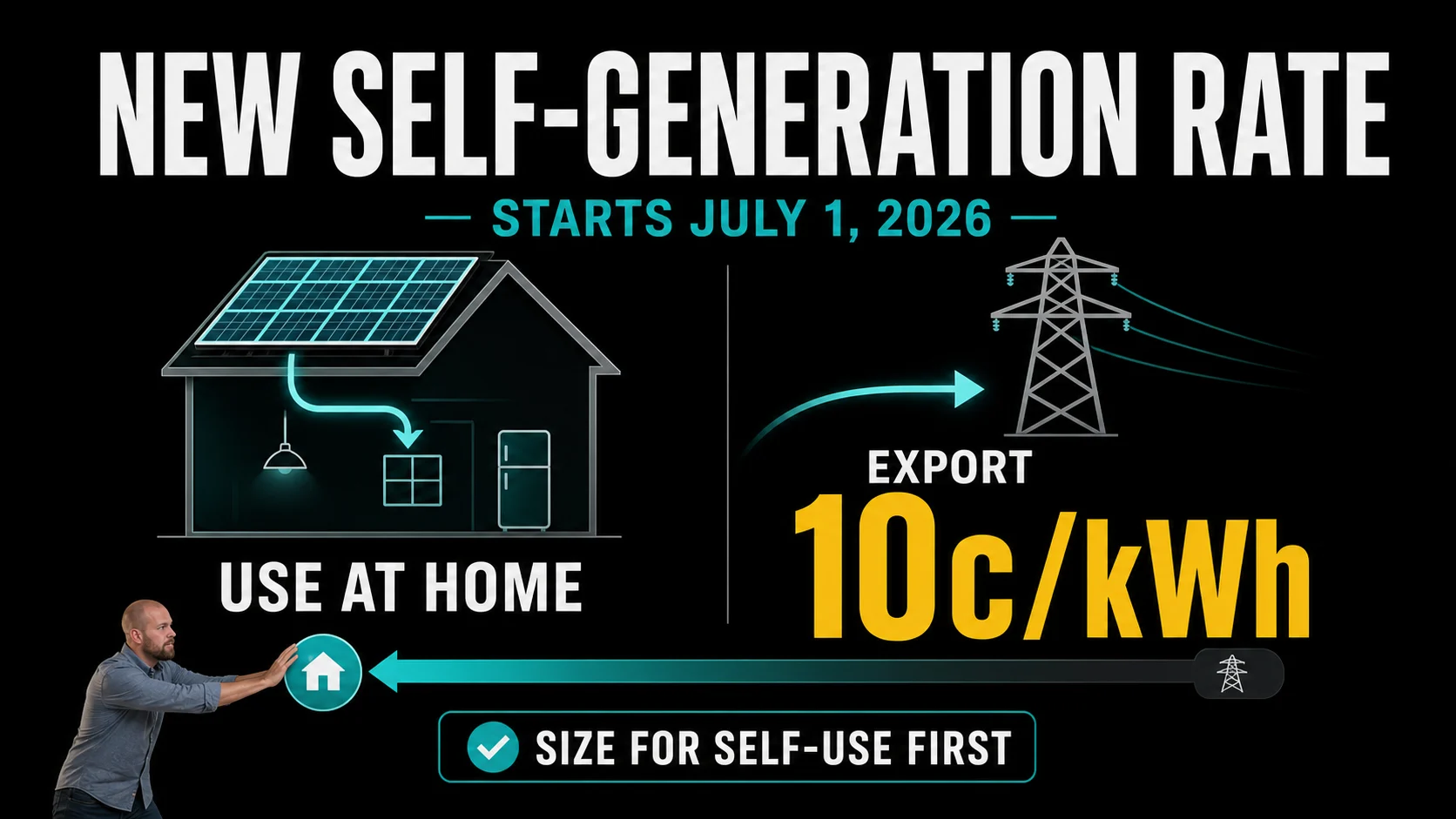
BC Hydro says the old net metering service rate closes to new customers once the new self-generation service rate starts on July 1, 2026. Under Rate Schedule 2289, BC Hydro will purchase excess generation at 10 cents per kWh and compensate customers each billing cycle.
That makes self-consumption more important. Electricity your home uses directly can avoid buying power from BC Hydro. Electricity exported after the home is already supplied is valued at the export rate. In many Richmond homes, the best system is not automatically the largest system that fits on the roof.
Tip for export-heavy designs
Ask every installer to separate annual production, annual self-use and annual export. A large open roof can make an oversized design look attractive on paper, but too much midday export can weaken the payback if your home does not use enough electricity during solar production hours.
Project Numbers And Bill Context
BC Hydro says a typical 10 kW residential system in B.C. can generate around 10,000 to 12,000 kWh per year. Scaled to a 9.2 kW Richmond example, that suggests a rough production range of about 9,200 to 11,040 kWh per year before site-specific losses.
For bill-value planning, the spread matters. Exported electricity under the new self-generation rate is 10 cents per kWh. BC Hydro’s residential rate notes say the Tier 2 energy charge remains 14.08 cents per kWh, while customers may also choose flat, tiered or optional time-of-day pricing. See BC Hydro residential rate notes.
That means the same 9.2 kW system can have different value depending on how much production is used at home versus exported. The rough annual value is not one clean number. It depends on usage timing, rate plan, roof output, fixed charges, taxes, inverter performance, shade and whether the home adds EV charging or a heat pump.
What Richmond Homeowners Usually Worry About
A common worry is whether solar is worth doing if the roof may need replacement later. That concern is fair. If the roof is near end of life, price the roof first or ask what future panel removal and reinstallation would cost. For Richmond low-slope roofs, roof timing can be as important as panel count.
Another worry is payback. Public homeowner discussions about Richmond solar show the usual questions: who installed the system, whether the economics worked, what happens when a roof needs work and how long payback might take. Treat those comments as personal experience, not a rule for your home. The useful takeaway is to ask better quote questions.
Before you sign, compare at least a few detailed quotes. The cheapest number is not always the best value if it leaves out roof protection, uses weak production assumptions, hides financing terms or gives you a system that exports too much.
What Can Go Wrong With A Richmond Solar Quote?
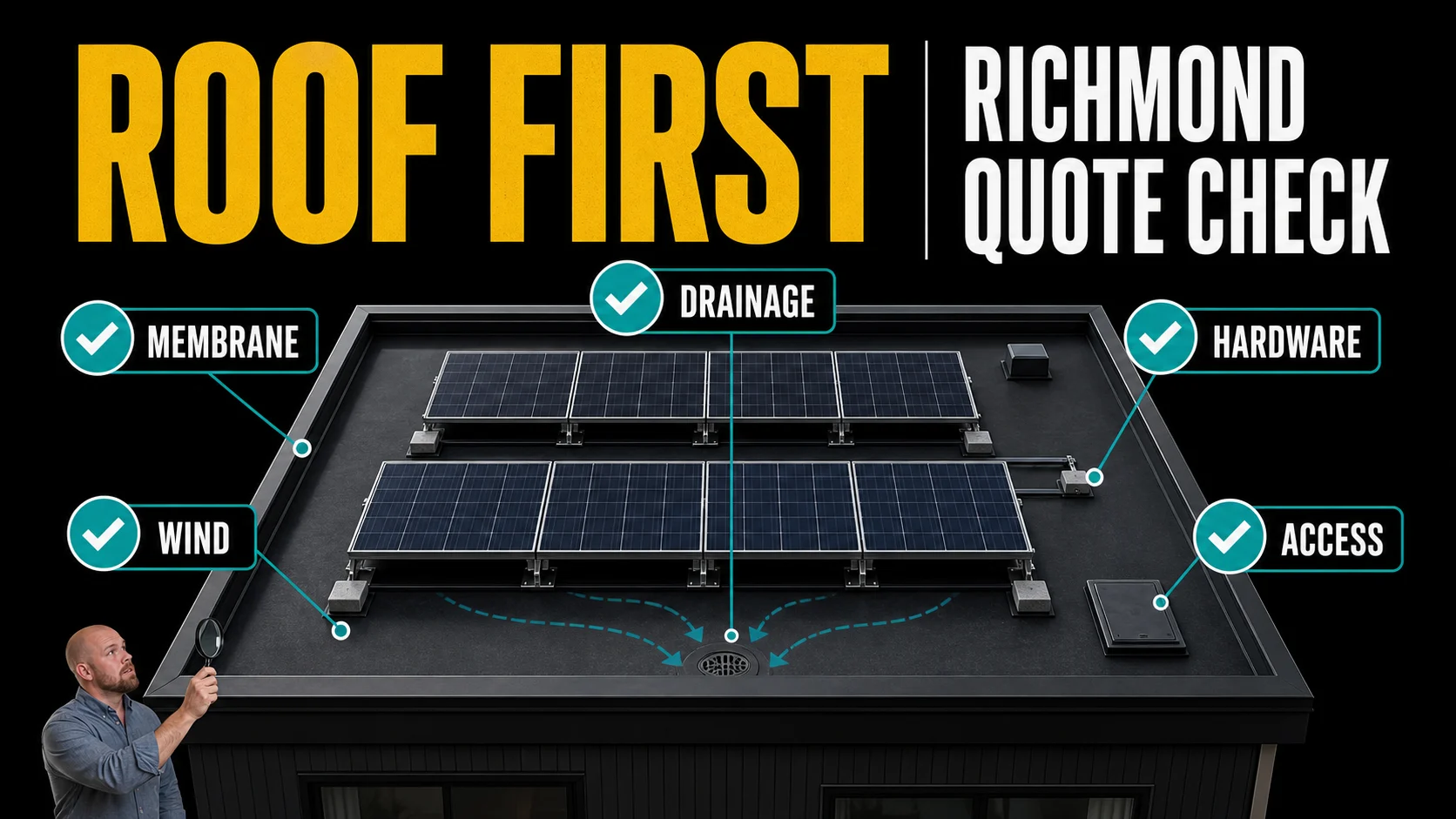
A weak Richmond solar quote usually fails in one of five places.
First, it ignores the roof membrane. Low-slope roofs need careful attachment or ballast design. The quote should explain how the installer protects waterproofing and keeps service access clear.
Second, it oversizes for export. Richmond roofs can sometimes fit more panels than the home can use efficiently, especially if the house is empty during sunny weekday hours.
Third, it treats batteries as a simple add-on. A battery does not automatically run the whole home in an outage. Ask which circuits are backed up, how long they can run and whether Peak Saver enrollment is part of the rebate plan.
Fourth, it skips corrosion details. Richmond’s coastal air makes racking, fasteners and inverter placement worth discussing.
Fifth, it buries roof replacement timing. If the roof is close to replacement, deal with that before solar or price future removal and reinstall work honestly.
How To Choose A Solar Installer In Richmond
Ask every installer these questions:
- Are you an HPCN member for BC Hydro rebate eligibility?
- Have you installed solar on Richmond flat or low-slope roofs?
- Will the quote specify attachment, ballast, flashing and membrane protection?
- What racking and fastener materials are used near coastal air?
- Who handles the BC Hydro self-generation application, and what does the homeowner need to submit?
- Does the quote include electrical permits, structural review and final inspection?
- What happens if production is lower than estimated?
- Is the battery optional, and which loads will it actually back up?
- Does the quote separate cash price, financing terms and rebate assumptions?
SolarEnergies.ca can connect Richmond homeowners with certified installers who have completed 14,000+ installs across Canada, so you can compare real options instead of guessing from one quote.
Richmond Quote Math To Double-Check
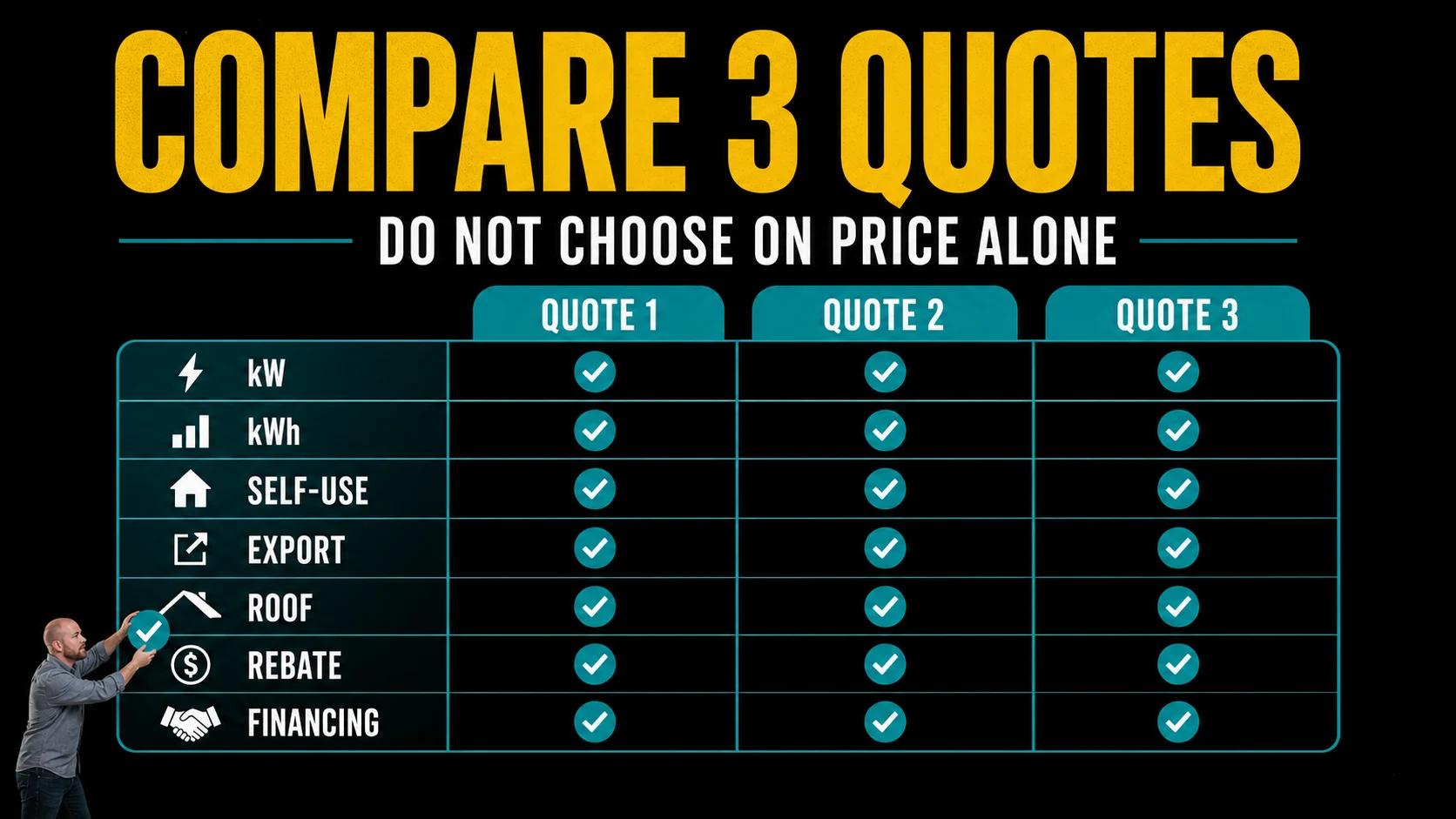
Ask for a simple table with these columns:
| Quote item | What to ask for |
|---|---|
| System size | kW DC, panel count and roof area used |
| Production | Annual kWh estimate and modelling assumptions |
| Self-use | Estimated kWh used directly by the home |
| Export | Estimated kWh sent to BC Hydro |
| Roof work | Attachment, ballast, waterproofing and service access details |
| Rebate | Solar rebate, battery rebate and HPCN eligibility |
| Battery | Backup loads, Peak Saver status and cost with/without battery |
| Financing | Cash price, financed price, rate, term and approval assumptions |
If upfront cost is the sticking point, ask about available financing options, including 0% financing with $0 down payment where approved and where program terms allow. Keep the cash price visible so you can compare quotes cleanly.
Next Steps
Pull your last 12 months of BC Hydro usage, check the roof age and gather quotes that model annual production, self-use and export under the current BC Hydro rules. For Richmond, give extra attention to waterproofing, wind design, corrosion-resistant hardware and battery expectations.
If you want a fast first read on whether solar fits your property, use the SolarEnergies.ca calculator before you start collecting quotes. Then compare detailed installer proposals side by side.
FAQ
Are solar panels worth it in Richmond?
They can be, especially for homes with open roof exposure and higher electricity use from EVs, heat pumps, electric hot water or larger households. The quote still needs to show roof-specific production, self-use, export and waterproofing details.
How much do solar panels cost in Richmond in 2026?
BC Hydro’s B.C. planning range is about $2,000 to $3,000 per kW DC installed before rebates. A 10 kW residential system typically costs $20,000 to $30,000 before incentives, according to BC Hydro’s solar panel guidance.
What solar rebate is available in Richmond?
For eligible BC Hydro customers, the residential solar rebate is $1,000 per kW of installed generator capacity, capped at 50% of installed product cost, with a maximum solar rebate of $5,000. Rebate eligibility depends on program rules, equipment, application steps and contractor requirements. Solar panel installation in Kelowna offers residents a fantastic opportunity to reduce their energy bills and contribute to a more sustainable environment. Many local contractors are available to assist with the installation process and ensure compliance with the required standards. Additionally, potential savings from government rebates can significantly offset the initial investment, making it a smart choice for homeowners in the area.
Does the installer need to be an HPCN member?
For BC Hydro rebate eligibility, yes after June 1, 2026. BC Hydro says solar and battery systems must be installed by a Home Performance Contractor Network member for customers to qualify for rebates.
Are flat roofs good for solar in Richmond?
They can be, but the roof design has to be taken seriously. Ask about membrane protection, ballast or penetrations, drainage, wind, roof warranty impact and how future roof maintenance will be handled.
Should I replace my roof before installing solar?
If the roof is near replacement, usually yes. Removing and reinstalling panels later can add avoidable cost, and low-slope membrane roofs need careful planning before solar equipment is added.
Do I need a battery in Richmond?
Not always. Batteries can help with backup, self-consumption or Peak Saver participation, but they add cost and need clear expectations. Ask for solar-only and solar-plus-battery pricing, and ask exactly which loads are backed up.
Can a Richmond solar system eliminate my BC Hydro bill?
Do not assume that. Solar can reduce the bill, but fixed charges, seasonal production, household load, export rules, rate plan and taxes can still leave charges on the account.
What is the best first step?
Gather your BC Hydro usage, check your roof age and compare quotes that show production, self-use, export value, roof work, rebate assumptions and installer credentials.